Fujiyama from Gotemba — History & Analysis
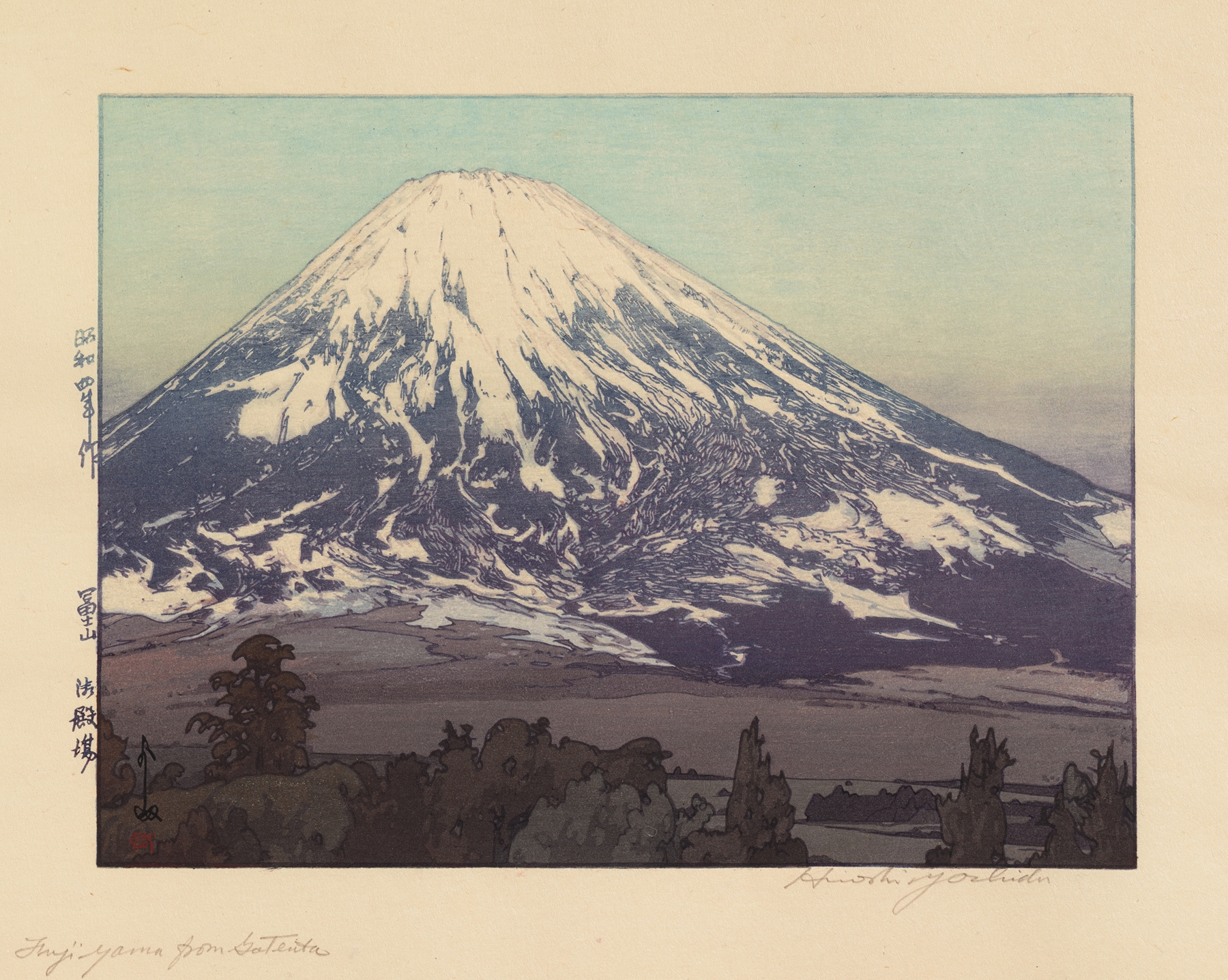
“Art reveals the soul when the world turns away.” In the stillness of a landscape, beauty can emerge from the shadows of turmoil, where nature's power conveys not just peace but an undercurrent of violence and transience. Look to the foreground and notice the delicate interplay of color and form; the soft hues of morning light envelop the silhouette of Fujiyama, its majestic peak emerging almost like a specter from the earth. The rolling hills lead your gaze upward, their textured strokes reminiscent of gentle waves, while the contrasting boldness of the mountain's summit commands authority over the entire scene. Each brushstroke suggests movement beneath the surface, hinting at a fierce spirit lying dormant, waiting to disrupt the calm.
Here, the juxtaposition of tranquility and latent power creates a profound tension. The serene landscape belies the potential violence of nature, showcasing how formidable beauty can be. As the viewer, you are drawn into a deeper contemplation: does this scene celebrate the peacefulness of Japan, or does it echo the stories of volcanic eruptions and the raw, untamed forces that shape such landscapes? The contrast between the inviting colors and the imposing mountain peak evokes a feeling of reverence mixed with an awareness of nature's unpredictable temperament.
In 1929, when this work was created, the artist was living in Japan, a period marked by significant social and political changes. The influence of Western art was palpable, yet traditional themes and aesthetics continued to thrive. In this context, Fujiyama from Gotemba embodies a moment in which the artist sought to reflect upon the sublime beauty and inherent violence of nature, encapsulating the dualities that defined his world and the art of his time.