Gebirgslandschaft mit Pilgern und fahrendem Volk — History & Analysis
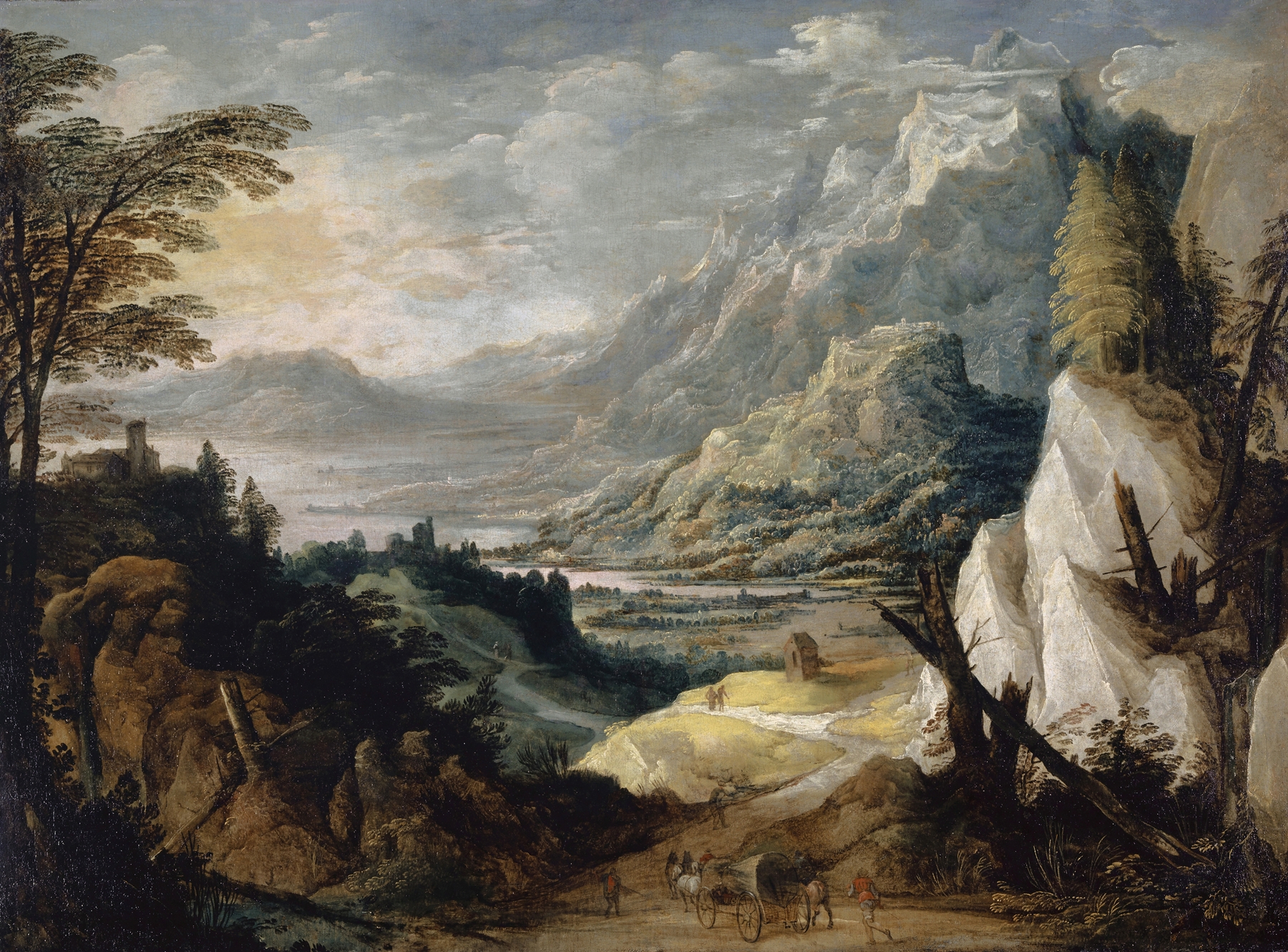
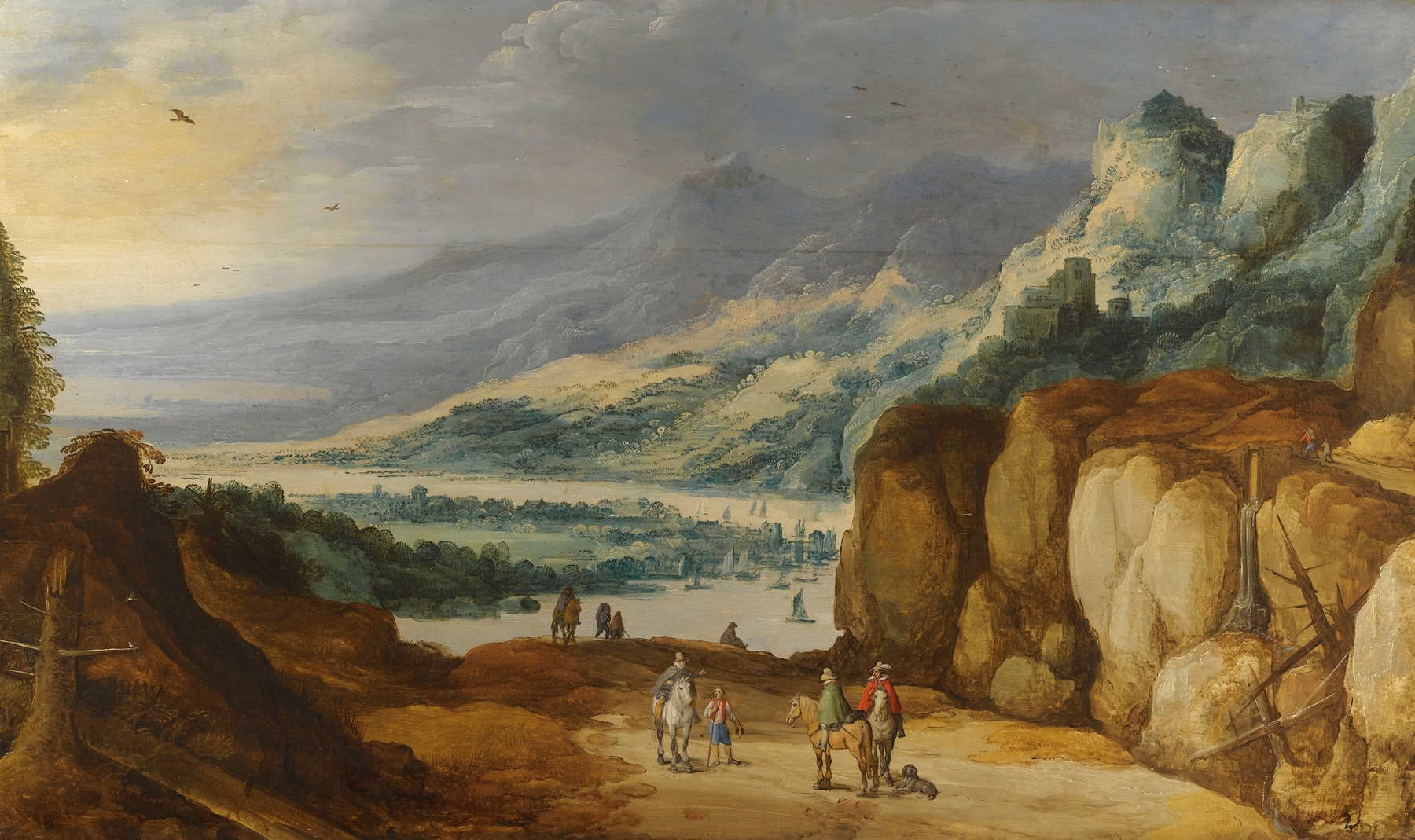
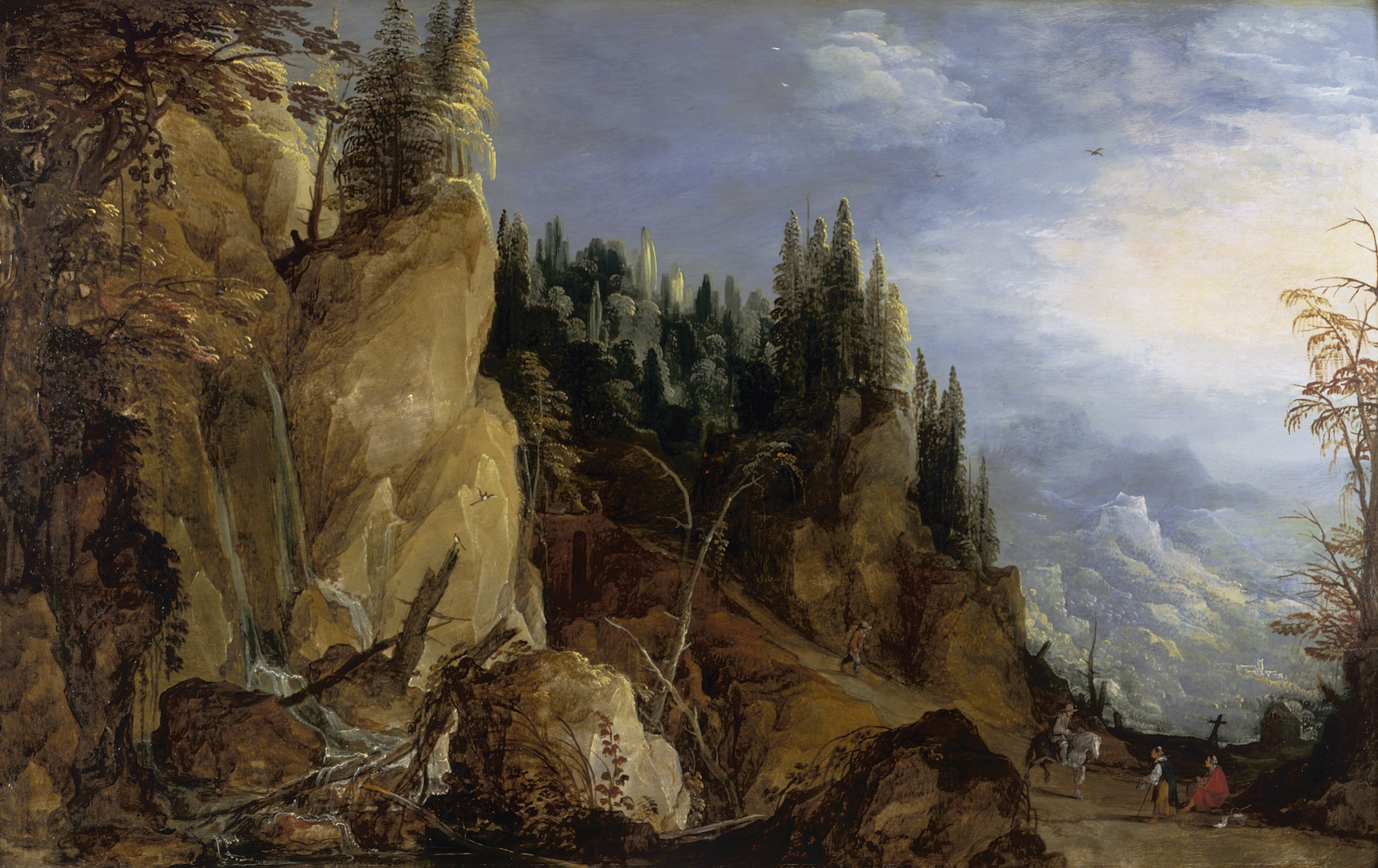
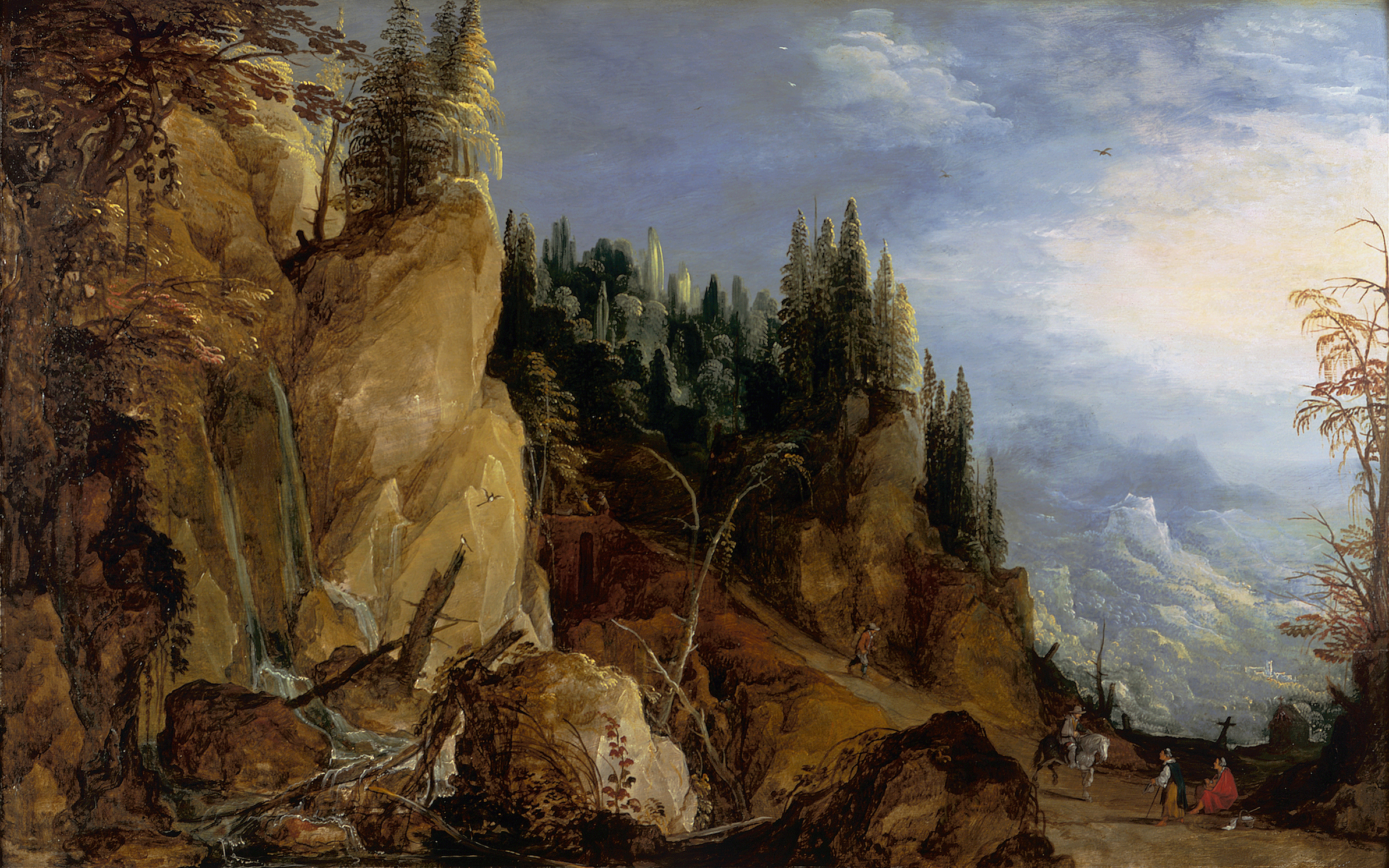
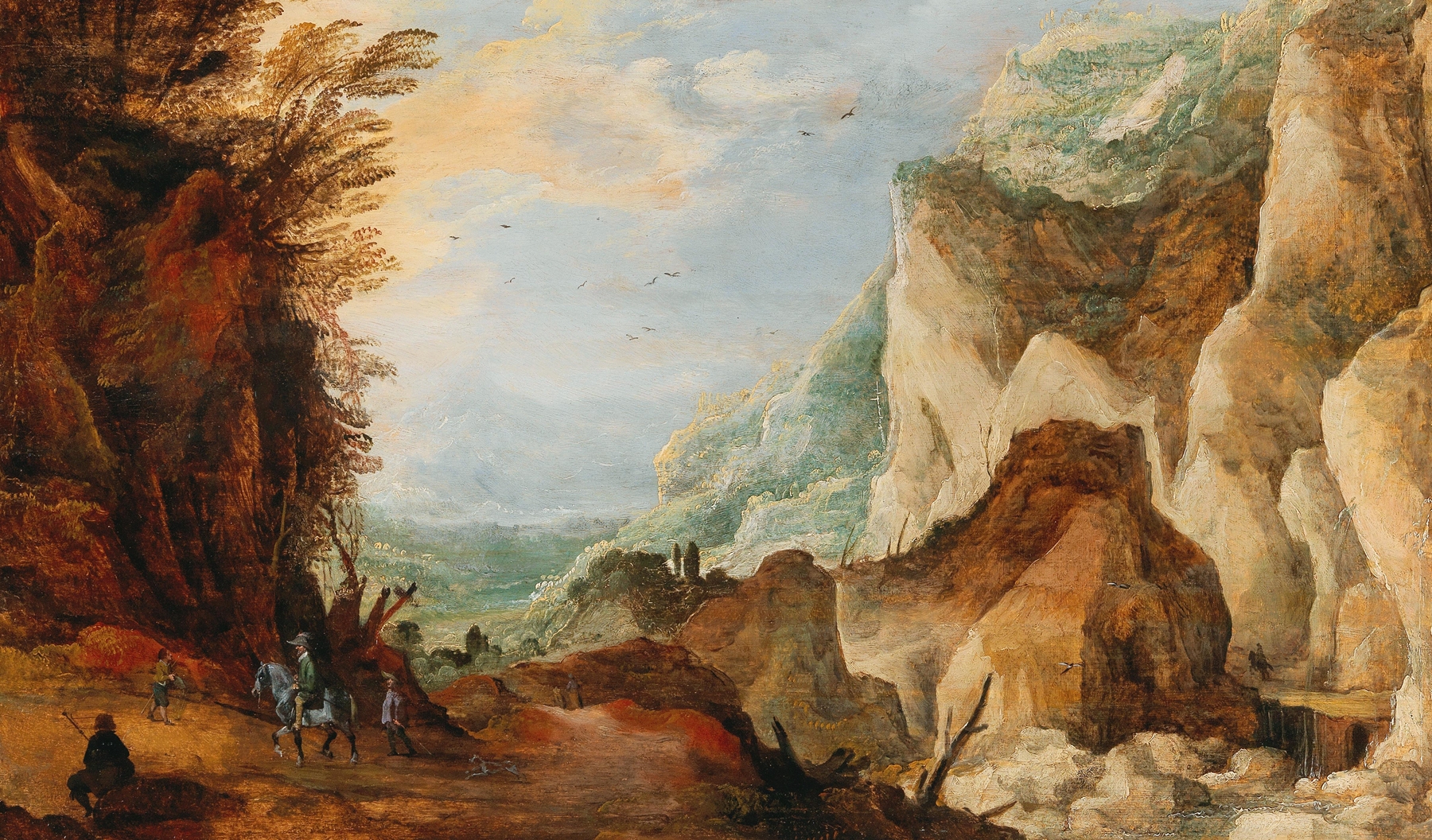
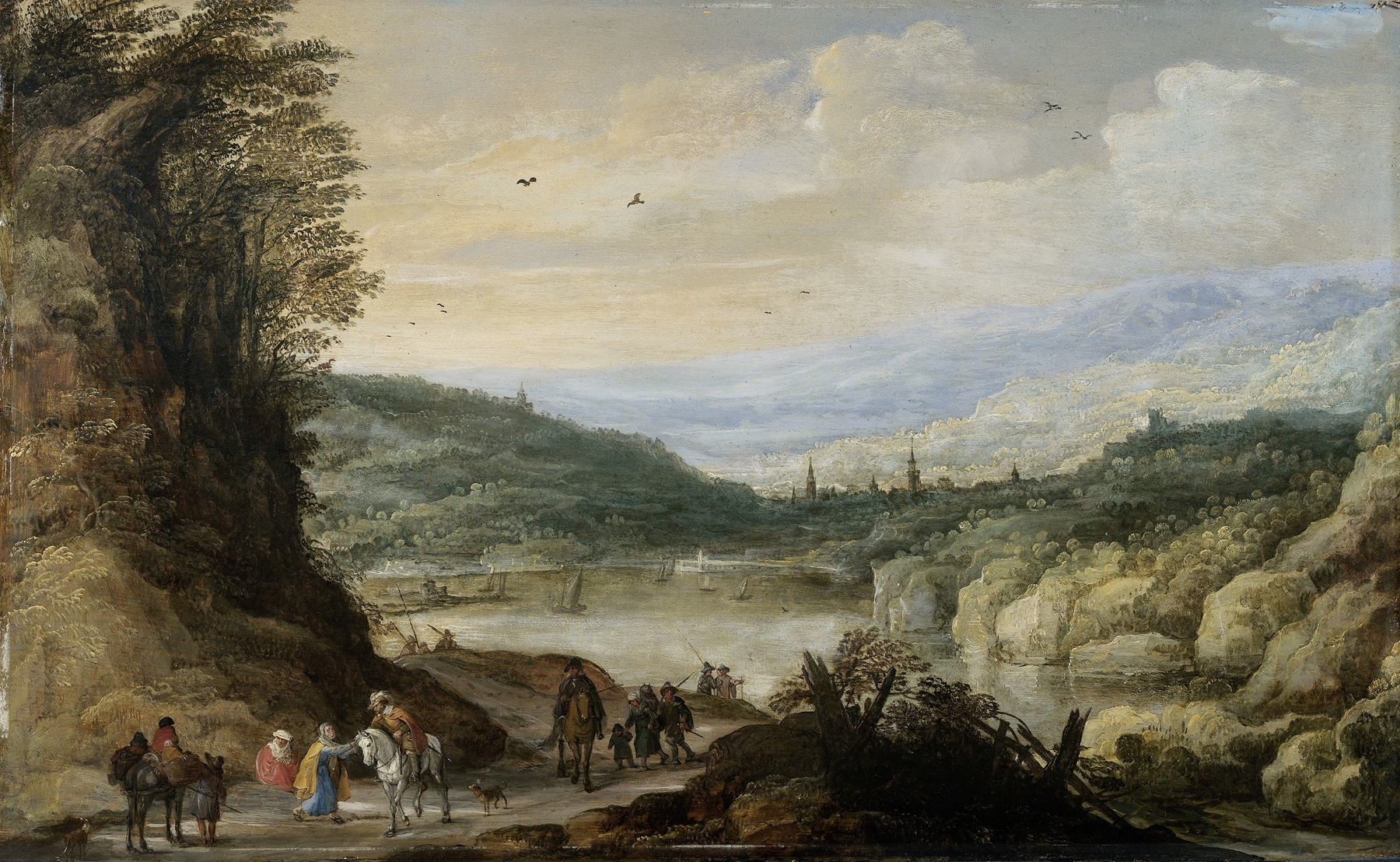
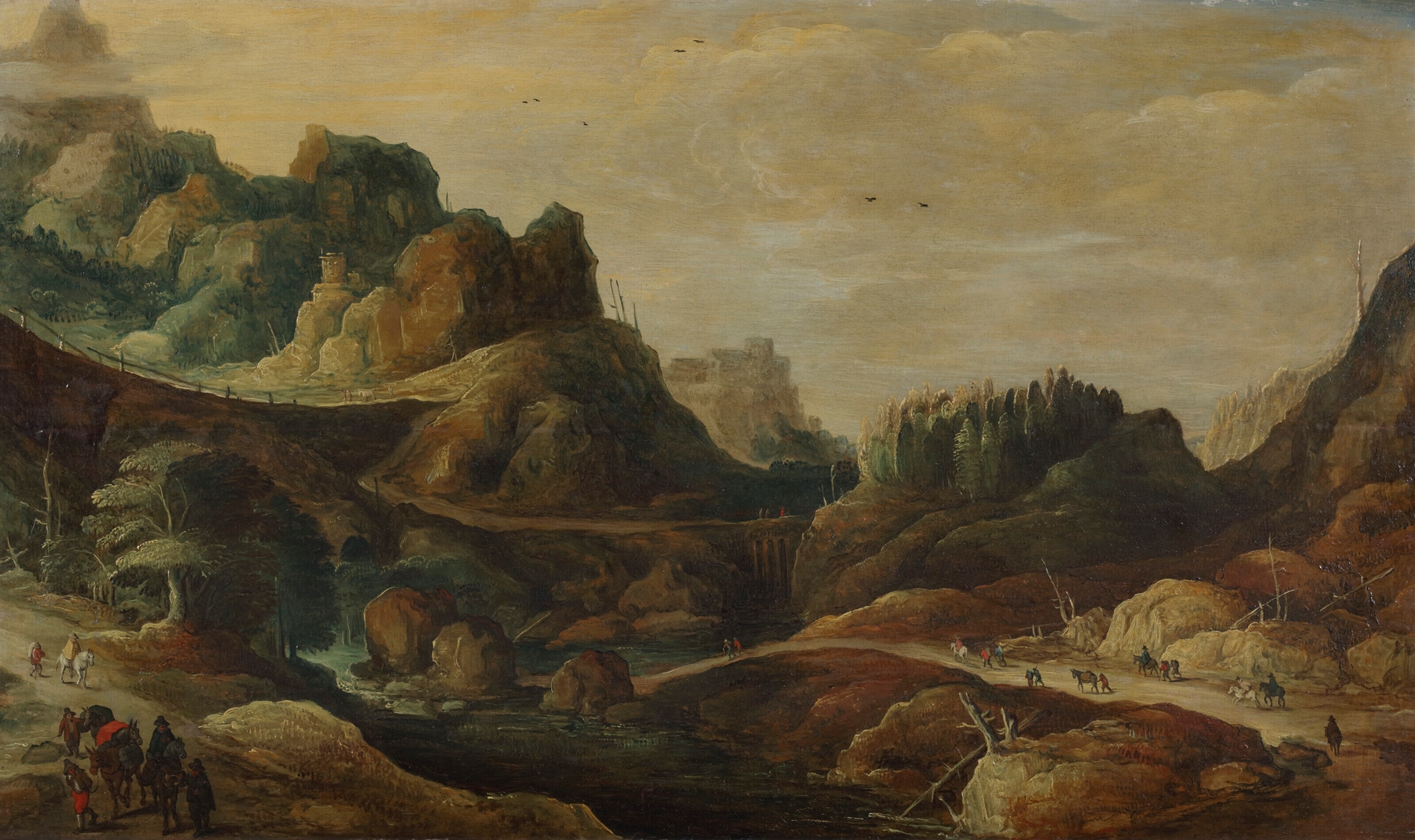
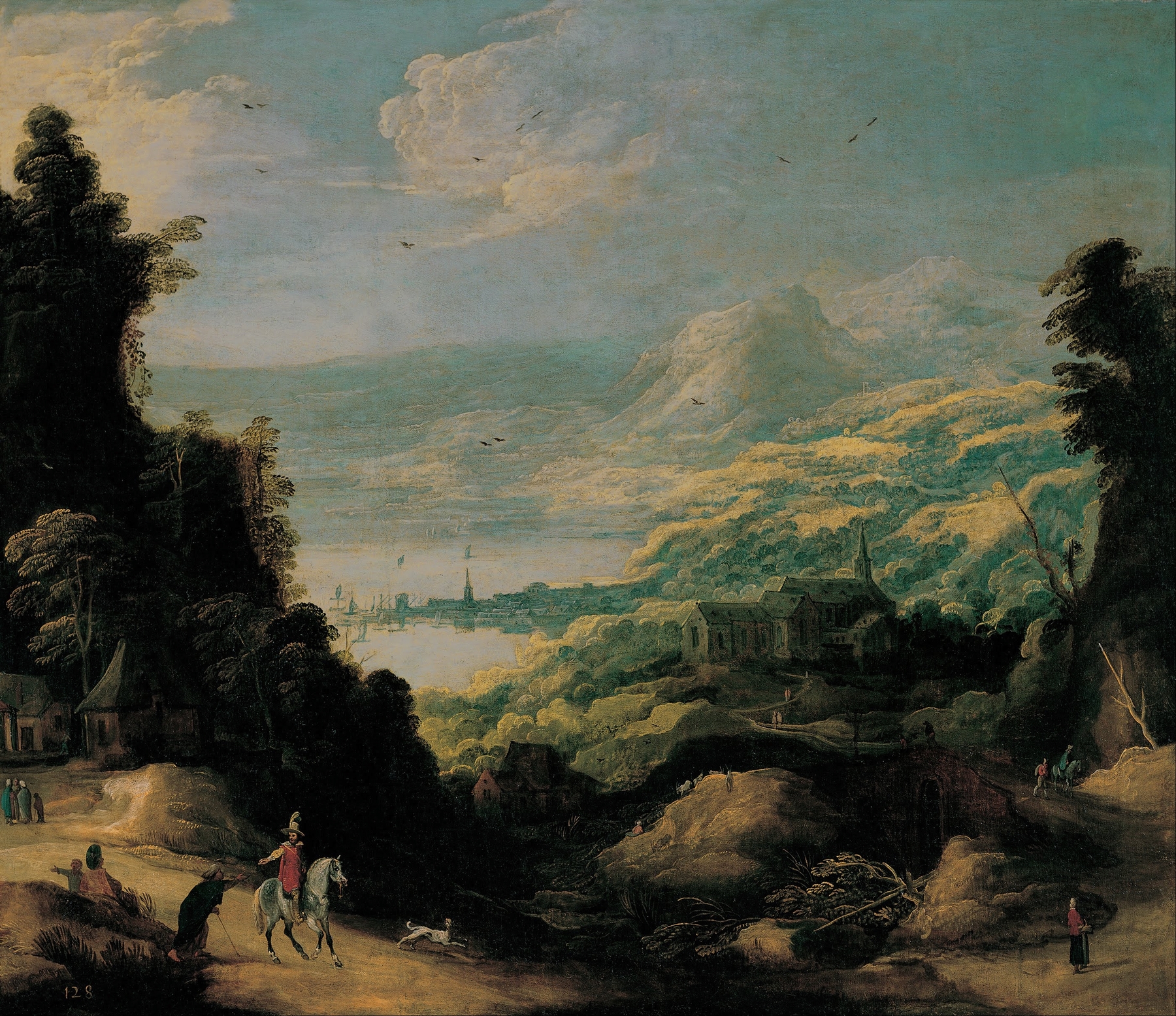
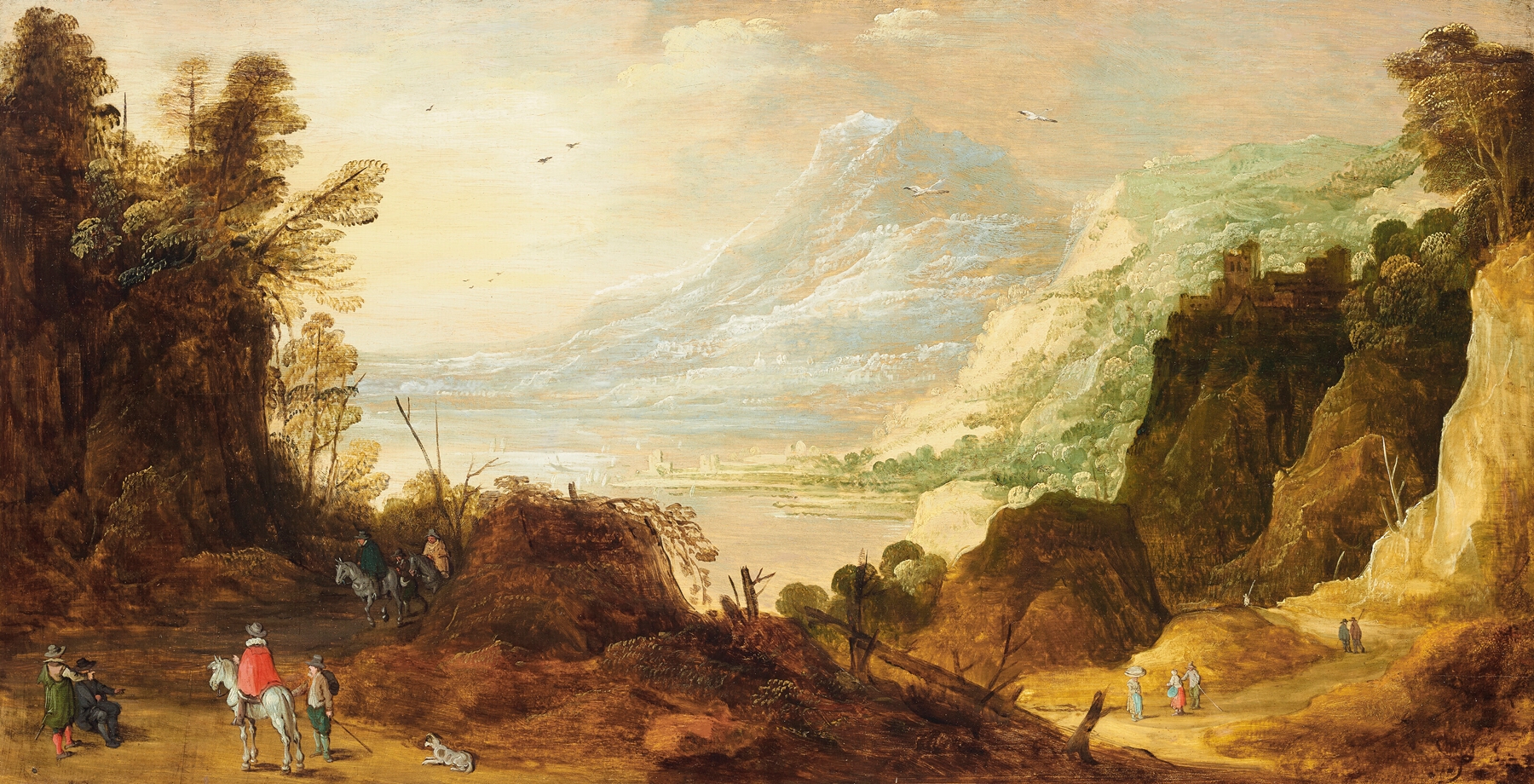
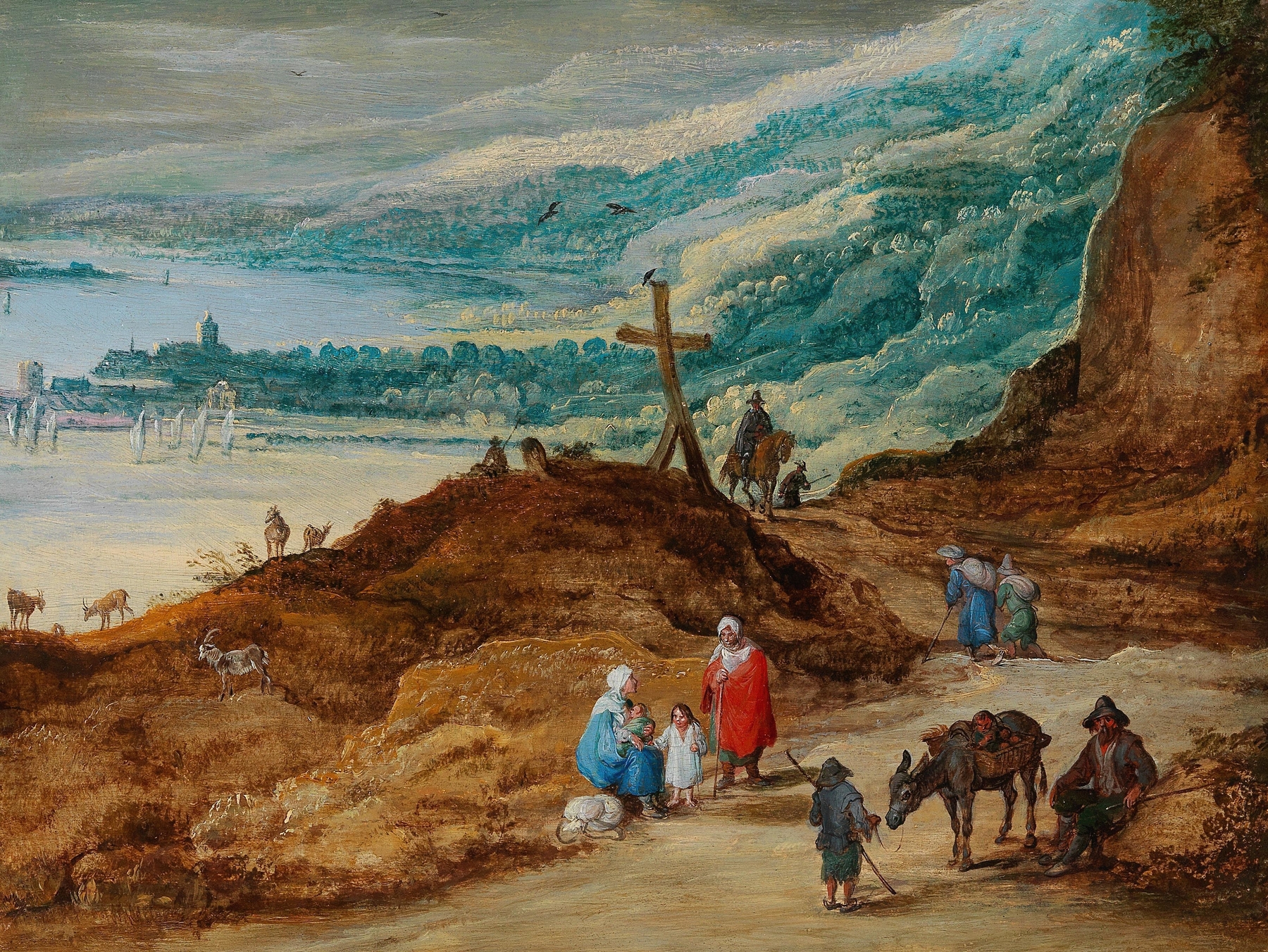
“Sometimes beauty is just pain, disguised in gold.” This sentiment resonates in the sublime landscapes of Joos de Momper, where light dances amidst shadows, revealing a deeper narrative beneath the surface. Look closely at the interplay of light and dark in Gebirgslandschaft mit Pilgern und fahrendem Volk. The foreground draws your gaze first, where a group of travelers meanders through a rugged terrain, rendered with intricate details in muted earth tones. As your eyes move upward, the luminous sky captures attention, its golden hues contrasting sharply with the cool shadows of the mountains, creating a sense of harmony and tension.
The careful brushwork of clouds suggests a fleeting moment, as if nature itself holds its breath. Amidst this picturesque setting, the presence of the pilgrims hints at a journey not merely of distance but of purpose and devotion. The mountains loom as both a backdrop and a metaphor for obstacles, the light illuminating their path, yet casting long shadows that evoke feelings of uncertainty.
This juxtaposition of bustling life against the vast, unyielding landscape invites reflection on the human condition—our struggles and the fleeting moments of clarity that guide us. Painted in an era when landscapes began to flourish as an independent genre, this work emerged in the late Renaissance, a time when artists explored the emotive qualities of nature. De Momper, active around the 16th century in the Low Countries, was influenced by the detailed and atmospheric styles of his predecessors, contributing to the evolving narrative of landscape art and echoing the spiritual quest of humanity nestled within its beauty.