Gezicht op Villa del Popolo en de Via Nuova te Napels, Italië — History & Analysis
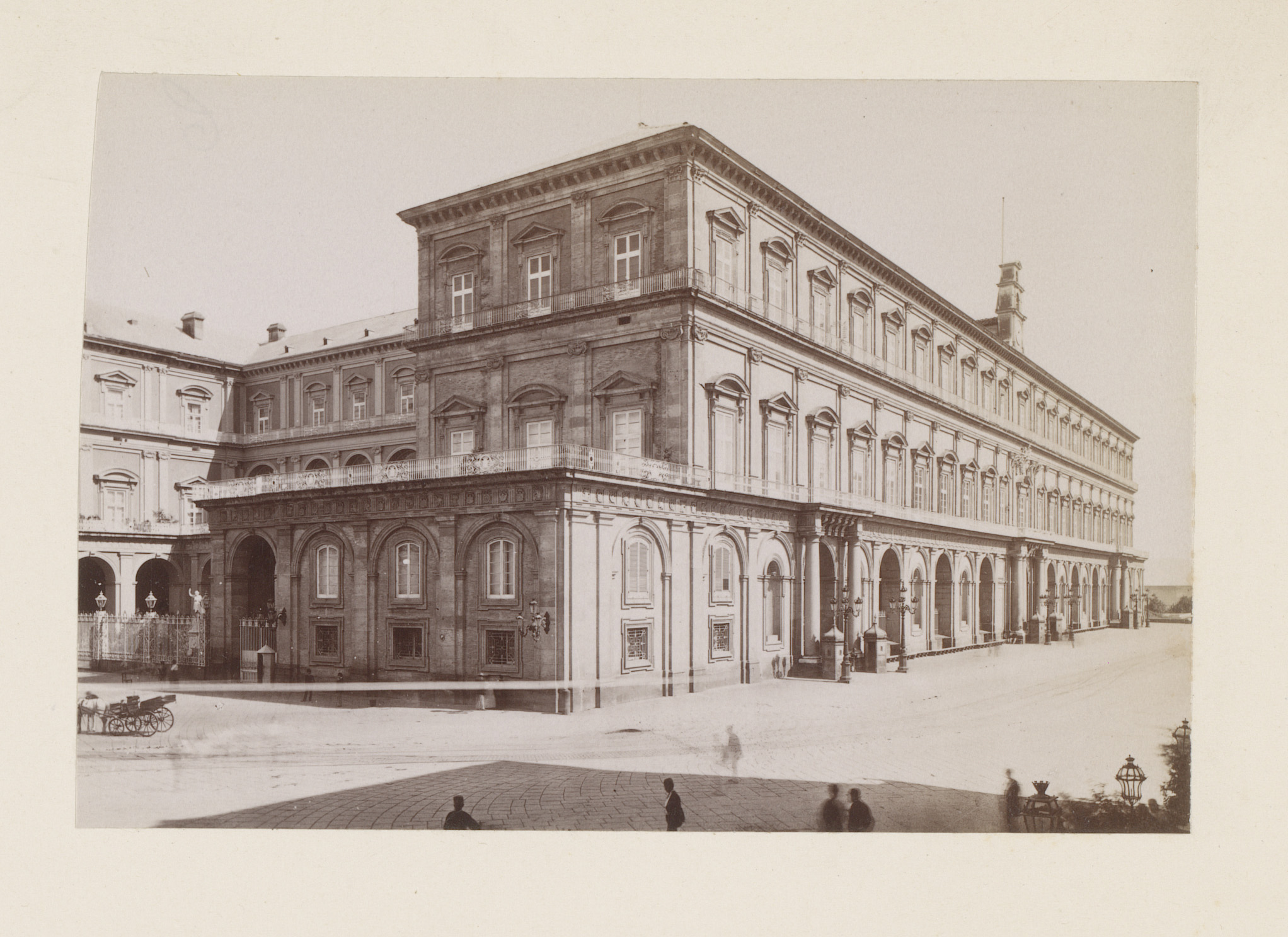
“Sometimes beauty is just pain, disguised in gold.” In the quiet embrace of a bygone era, reflections can reveal the hidden emotions of a place, whispering secrets that the eye alone cannot capture. Look to the center of the canvas, where the Villa del Popolo stands proudly, its elegant architecture bathed in warm hues of ochre and terracotta. The play of light enhances every detail, illuminating the lush greenery that envelops the villa and the winding Via Nuova. Notice the delicate strokes that define the clouds above, showcasing Brogi’s skill in capturing the atmosphere, while the serene blue sky provides a striking contrast to the earthy tones below.
Within the tranquil scene lies a duality; the peaceful beauty of the villa juxtaposes the shadows of longing cast by the silent figures in the foreground. Each element—the flowing trees, the distant hills, the meandering road—invites contemplation, suggesting a bittersweet narrative of nostalgia and the passage of time. The way the reflections shimmer in the water hints at deeper emotions, evoking a sense of yearning for what once was or what could have been.
Giacomo Brogi painted this scene between 1864 and 1881, during a period of artistic exploration in Italy. As he traveled, he documented landscapes and architecture, capturing the essence of Italian life with a keen eye. Brogi's technique blended realism with a sense of romanticism, reflecting both his skill and the emotional depth of a country rich in history, often grappling with its past while looking towards the future.