Gondole Devant Le Grand Bassin, Venise — History & Analysis
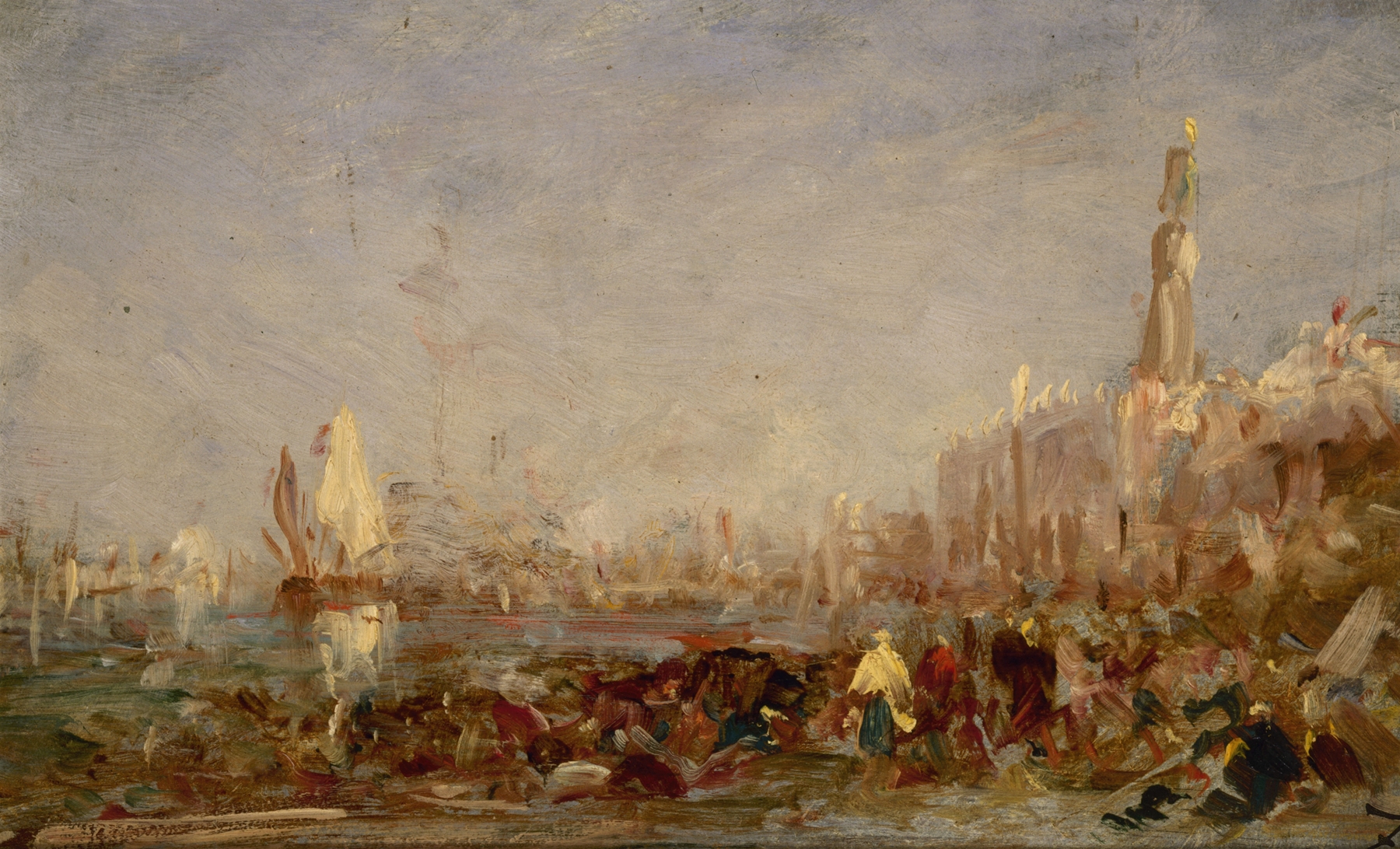
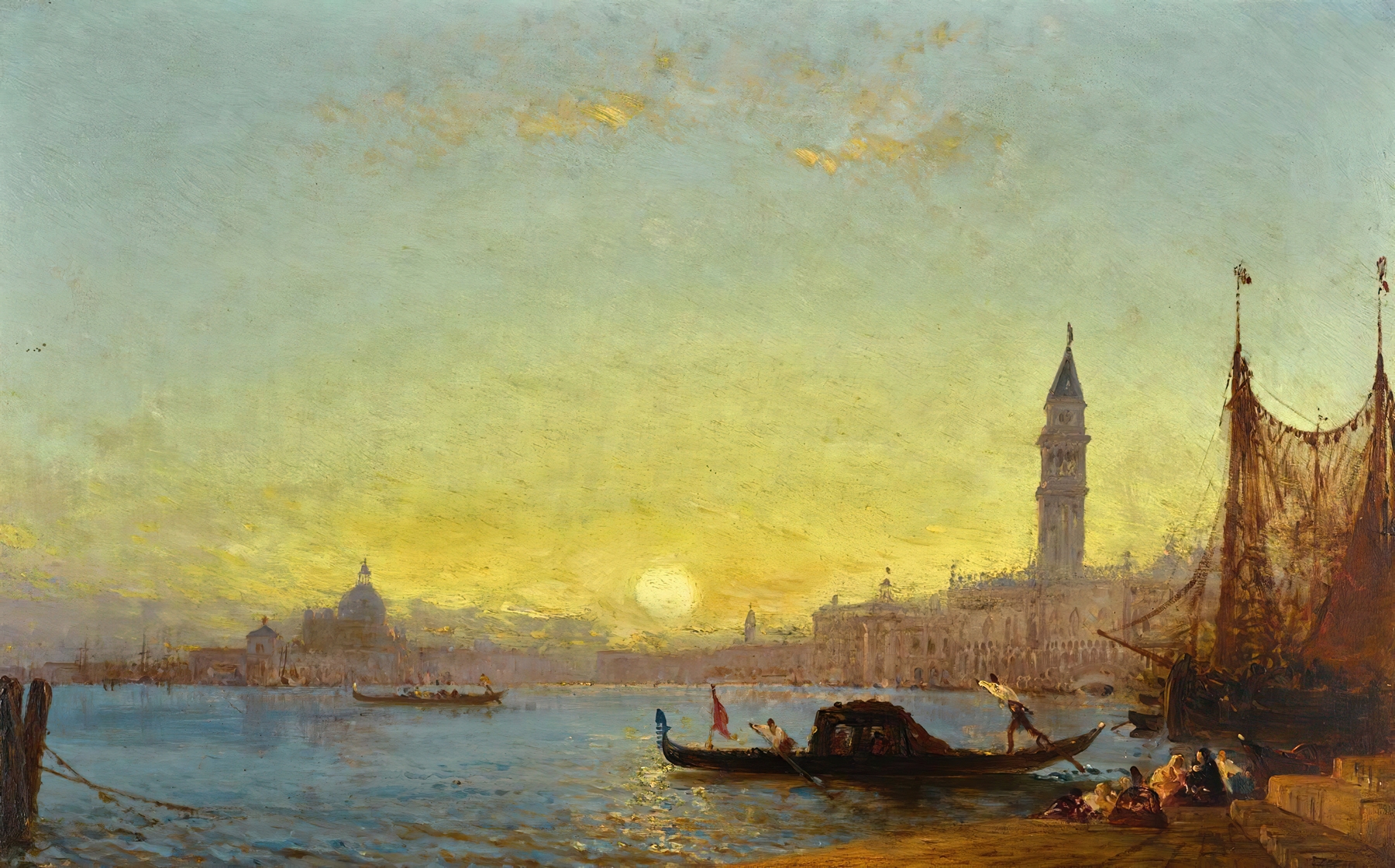
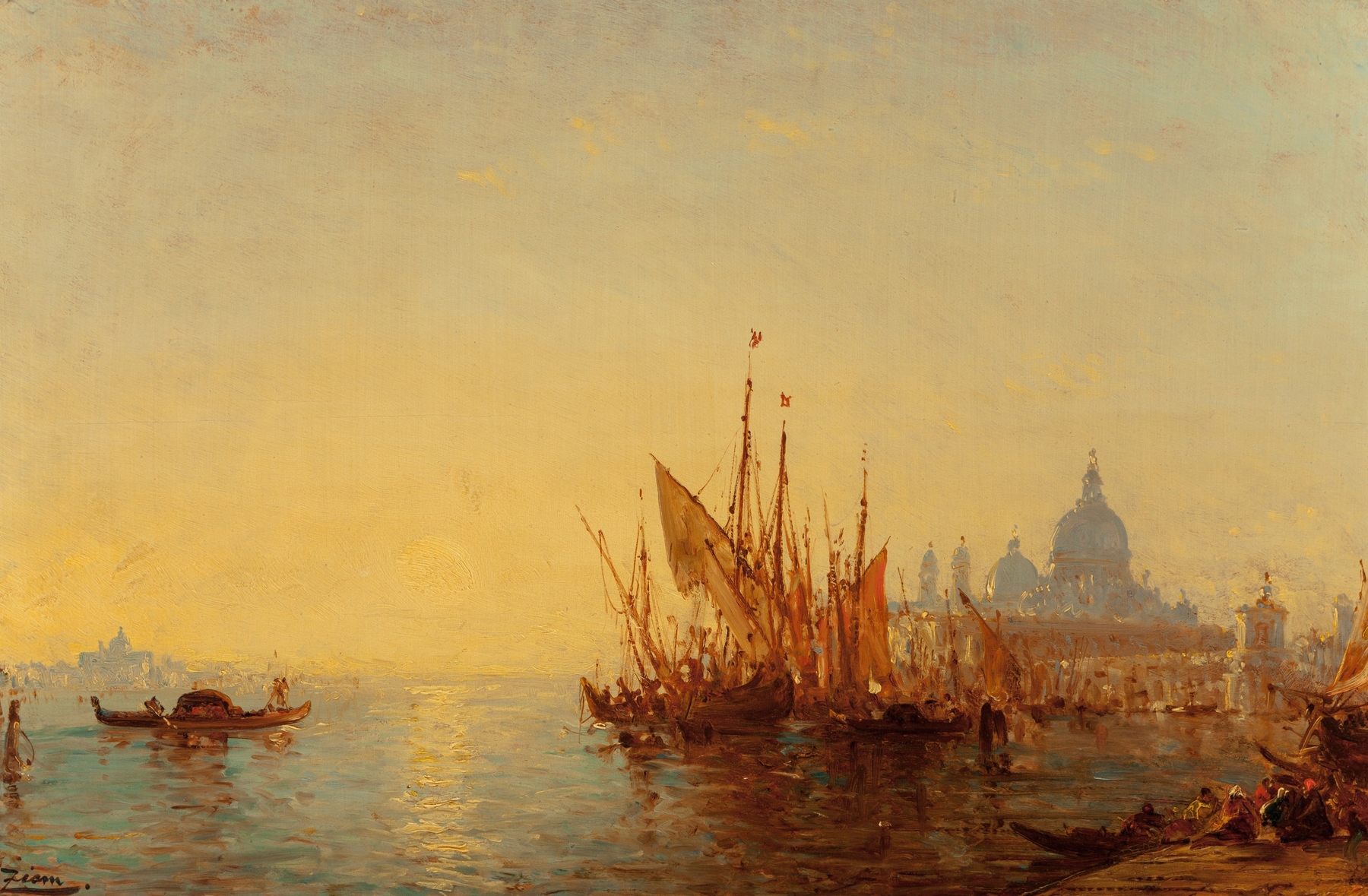
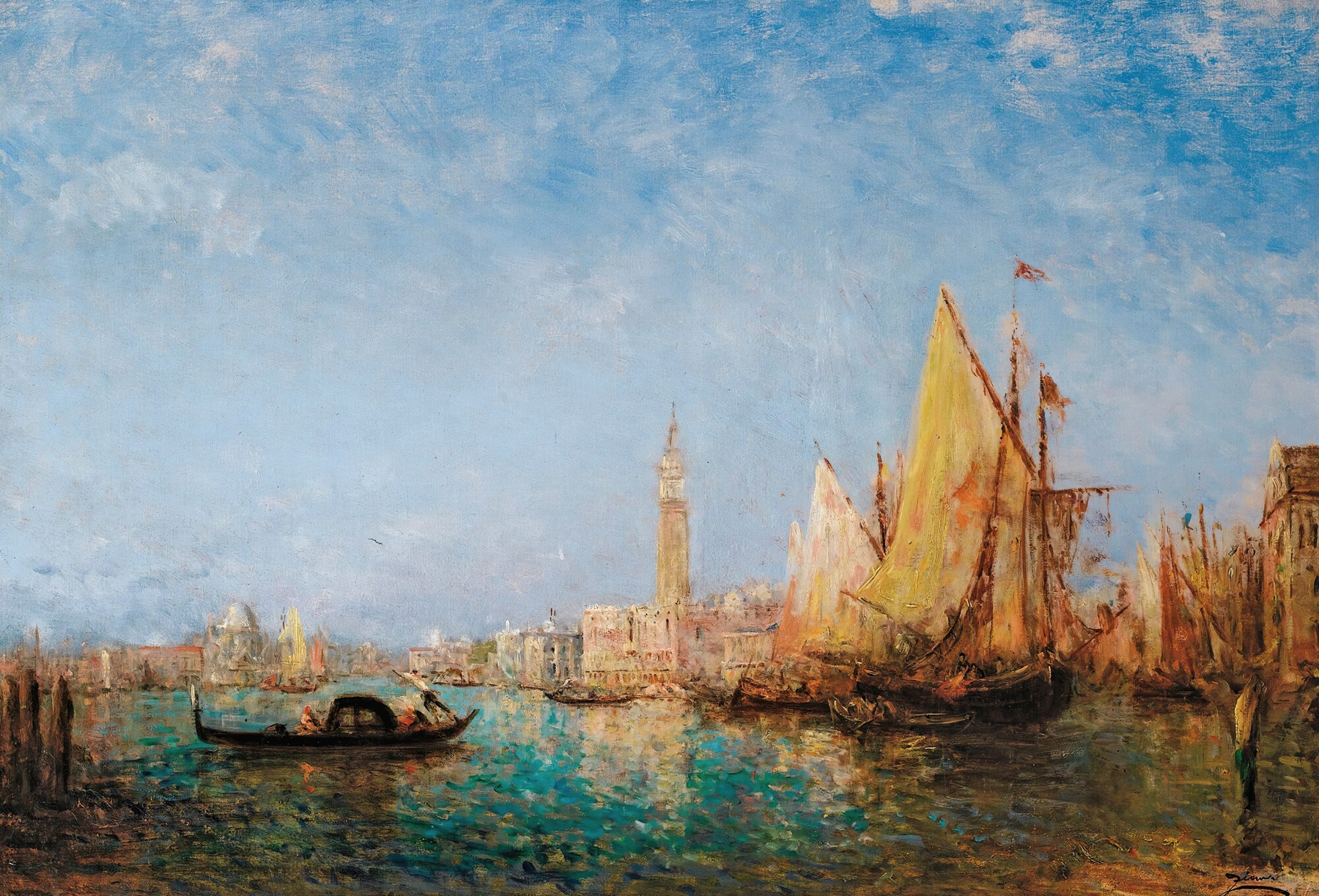
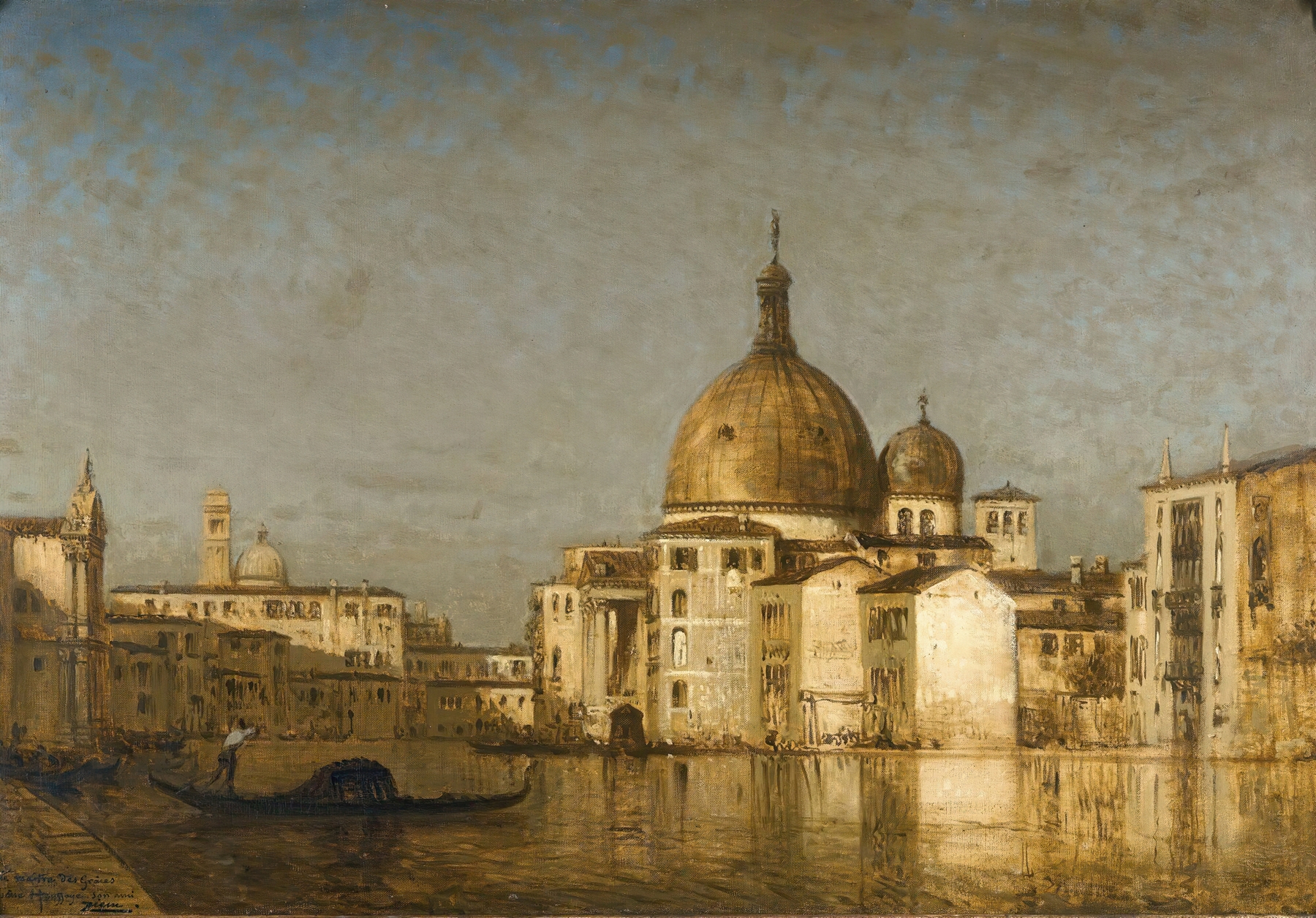
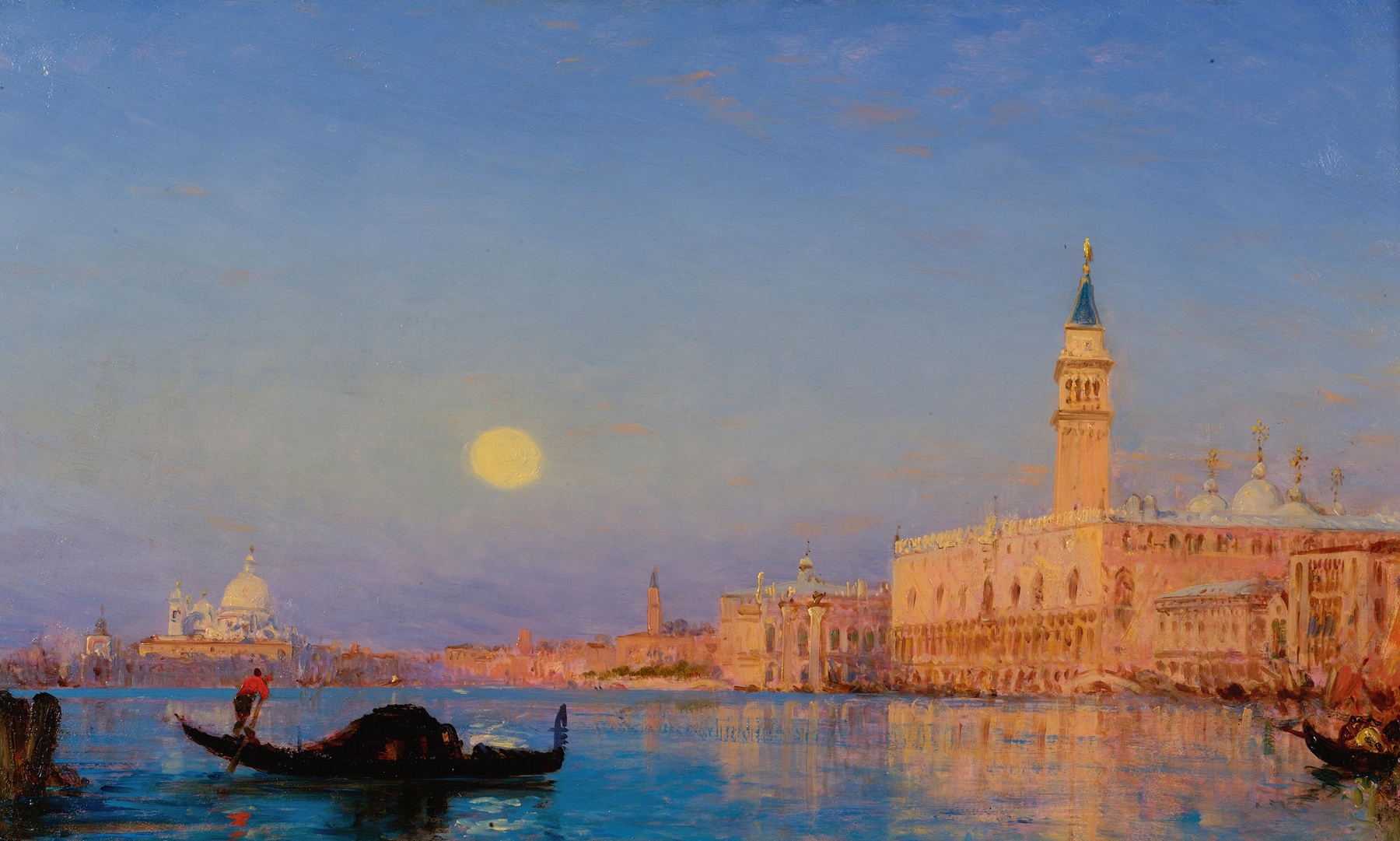
“To paint is to remember what time wants us to forget.” In every brushstroke lies a legacy, a whisper of moments once lived, now immortalized on canvas. Focus on the vibrant hues of blue and green that cradle the Grand Basin, drawing your eyes to the serene waters where gondolas glide effortlessly. Notice the delicate interplay of light reflecting off the surface, each ripple capturing fleeting fragments of Venetian architecture, as if nature itself is taking a breath to savor the scene. The composition is masterful—gondoliers poised like figures in a harmonious ballet, their silhouettes contrasting against the luminous backdrop, inviting you to pause and soak in the tranquility of this iconic city.
Yet beneath this tranquil surface, a deeper narrative unfolds. The gondolas represent not just a mode of transport but also the weight of history and romance, cradling the stories of countless souls who traversed these waters. The soft light illuminating the structures hints at the ephemeral nature of beauty and the inevitable passage of time, urging viewers to reflect on what remains and what is lost. Each detail, from the weathered walls to the gentle waves, speaks of a coexistence between the eternal and the fleeting.
Félix Ziem painted this evocative scene during a time when the art world was embracing the Romantic movement, possibly in the late 19th century while living in Paris. His fascination with Venice, a city steeped in history, mirrored his own desire to capture transient beauty, as he navigated the artistic dialogue of his era. At this moment, Ziem was not only creating art but also weaving his own legacy into the fabric of the city’s enduring charm.