Harvesters in Landscape in Sussex — History & Analysis
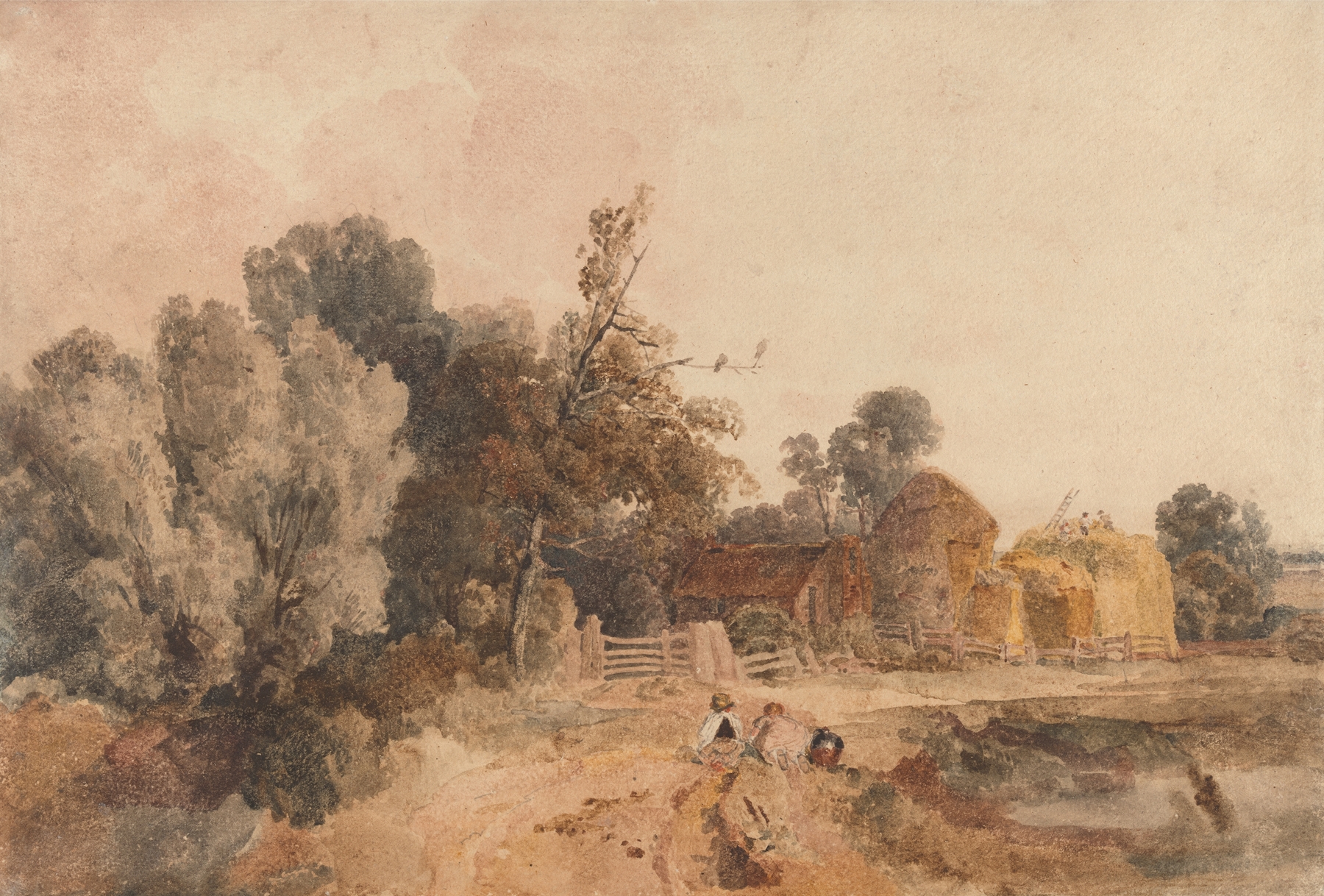
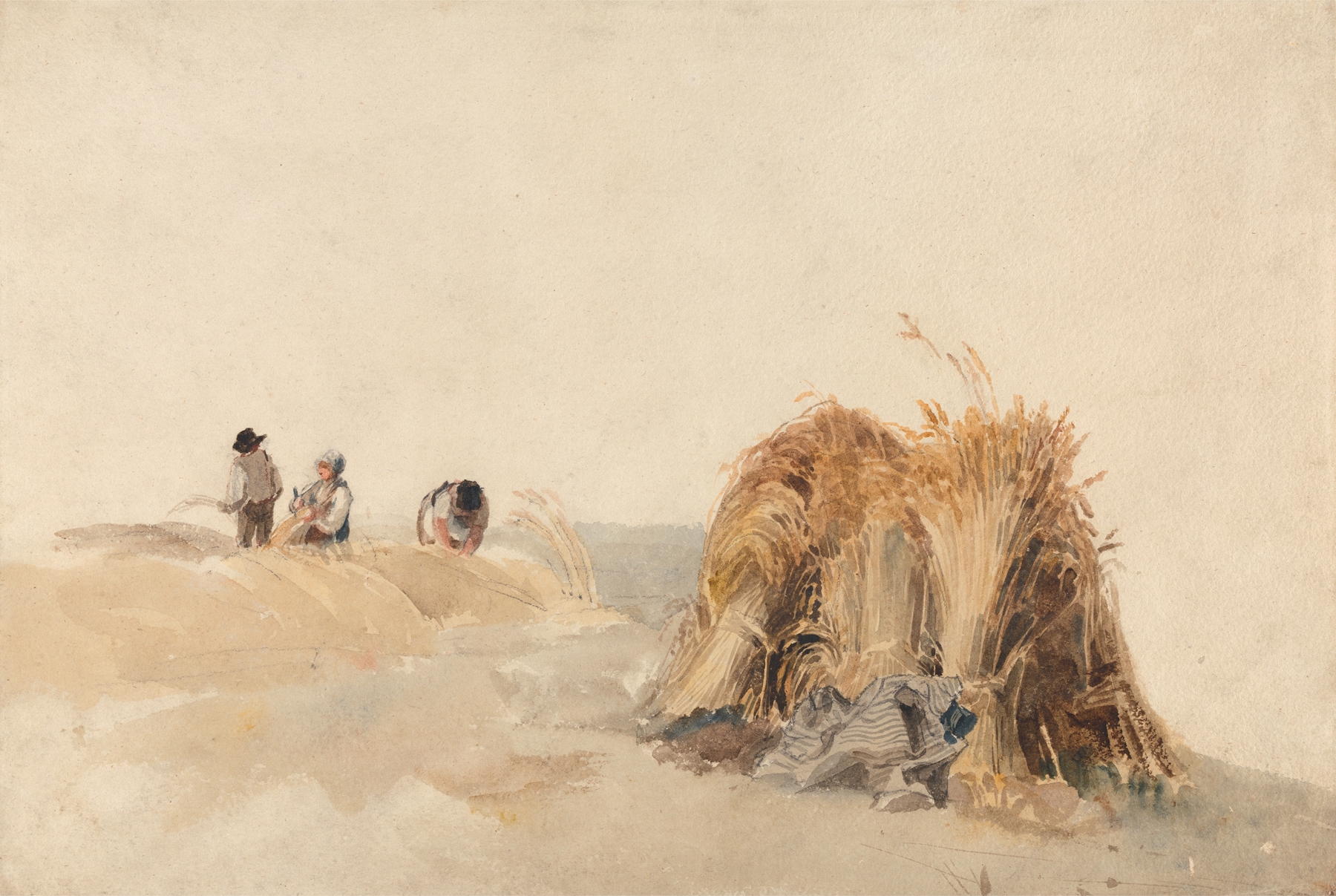
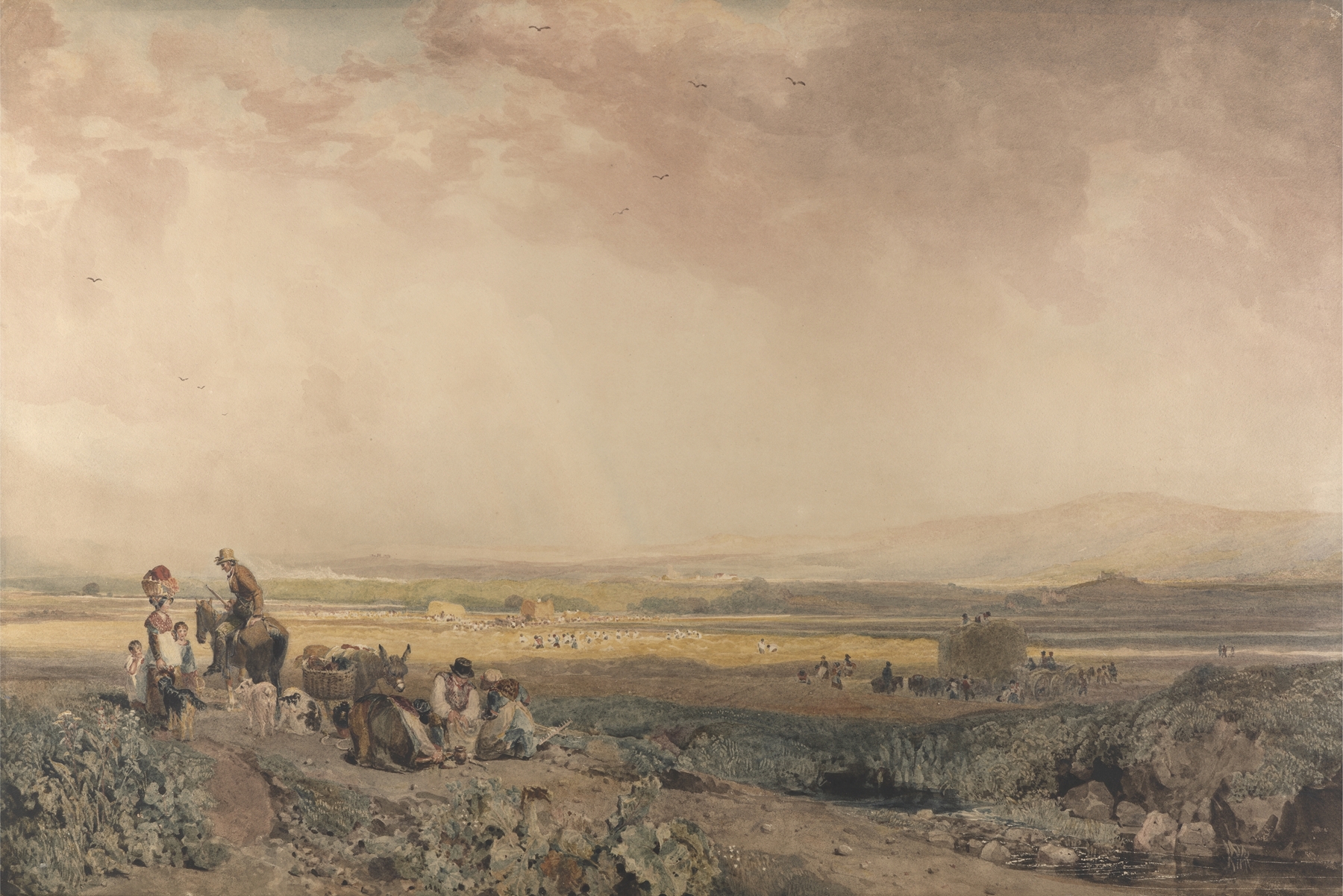
Can beauty exist without sorrow? In Harvesters in Landscape in Sussex, vibrant hues of green and gold resonate with the warmth of late summer, yet carry an undercurrent of the toil that permeates the harvest season. Look to the foreground where the laborers bend over, their figures interspersed amongst the golden wheat. Notice how the golden stalks catch the sunlight, creating a shimmering effect that contrasts with the deep greens of the distant hills.
The brushwork is loose yet deliberate, imbuing the scene with a sense of movement and life as if the laborers are caught in a rhythmic dance with nature. The color palette breathes warmth, yet there’s a subtle play of shadows that hints at the hard work behind this picturesque façade. Delve deeper into the expressions of the harvesters, where fatigue and determination etch lines upon their faces. The juxtaposition of their humble toil against the expansive, idyllic landscape speaks to the larger narrative of human perseverance against the backdrop of nature’s beauty.
The bright sky, although radiant, casts shadows that suggest the fleeting nature of this bounteous moment, a reminder that every harvest carries both promise and the weight of inevitable loss. In 1820, Peter DeWint painted this scene during a time of personal and artistic transition, as he was establishing his reputation as a leading landscape artist in England. This period saw a burgeoning interest in capturing rural scenes, reflective of the Romantic movement that emphasized the beauty of nature and the human experience within it. DeWint's work not only showcases the picturesque English countryside but also mirrors the socio-economic changes rippling through society at that time.