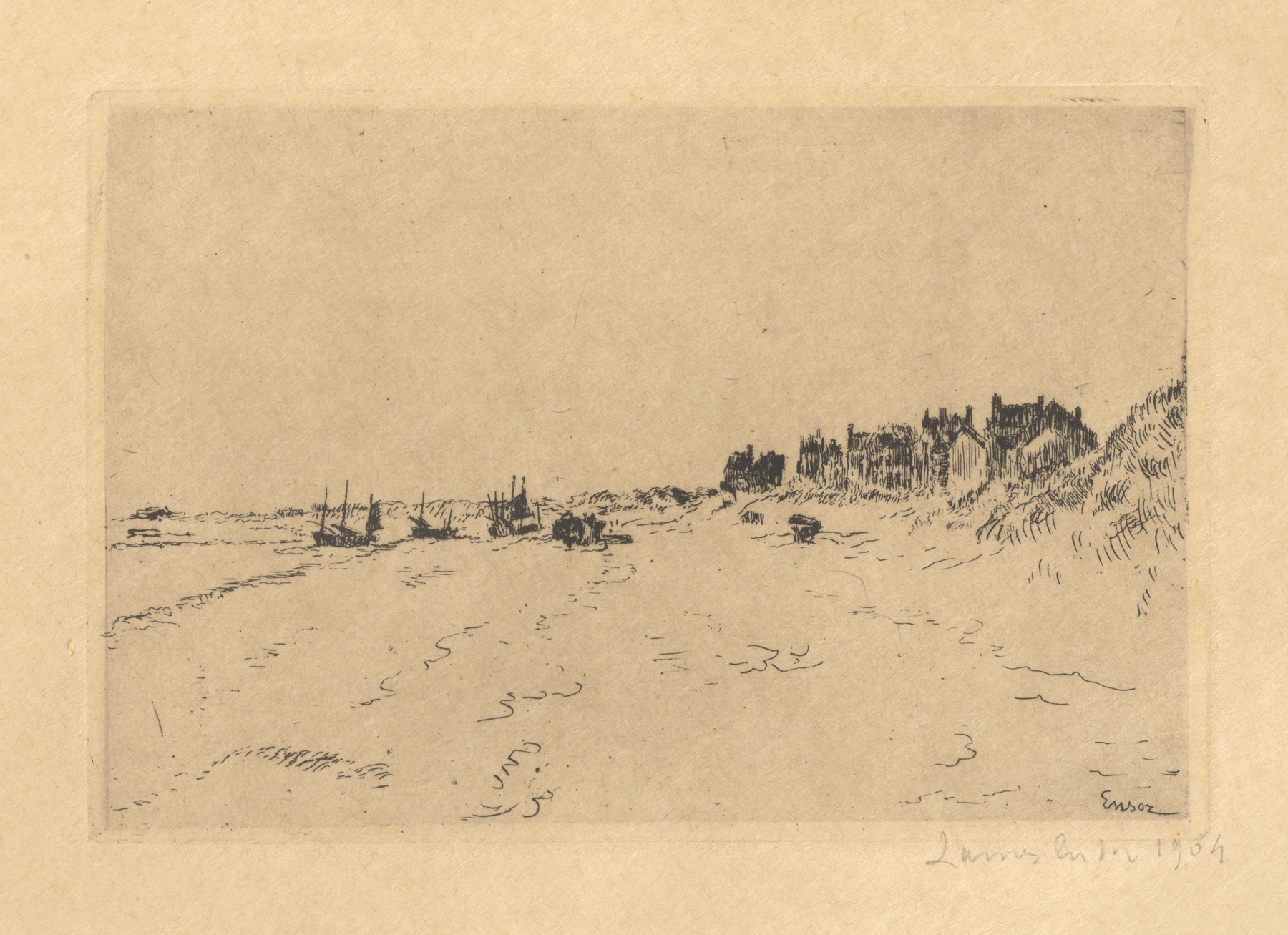
Where does light end, and longing begin? In the interplay of shadow and illumination, one finds the essence of existence, a delicate balance that James Ensor captures with masterful precision in *Het strand van De Panne*. Look to the left at the figures dotting the sandy expanse, their forms shrouded in the soft glow of a fading sun. The skillful application of light creates a shimmering horizon, enticing the viewer to follow the gentle undulations of the shoreline. Notice the contrast between the sunlit areas and the deeper shades beneath the parasols, where the shadows evoke a sense of intimacy and solitude amid the gathering crowd. The palette, dominated by warm browns and muted golds, suggests a moment suspended in time, evoking both nostalgia and tranquility. Beneath the surface, layers of emotional tension emerge. The juxtaposition of the sun-drenched beach with the obscured figures hints at the isolation that can occur in even the most crowded places. The shadows cast by both nature and humanity underscore the longing for connection, suggesting that while the light draws us in, there remains an inherent solitude in the human experience. Each figure, lost in their thought or conversation, mirrors the viewer’s own pursuit of solace, leaving questions about the depth of our interactions and the shadows we carry. In 1904, when *Het strand van De Panne* was painted, Ensor was living in Ostend, Belgium, amidst a vibrant art scene marked by post-impressionism and burgeoning modernism. His life was intertwined with personal struggles and the evolving landscapes of European art, pushing him to explore themes of identity and human emotion. This piece reflects his ongoing journey, capturing the essence of a moment where light and shadow coalesce into profound expressions of the human condition.