The Music in the rue de Flandre, Ostend — History & Analysis
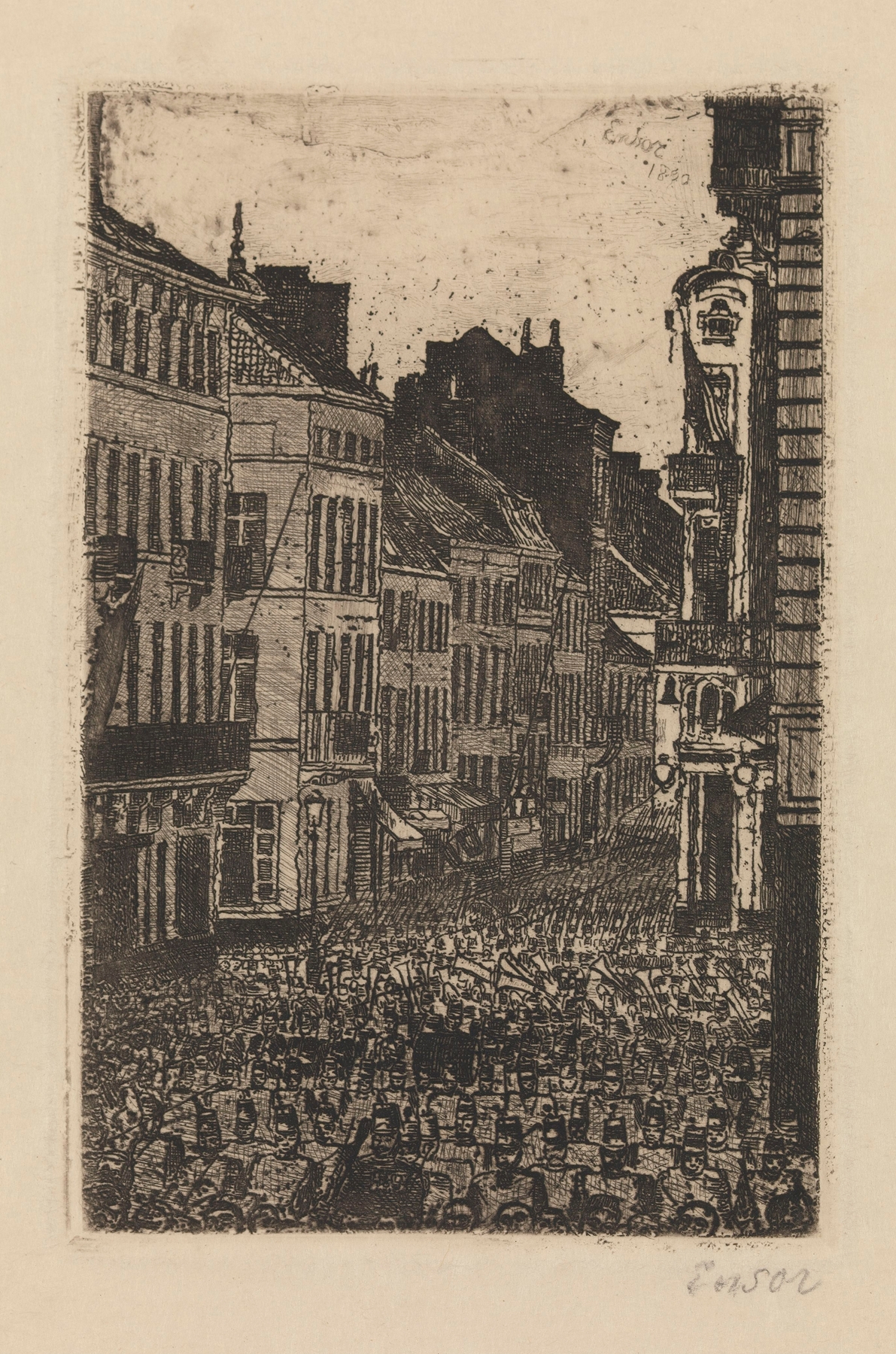
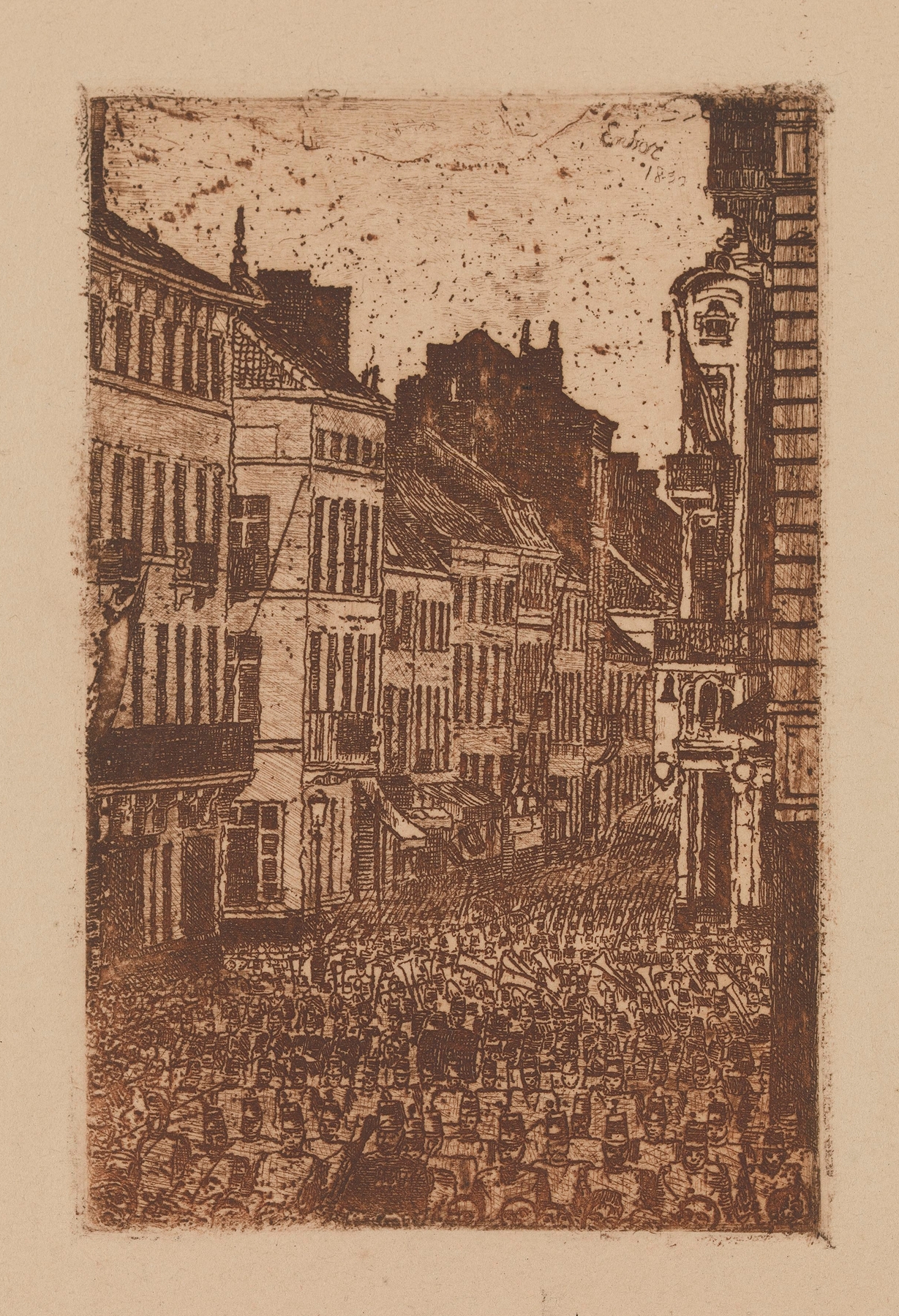
Can beauty exist without sorrow? In the vibrant chaos of life, it often intertwines, revealing the fragility of joy amid the shadows of loss. Look to the left at the figures, animated in their merriment, their masks a curious blend of glee and tragedy. The bold, swirling strokes of color draw the eye across the canvas, while the cacophony of sounds—the unseen music—almost resonates in the air. Notice how the sunlight spills through the scene, illuminating the festive atmosphere while casting darker corners, hinting at the underlying melancholy that lingers beyond the celebration. The bright hues clash and harmonize, reflecting the contradictory nature of human experience. Each masked figure embodies a duality: joy wrapped in sorrow. The presence of the skeleton in the background—an emblem of mortality—reminds us that laughter often masks grief. This tension between revelry and loss lies at the heart of the piece, suggesting that every celebration carries a whisper of sadness, a reminder of what is transient. In 1890, as *The Music in the rue de Flandre, Ostend* took shape, James Ensor was navigating a tumultuous period in his life. Living in Belgium, he was influenced by the changing tides of the art world, embracing symbolism and exploring the complexities of human emotions through his work. This period also saw a growing interest in the macabre and a fascination with the duality of existence, themes that came to life vividly in this painting.