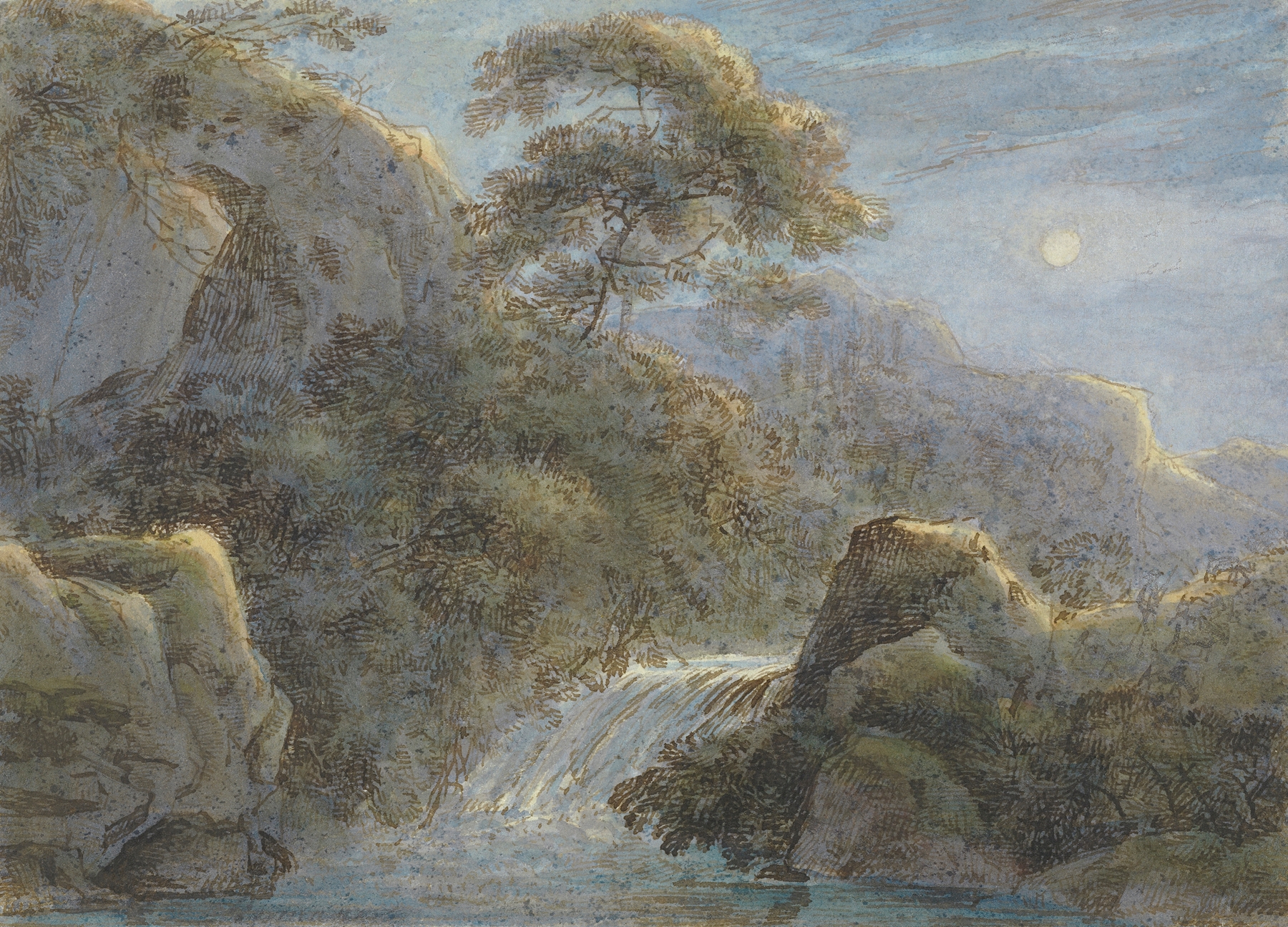
Hilly Landscape with a Stream — History & Analysis
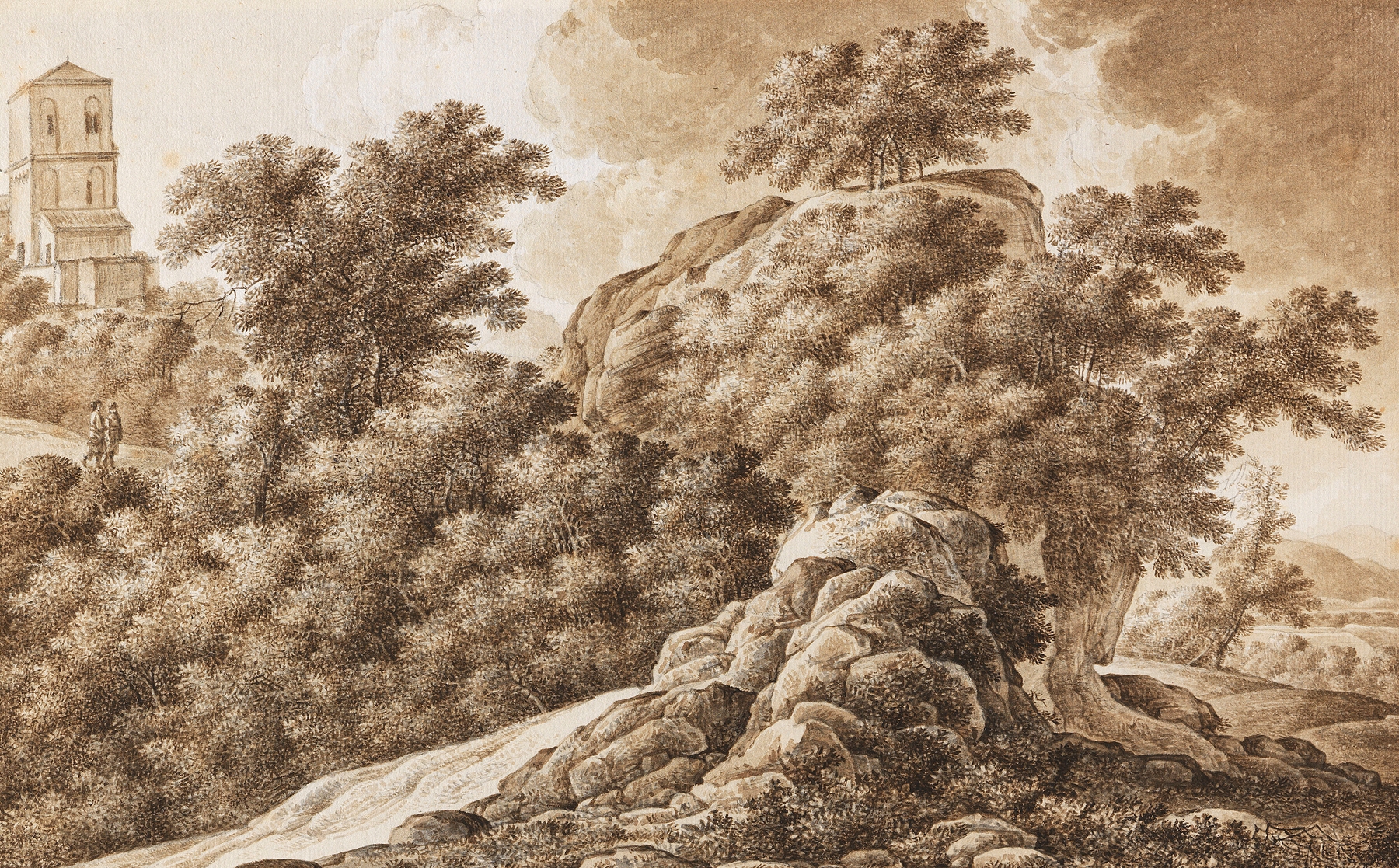
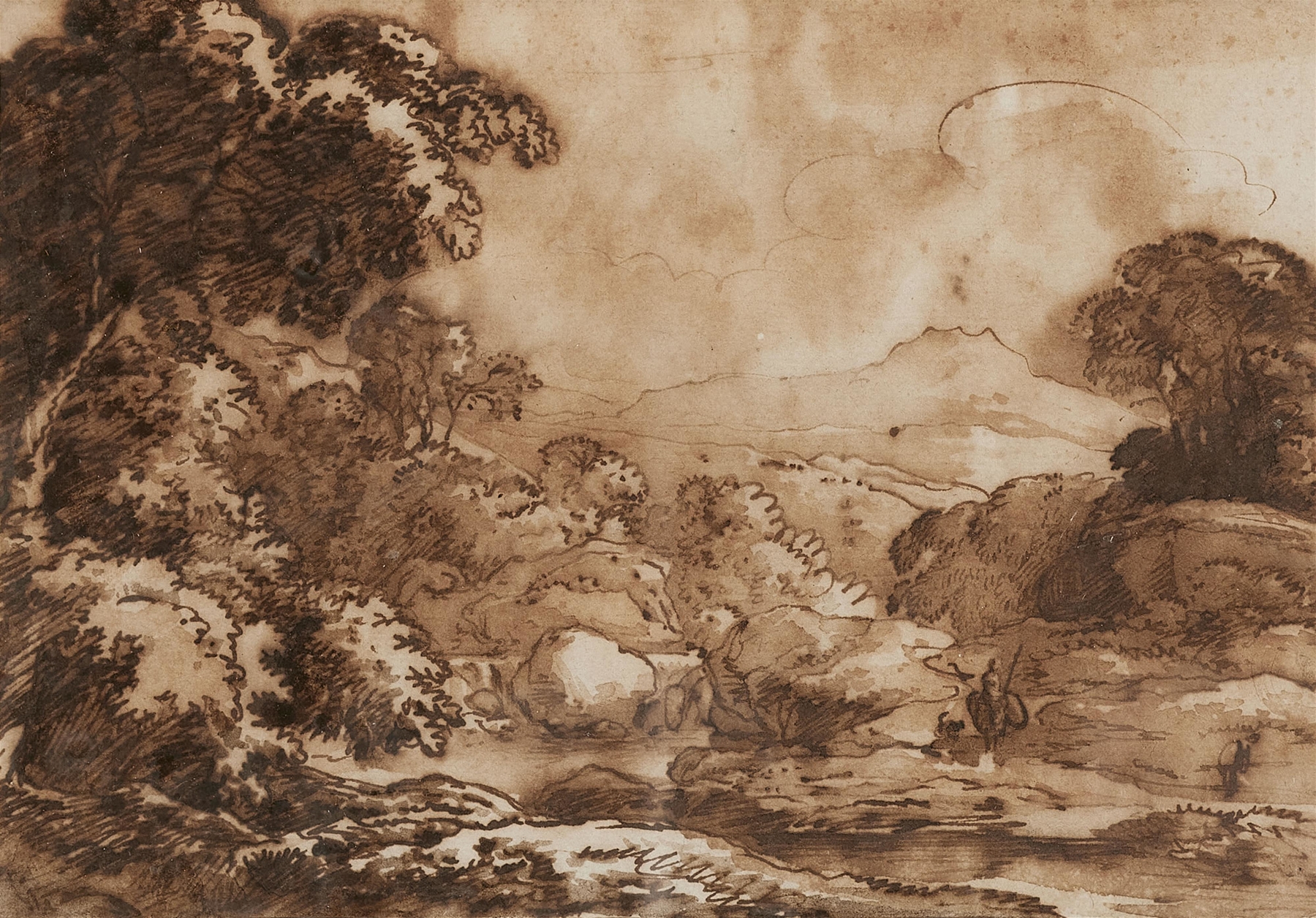
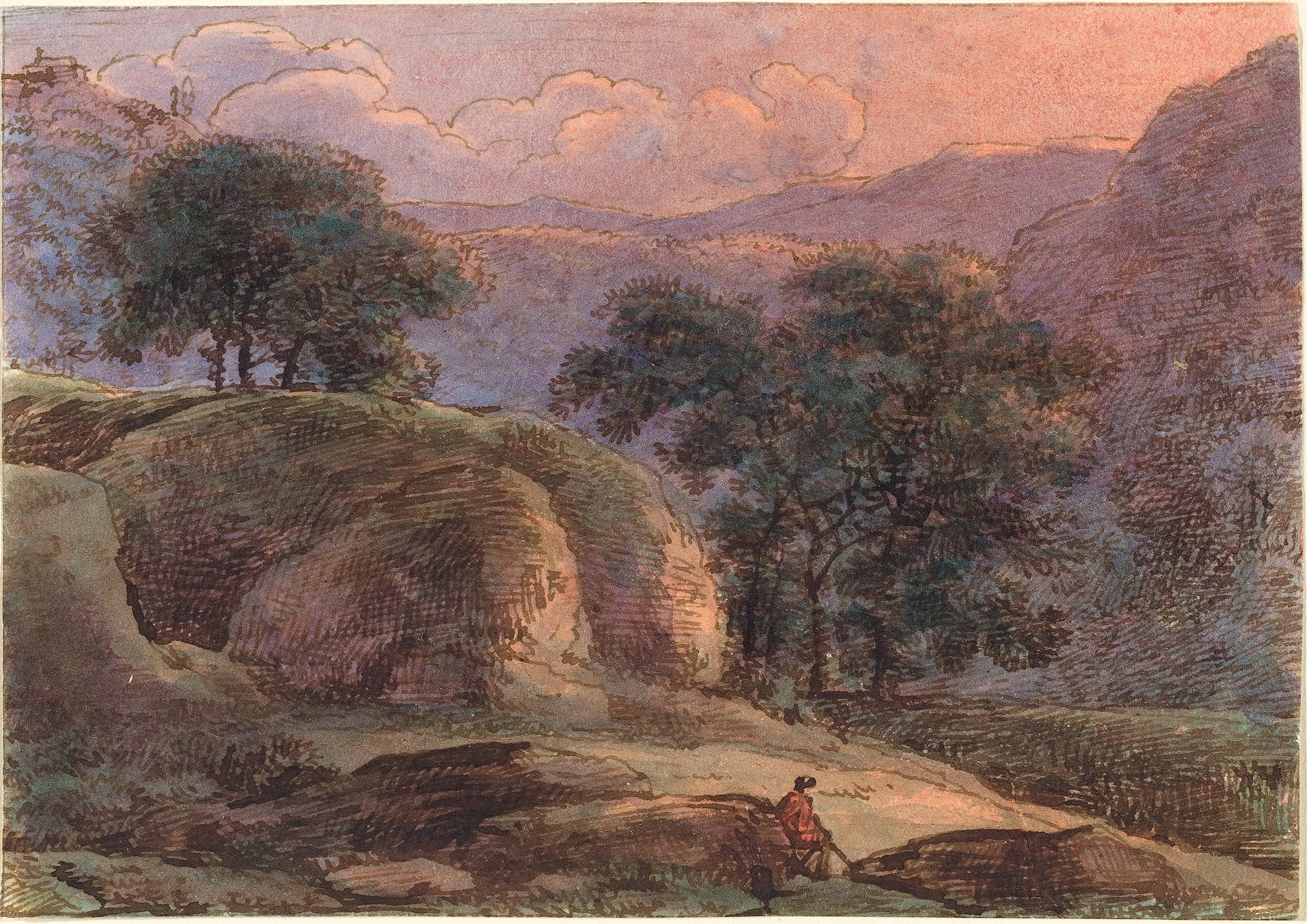
Could a single brushstroke hold eternity? In the quiet interplay of nature and artistry, revelations await those who seek to decipher the sublime. Look to the left at the gentle curve of the stream, where the water’s surface mirrors the soft blue of the sky. Notice how the artist employs delicate brushwork, blending greens and browns to evoke the lush hills rising majestically in the background.
The diagonal lines of the landscape draw the eye, creating a sense of movement that invites viewers to wander through the scene, while dappled light filters through overhanging trees, casting playful shadows upon the earth. This painting resonates with emotional tension, juxtaposing the tranquil serenity of nature against the underlying chaos of existence. The stream flows, emblematic of time's relentless march, yet the stillness of the hills suggests a timelessness that invites introspection. Additionally, the harmony of color—earthy tones interspersed with vibrant greens—reflects a balance between vitality and the calm that nature provides, serving as a reminder of life’s cyclical nature.
Franz Kobell painted Hilly Landscape with a Stream between 1800 and 1805, a period marked by a growing Romantic interest in the natural world. Working primarily in Germany, he found himself amidst a cultural shift that celebrated nature’s beauty and mysteries as a reaction to the Industrial Revolution. This backdrop allowed him to explore themes of revelation and introspection within his landscapes, creating works that resonate with viewers even today.