Holländischer Hafen bei Sturm — History & Analysis
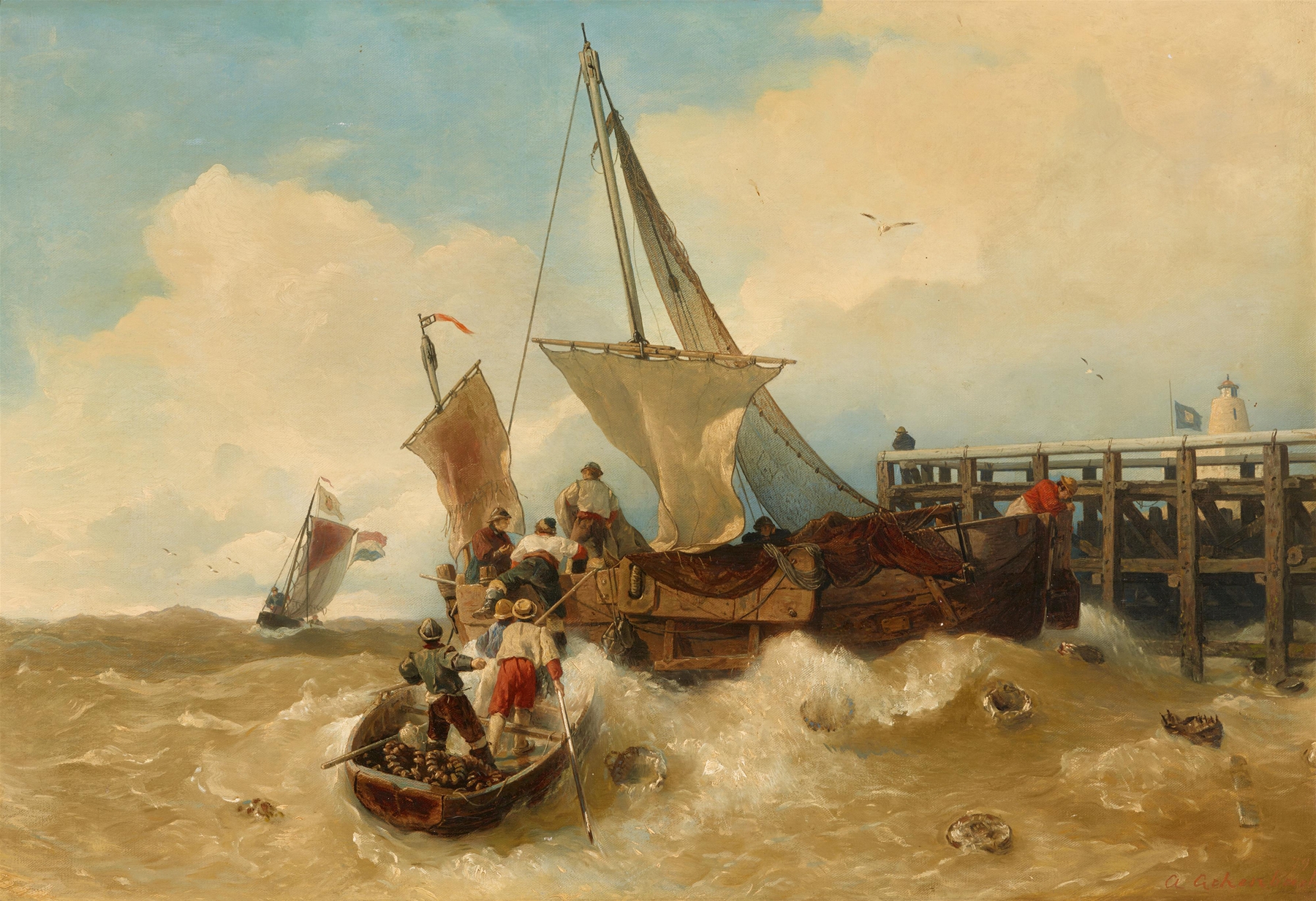
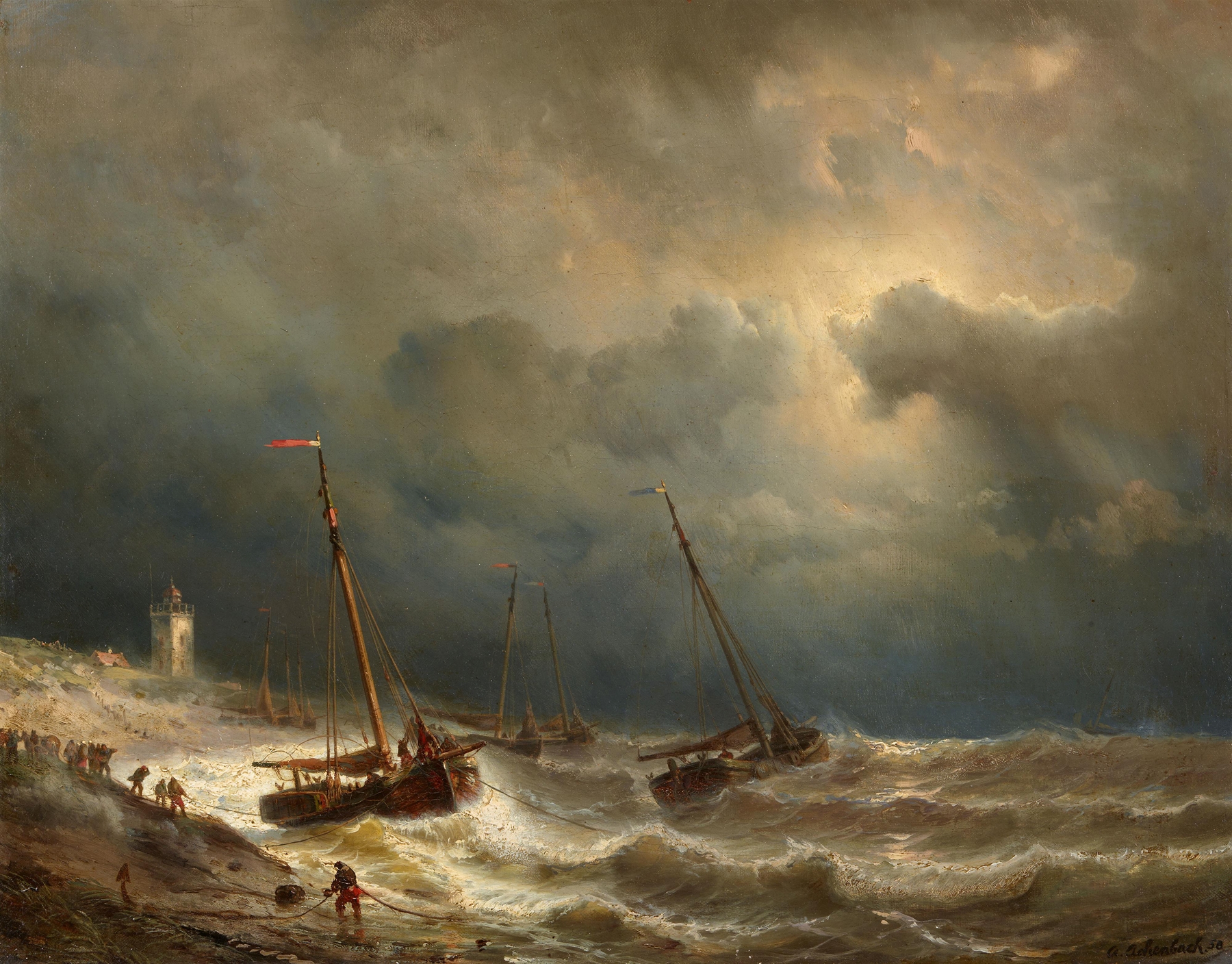
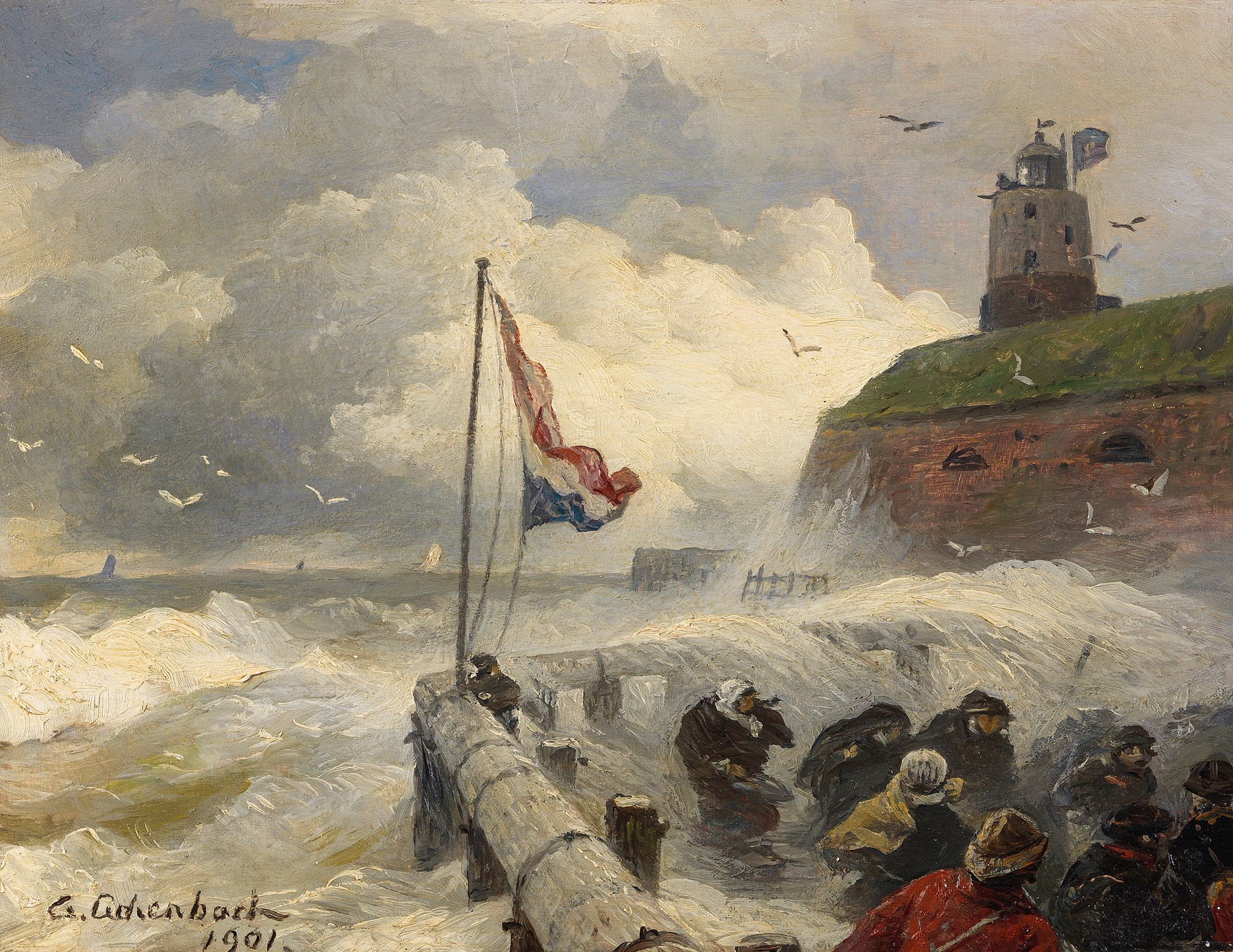
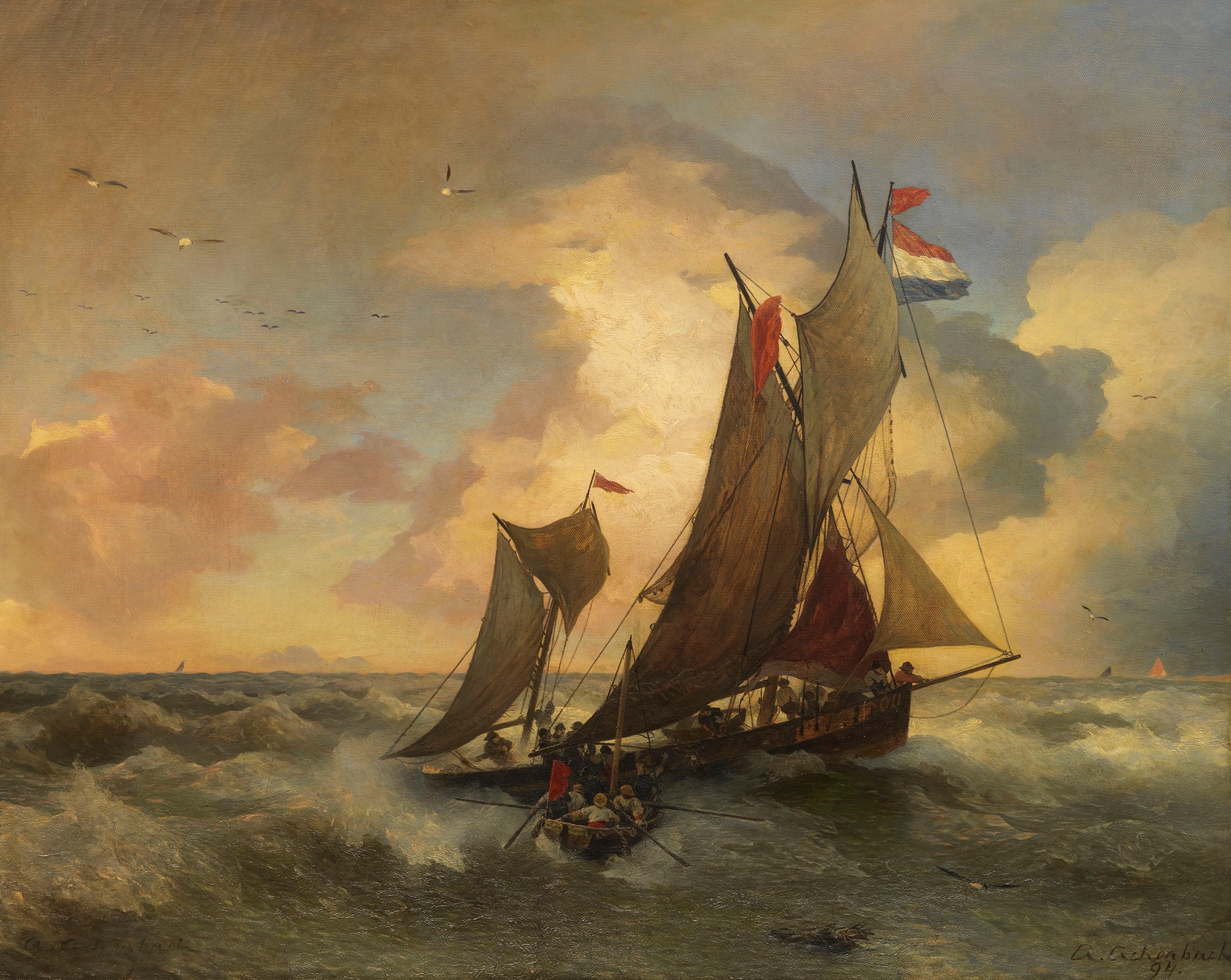
“To paint is to remember what time wants us to forget.” The essence of decay, the ravages of nature, and the ephemeral moments of beauty captured in the tumult of a storm—these themes resonate deeply in the heart of the viewer. Focus first on the dramatic swirling clouds that dominate the upper portion of the canvas, their dark, brooding hues mingling with flashes of white. The chaotic energy of the storm is palpable, drawing your gaze toward the turbulent waters below, where boats writhe against the waves. Notice how the subtle interplay of light and shadow lends depth to the scene, creating a sense of urgency as sunlight intermittently breaks through, illuminating the vessels struggling for stability in the harbor.
Yet, amid this chaos lies a feeling of profound stillness. The decaying docks, worn by time and weather, stand as silent witnesses to both human endeavors and nature’s fury. The contrast between the storm’s violent movement and the stillness of the boats reveals a poignant narrative: life’s fragility amidst the relentless passage of time. Each element in the painting speaks to a larger truth, a reminder of the beauty that exists even in decline, and the inevitable intertwining of creation and destruction.
In 1890, while working on Holländischer Hafen bei Sturm, Andreas Achenbach was deeply influenced by the Romantic movement’s focus on nature’s power and humanity’s place within it. Based in Germany, he was celebrated for his landscape paintings that conveyed both beauty and melancholy. The late 19th century was a time of great change in Europe, with industrialization altering the landscape and society, further prompting artists like Achenbach to reflect on impermanence, evoking both nostalgia and a foreboding sense of decay.