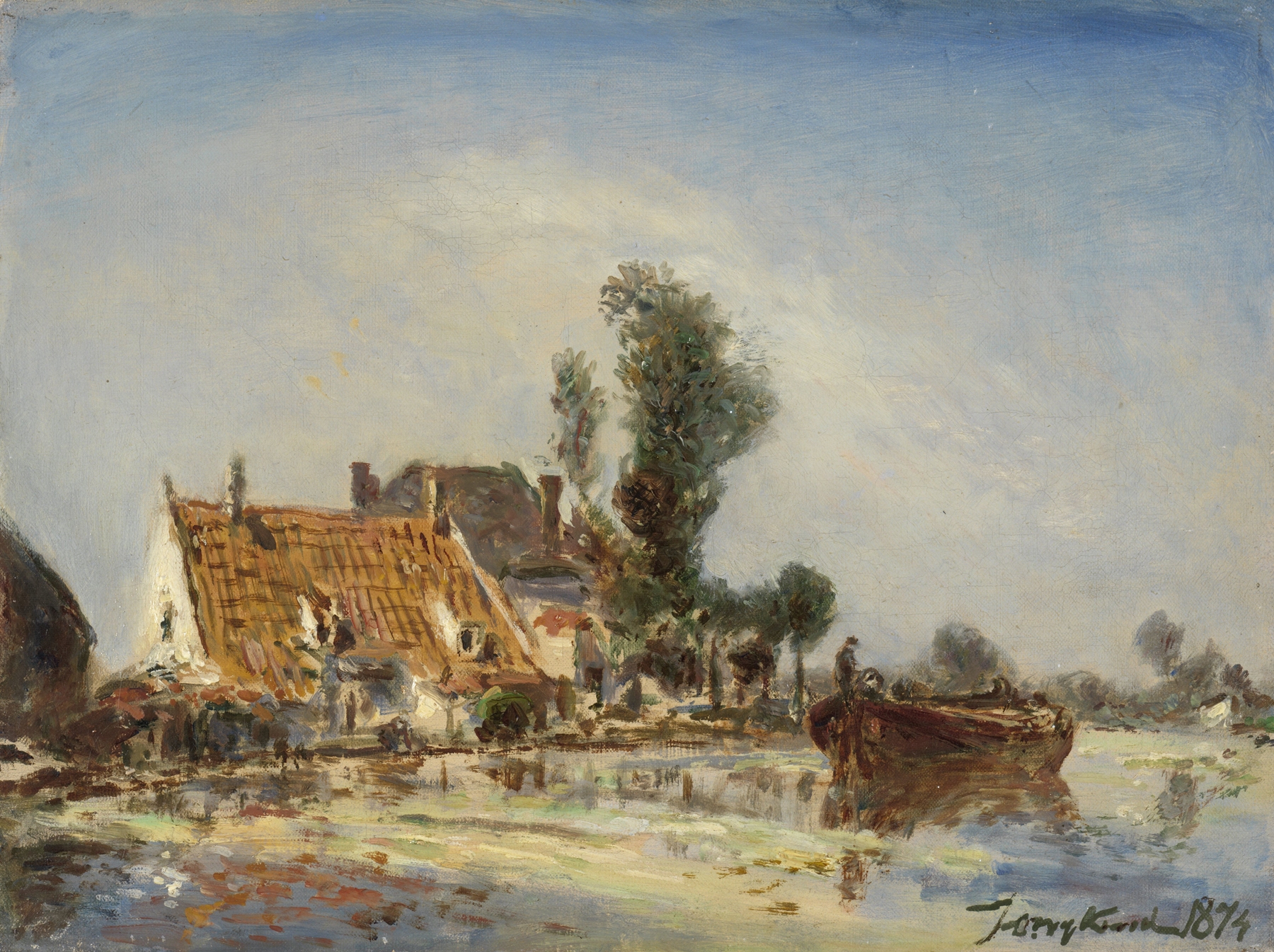
Houses on a Waterway near Crooswijk — History & Analysis
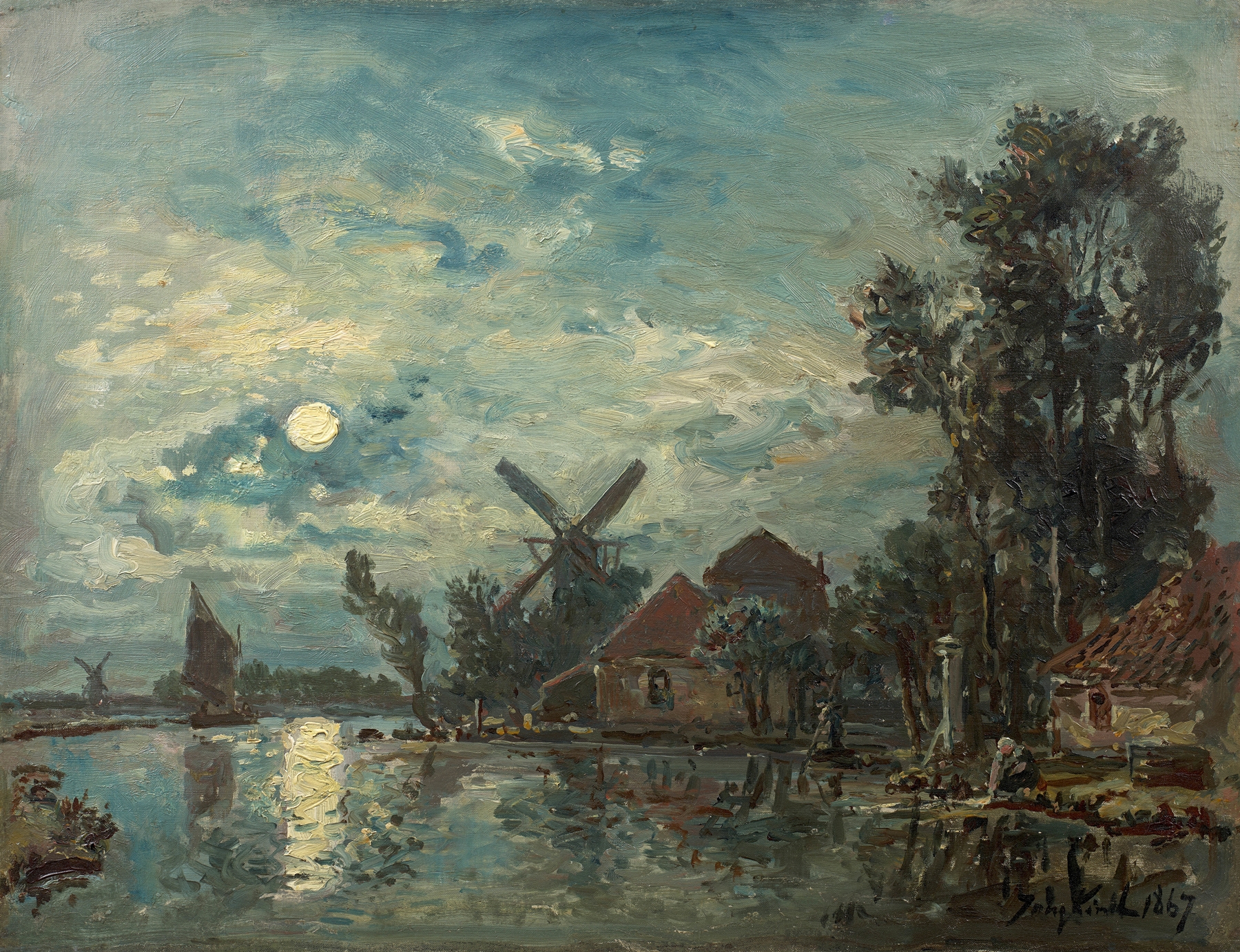
Could beauty survive in a century of chaos? In *Houses on a Waterway near Crooswijk*, we find a delicate balance between tranquility and the currents of an ever-changing world. Look to the left at the gentle curve of the waterway, where soft ripples reflect the muted hues of the sky. The subtle blues and greens blend into one another, evoking a serene atmosphere, while the houses, with their warm earth tones, stand steadfast against the flowing landscape. Notice how the light dances on the water’s surface, creating a shimmering path that draws the viewer's eye deeper into the scene, inviting contemplation and connection. Amidst this calm, there lies an undercurrent of tension. The juxtaposition of the sturdy houses—symbols of stability and home—against the fluidity of the water suggests a sense of fragility in human existence. The clouds above, heavy yet ethereal, hint at change, blending hope with uncertainty. Here, the artist captures not only a picturesque moment but also a reflection on the resilience required to navigate life's unpredictable waters. Created in 1874 while Jongkind resided in France, this work emerged during a time when impressionism was beginning to take shape. The artist, often regarded as a precursor to the movement, sought to convey the immediacy of his surroundings, embracing both nature and humanity in his compositions. In a world marked by rapid industrialization and social upheaval, his brushstrokes echo a longing for connection and beauty, revealing faith in the enduring power of art.