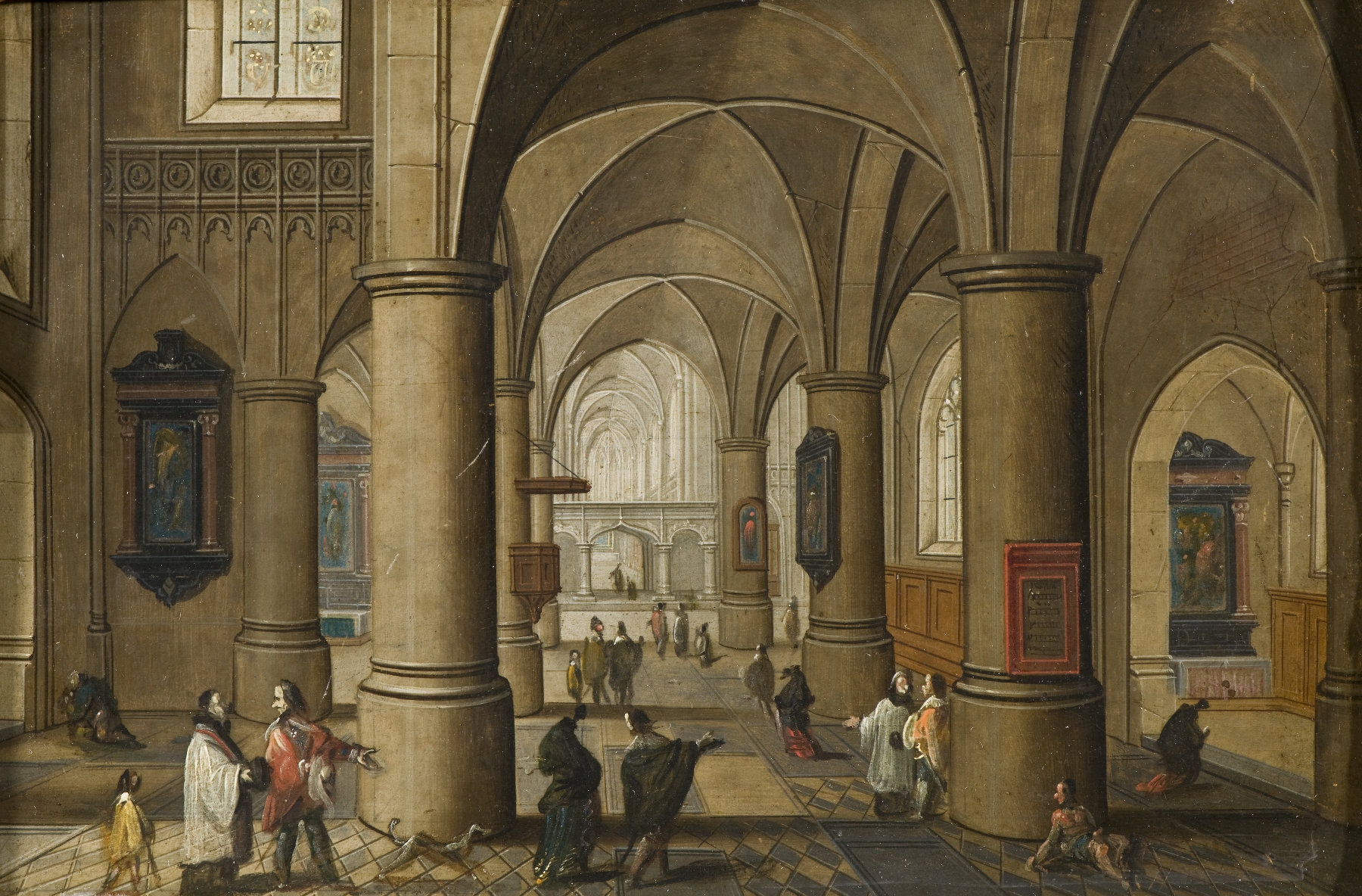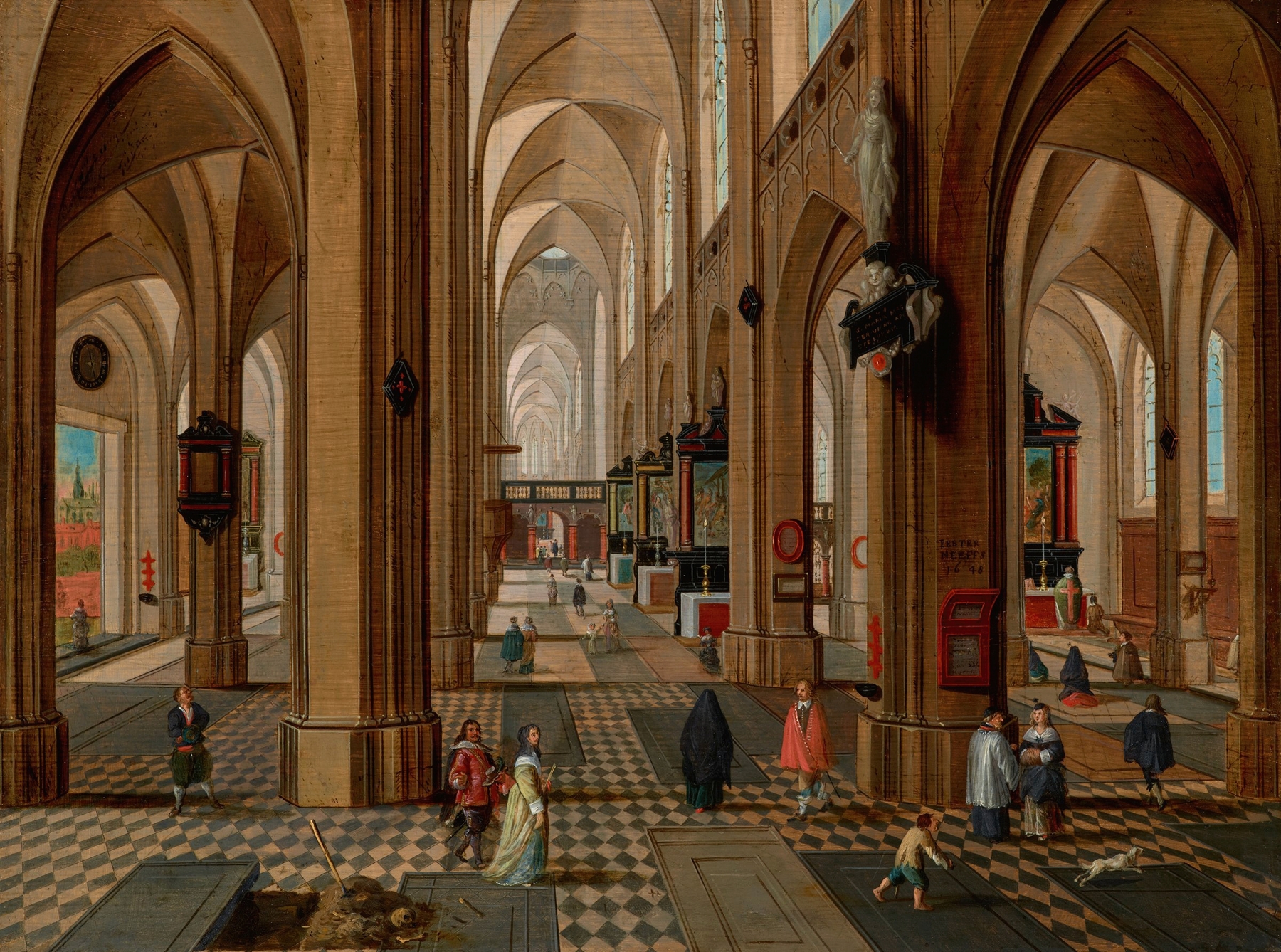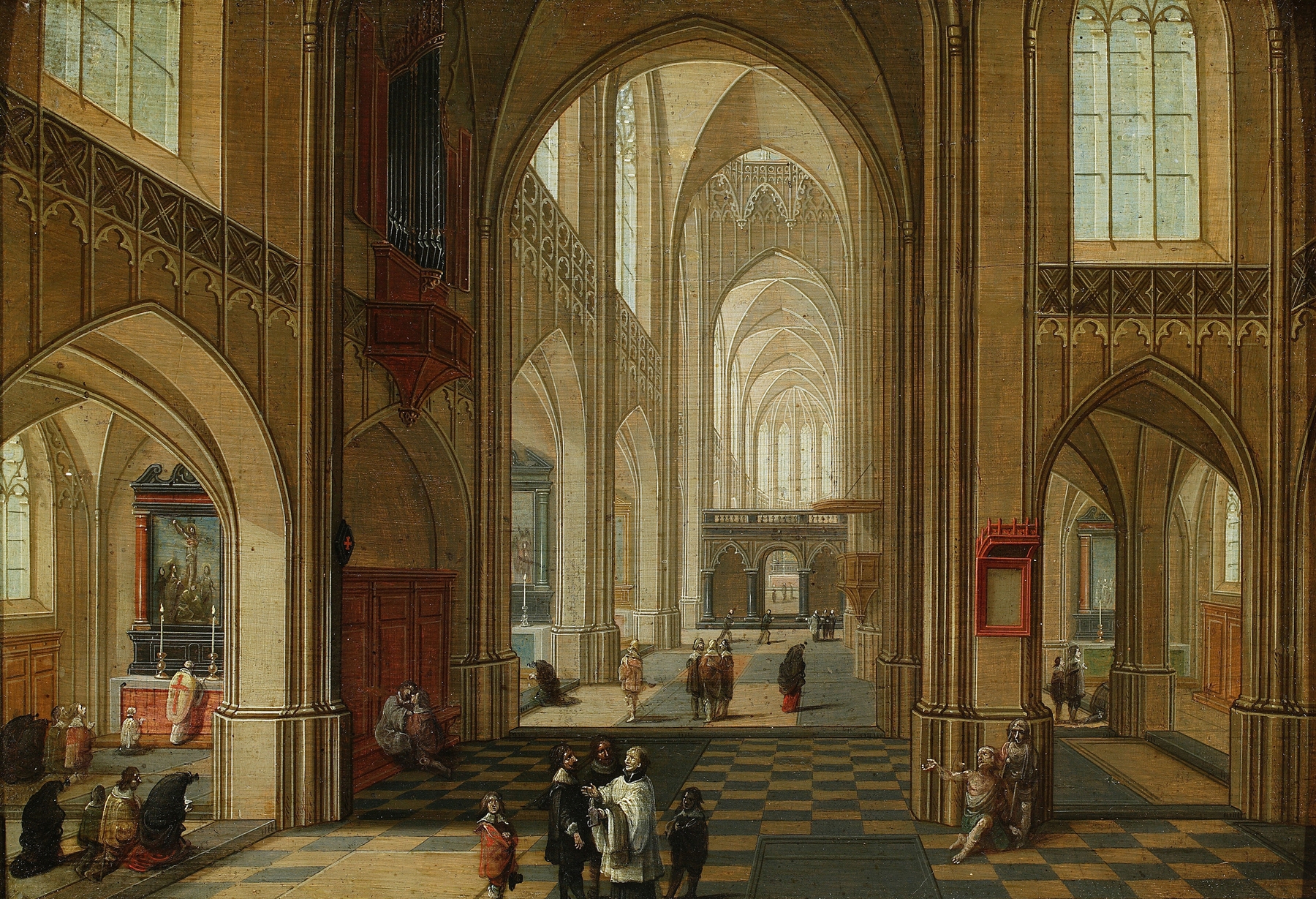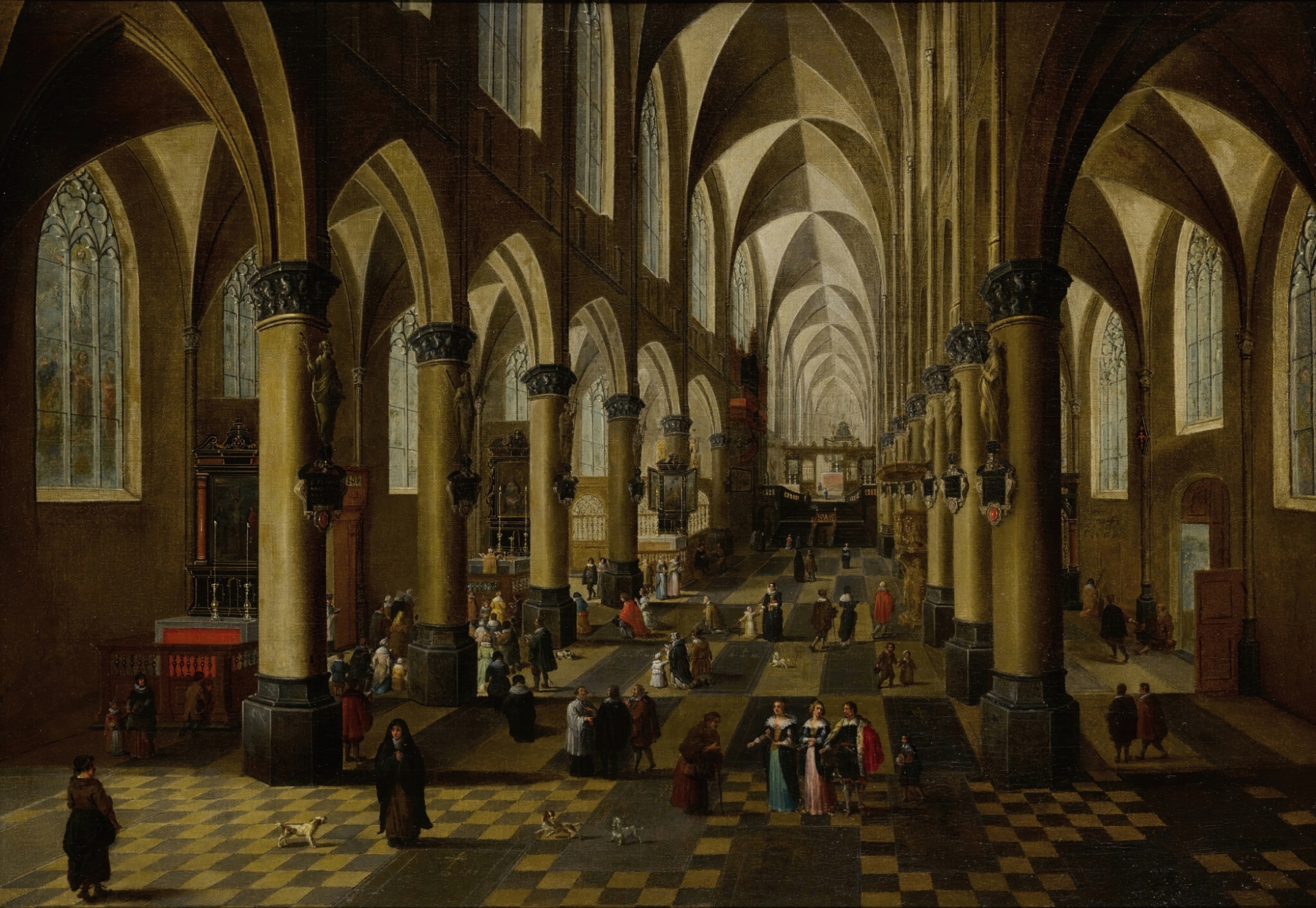
Interior of a Gothic Church by Candlelight — History & Analysis
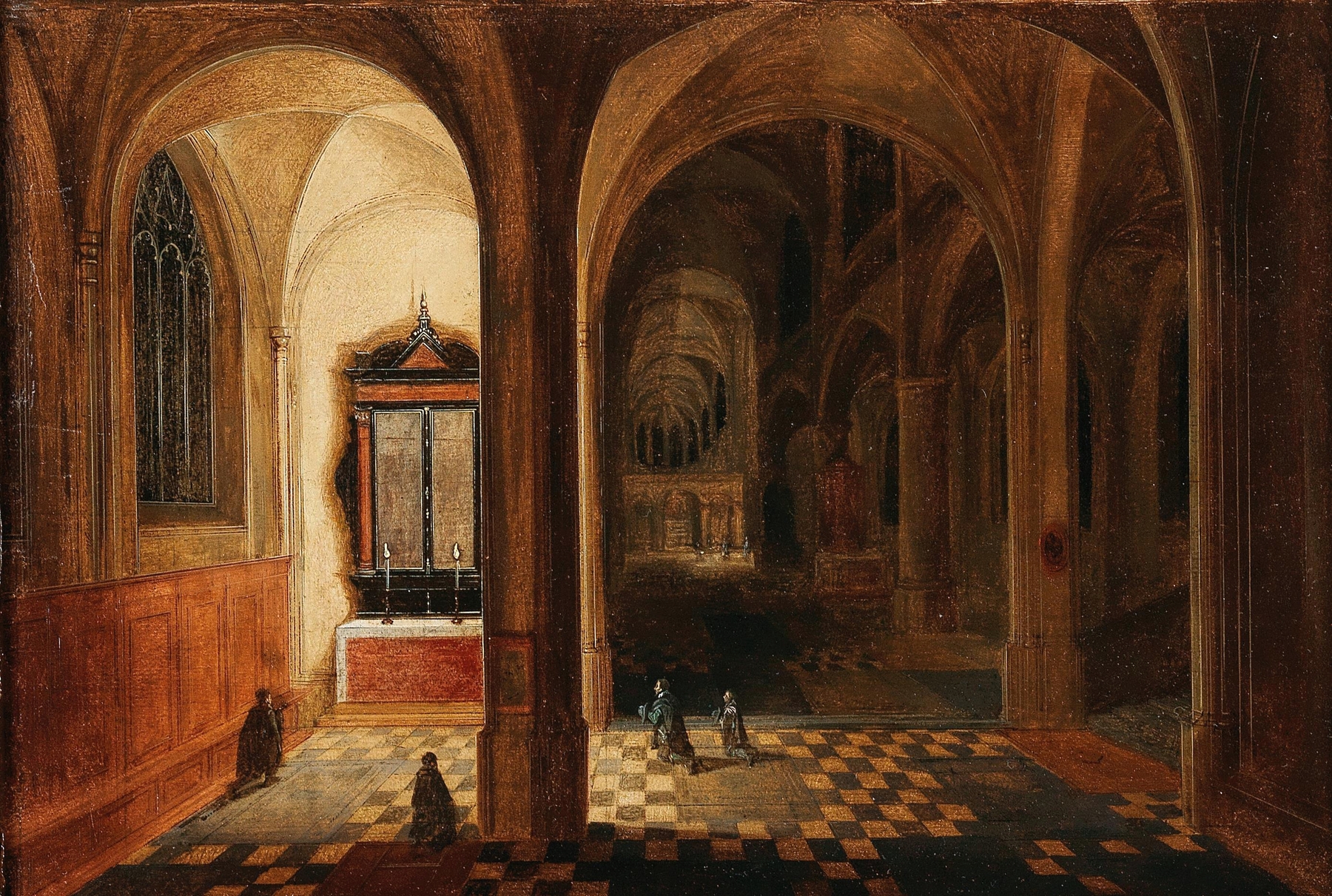
Could a single brushstroke hold eternity? In Interior of a Gothic Church by Candlelight, the delicate interplay of light and shadow invites contemplation, revealing the profound balance between the ephemeral and the eternal. Look to the depth of the canvas, where the towering arches soar toward the heavens, cloaked in a warm, flickering light. Notice how the candlelight dances across the stone walls, casting serene shadows that seem to breathe, almost alive.
The rich, muted palette of deep browns and soft golds creates a sacred atmosphere, enveloping the viewer in a moment of tranquil stillness, while the intricate details of the architecture draw one’s eye deeper into the sanctum. Amidst this serenity, the tension between light and dark reflects the struggle between the divine and the mundane. The flickering candles symbolize hope and faith, illuminating the figures that move like whispers through the nave, suggesting a congregation caught in reverent contemplation. Each brushstroke, meticulously placed, resonates with the idea of balance—between the grandeur of the Gothic style and the intimacy of candlelit devotion, between the silence of the church and the murmurs of prayer.
During the years Pieter Neeffs the younger painted this work, approximately between 1646 and 1652, he was actively engaged in capturing the spiritual essence of interiors, reflecting the Baroque fascination with light. Living in Antwerp, Neeffs emerged as a significant figure in the artistic scene, where the interplay of architecture and illumination was paramount. His works often encapsulated the essence of religious devotion during a time when the church remained central to daily life, merging artistic skill with spiritual reverence.