Italian Landscape with Shepherds at a River — History & Analysis
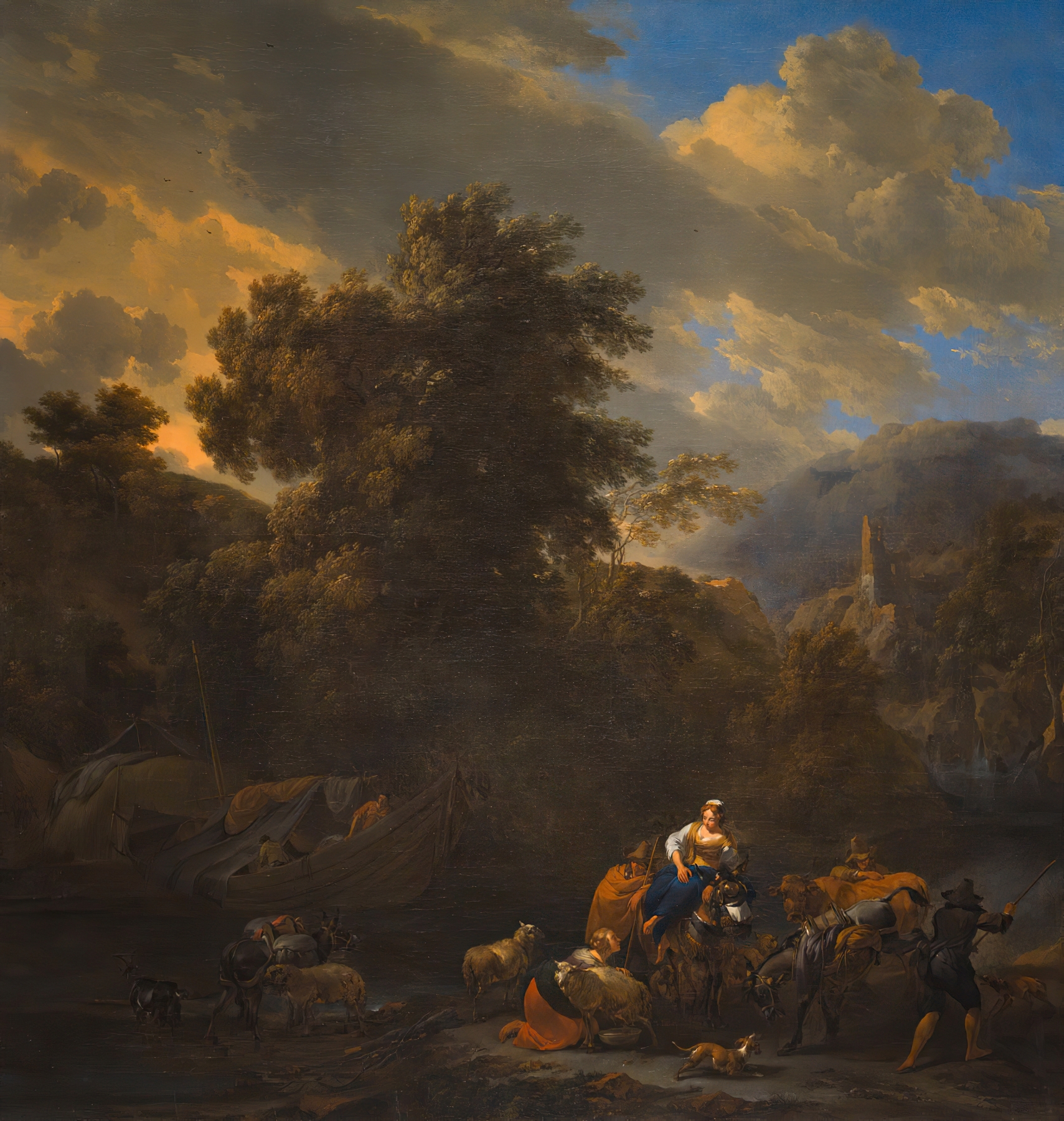
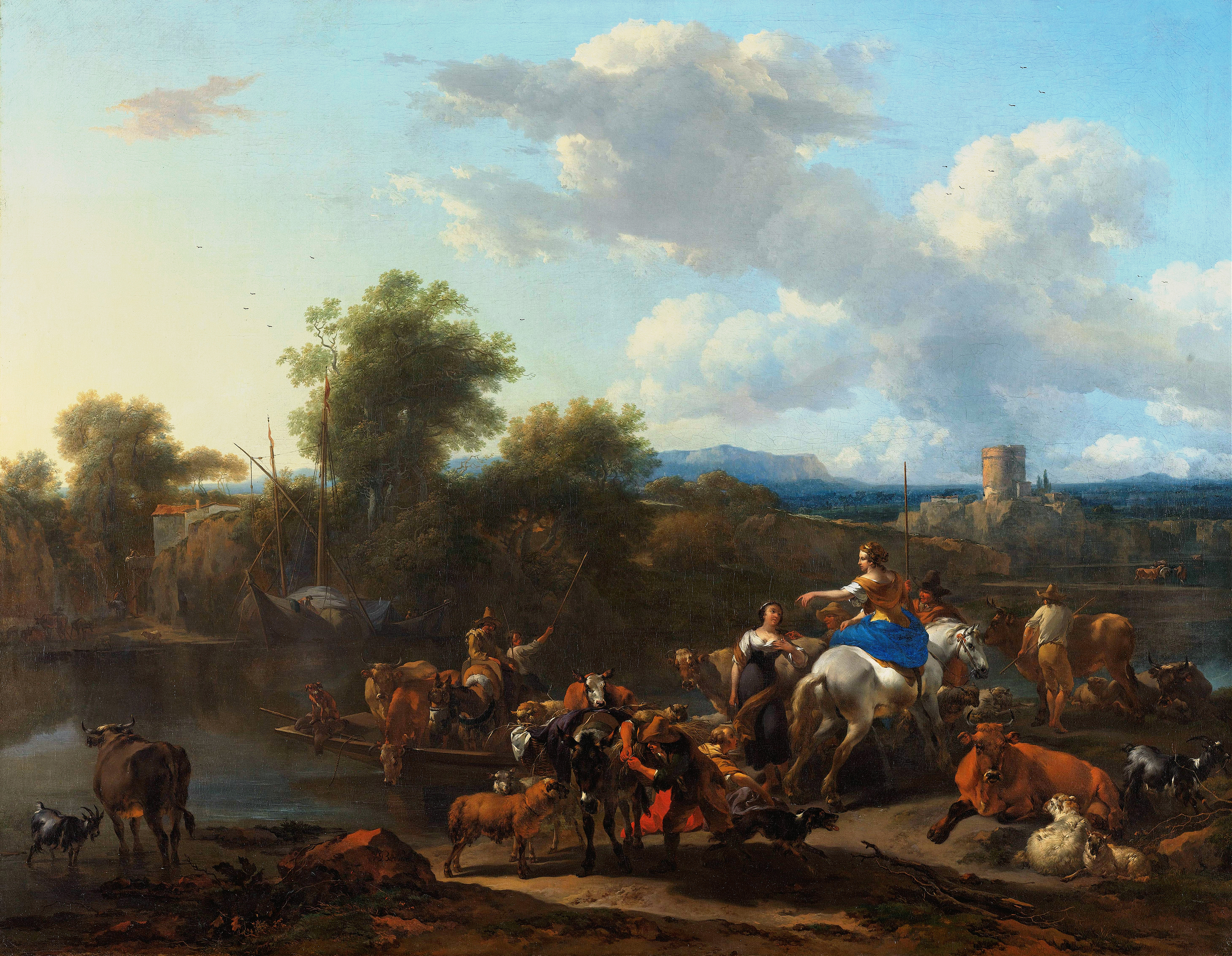
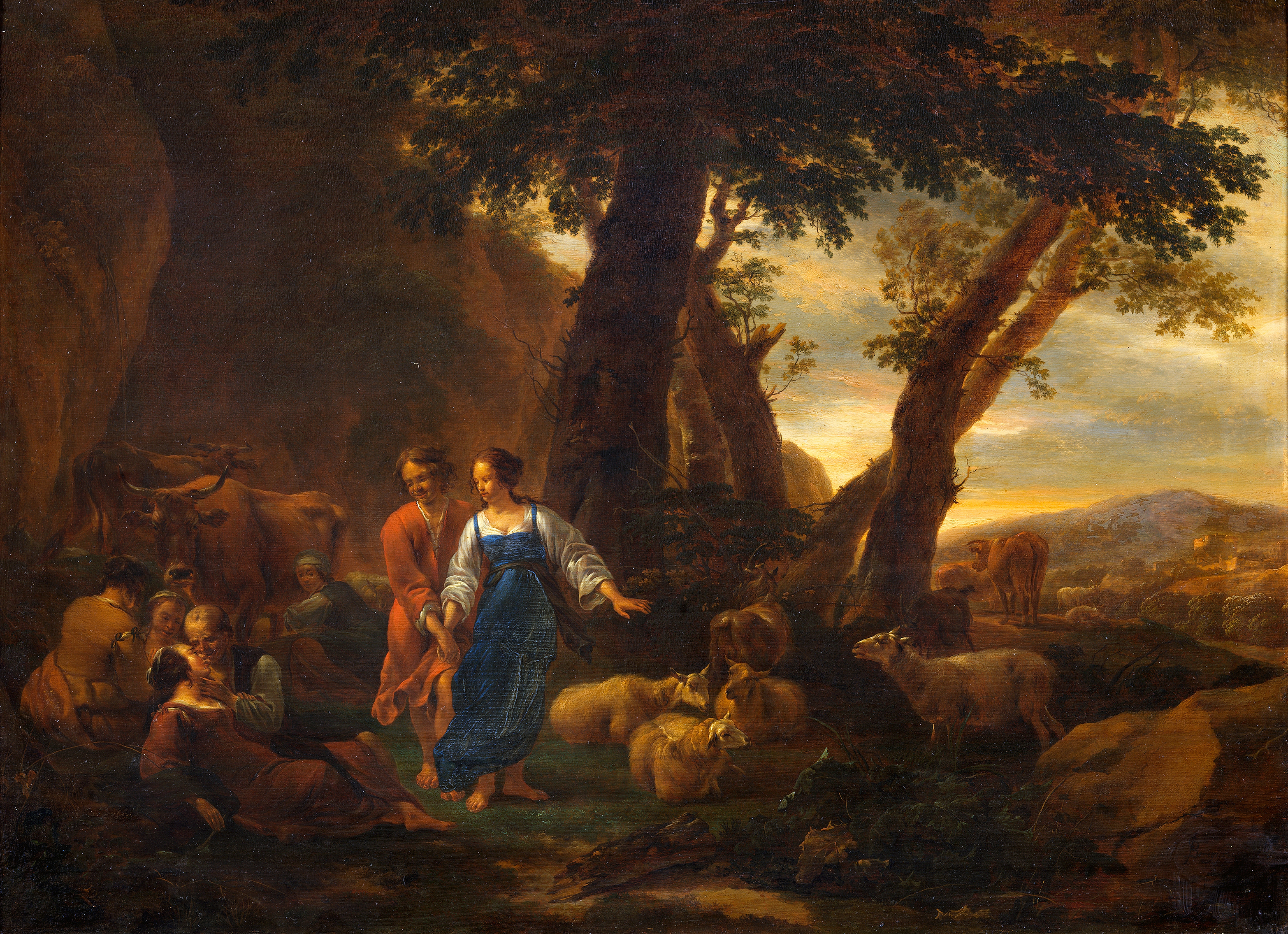
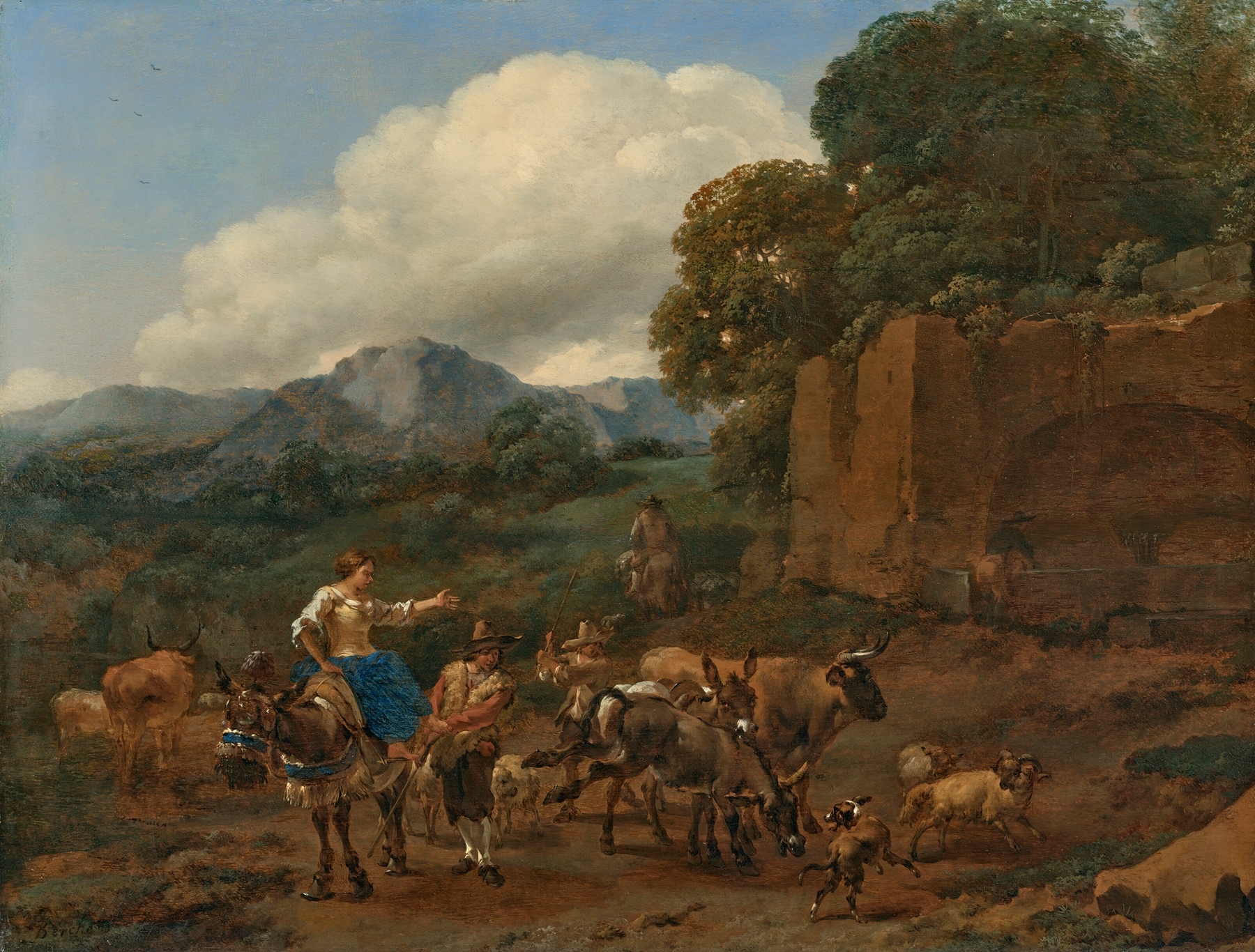
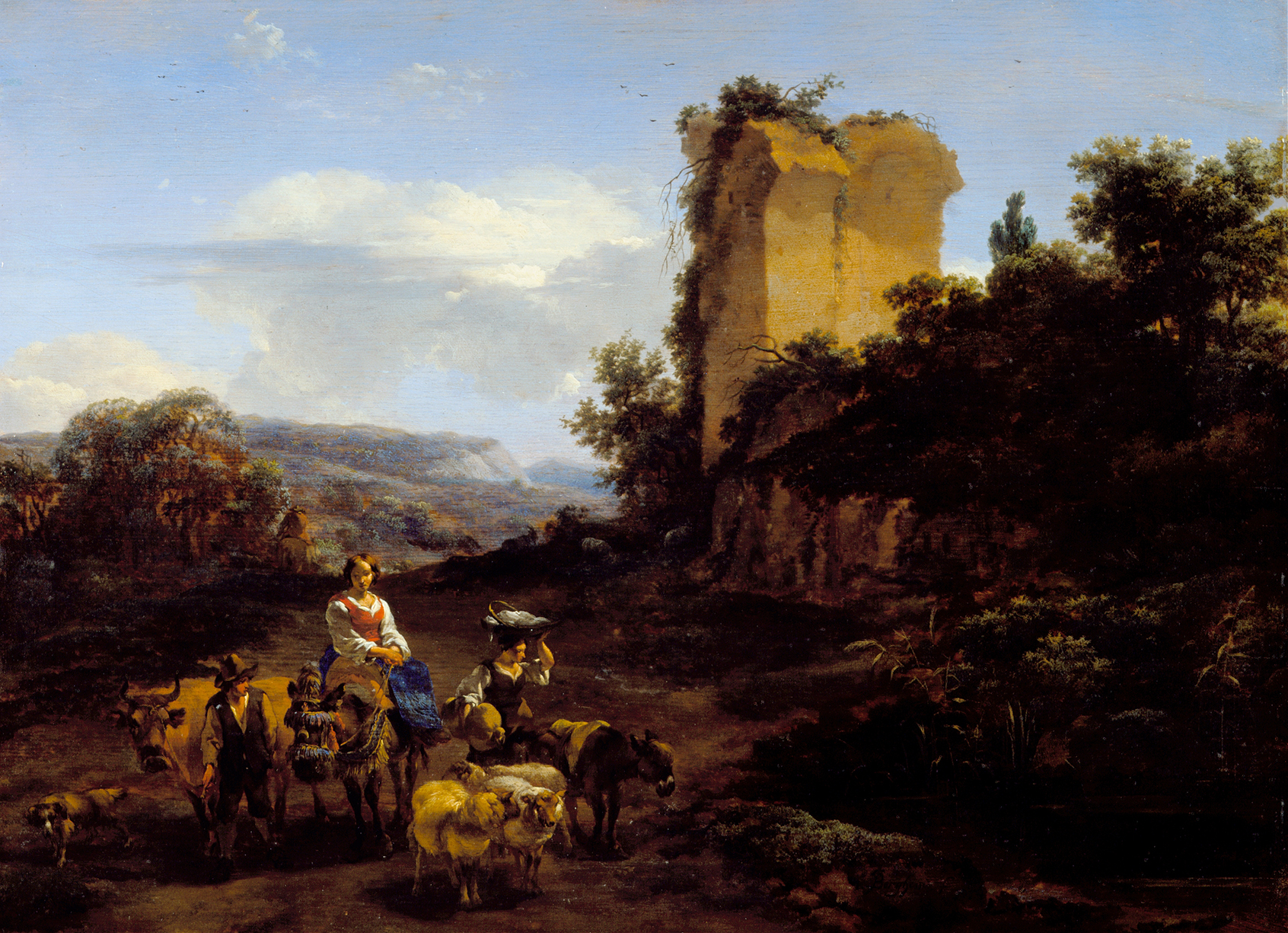
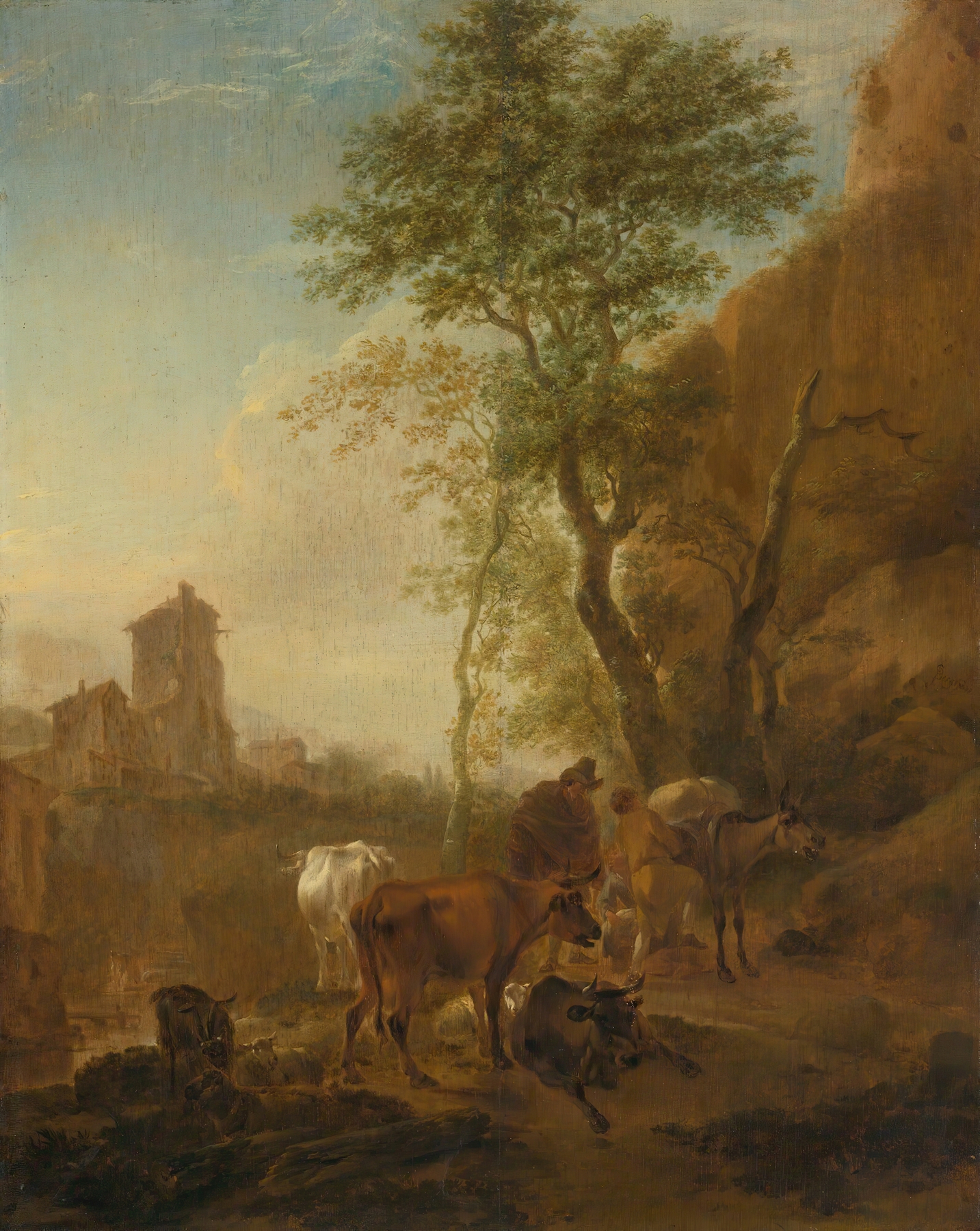
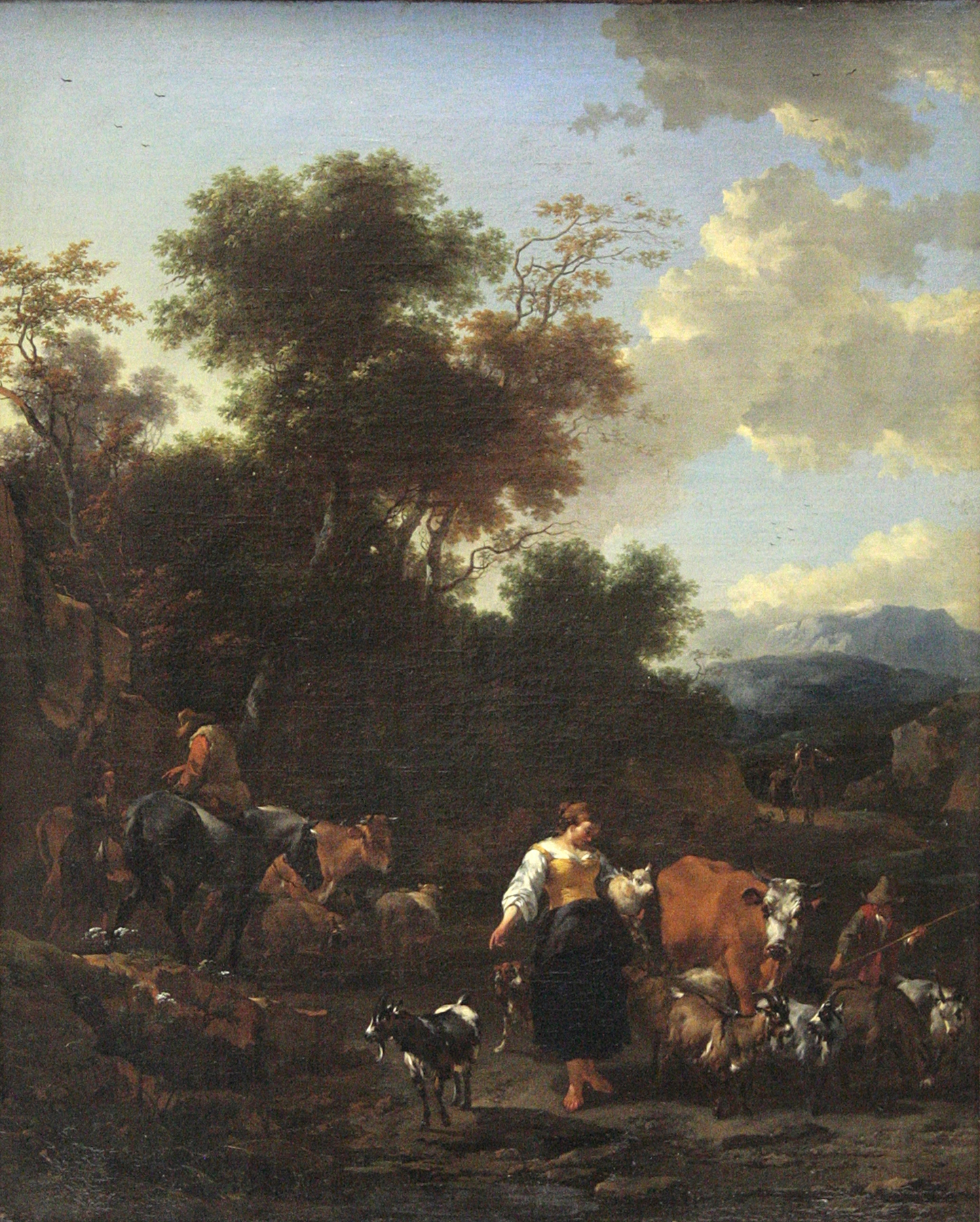
Who listens when art speaks of silence? In Italian Landscape with Shepherds at a River, the quietude of a pastoral world invites us to contemplate the delicate balance between nature and humanity, echoing a time of profound change. Look to the foreground, where two shepherds converse beside a gently flowing river. Notice how the soft, golden light bathes their figures, casting long shadows that stretch toward the water. The lush greenery surrounding them frames the scene, while clusters of trees rise majestically in the background.
The artist’s use of warm earth tones and luminous highlights creates a harmonious atmosphere, drawing our gaze into the serene heart of the landscape. Yet, beneath this tranquil surface lies a complex interplay of emotions. The shepherds, seemingly at ease, may symbolize the timeless connection between man and nature, but their isolation hints at a world on the cusp of transformation. The river, both a source of life and a barrier, reflects the uncertainties of the 17th century—an era characterized by burgeoning revolutions in thought, philosophy, and art.
The juxtaposition of serene pastoral life against the backdrop of impending change resonates deeply, inviting speculation on the future. Painted between 1650 and 1655, this work emerged during a period marked by significant upheaval in Europe. Nicolaes Pietersz Berchem was influenced by the rise of landscape painting in the Dutch Golden Age, reflecting a growing appreciation for rural life amidst societal shifts. The artist’s personal journey, navigating the vibrant art scene while exploring themes of nature and humanity, culminates in this evocative depiction—a testament to an era rich with possibility.