Italianate Landscape with Figures and Pack Animals on the Banks of a River — History & Analysis
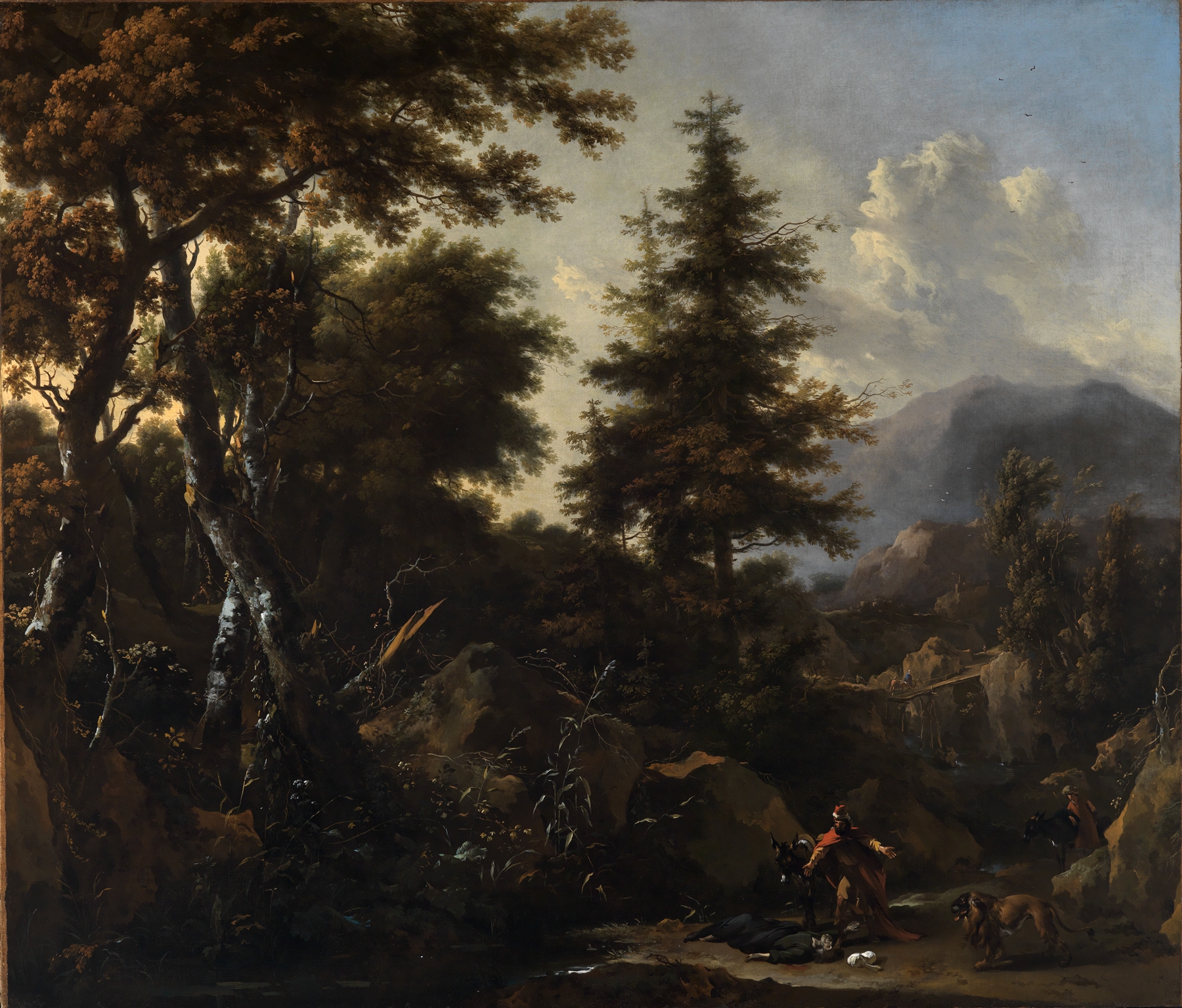
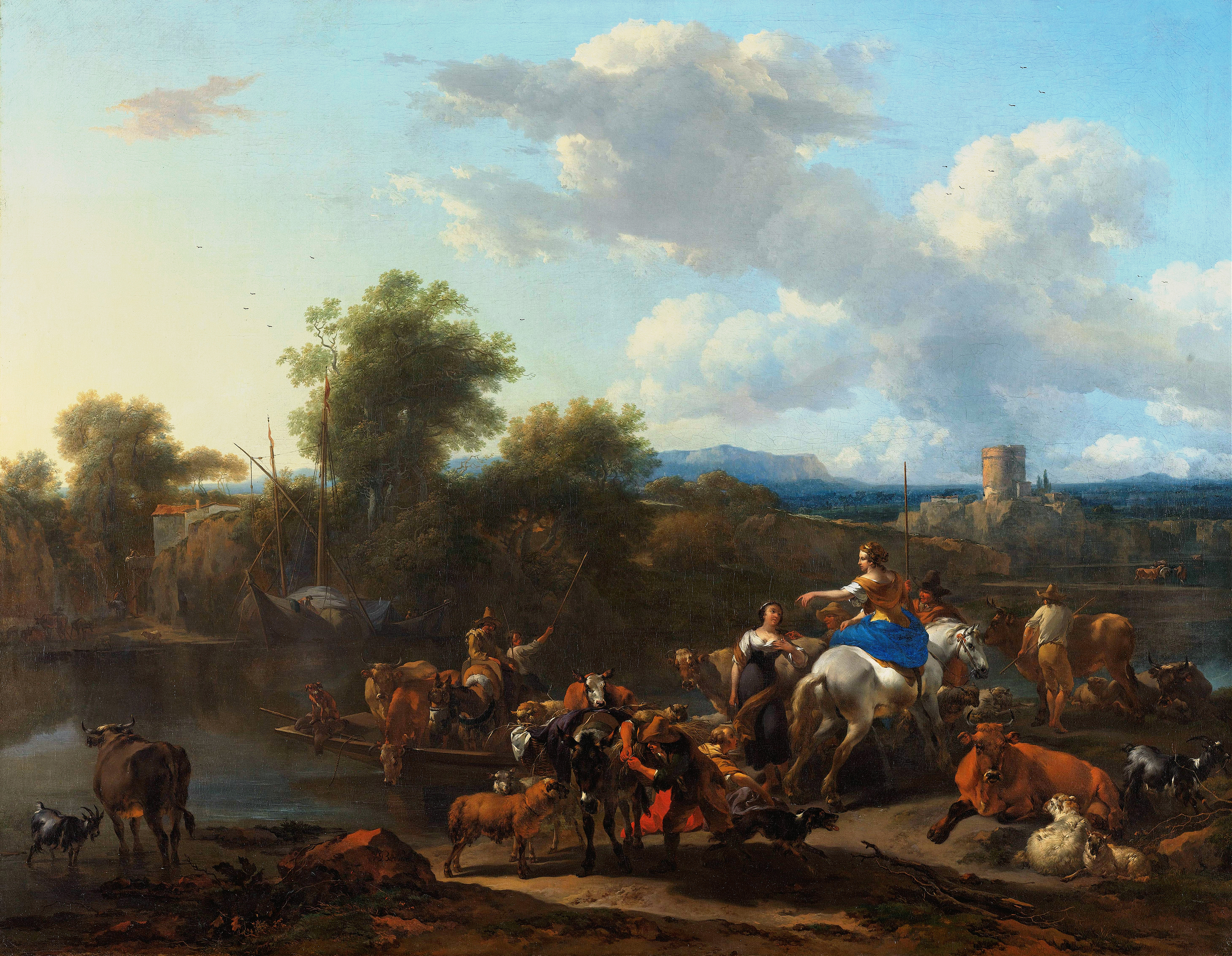
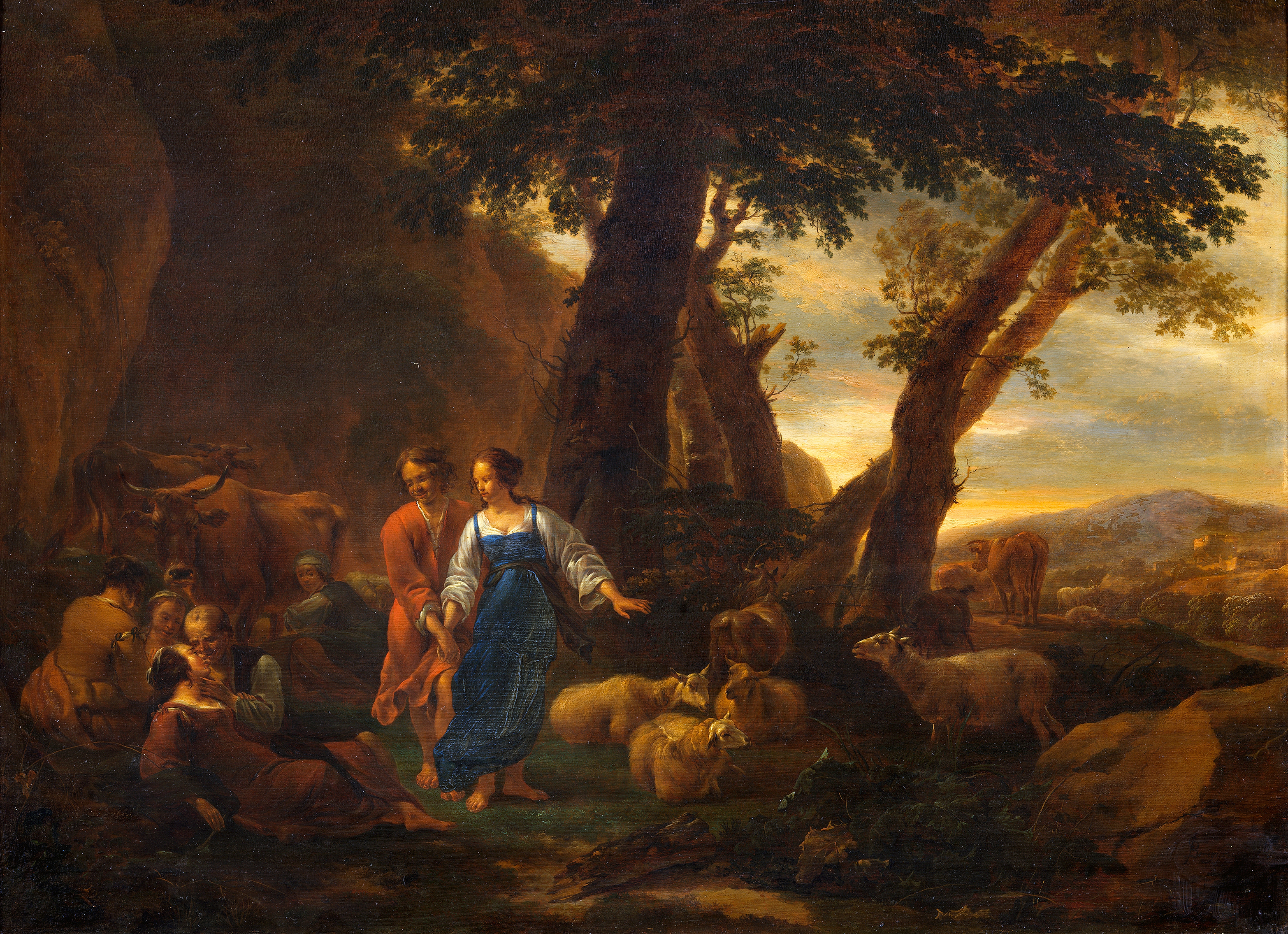
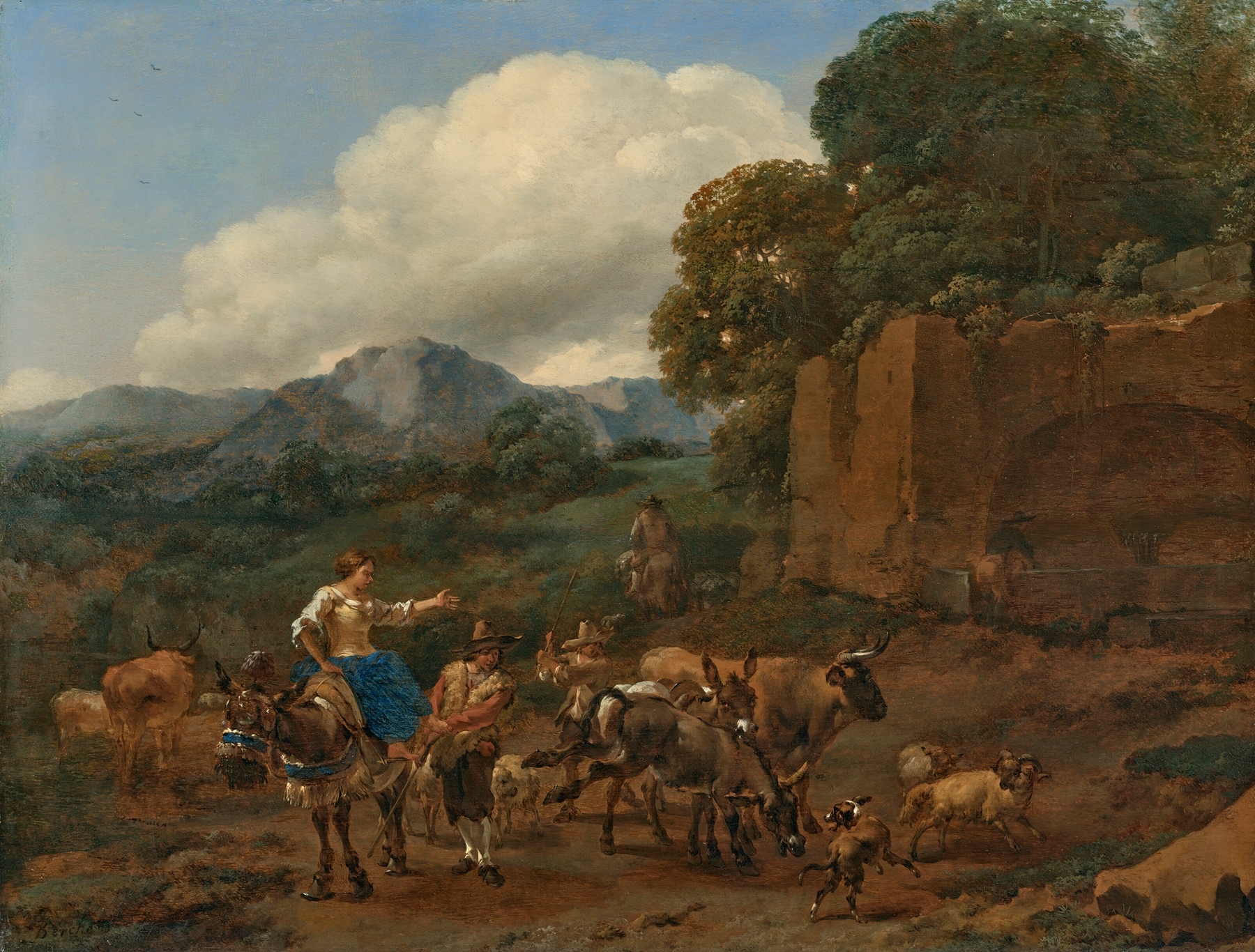
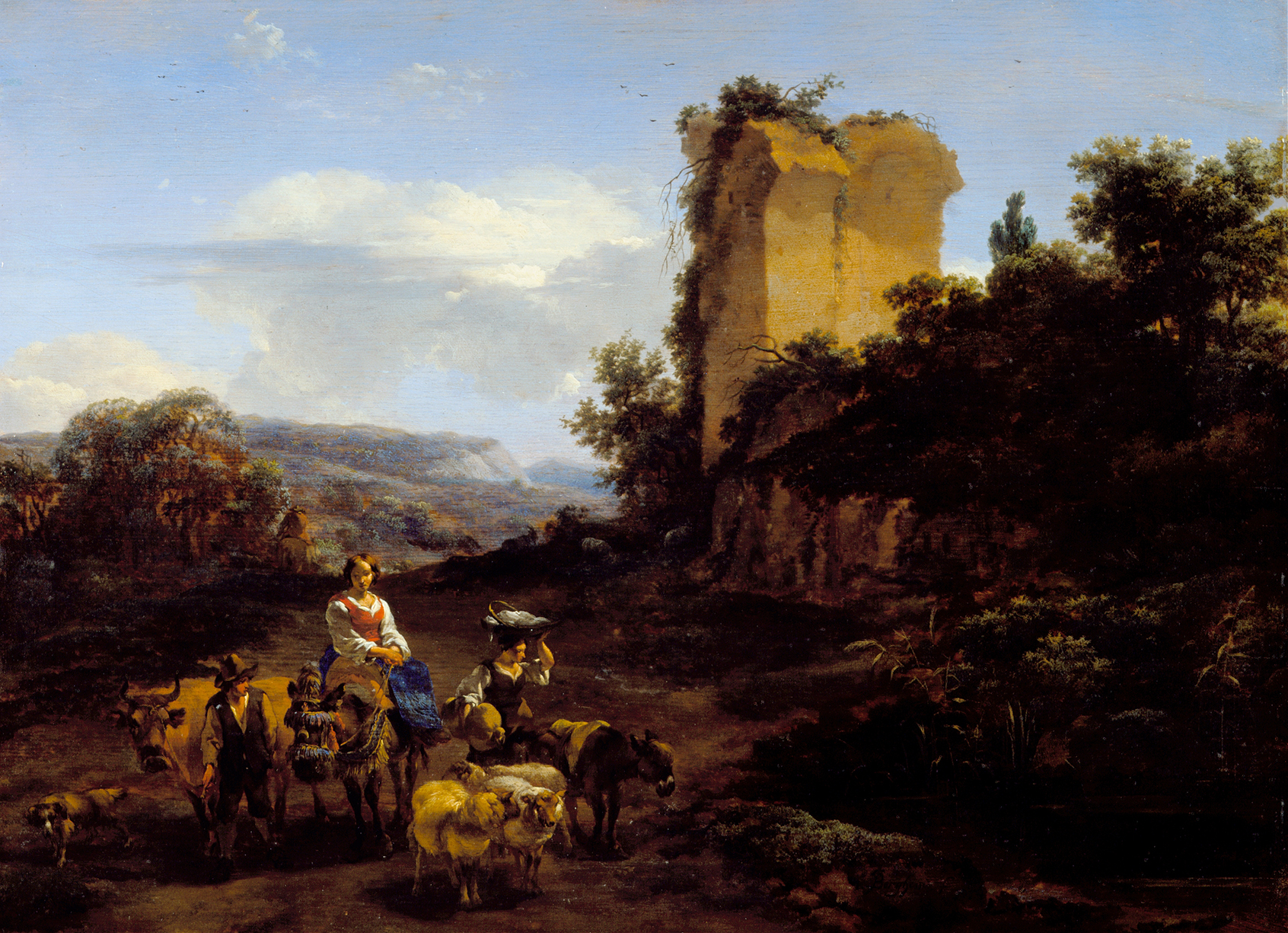
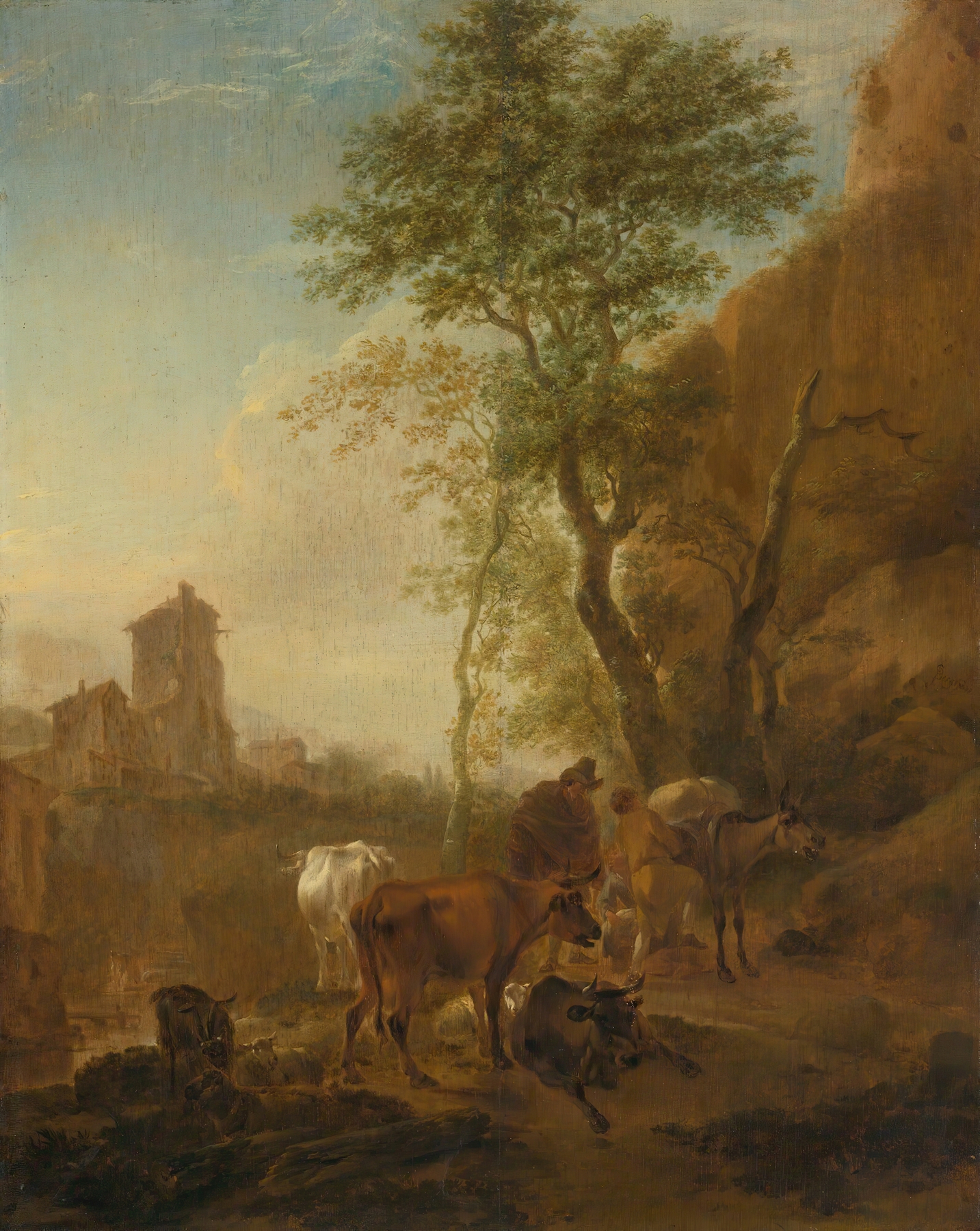
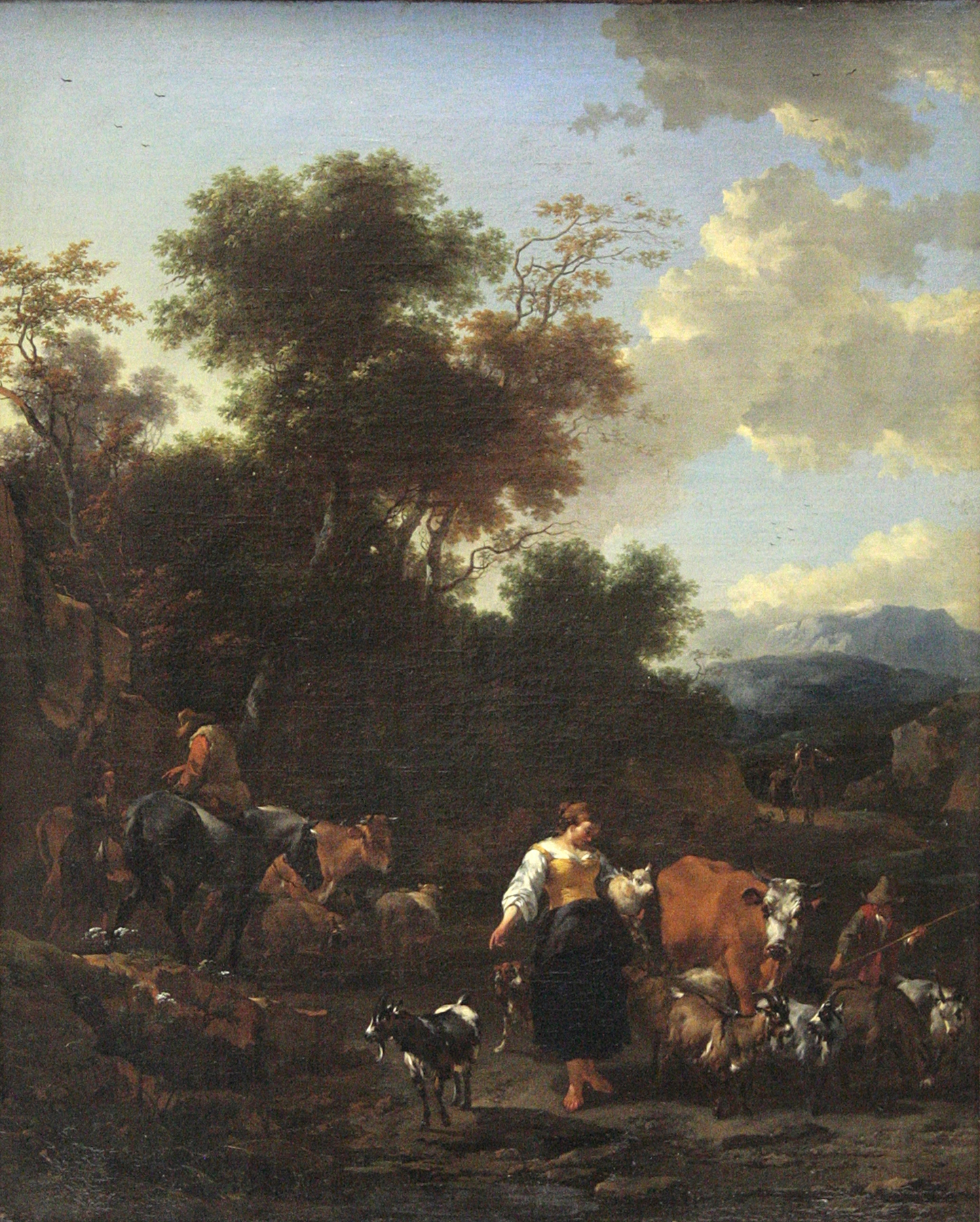
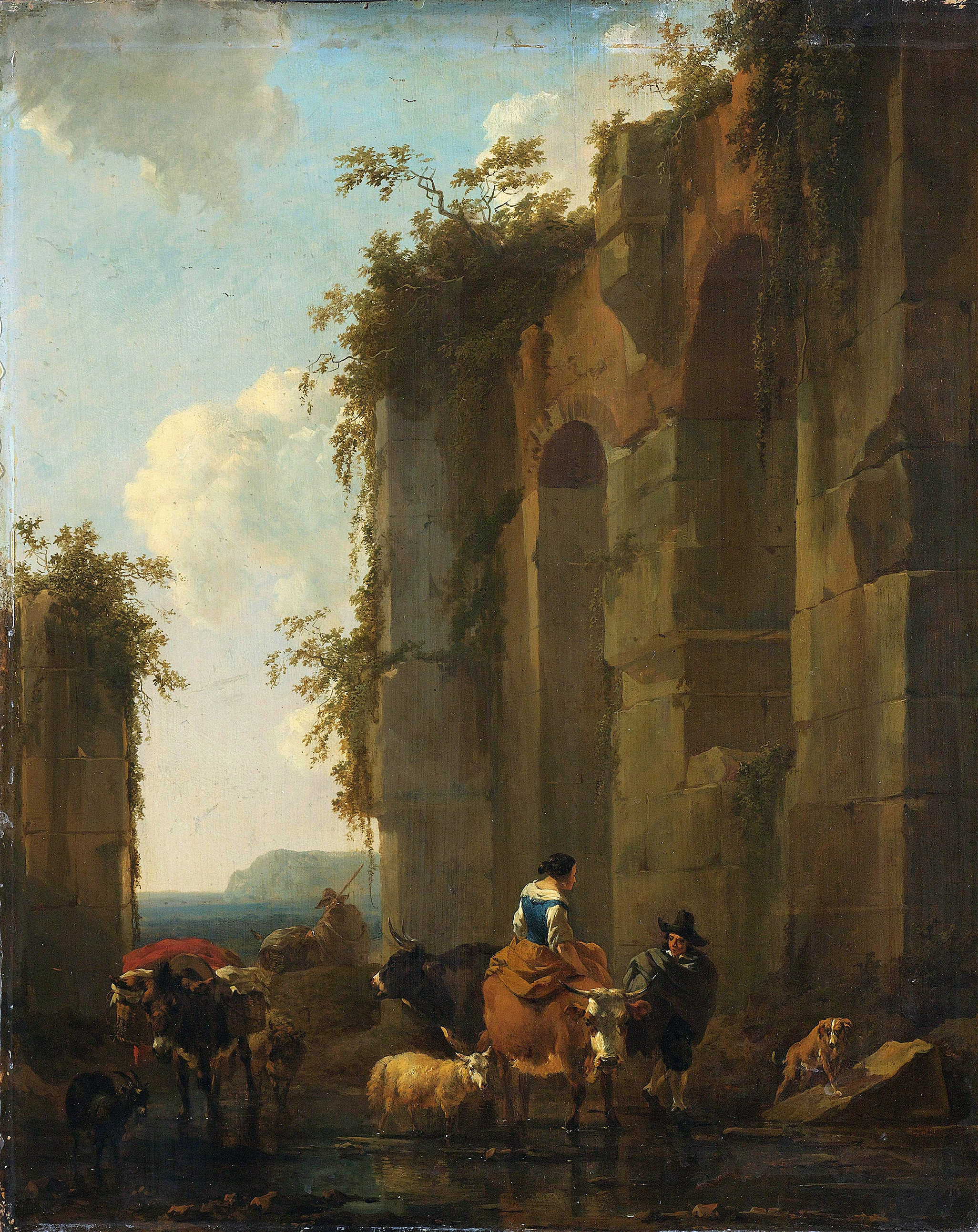
Could a single brushstroke hold eternity? In the world of art, each stroke offers a whisper of hope, a reminder of beauty amidst transience. Focus on the gentle curves of the riverbank, where figures and pack animals appear as harmonious participants in nature's embrace. The artist skillfully employs a warm palette of greens, ochres, and blues, inviting you to explore the soft interplay of light and shadow.
Notice how the sunlight spills across the water's surface, creating glimmers that dance like stars on the river, while the distant hills cradle the scene, hinting at both serenity and a journey yet to unfold. As you delve deeper, observe the figures—each distinct, yet united in their shared labor. The toil of the pack animals contrasts with the tranquil landscape, embodying the balance between human effort and nature’s grace. This juxtaposition creates an emotional tension; the viewer is reminded of life's relentless march forward, always carrying hope, whether through toil or reflection in the tranquil waters.
Nicolaes Pietersz Berchem created this work between 1620 and 1683, a period when Dutch artists were exploring themes of landscape and the human experience. Living in the Golden Age of Dutch painting, he found inspiration in the interplay of light and nature, reflecting a society that valued both the beauty of the natural world and the narratives of everyday life. This piece serves as a testament to his ability to encapsulate the essence of hope within a tranquil yet vibrant scene.