Schlucht im Bergwald mit alttestamentlicher Staffage — History & Analysis
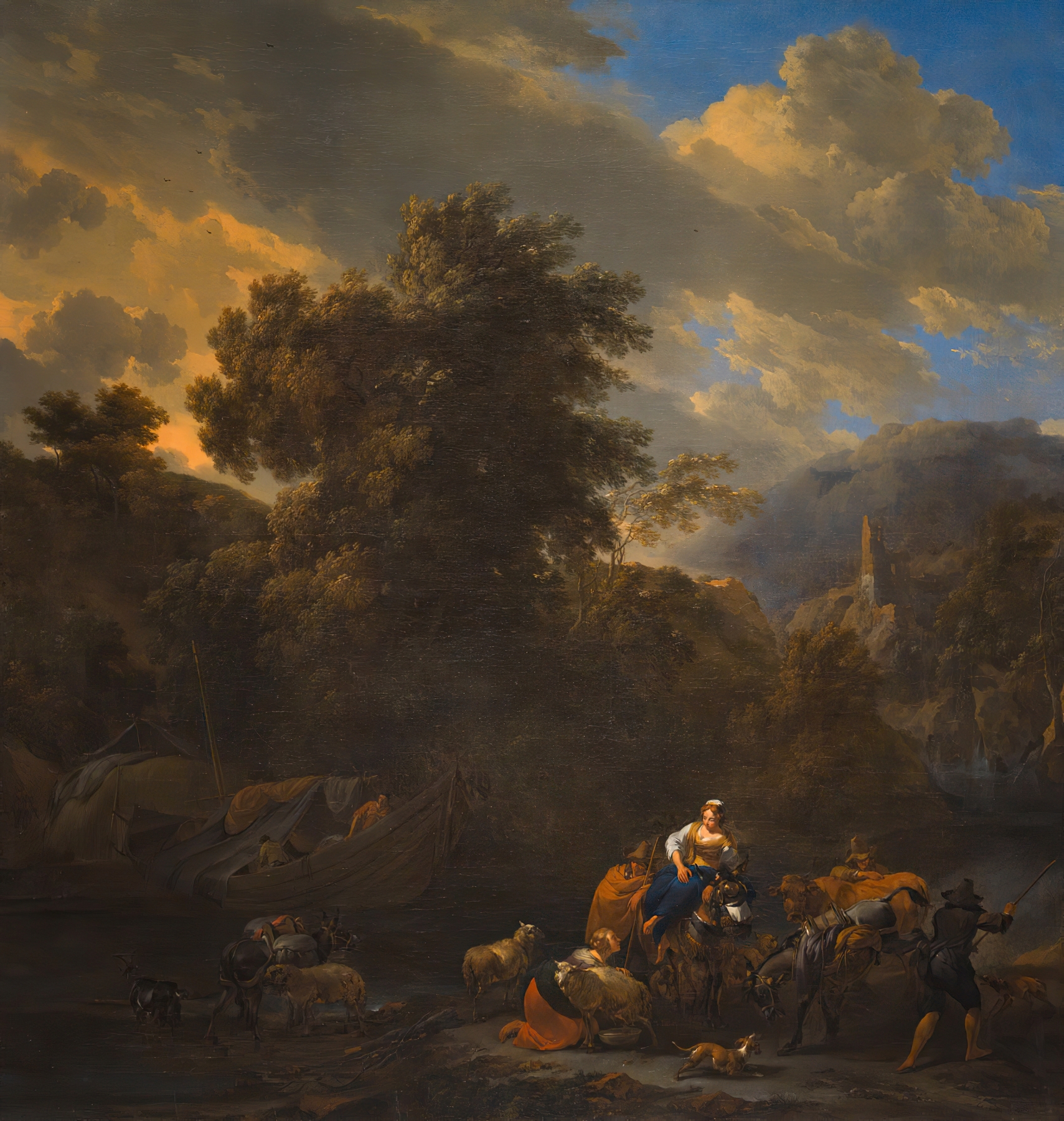
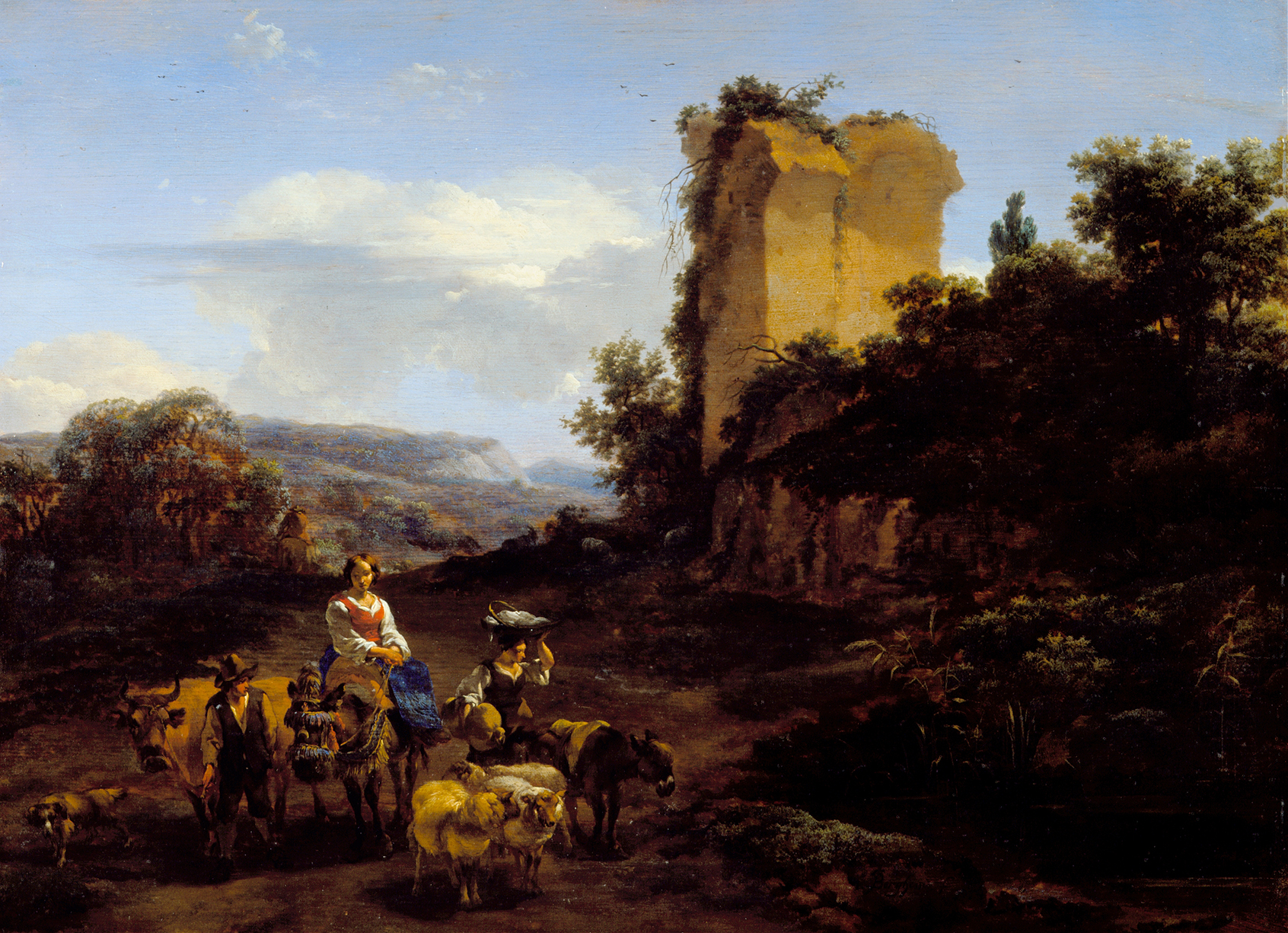
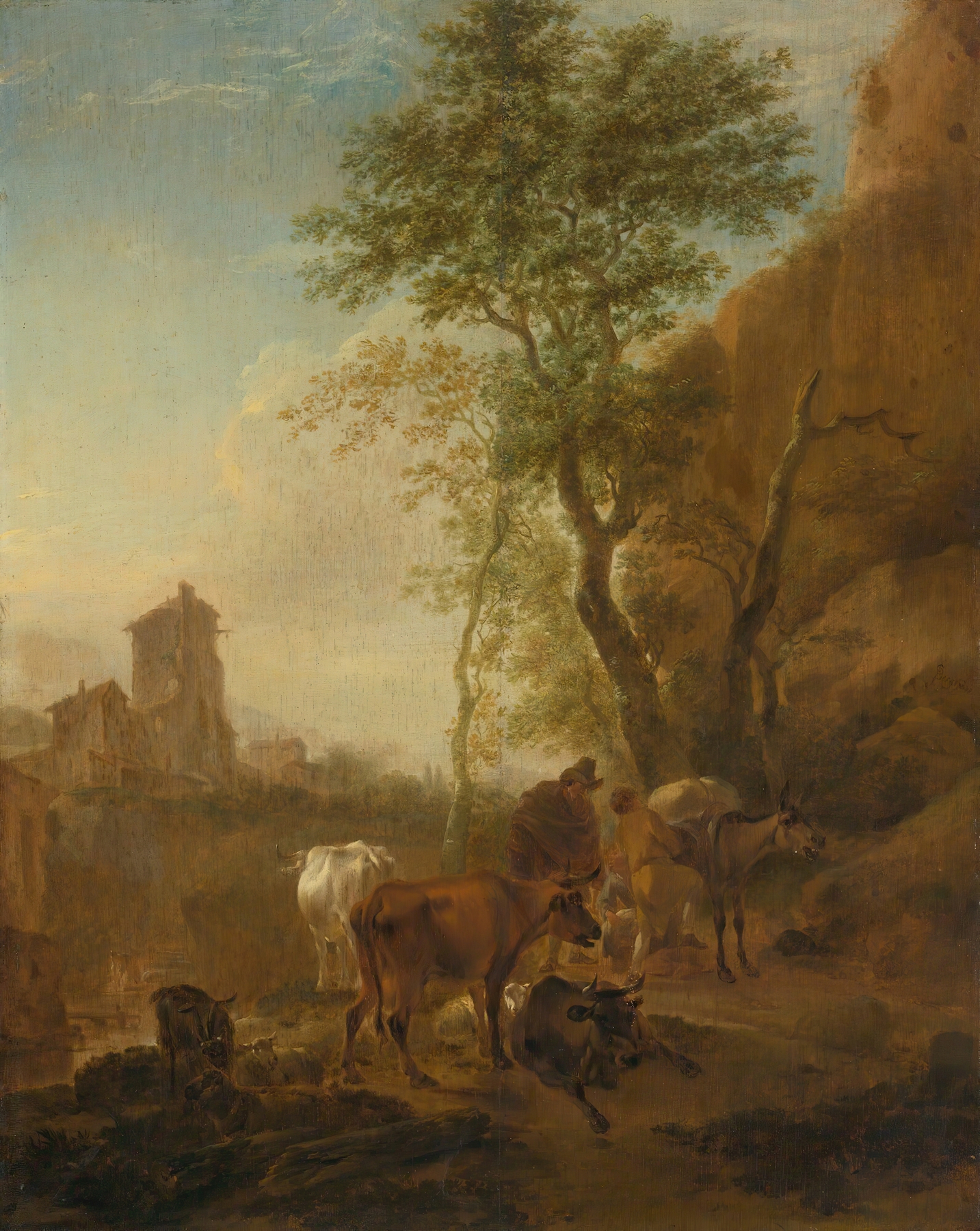
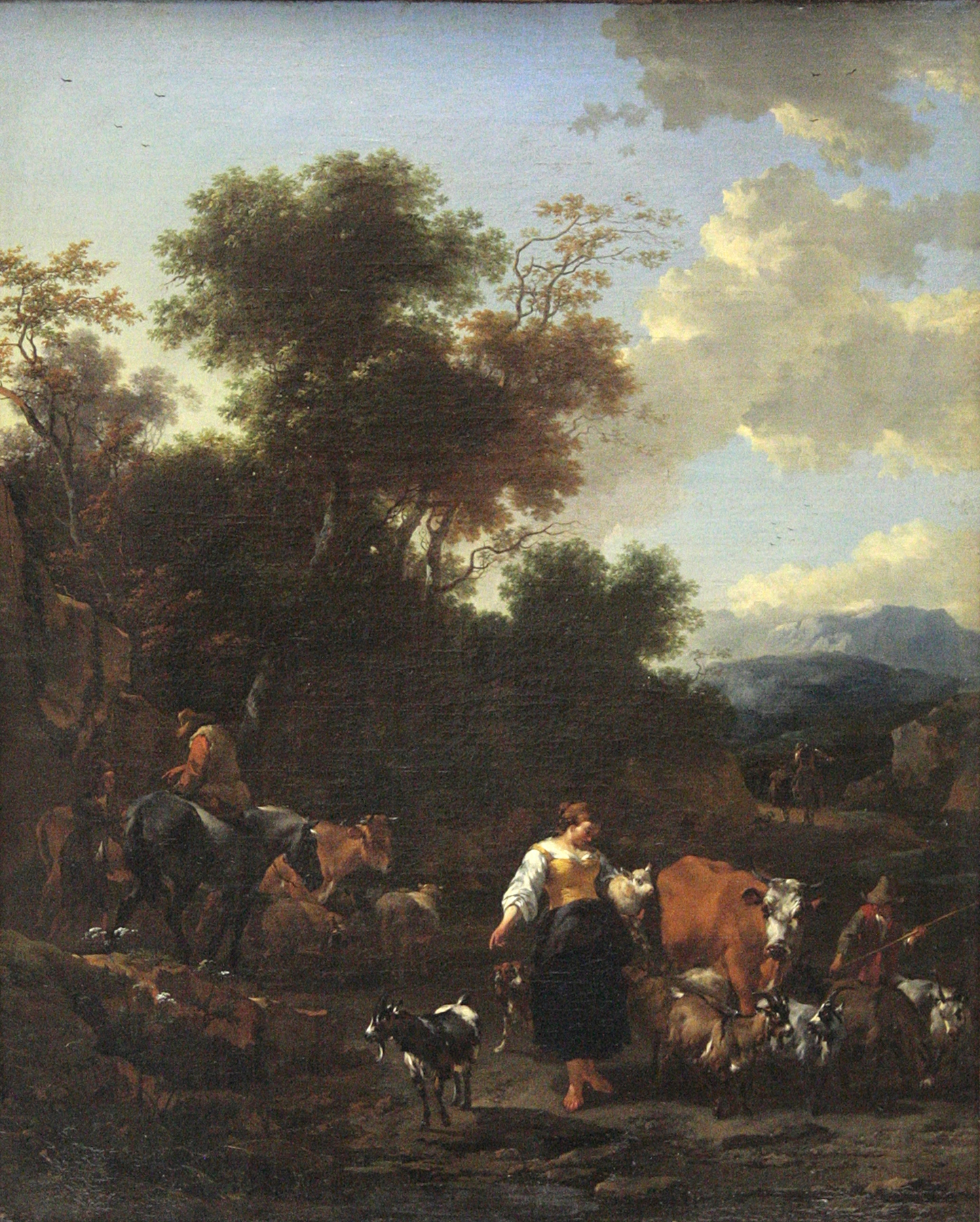
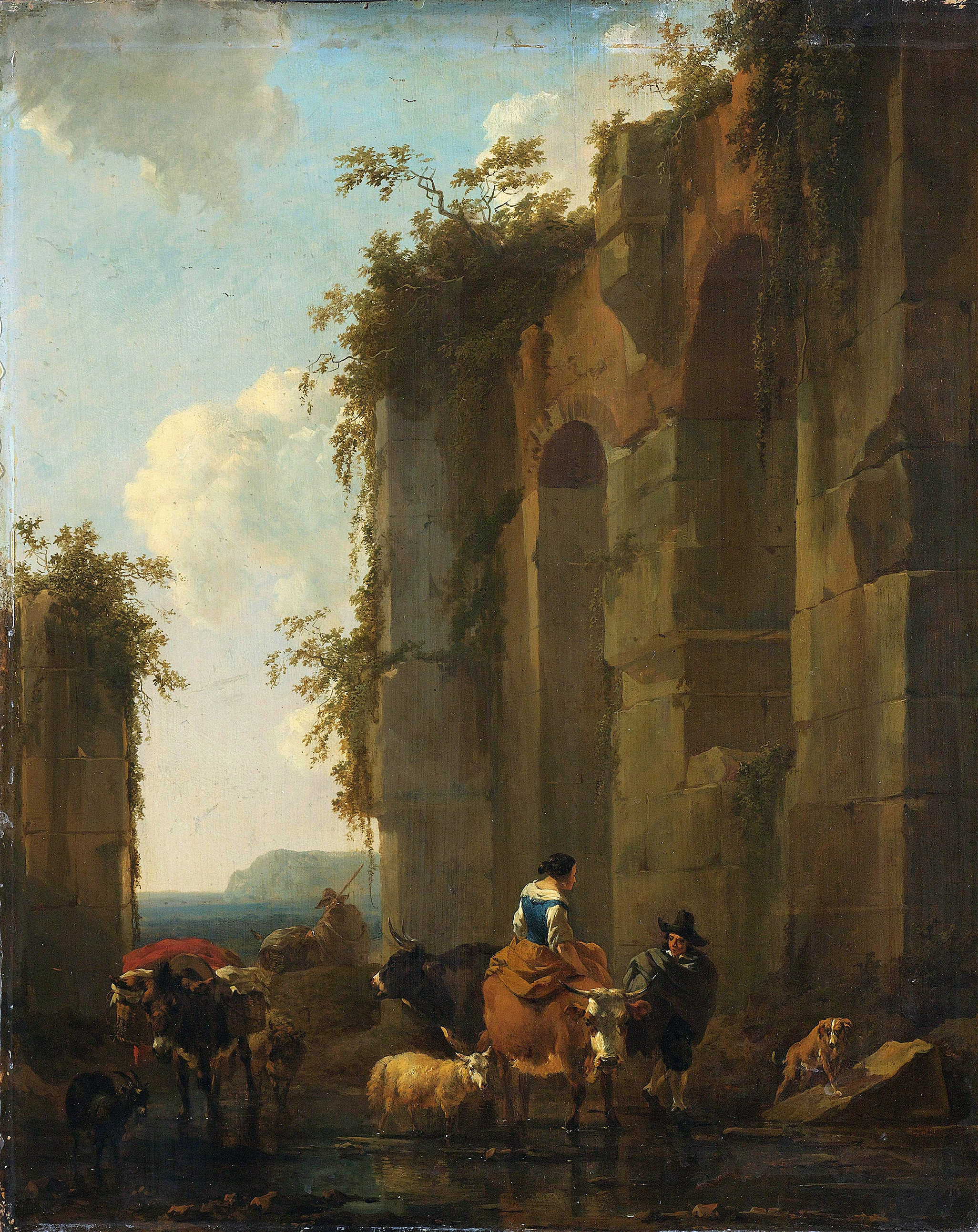
Can beauty exist without sorrow? In the delicate interplay of light and shadow, the landscape whispers of fear concealed beneath its tranquil facade. Look to the center where the towering trees stretch upward, their dark forms a stark contrast against the soft, luminous sky. The meandering path draws the viewer's eye deeper into the verdant forest, inviting exploration while simultaneously instilling a sense of unease.
Notice how the warm colors of the foliage pulse with life, yet the ominous shadows hint at hidden dangers lurking just out of sight. Berchem’s masterful brushwork captures the texture of the bark, the rustle of leaves, and the whisper of wind, crafting a scene that pulsates with both beauty and apprehension. The emotional tension in this piece resonates through its contrasts—light battles darkness, serenity contends with anxiety. The biblical figures, almost ghostly in their presence, suggest a narrative fraught with significance, perhaps a reminder of humanity’s frailty amid nature's grandeur.
Their placement juxtaposed against the wilderness evokes a haunting reflection on vulnerability; the lush environment, while captivating, serves as a backdrop for the unseen dangers that loom, urging contemplation on the fragility of existence. In 1664, the artist created this work during a period marked by a burgeoning interest in natural landscapes and pastoral themes. Living in the Netherlands, where the art scene was shifting towards a celebration of the sublime in nature, Berchem was influenced by both the Baroque aesthetic and the emerging Dutch Golden Age's focus on realism. This painting epitomizes the tension between the idyllic and the threatening, mirroring the complexities of life in a world on the brink of transformation.