Italian Landscape with two Roman Soldiers — History & Analysis
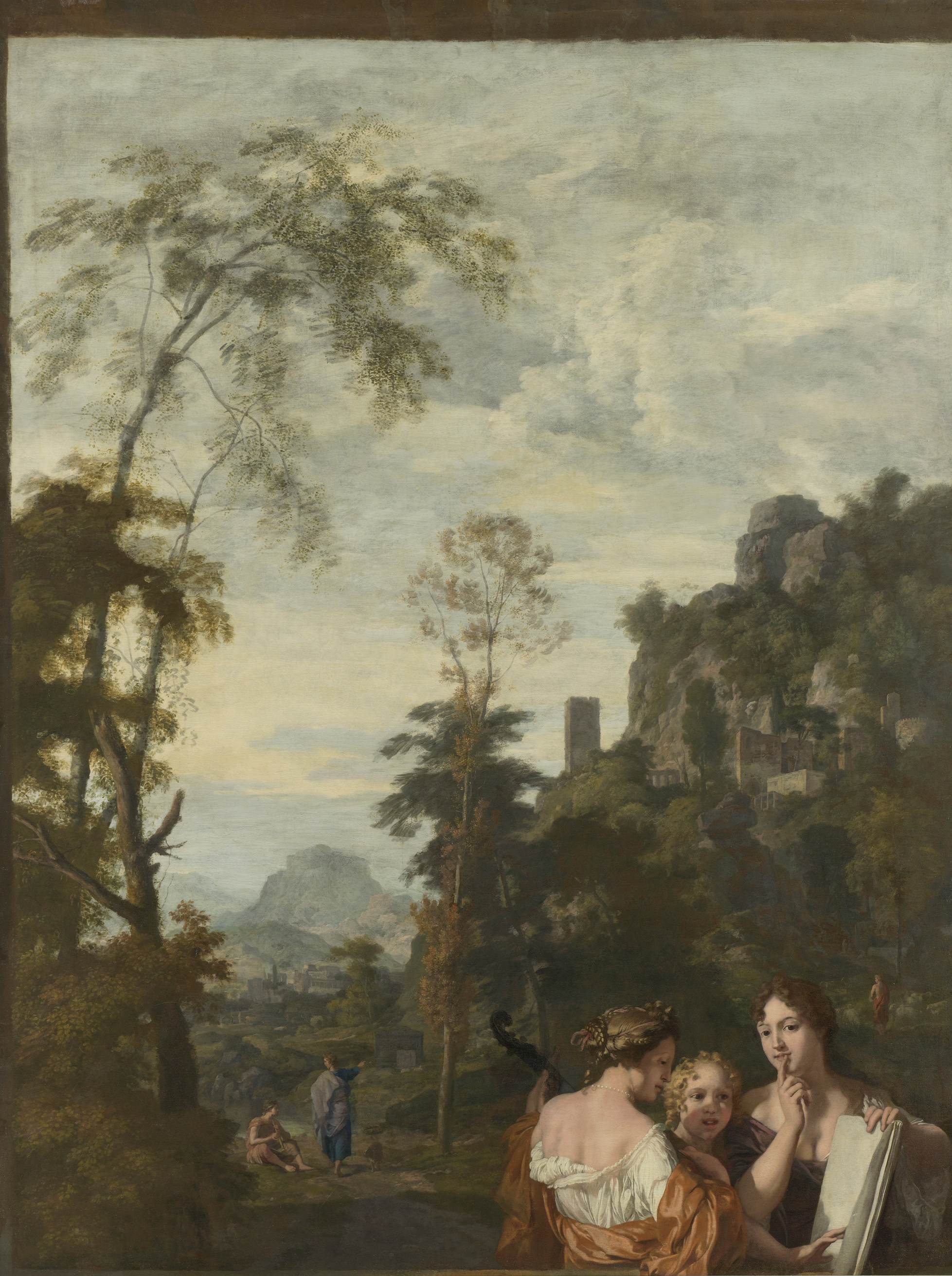
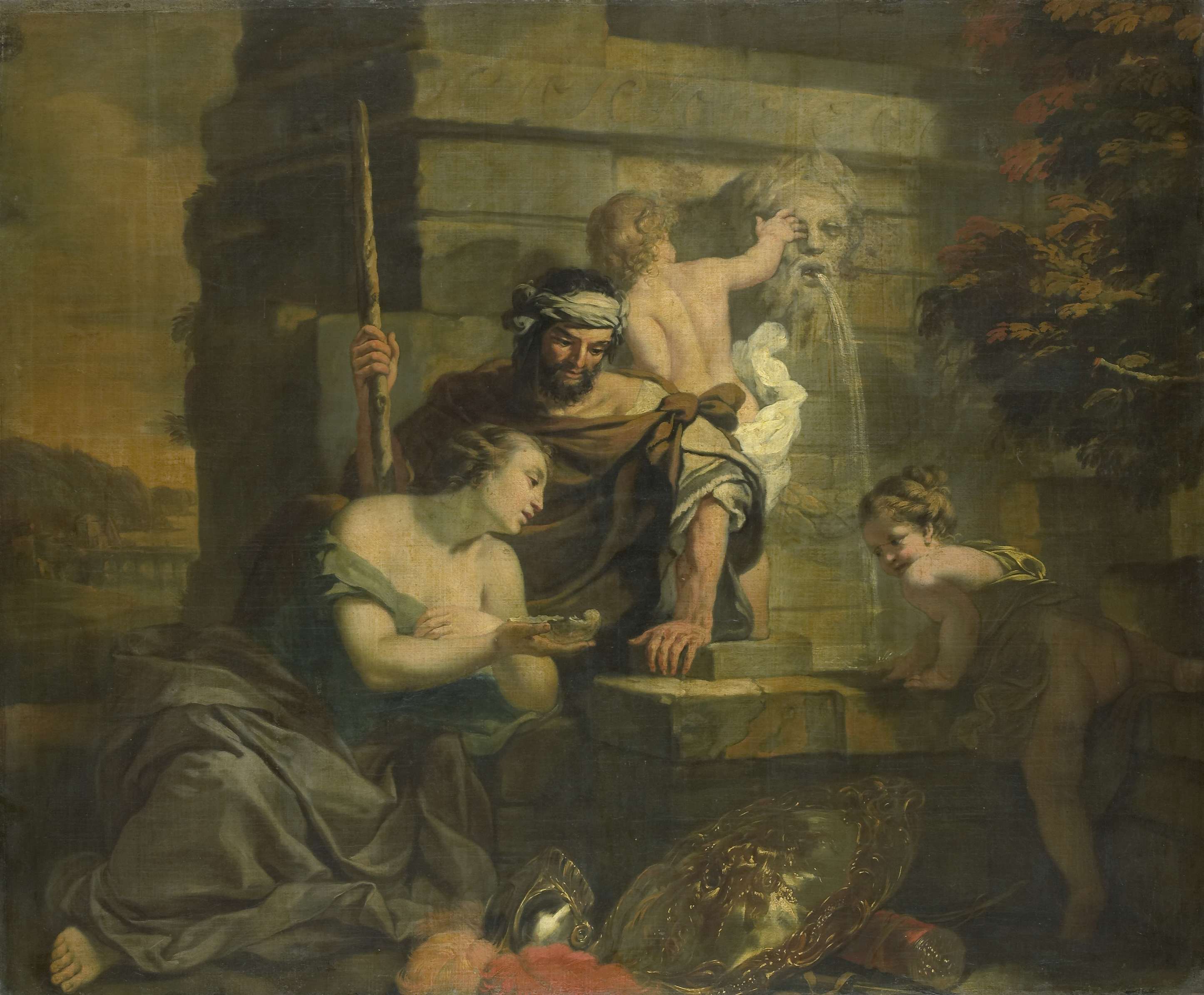
Could beauty survive in a century of chaos? In Gerard de Lairesse's Italian Landscape with Two Roman Soldiers, the answer unfolds gently across a verdant panorama, inviting us to ponder the fleeting nature of existence amidst a world in upheaval. Look to the left at the rolling hills bathed in a warm, golden light, where the brushstrokes dance with a soft fluidity. The soldiers, nearly silhouetted against the vibrant landscape, stand as guardians of a fading era, their figures grounded yet almost ethereal against the lush greenery and azure sky.
The composition draws the eye across the canvas, leading us from the tranquil foreground to the distant mountains that seem to cradle the scene in a serene embrace. Delve deeper into the contrasting elements of the painting—though the soldiers exude strength, their posture hints at introspection, perhaps contemplating their own mortality. The harmonious colors evoke a bittersweet sense of nostalgia, while the juxtaposition of human figures against the vastness of nature suggests a profound tension between the fleeting human experience and the timeless beauty of the world. In this landscape, we are reminded that even in tranquility, there lingers an awareness of life’s impermanence.
De Lairesse painted this work around 1687 during a time of personal struggle. He faced challenges with his eyesight, which would eventually lead to his blindness, mirroring the theme of mortality present in his art. This was also a period rich with artistic evolution in the Netherlands, as Baroque styles began to blend with emerging Classical influences, shaping the landscape of art and reflecting the complexities of human life.