Joseph and Potiphar's wife — History & Analysis
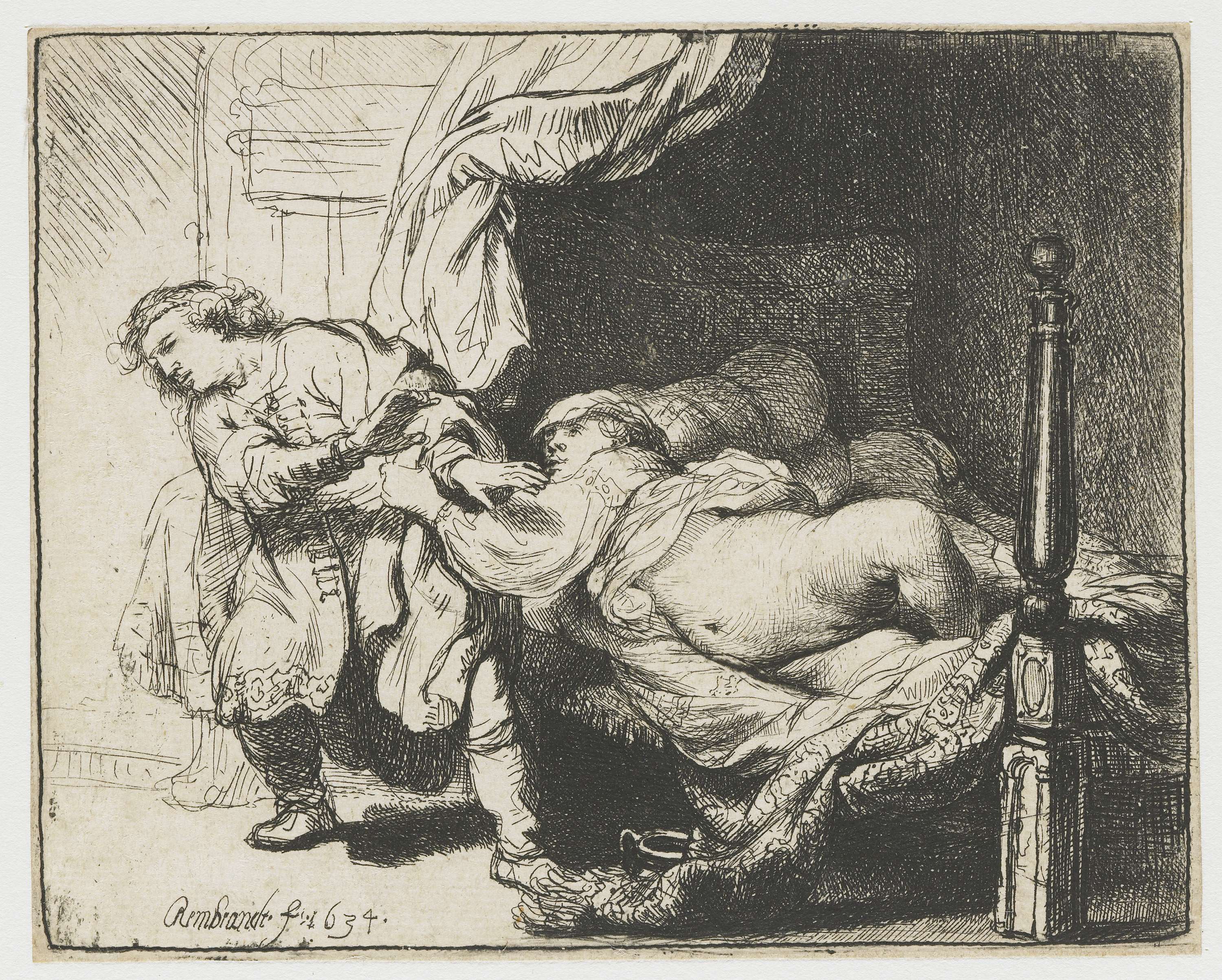
Is this a mirror — or a memory? In Rembrandt van Rijn's Joseph and Potiphar's Wife, the painting unveils the tension that lies at the intersection of desire and consequence, a moment suspended between temptation and morality. Focus on the figure of Joseph, standing steadfast against the advances of Potiphar's wife. Notice how the light falls upon his face, illuminating not just his features but also his restrained resolve.
In contrast, her outstretched hand is bathed in shadow, highlighting the alluring danger of her intentions. The rich, warm tones of ochre and deep reds envelop the scene, creating an intimacy that is both inviting and suffocating, drawing the viewer into this charged confrontation. Delve deeper, and the contrasts emerge as significant: Joseph's vulnerability juxtaposed with Potiphar's wife's boldness speaks volumes of societal roles and personal choices. The fabric of her garment, sumptuous and alluring, seems to entrap the very essence of desire, while Joseph's simple attire symbolizes virtue and restraint.
Their gazes, locked in a silent battle, reflect an inner turmoil — the struggle between temptation and integrity that defines the human experience. In 1634, Rembrandt was navigating the complexities of his career in Amsterdam, where he was gaining prominence as a master painter. This period marked a transformation in his style, as he sought to explore deeper psychological themes in his work. The painting encapsulates a moment of introspection, revealing not just the story of its figures, but also the artist’s own contemplation of morality and the human condition, amidst a flourishing yet tumultuous art scene.