La Cervara, the Roman Campagna — History & Analysis
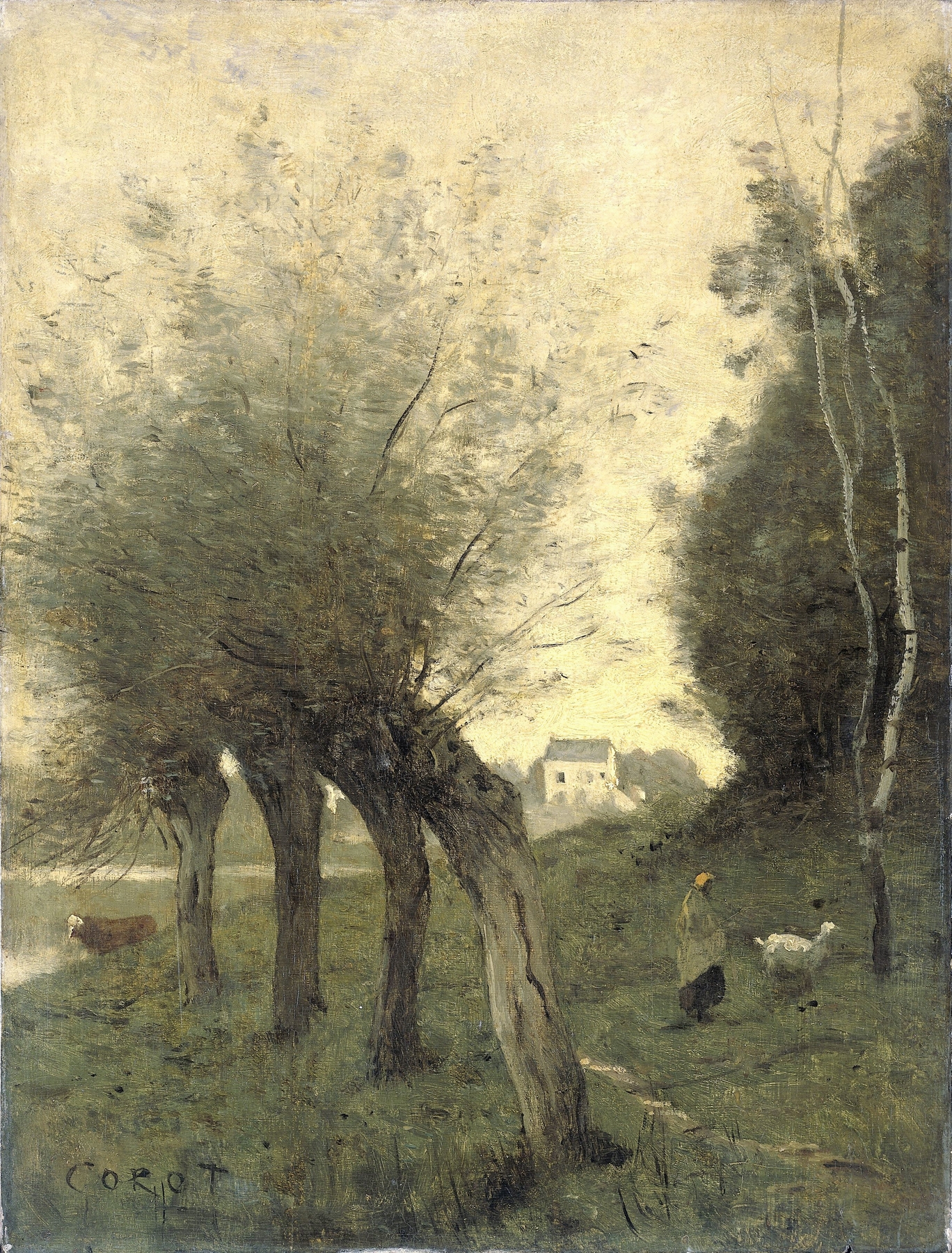
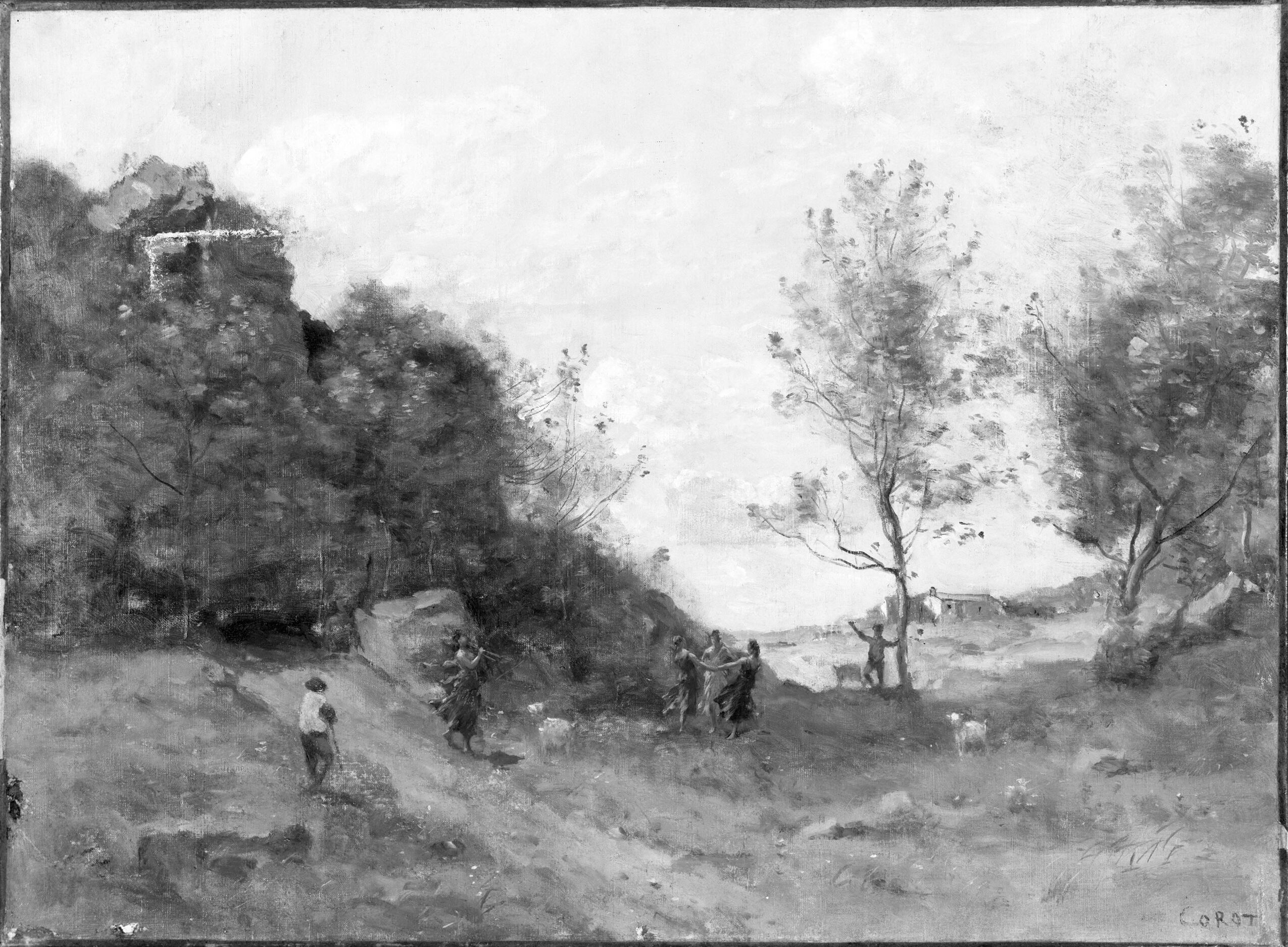
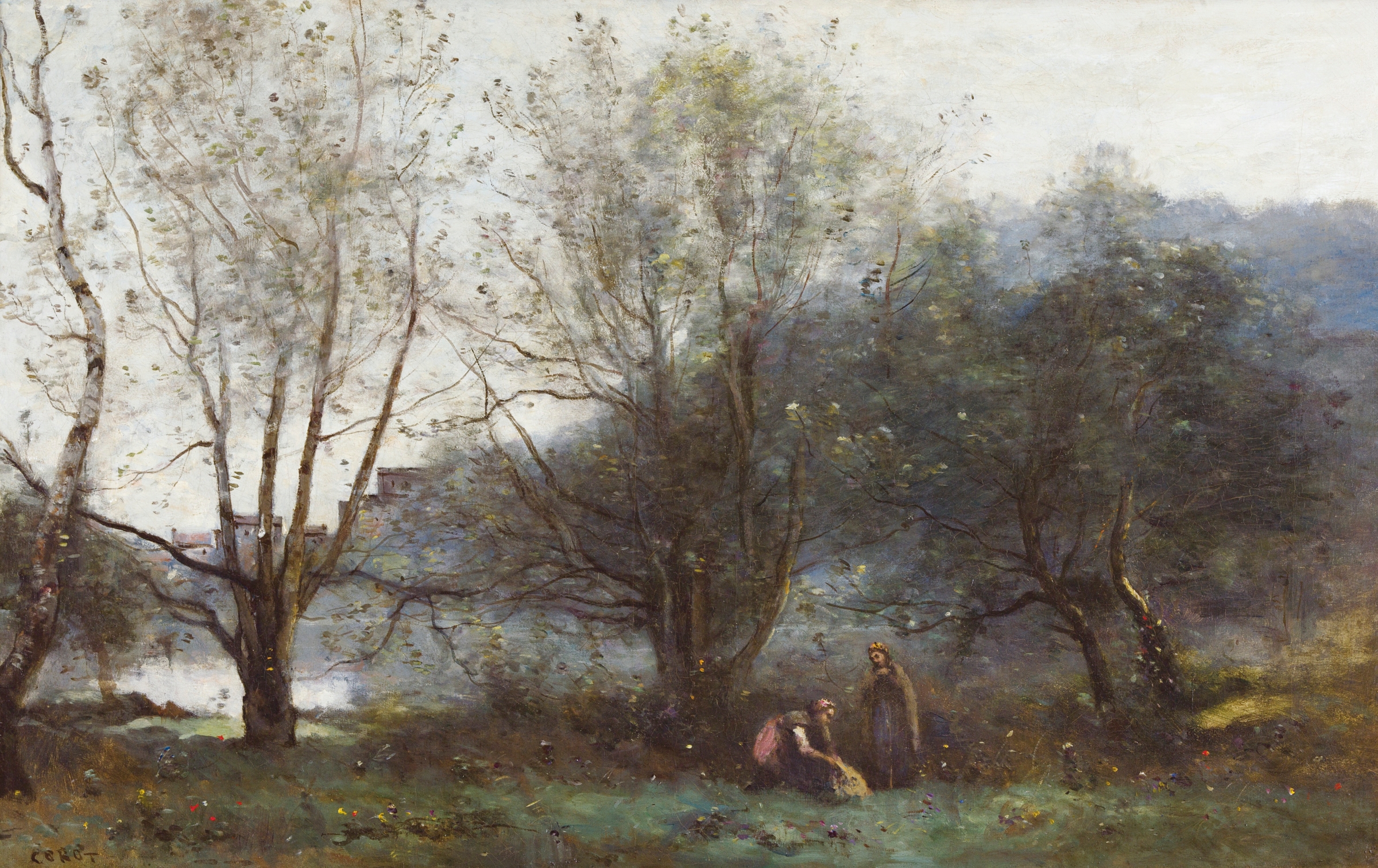
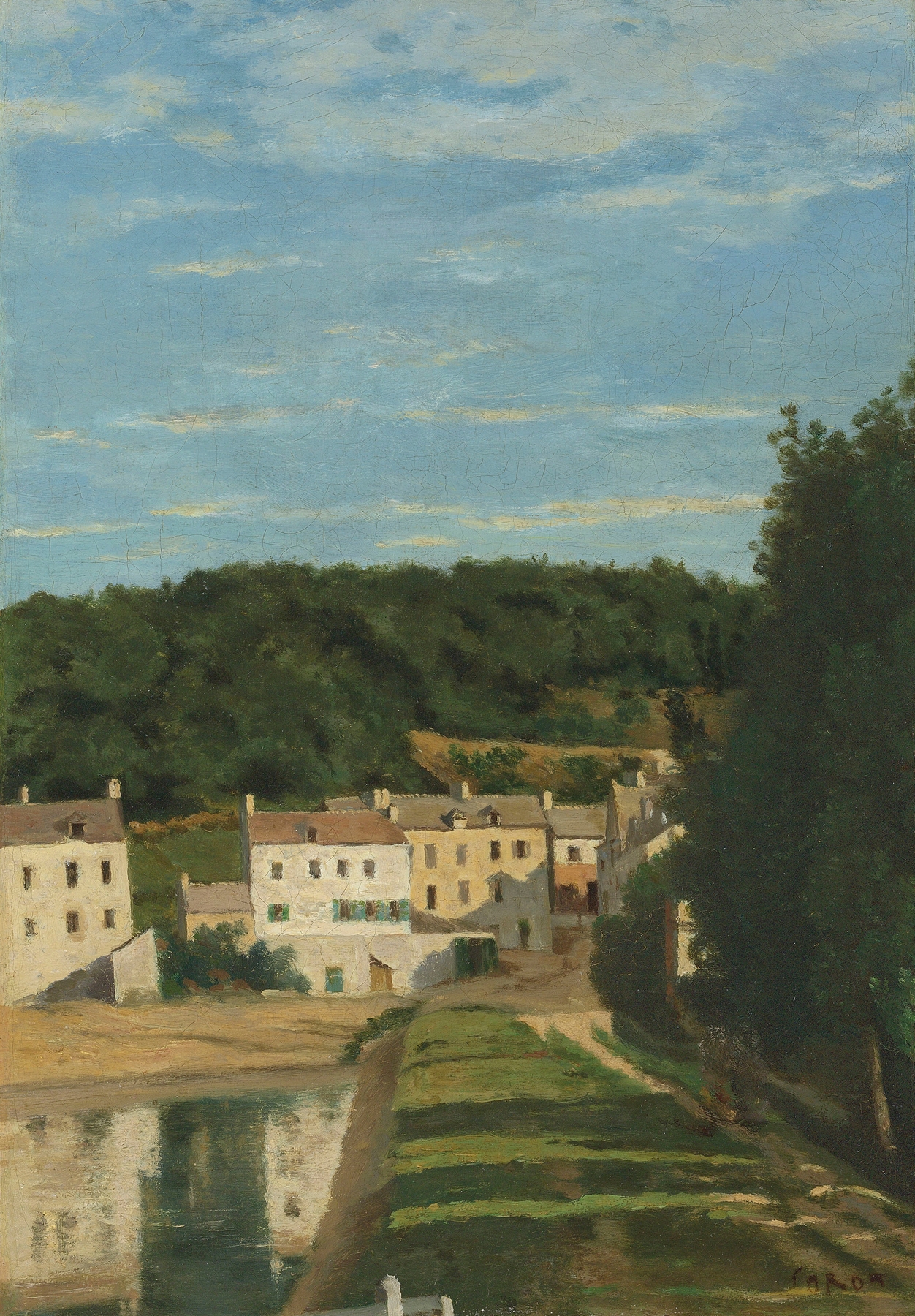
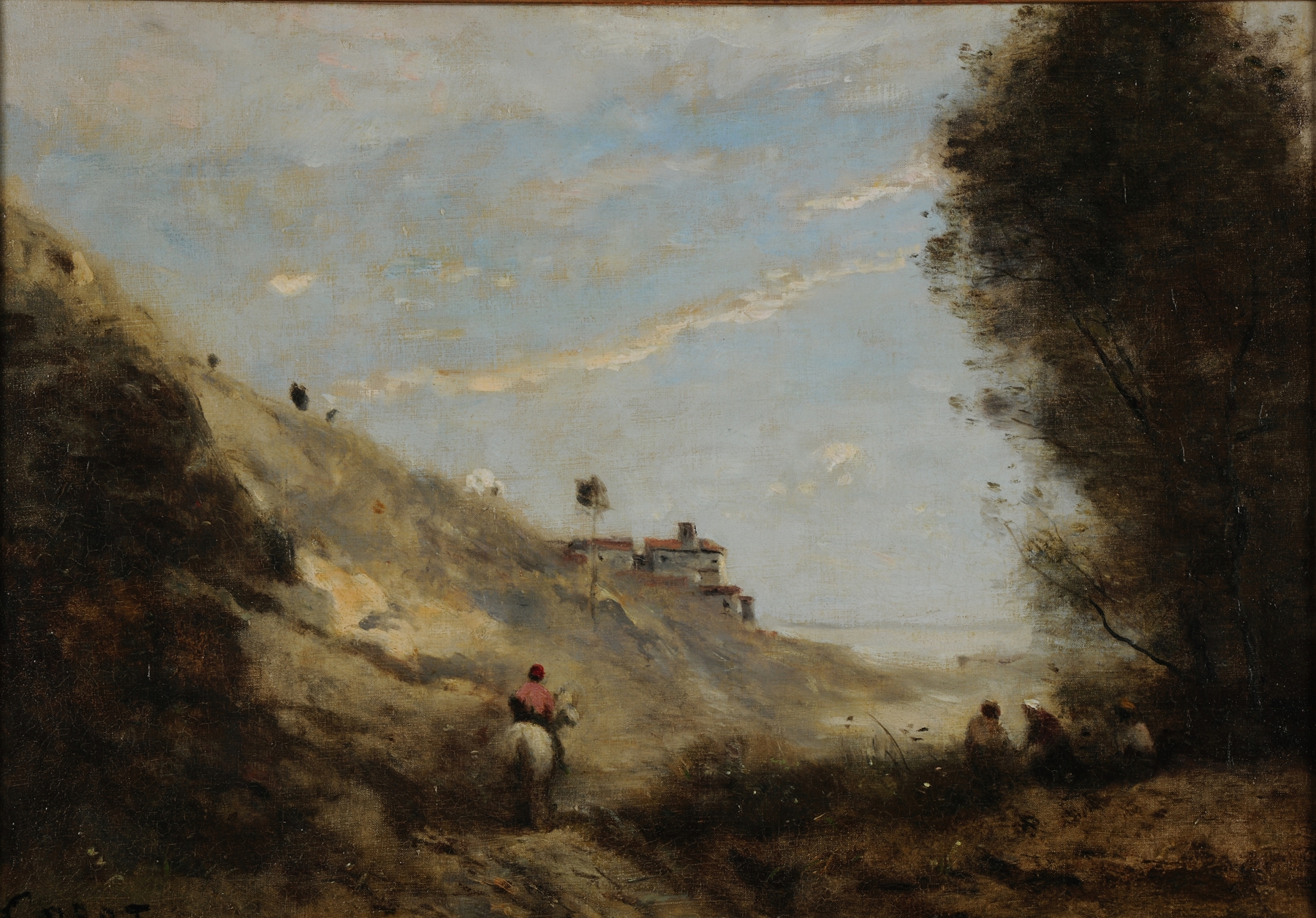
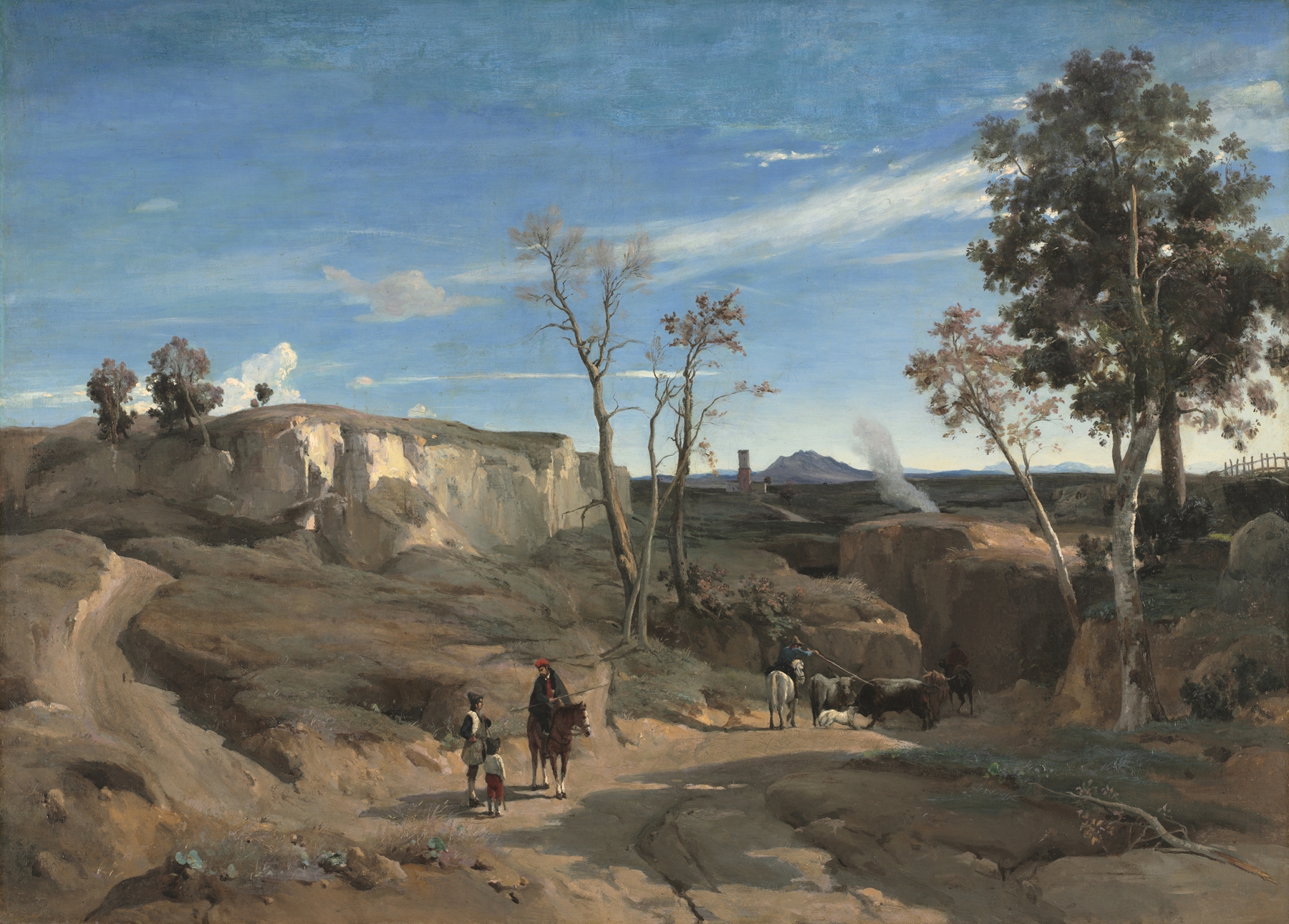
Who listens when art speaks of silence? In La Cervara, the Roman Campagna, divinity lingers in the tranquil air of a pastoral landscape, inviting viewers to contemplate the sacred interplay between nature and civilization. Look to the left at the softly draped trees, their delicate brushstrokes swaying gently in the breeze. The warm hues of ochre and green flow seamlessly into the serene blue sky, creating a sense of harmony.
Notice how the light falls upon the distant hills, bathing the scene in a golden glow, illuminating the church that stands as a sentinel over the countryside. Corot's masterful technique of layering color evokes an ethereal quality that draws your eye deeper into this tranquil composition. Hidden within the canvas lies a contrast between the serenity of the landscape and the looming presence of the church, suggesting the divine's watchful gaze over humanity. The juxtaposition of nature’s lush bounty and the structured, man-made architecture prompts a reflection on the relationship between the spiritual and the earthly.
Each brushstroke captures not just the physical beauty of the Roman Campagna, but also the sacred silence that envelops the scene, inviting viewers to pause and ponder their own place within it. During the early 1830s, Corot was immersed in the burgeoning Romantic movement, experimenting with light and atmospheric effects. He painted this work while reflecting on the themes of nature and spirituality, which were increasingly influential in the art world. As he traversed the Italian landscape, Corot sought to convey not merely the view, but an experience — a moment of reverence for nature's beauty intertwined with the divine essence of creation.