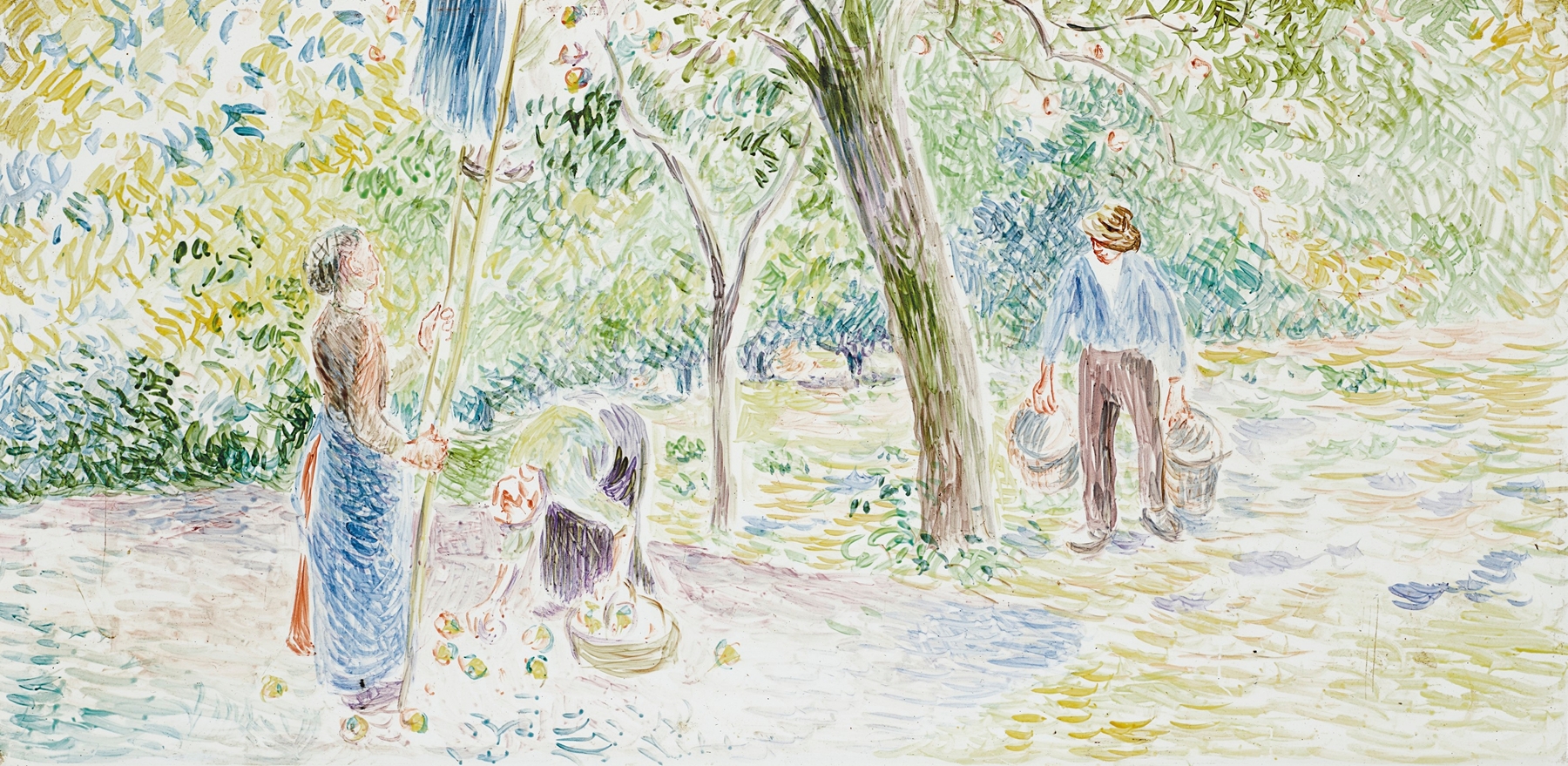
“The canvas doesn’t lie — it simply waits.” In its quiet stillness, *La cueillette des pommes* captures not merely a moment of labor but the profound ache of what is fleeting and the reverberations of loss that follow. The act of picking apples, seemingly joyous, becomes a poignant reminder of impermanence, echoing the cycles of nature and life. Focus on the soft, dappled light that bathes the orchard, drawing your eyes to the group of figures engaged in their harvest. Notice how the colors blend harmoniously, with earthy greens and warm reds creating a tapestry of life. The staccato brushstrokes evoke movement, yet the overall composition holds a serene stillness, as if time has paused. Look closely at the expressions of the pickers; their faces reflect a mix of concentration and resignation, hinting at an emotional weight beneath their task. Hidden within the vibrancy of the apple harvest lies a deeper narrative. The juxtaposition of labor and leisure reveals the tension between hope and the inevitability of loss; the apples, ripe and ready, symbolize both abundance and the transitory nature of joy. Each picked fruit, though filled with promise, will soon fade and fall, underscoring the bittersweet relationship between nature's bounty and the sorrow of its passing. The figures, while together in this moment, also project solitude, amplifying the pathos of human connection amid the relentless march of time. Pissarro painted *La cueillette des pommes* between 1884 and 1885 in Éragny, France, during a period of personal and artistic evolution. He was deeply involved in the Impressionist movement, exploring the interplay of light and color while grappling with the societal changes of the era. This work reflects not only his mastery of technique but also his introspection amid a changing world, capturing the essence of the human experience in all its fragility.