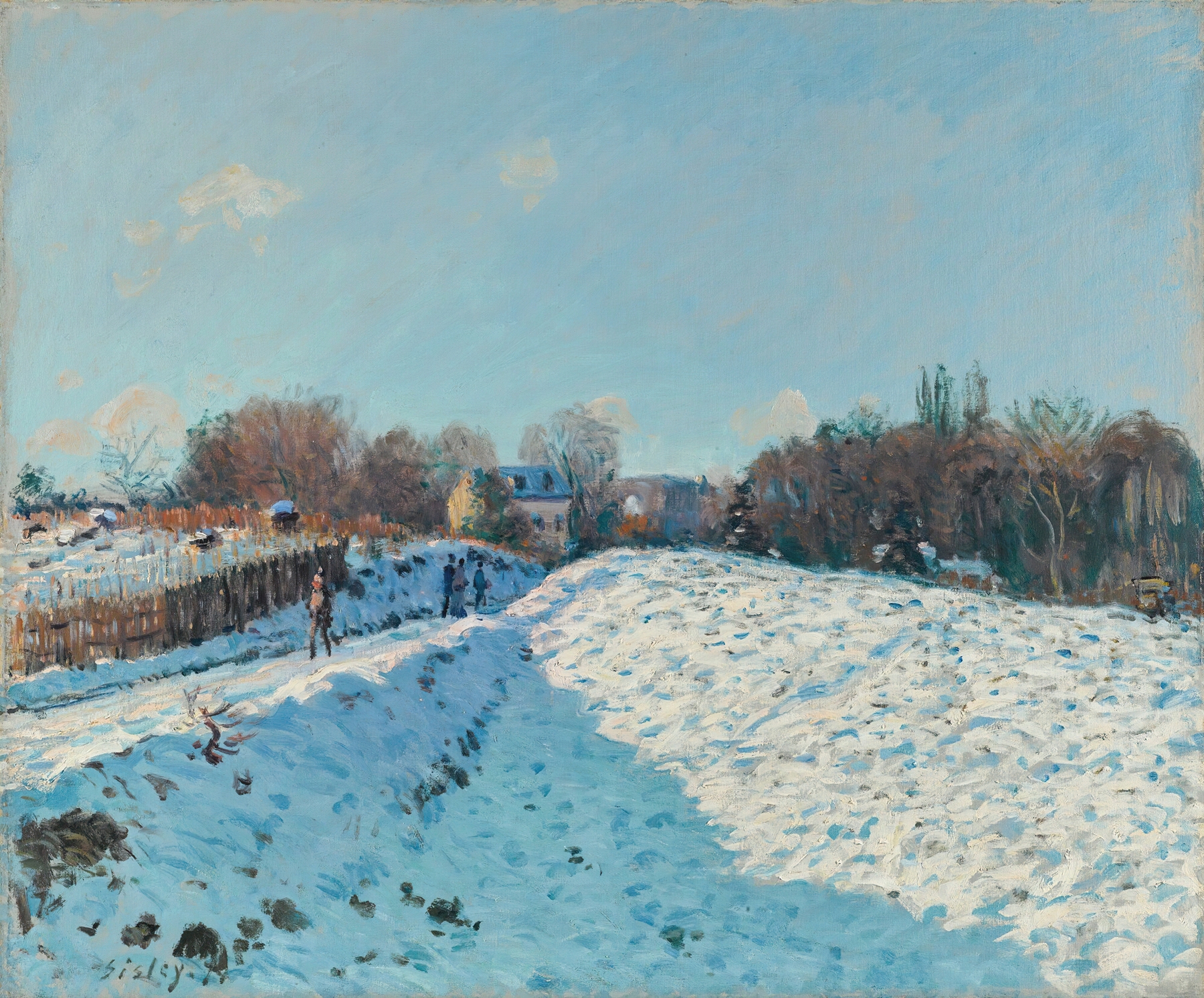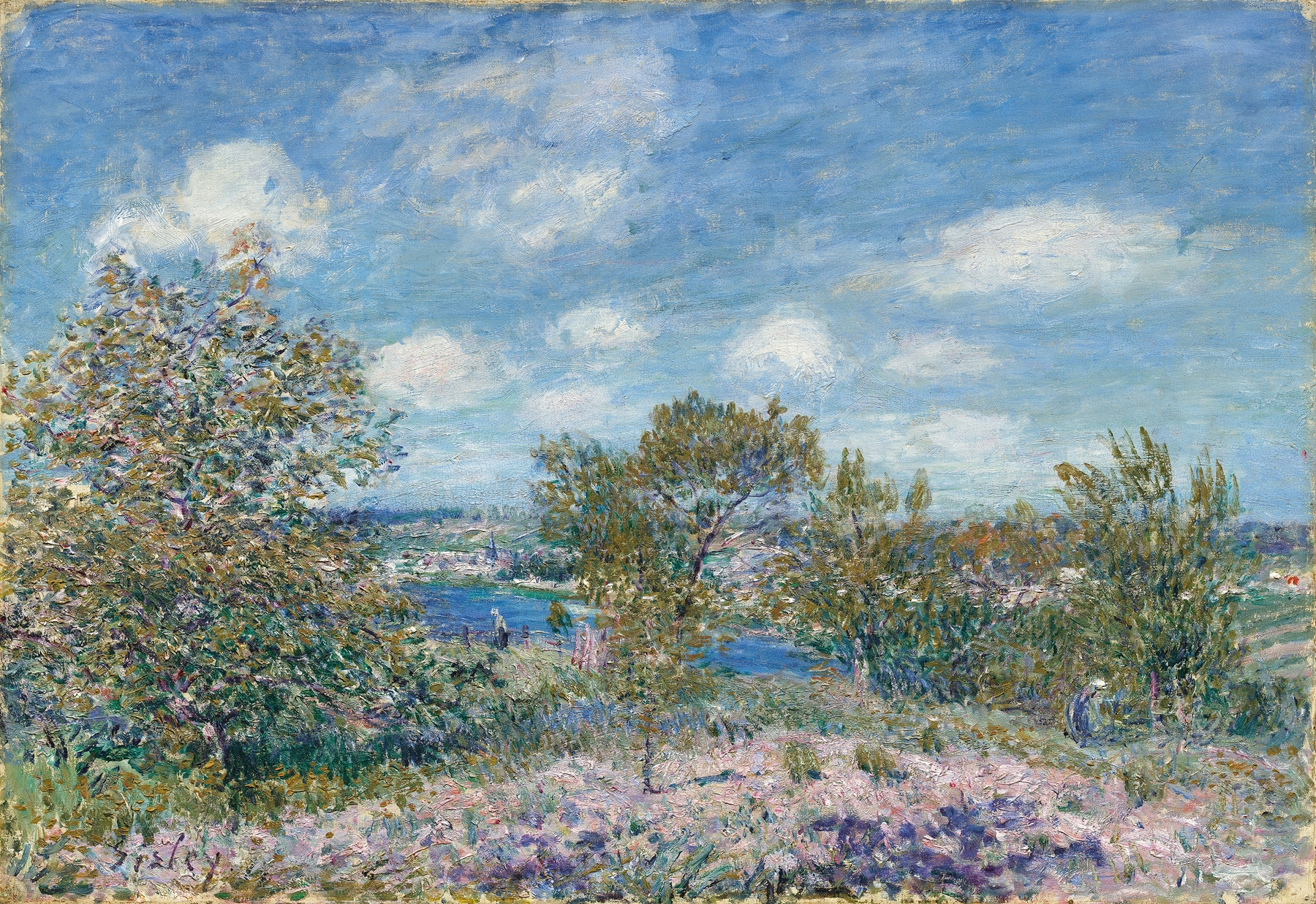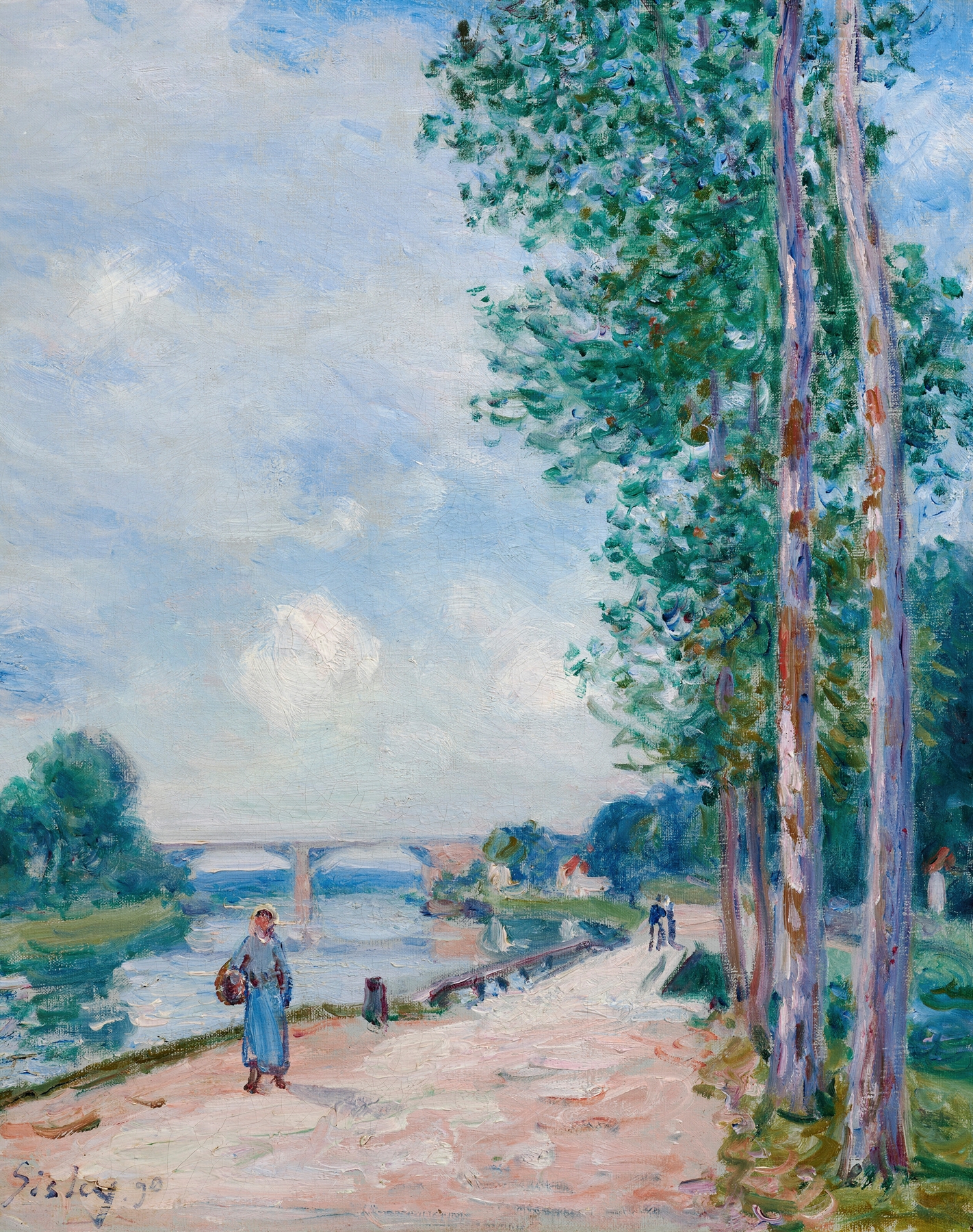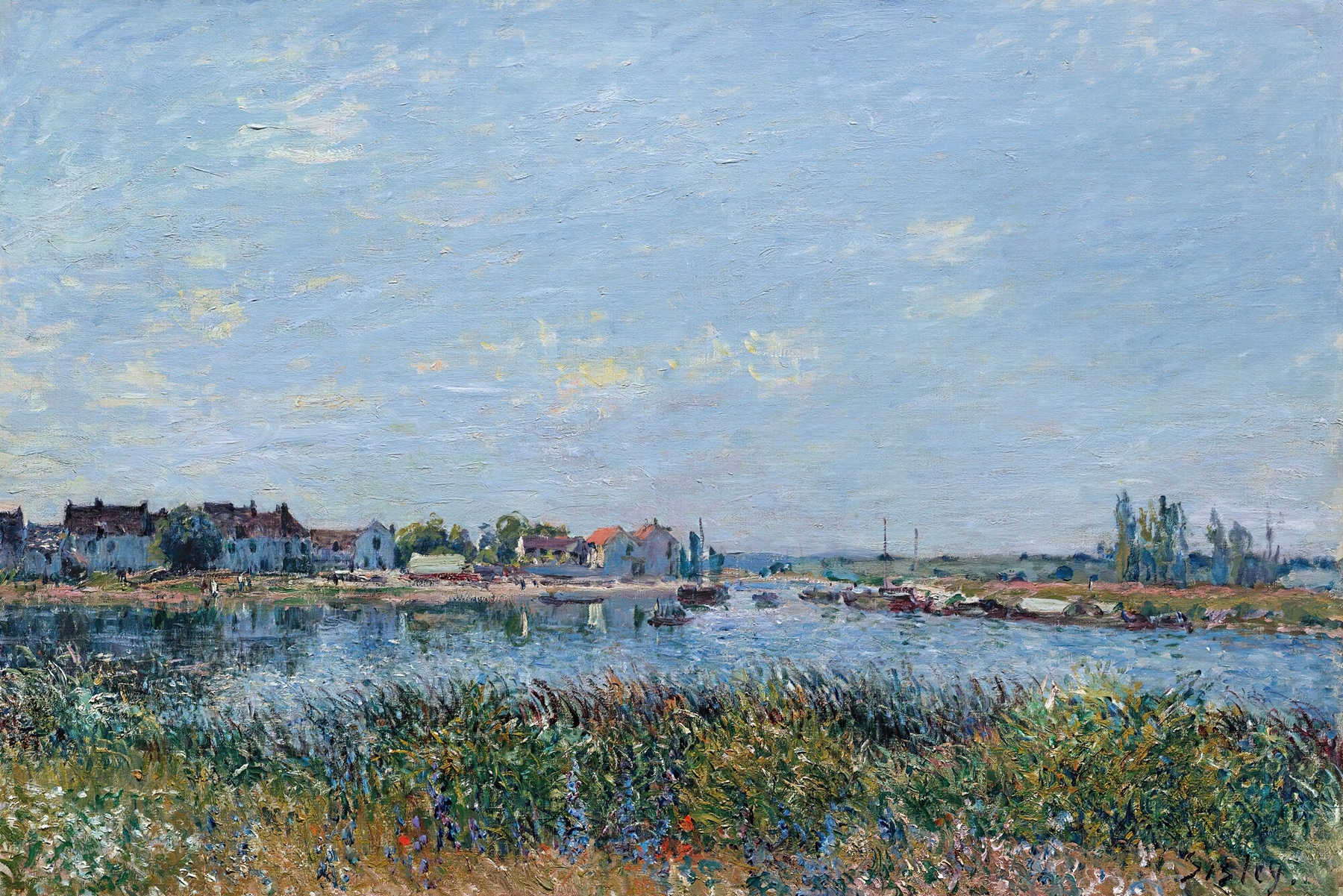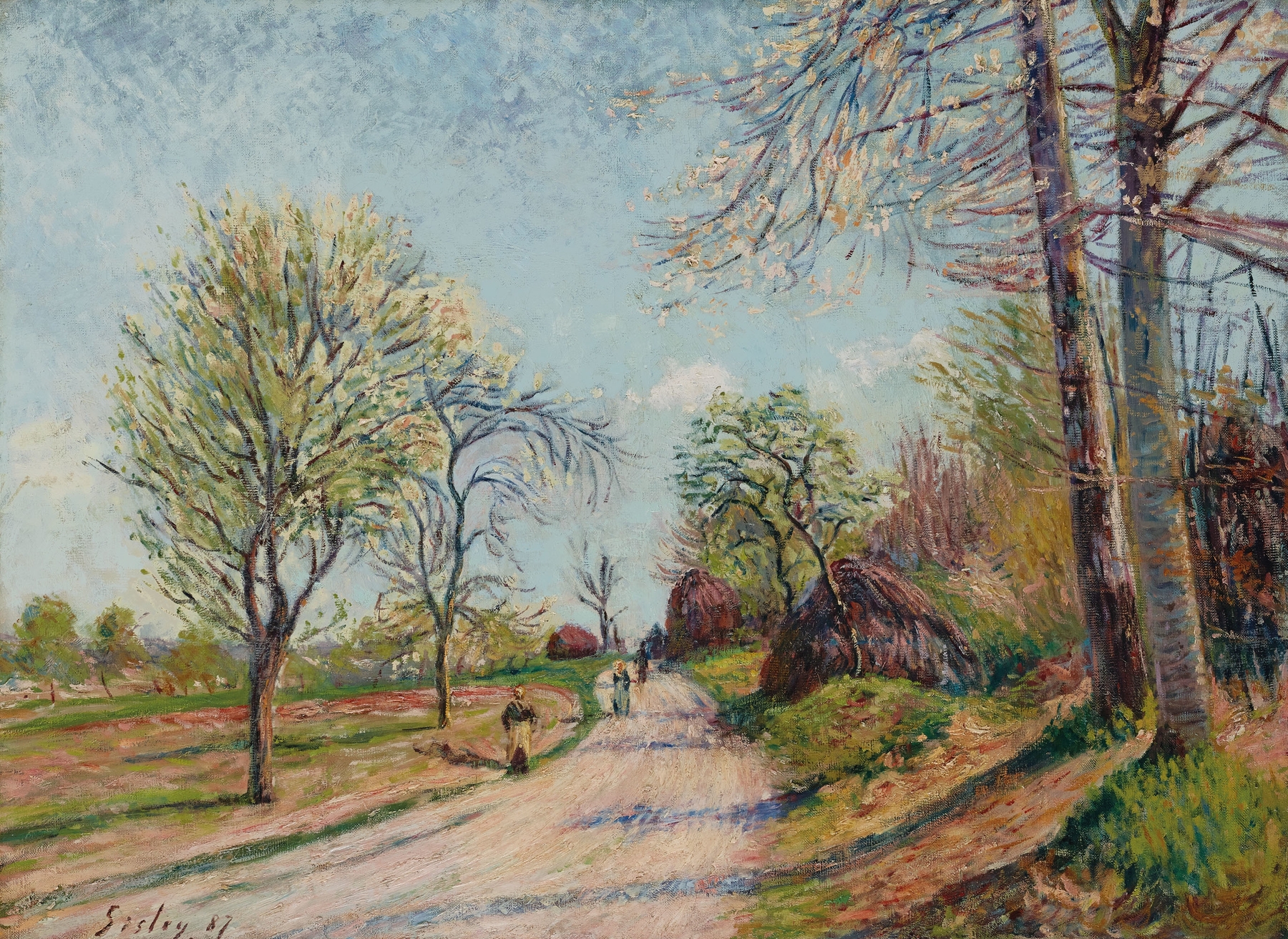
What secret hides in the quiet of the canvas? In the stillness of *La route de Veneux*, Alfred Sisley invites us to explore the whispers of memory intertwined with nature’s embrace. Look to the left at the gentle curve of the winding road, leading us into the soft expanse of greenery. The colors—lush greens mingled with muted earth tones—imbue the scene with tranquility, while dappled sunlight filters through the branches of nearby trees, creating a delicate interplay of light and shadow. Notice how the brushstrokes are both fluid and precise, guiding your gaze along the path, as if beckoning you to step into this serene moment. Beneath the surface of this idyllic landscape lies a profound emotional tension. The road symbolizes journeys both physical and metaphorical, prompting reflections on where we have been and where we may yet go. The solitude encapsulated by the trees, the muted palette, and the absence of figures suggest a poignant stillness, a space for contemplation that resonates with anyone who has experienced the bittersweet nature of reminiscence. It's a moment suspended in time, holding the weight of memory in its quietude. In 1887, Sisley painted this work while residing in France, where he became a pivotal figure in the Impressionist movement. This was a period marked by his continued experimentation with light and atmosphere, reflecting the changing landscape of post-industrial Europe. As he sought to capture the essence of fleeting moments, Sisley embraced the harmony of nature, grounding his vision in a world that lay both before and behind him.