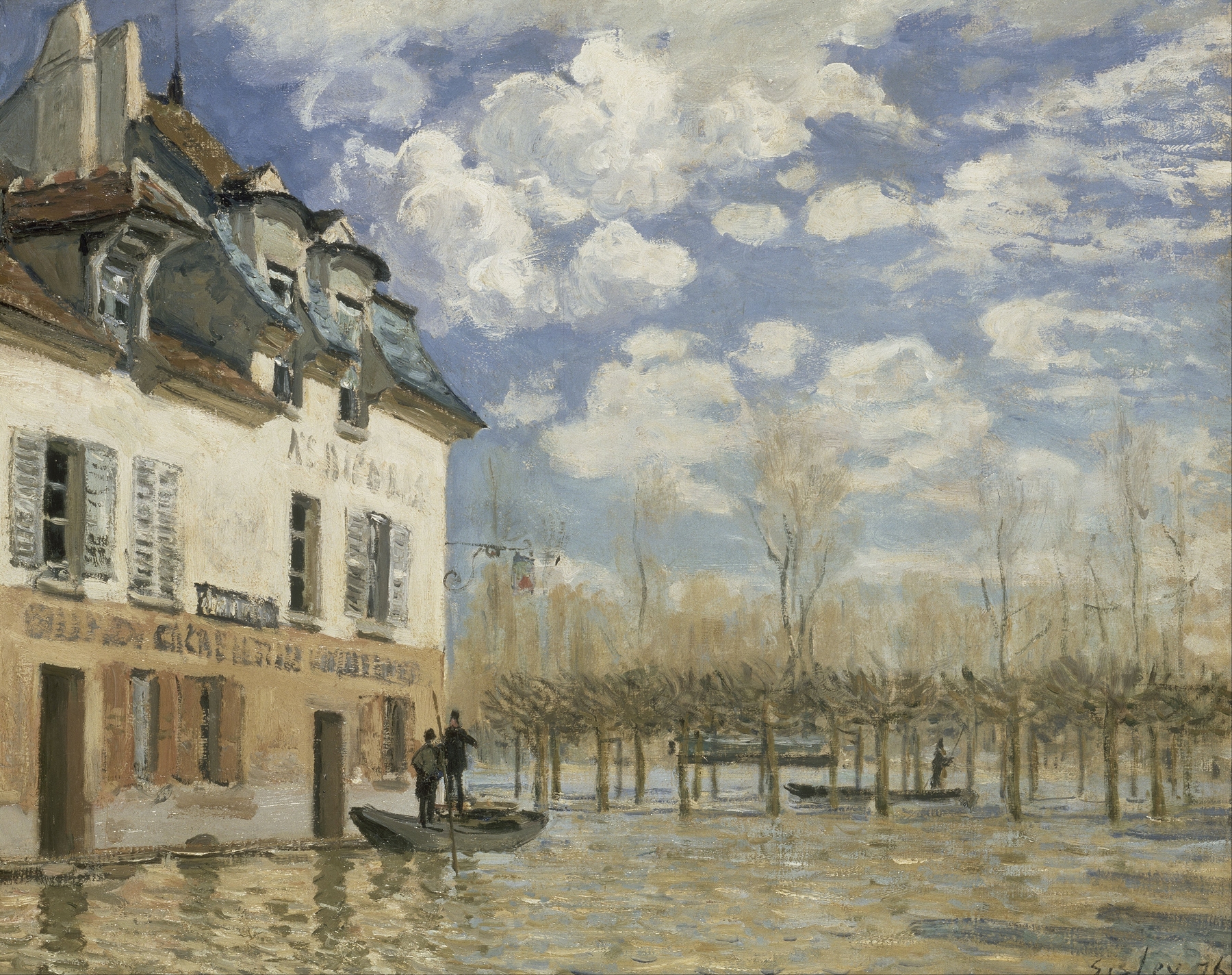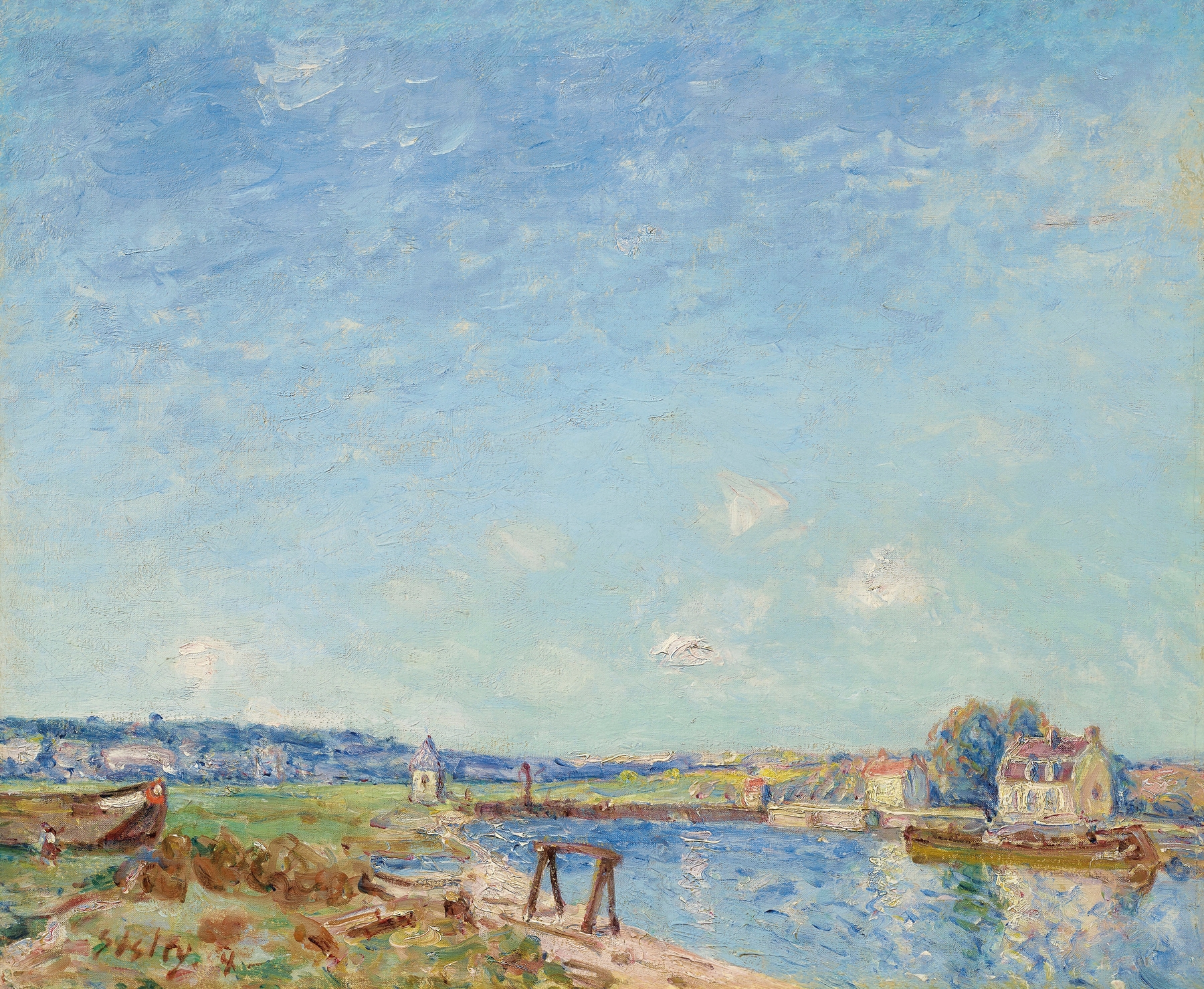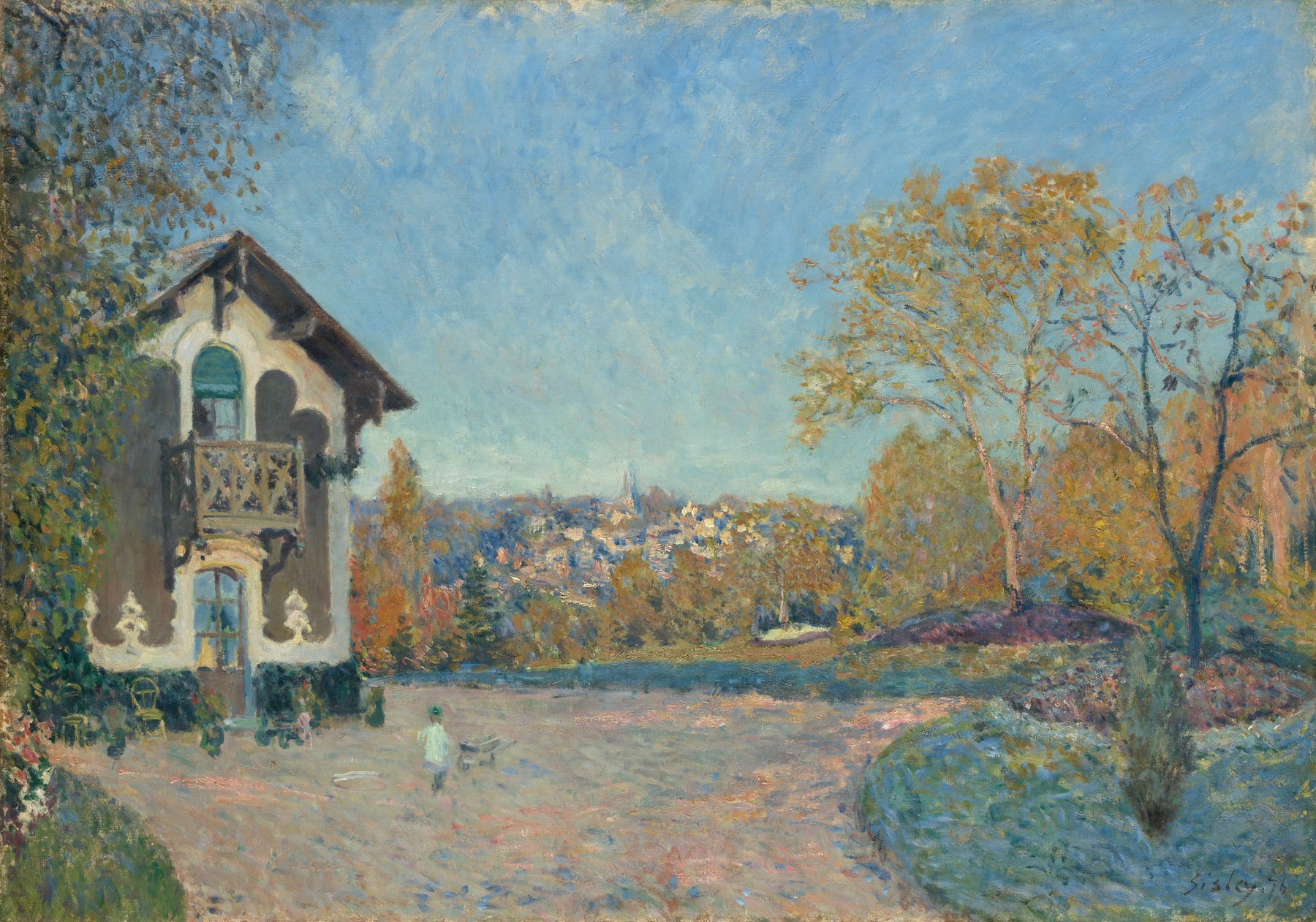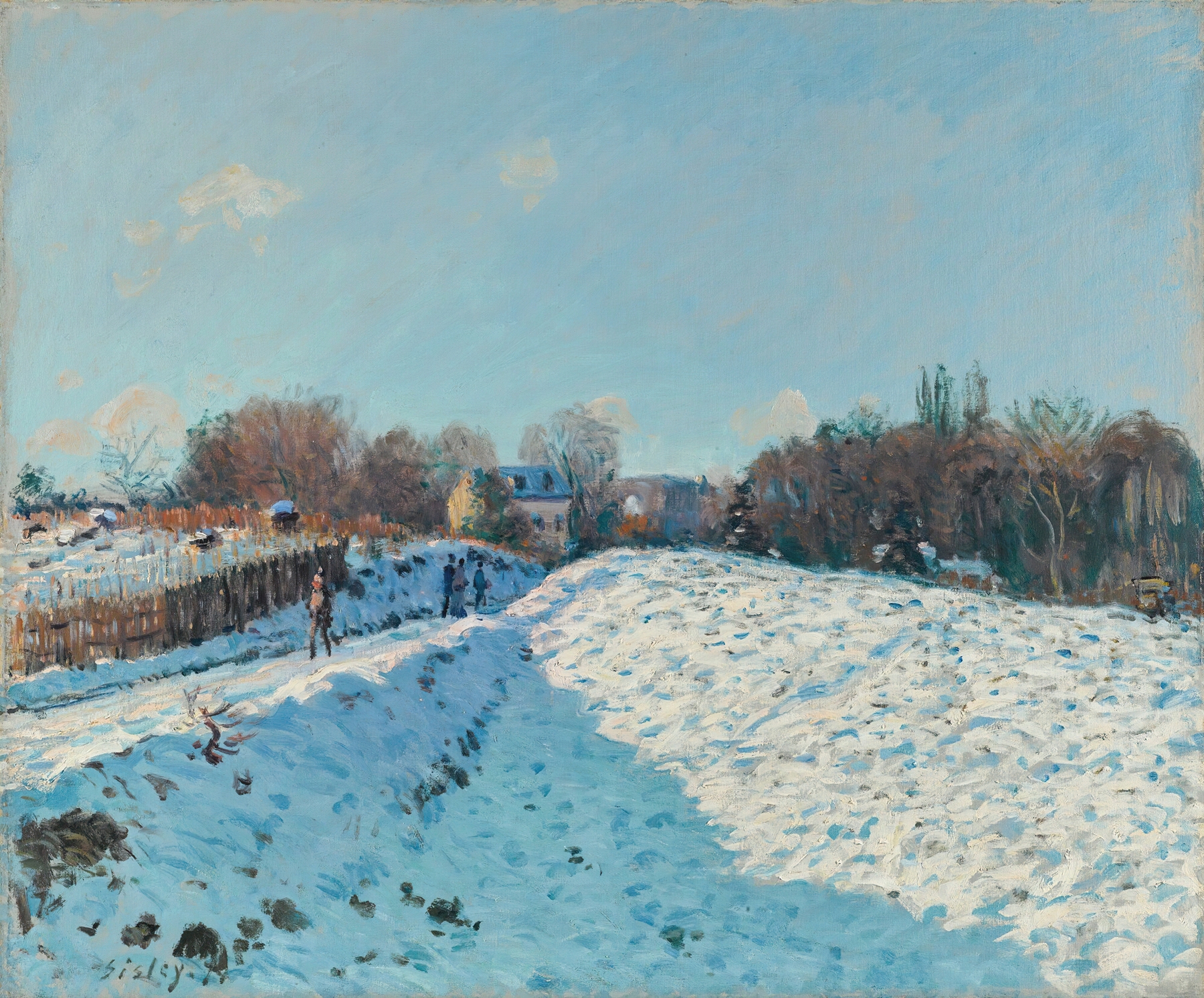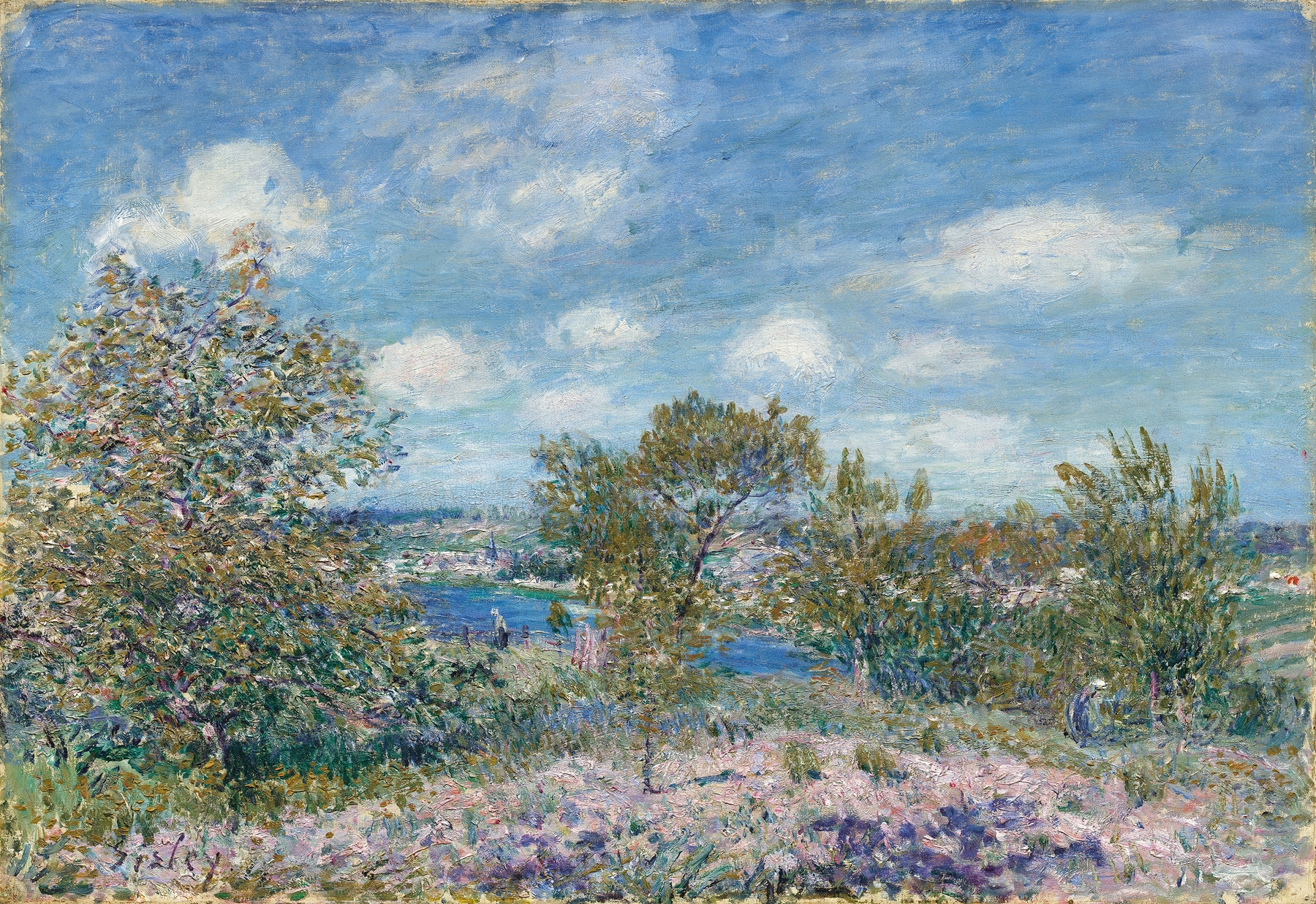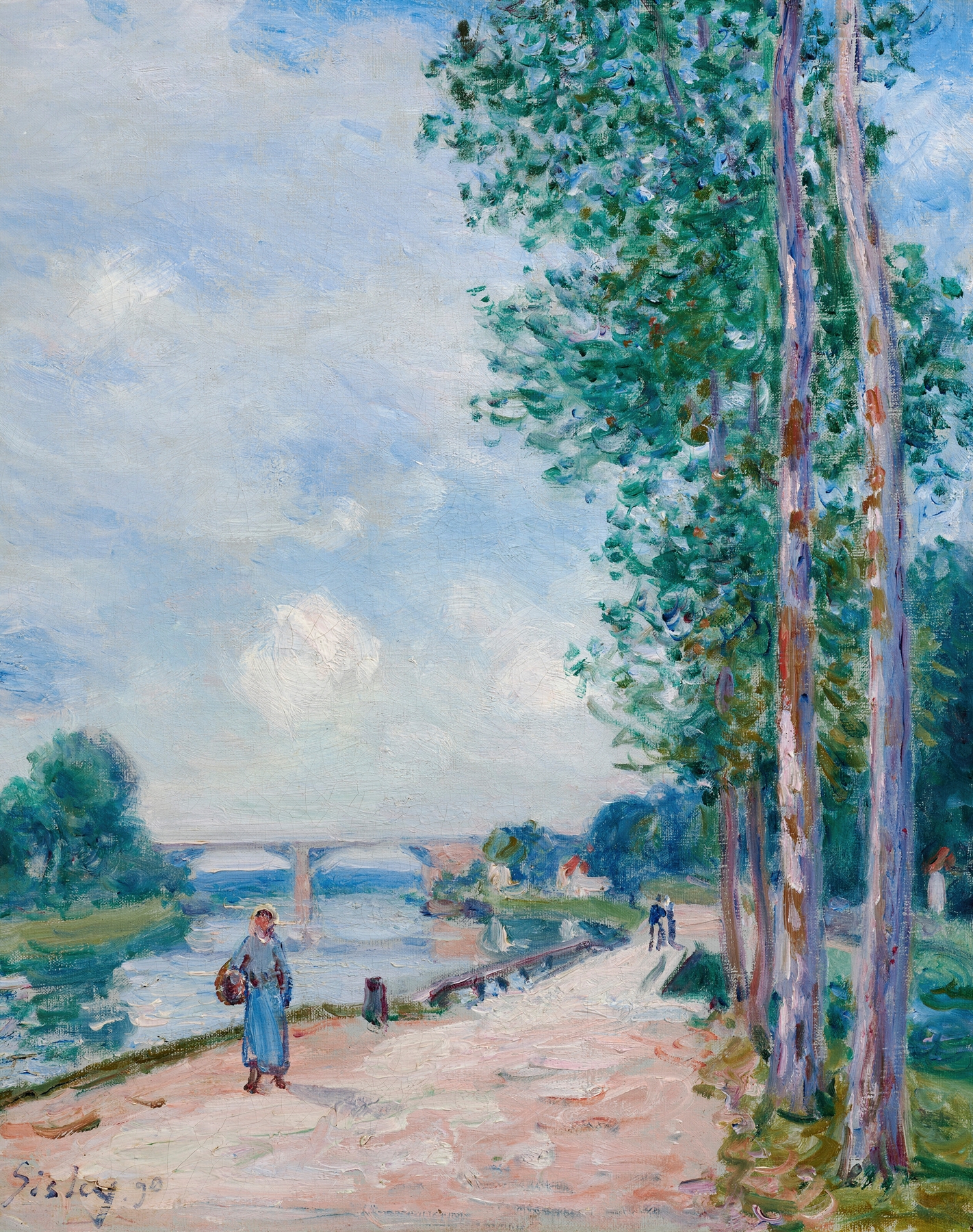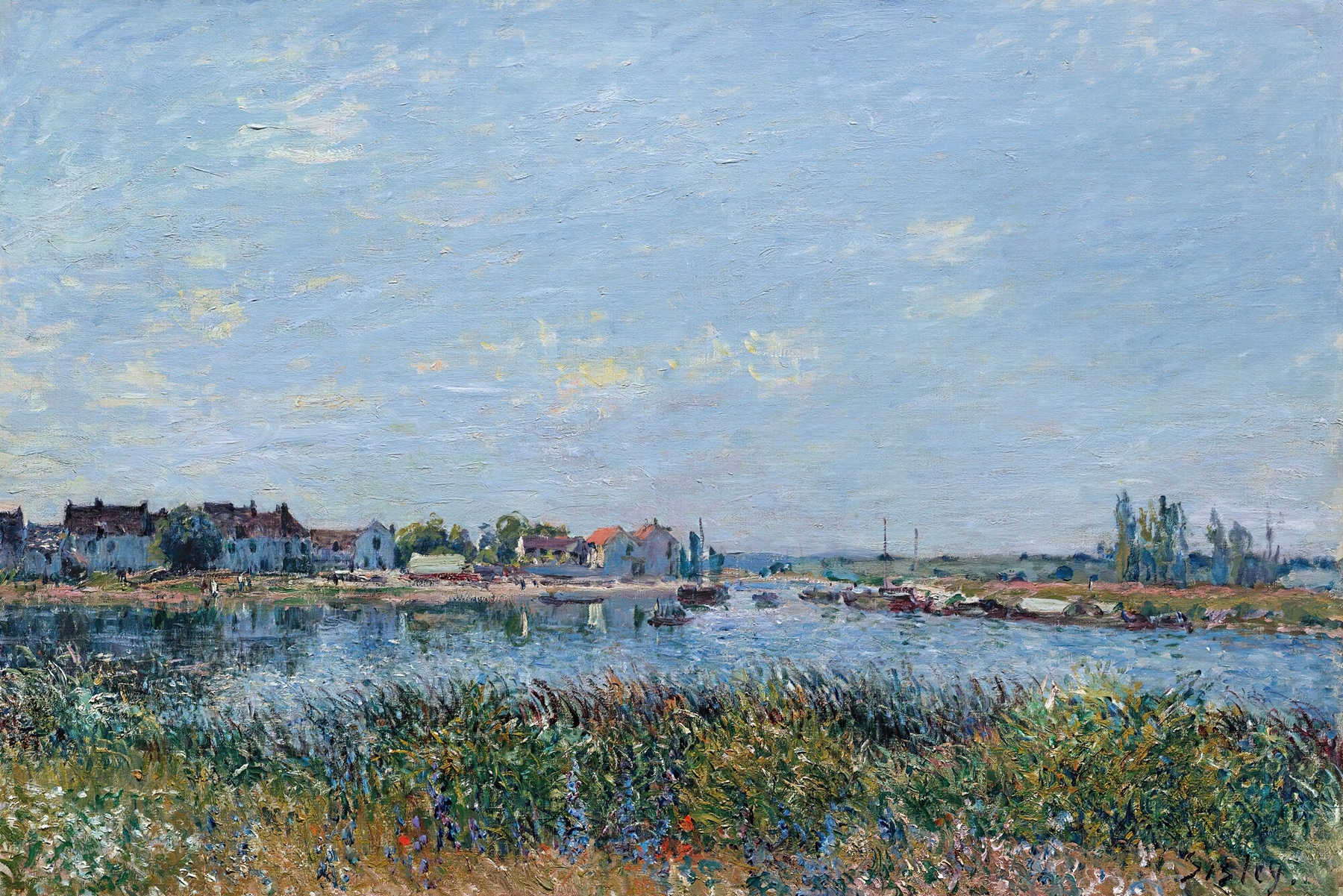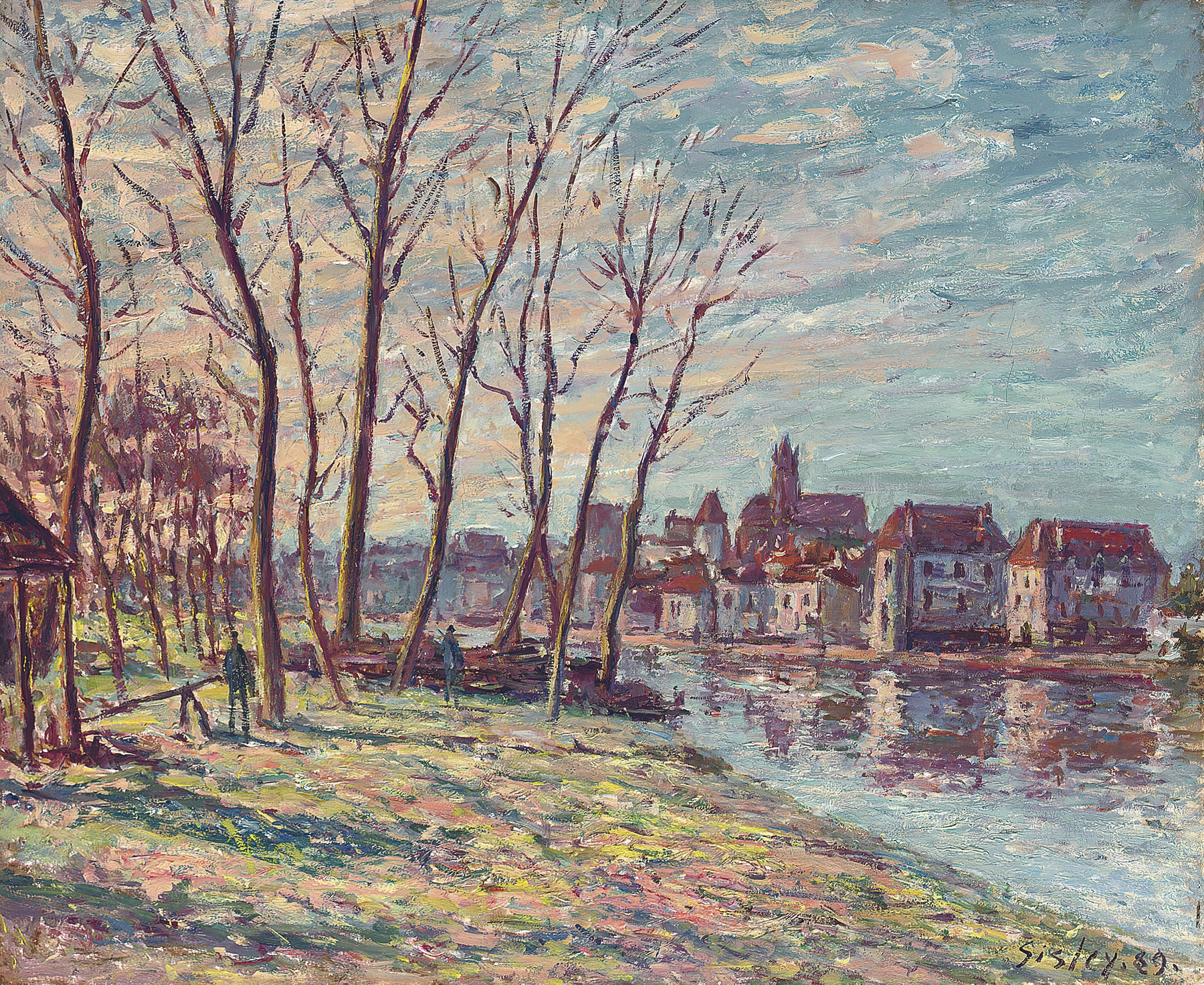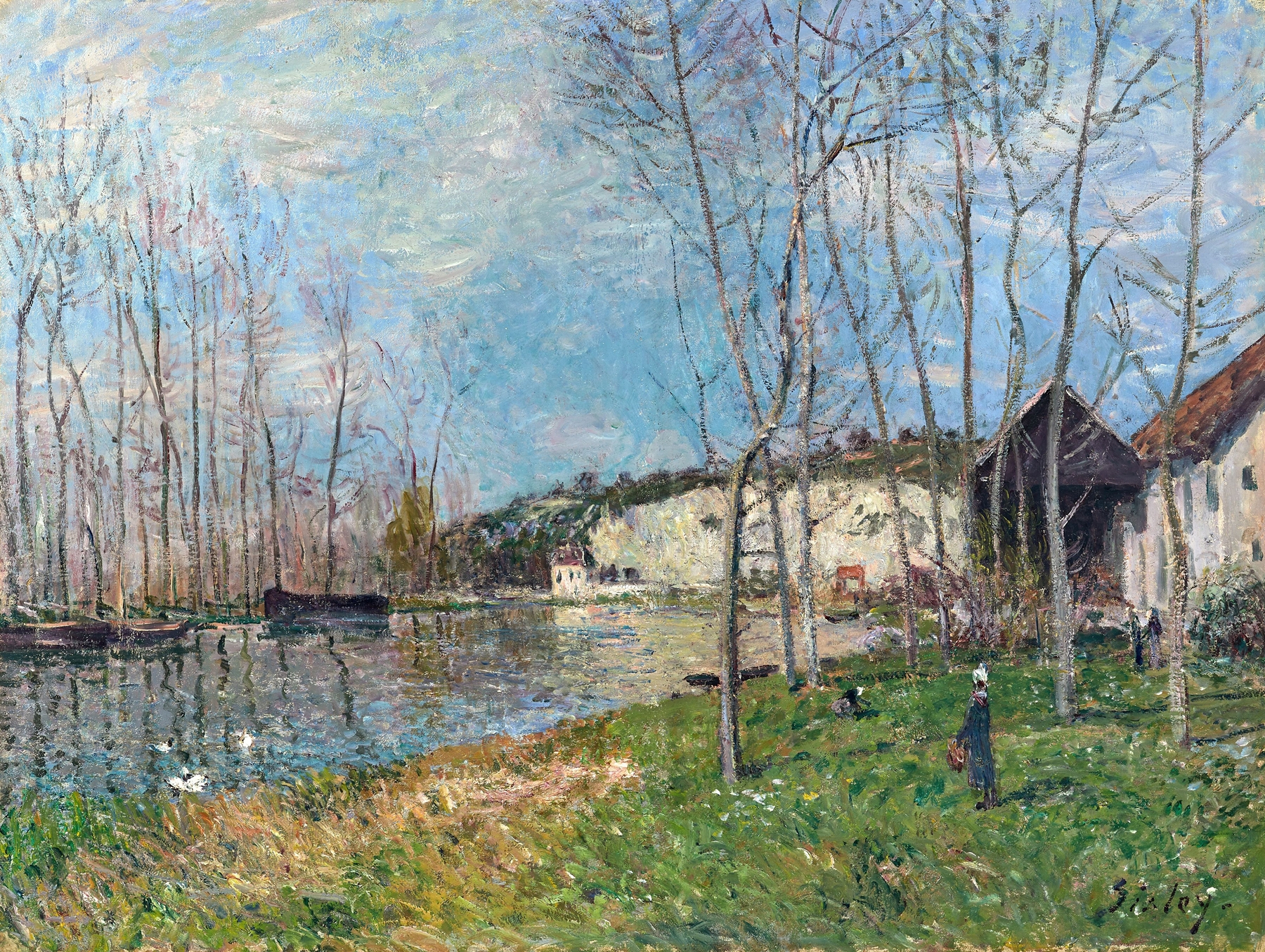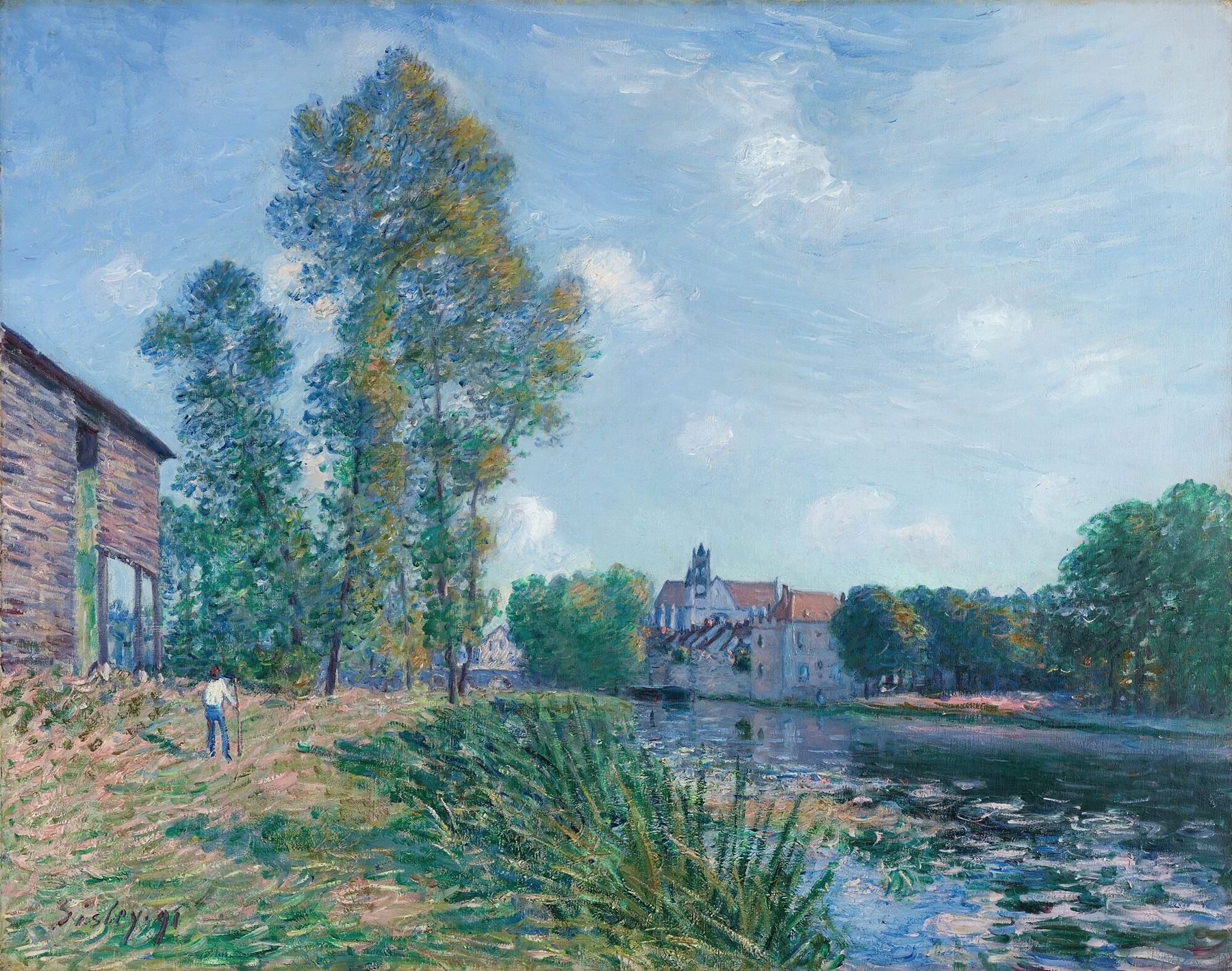
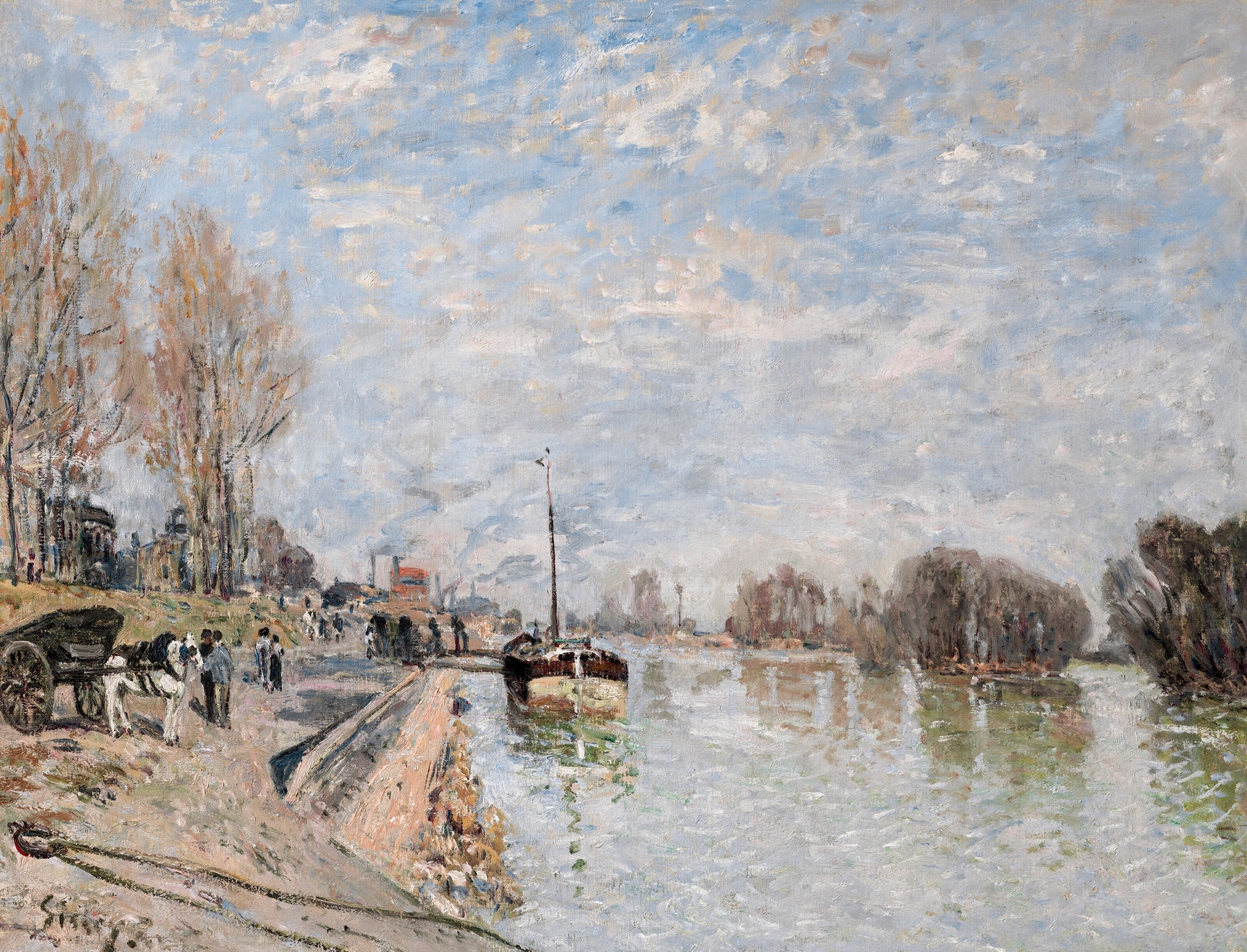
“Art reveals the soul when the world turns away.” In a fleeting moment, Sisley's brush captures not just a scene, but an essence that speaks to the truth of existence. Focus first on the shimmering surface of the river, where ripples dance with a delicate light, creating a mirror-like effect that draws your gaze. Look to the left, where the lush green trees stand tall, their branches swaying gently as if whispering secrets to the summer breeze. The palette of vibrant greens, blues, and soft earth tones evokes warmth, yet the subtle interplay of shadow hints at fleeting moments, reminding us of life's transience. Beneath the surface, there’s a juxtaposition of serenity and movement. The peaceful water suggests calmness, yet the strokes convey a sense of urgency and change, a reminder that nature is a living entity. The distant figures, almost ghosts within the landscape, symbolize humanity's fleeting place in the grand tapestry of time, inviting contemplation on our connection to nature and each other. Alfred Sisley painted *Le Loing À Moret, En Été* in 1891 while living in France, a time when Impressionism was blooming and shifting artistic landscapes. This period marked personal challenges for him, including financial difficulties, yet he remained devoted to capturing light and atmosphere. His dedication to en plein air painting reflected the broader movement's quest to express pure truth and emotion through the lens of nature.