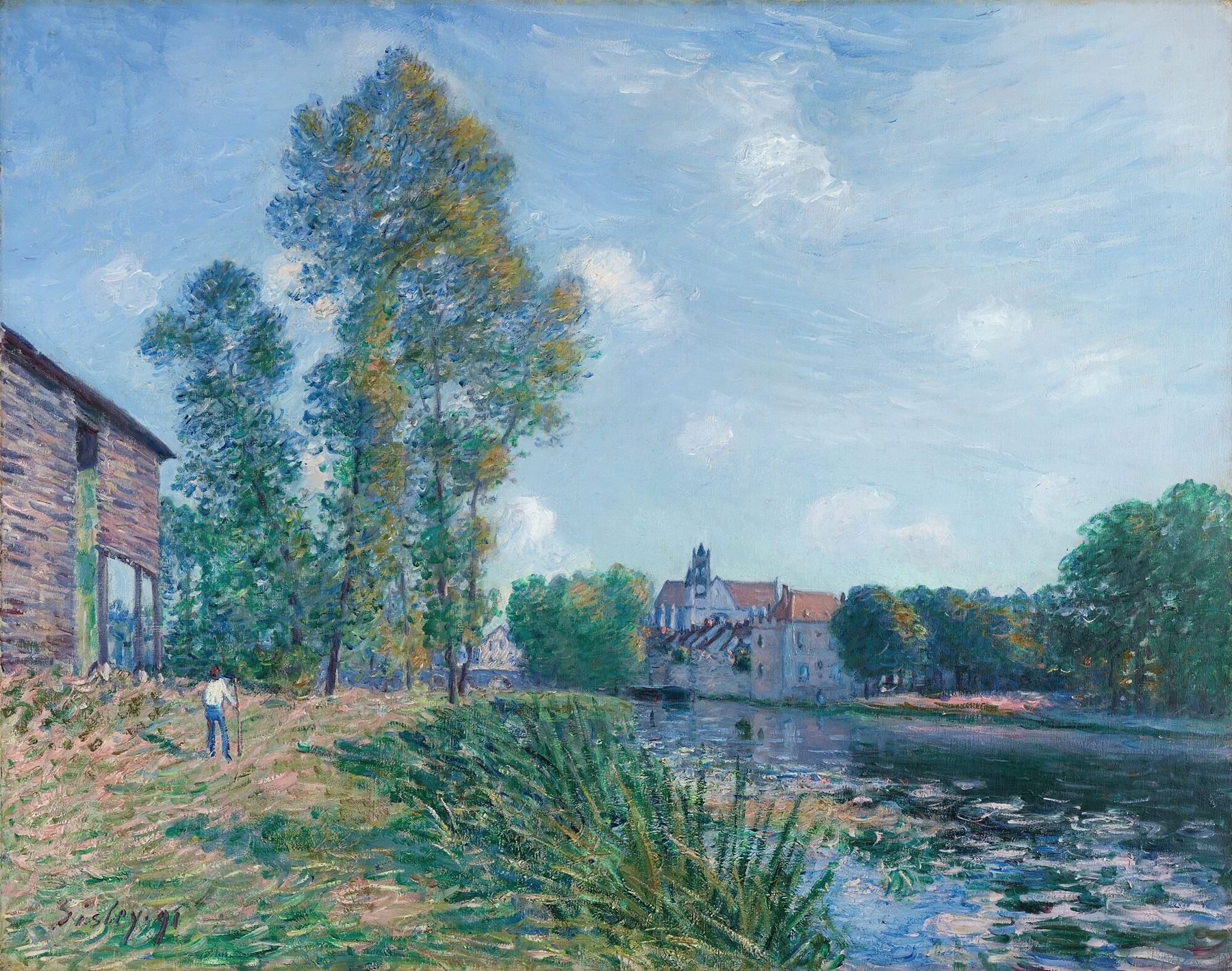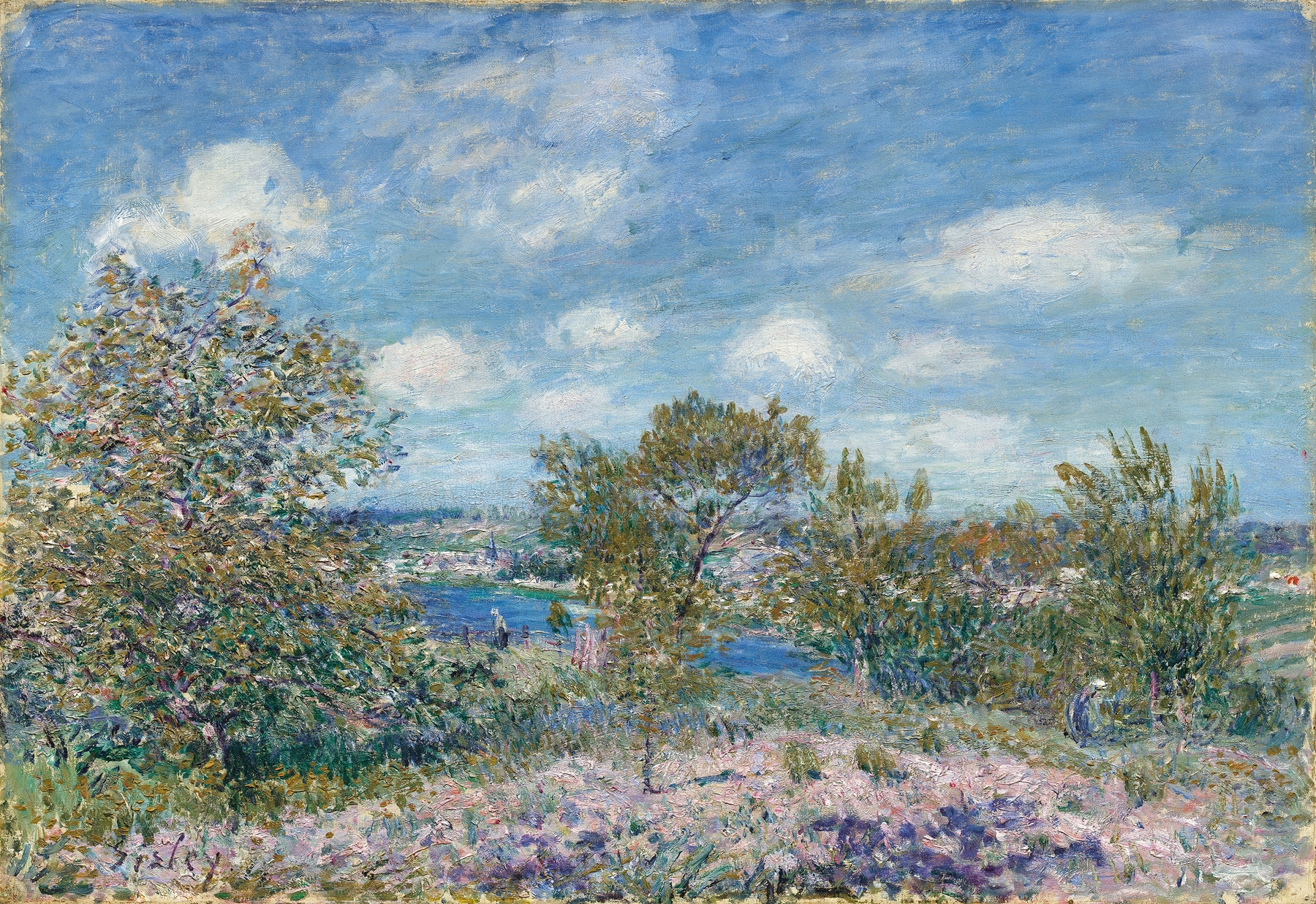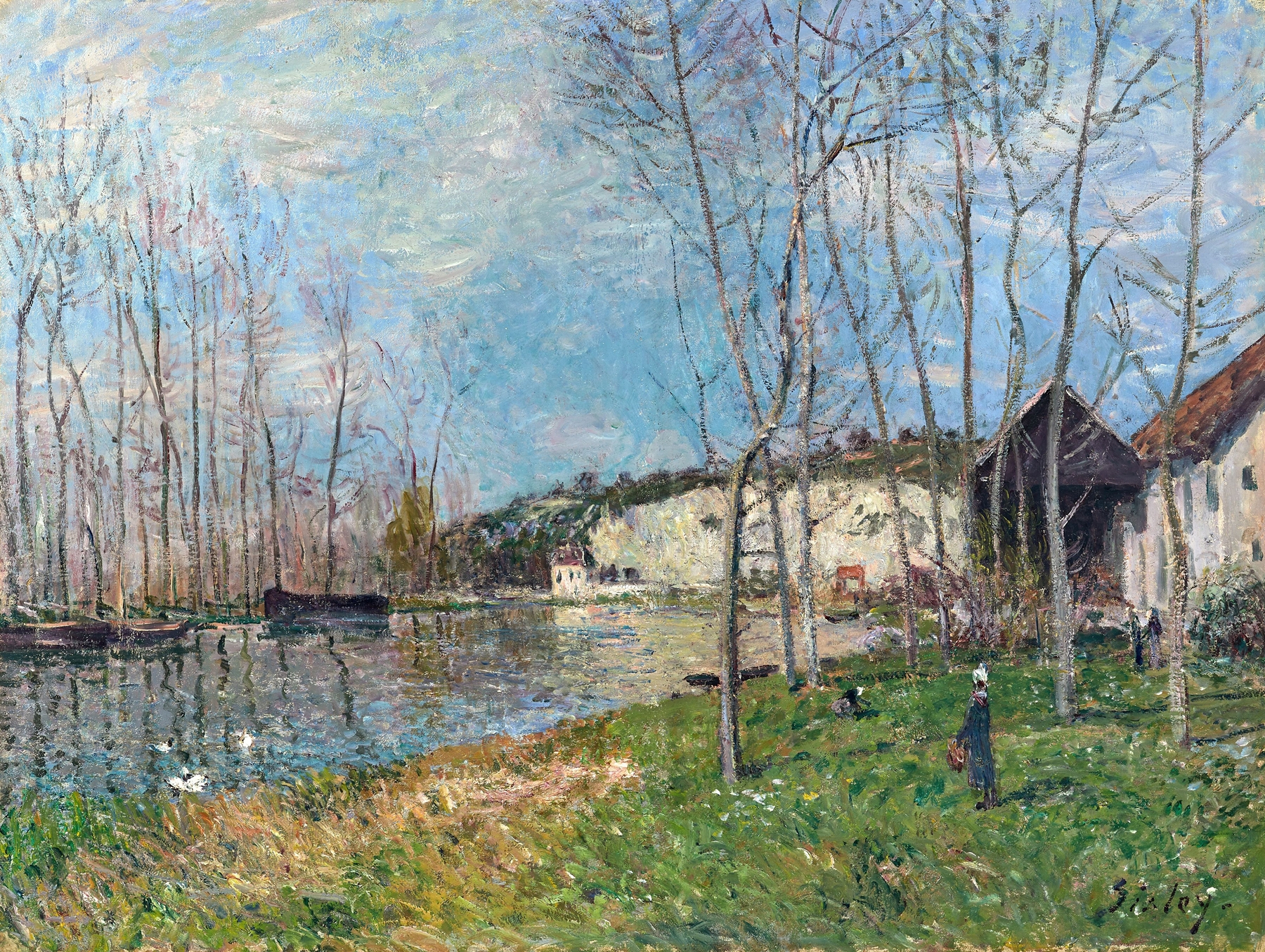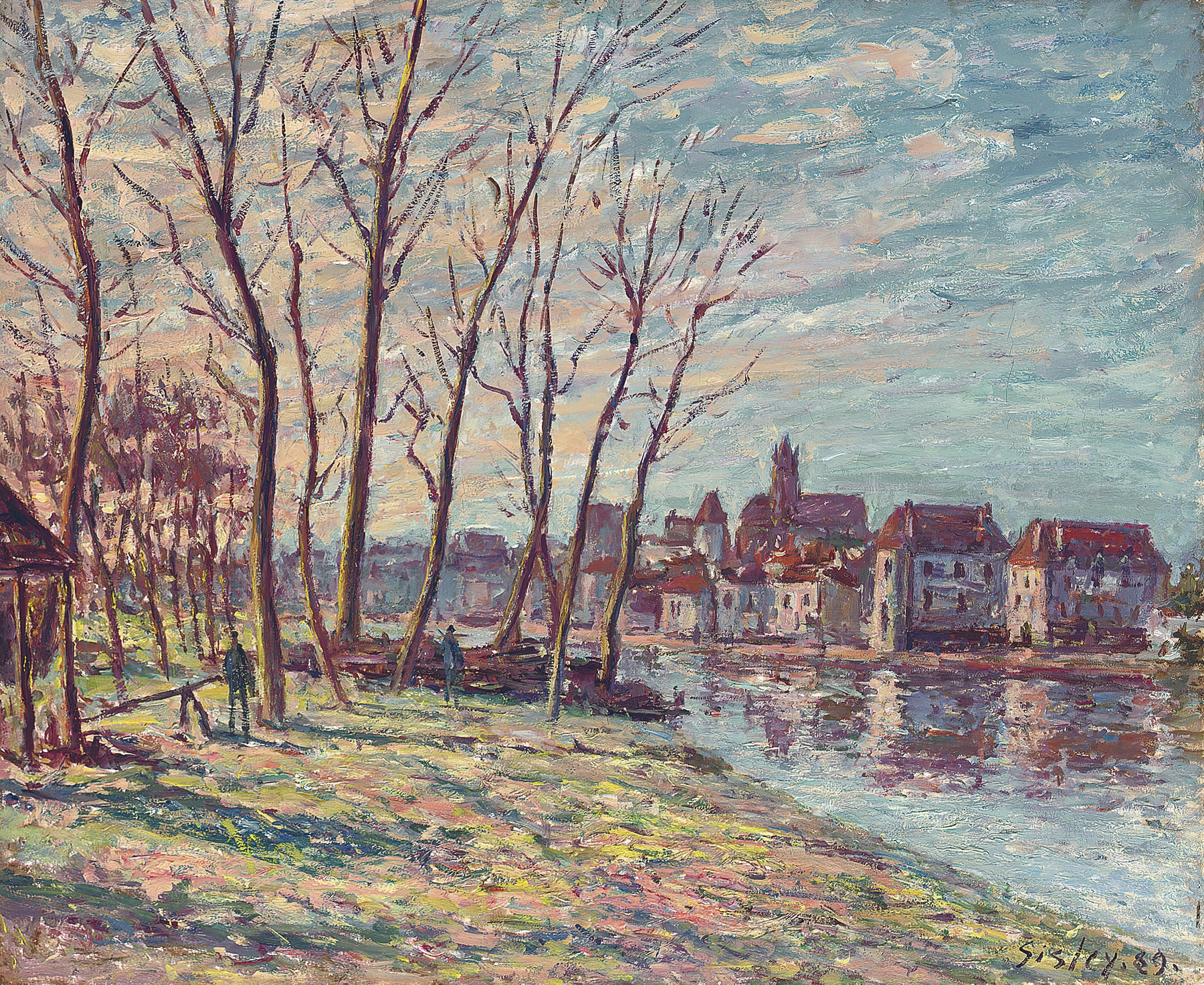
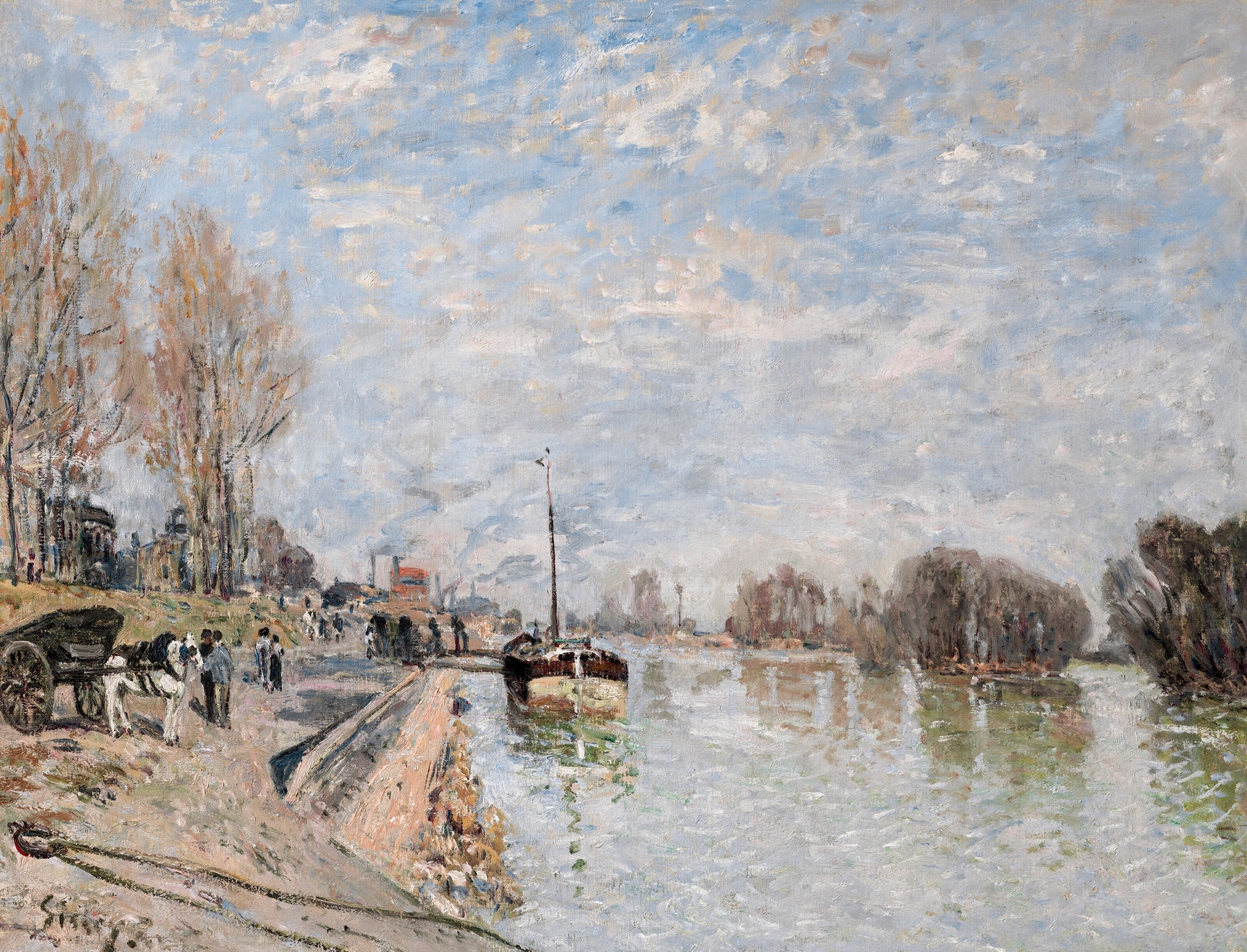
“Art reveals the soul when the world turns away.” A fleeting moment captured on canvas can speak volumes of our deepest fears and hopes, whispering truths that words often fail to express. In *Vue de Moret*, the viewer is invited into a serene landscape that belies the undercurrents of apprehension lurking beneath its tranquil façade. Look to the right at the gentle curve of the river, meandering softly through the scene, its waters reflecting a sky heavy with clouds. Notice how Sisley's brushstrokes create a rhythm that guides the eye along the banks, where muted greens of foliage blend harmoniously with the earthy browns of the land. The soft light filters through the trees, illuminating patches of wildflowers with a fleeting brilliance, yet hints at an impending storm threatening the peaceful ambiance. The composition is carefully balanced, leading one to feel both the solace of nature and the subtle tension that hangs in the air. Delve deeper, and you’ll find the emotion that lies beneath the surface: a contrast between beauty and unease. The delicate flowers, while vibrant, seem fragile against the foreboding clouds, reflecting the transient nature of happiness and the fear of change. The quiet stillness of the landscape speaks to a moment both perfect and precarious, evoking a sense of vulnerability in a world often filled with uncertainty. Here, the harmony of nature becomes a poignant reminder that beauty can coexist with fear. In 1889, Sisley painted this work during a period marked by personal struggles and a shifting artistic landscape. Living in France, he faced financial challenges and the pressures of Impressionism evolving into new forms. Straddling the line between hope and despair, he captured both the serenity of nature and the emotional subtleties that accompany human experience, leaving us with a profound invitation to ponder our own fears amidst life’s fleeting beauty.