La Rue des Prêtres Saint-Séverin — History & Analysis
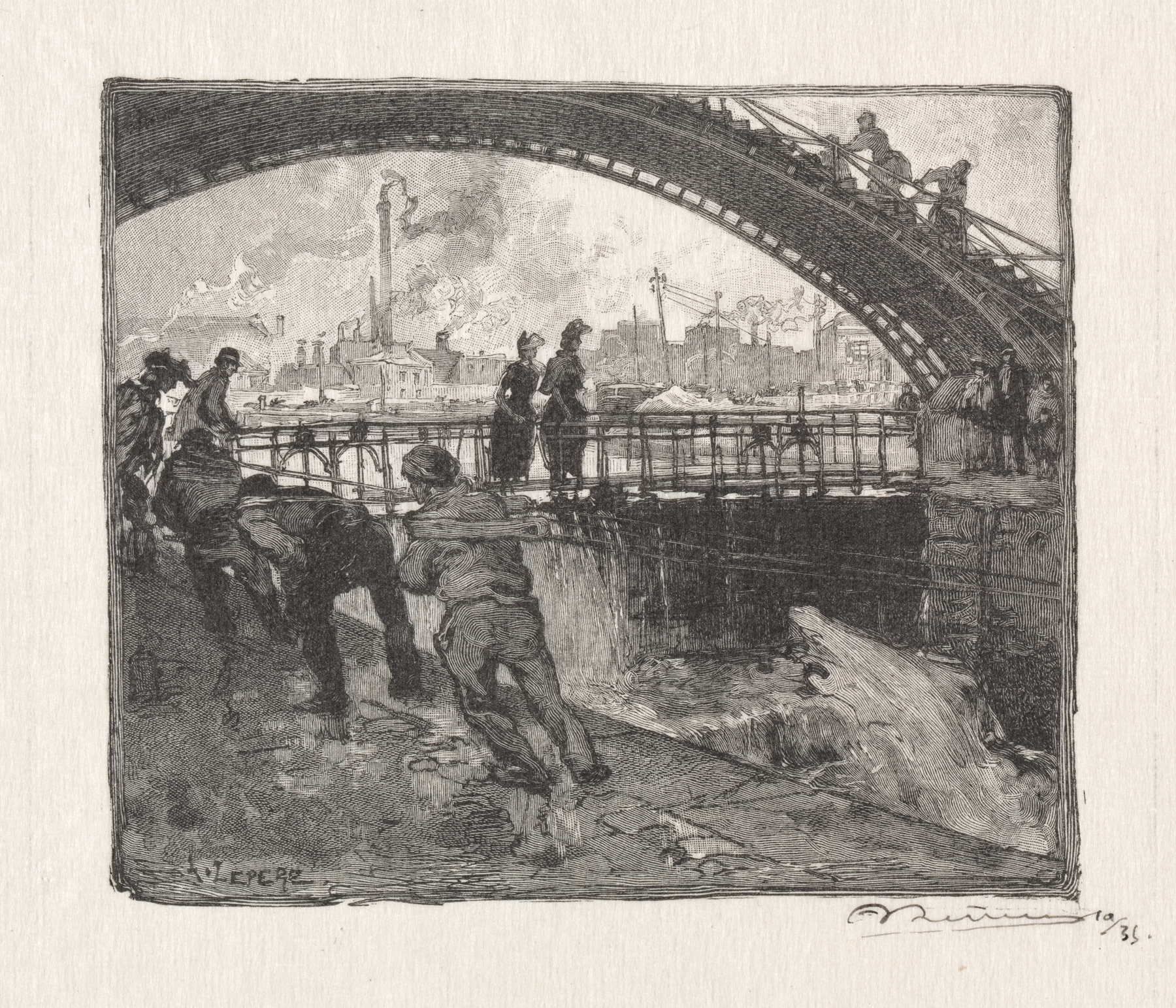
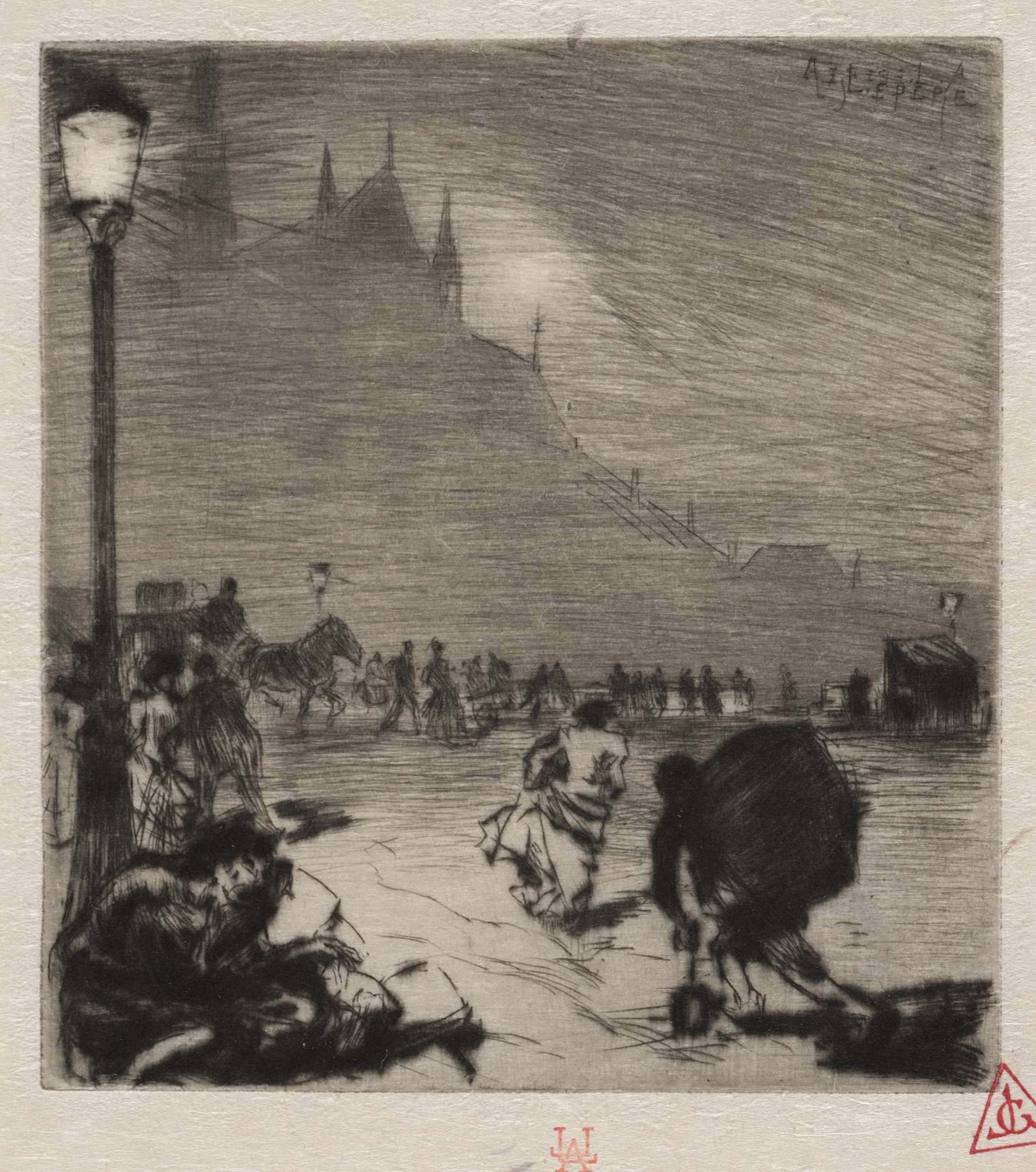
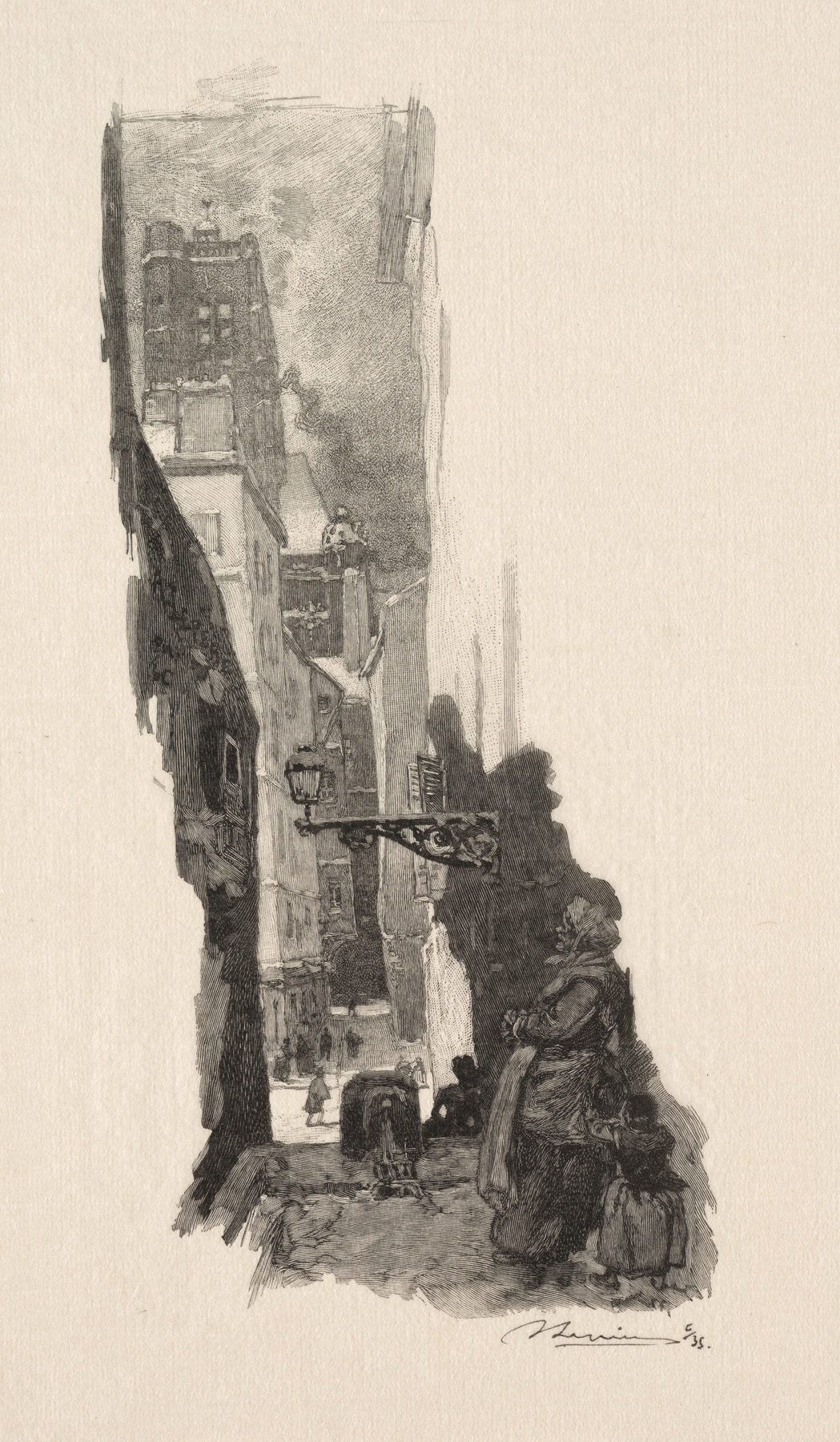
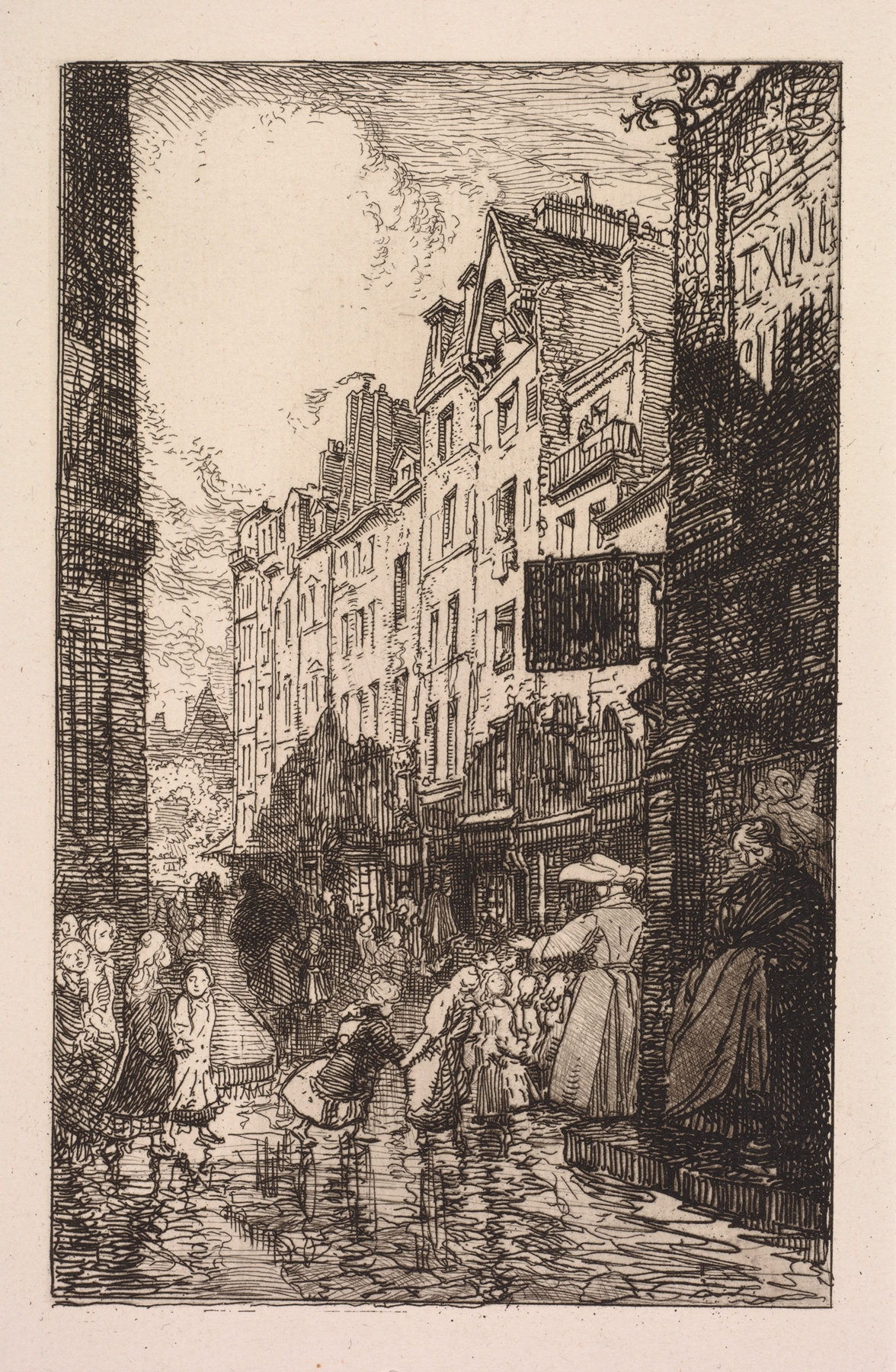
Who listens when art speaks of silence? In *La Rue des Prêtres Saint-Séverin*, chaos unfolds in a seemingly serene street, as the city breathes a quiet tension beneath its lively surface. Look to the left at the delicate interplay of shadows cast by the ancient buildings lining the narrow street. The muted palette of grays and browns creates an atmosphere of nostalgia, while the soft light reveals intricate architectural details that anchor the scene. Notice how the vanishing point draws your gaze toward the figures, enveloped in the stillness of evening, hinting at untold stories hidden in the folds of their garments and expressions. Yet, amidst this tranquility, the chaotic energy of urban life pulses just beneath. The figures appear detached, absorbed in their own worlds, suggesting a disconnect that resonates with contemporary anxieties. The juxtaposition of the looming structures against the smallness of humanity emphasizes the fragility and isolation inherent in city life, evoking a sense of longing for connection amidst the chaos surrounding them. In 1901, the artist found himself in the heart of Paris, a city on the verge of modernity. At this time, the Impressionist movement had already laid the groundwork for new ways of seeing, yet Lepère sought to capture the quieter whispers of urban existence. This piece reflects his engagement with the evolving dynamics of society, mirroring both the vibrancy and solitude that defined the era.