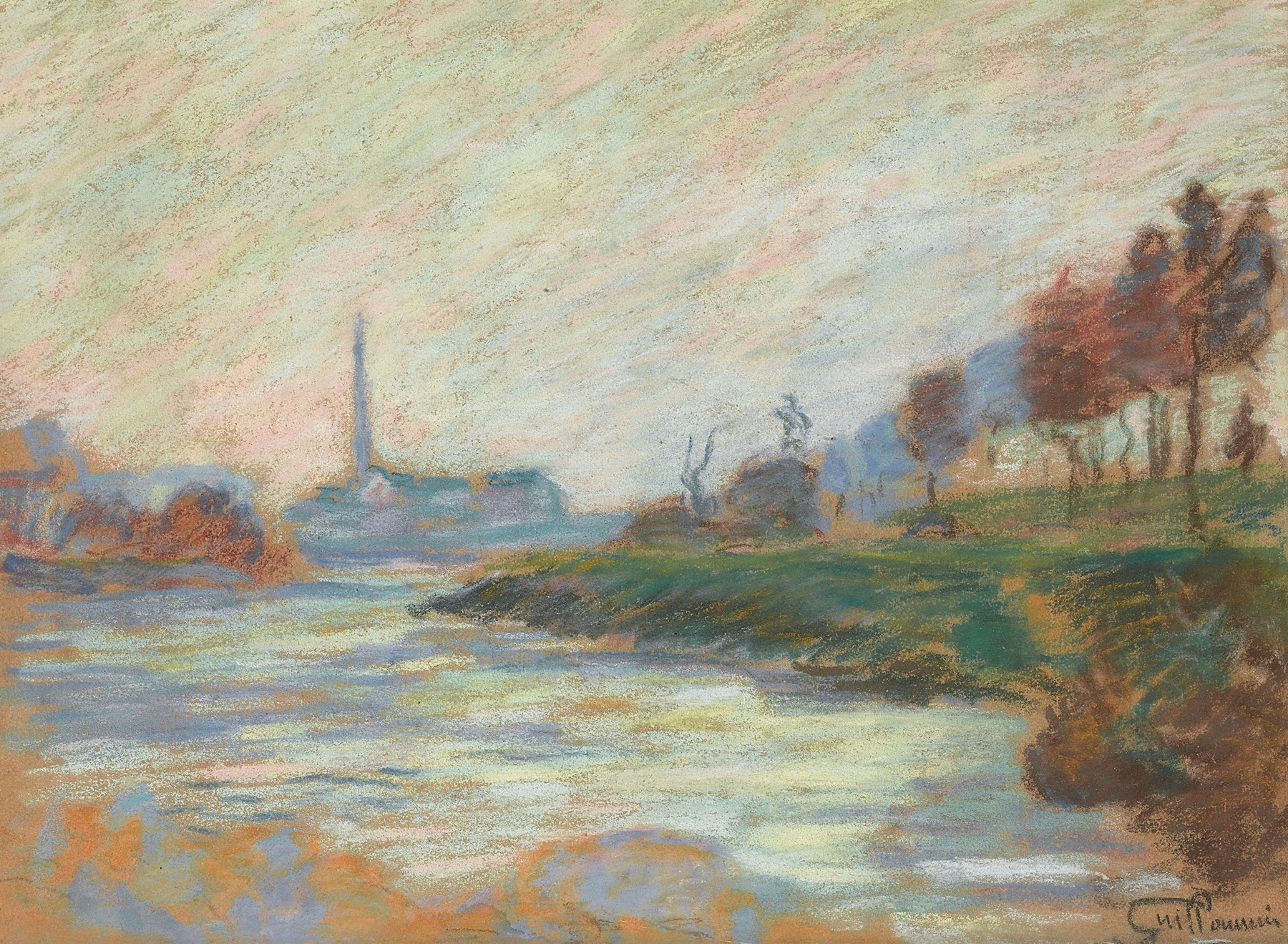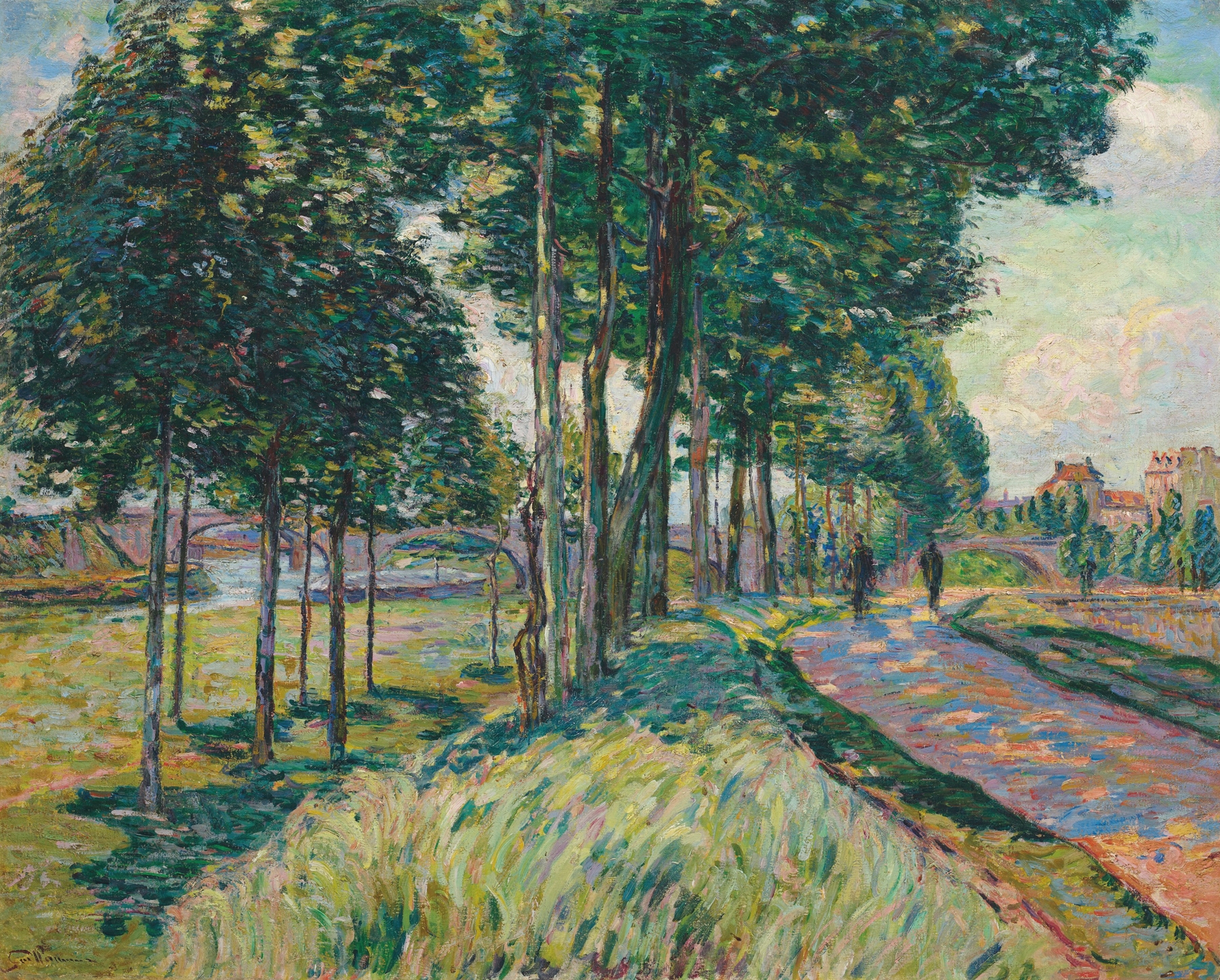
“Sometimes beauty is just pain, disguised in gold.” In *La Seine à Charenton*, light dances across the surface of the river, hinting at the tumult beneath its shimmering façade. Look to the foreground, where the sun drenches the water in a cascade of golden hues. The ripples reflect a warm palette of oranges and yellows, while hints of green suggest the thriving flora along the banks. Notice how the composition draws your eye along the winding river, inviting you to explore its depths — this is not merely a depiction of nature, but a celebration of light’s transformative power. The brushwork is both bold and tender, creating a dynamic texture that captures the essence of movement and life. Beneath the vibrant surface, the emotional undertones swirl quietly. The river, so often a symbol of tranquility, brims with the unspoken tensions of existence — beauty and melancholy intertwined. In the distance, the soft silhouettes of trees and buildings seem to merge into the horizon, suggesting the passage of time and the fleeting nature of moments. The light, while uplifting, serves as a reminder of impermanence, hinting at the deeper struggles hidden within the scene's apparent serenity. Armand Guillaumin created this evocative work in 1880 while living in France, embracing the Impressionist movement's daring exploration of light and color. At this time, he had begun to establish himself as a significant figure among his contemporaries but faced financial challenges. The world of art was shifting under the weight of revolution, and Guillaumin's focus on capturing the ephemeral beauty of nature became a vital response to the evolving landscape of modernity.