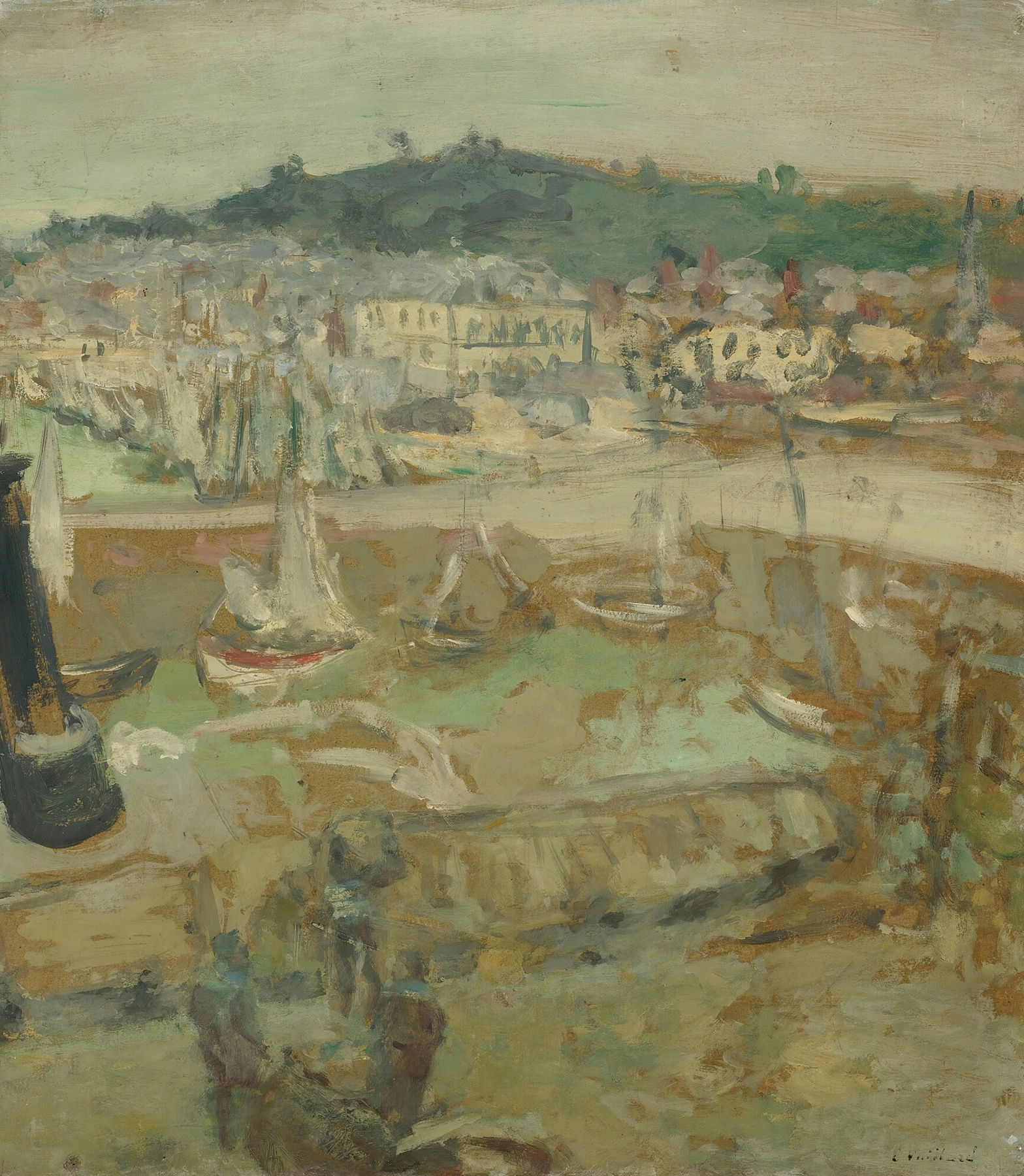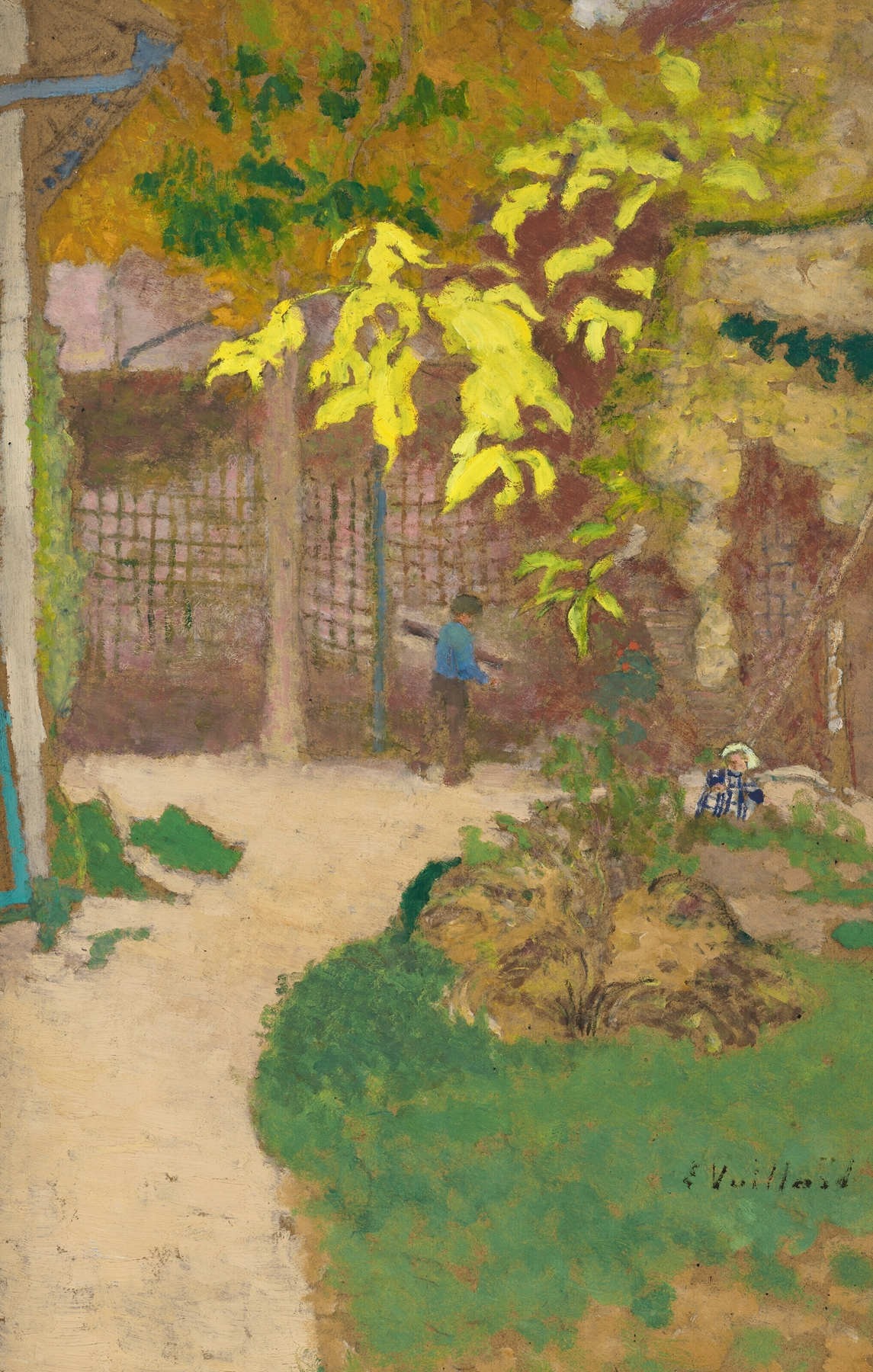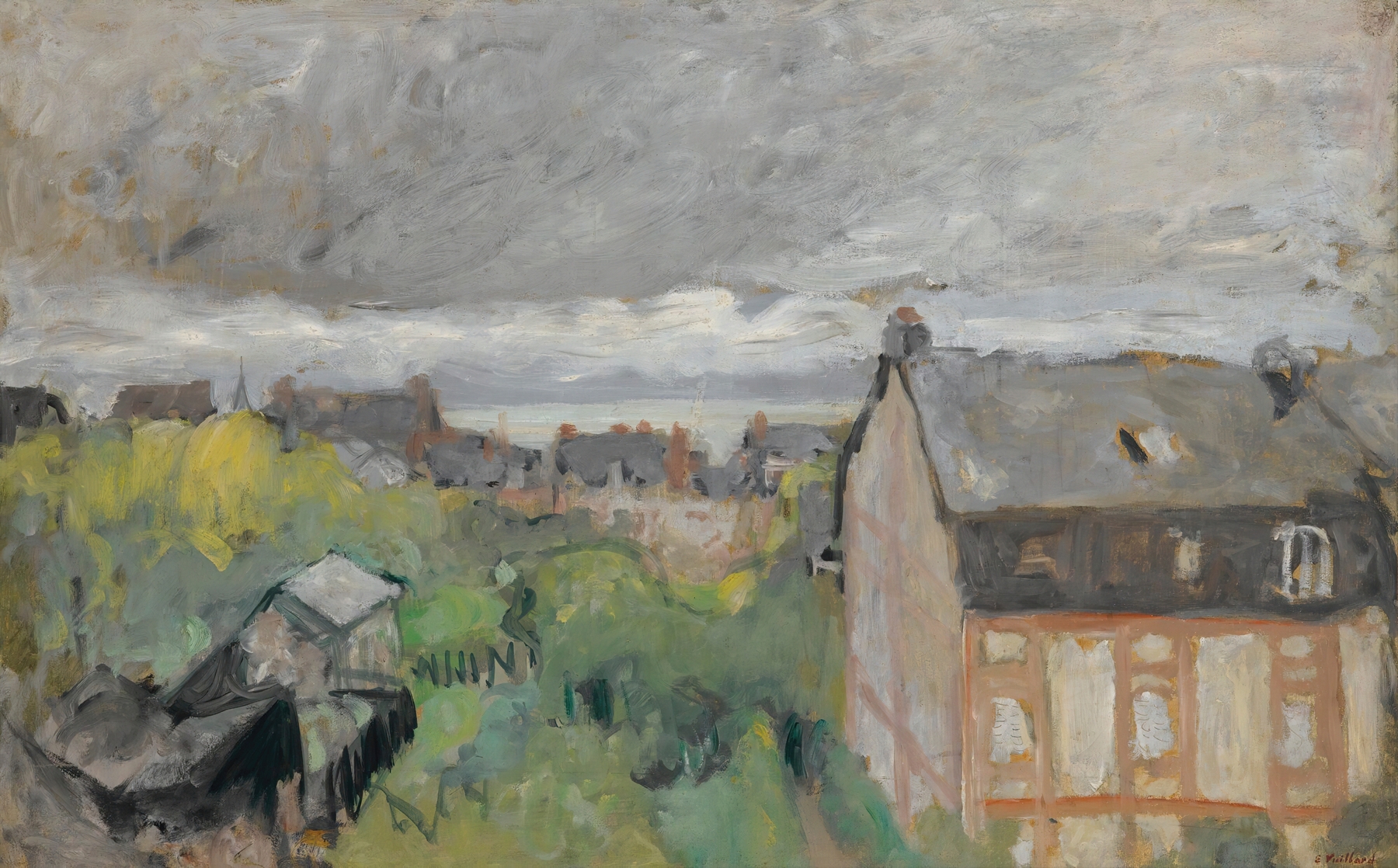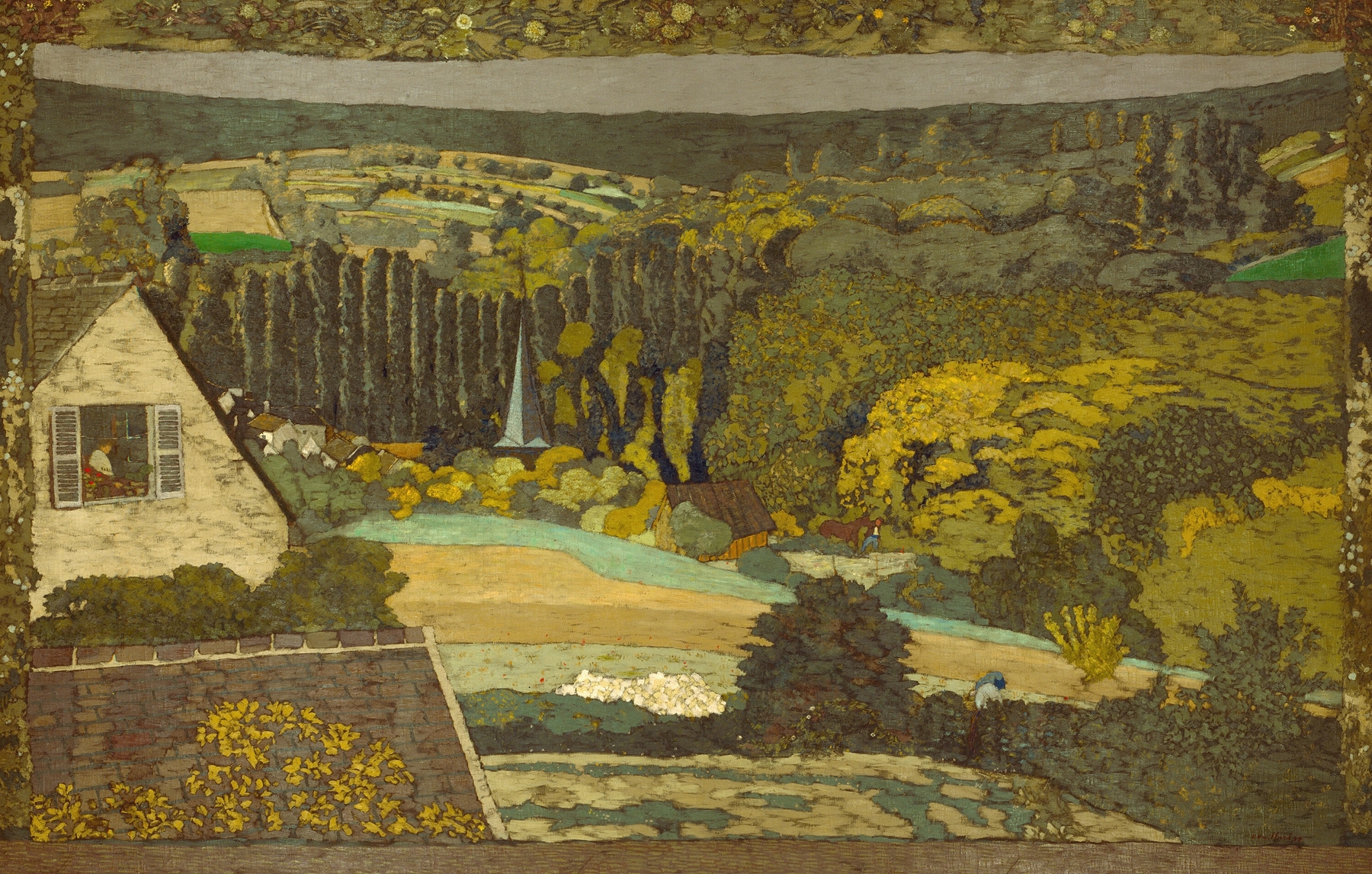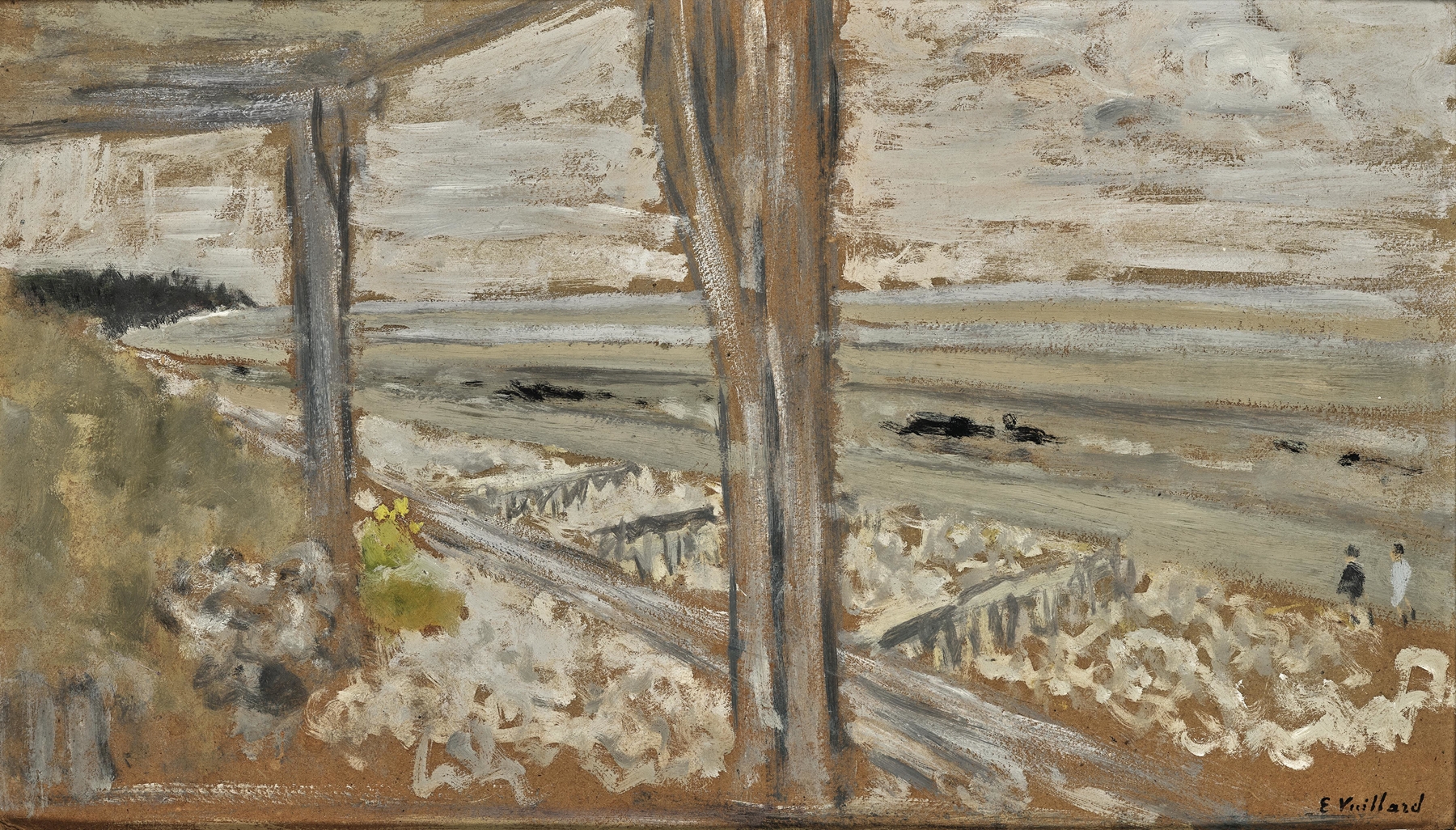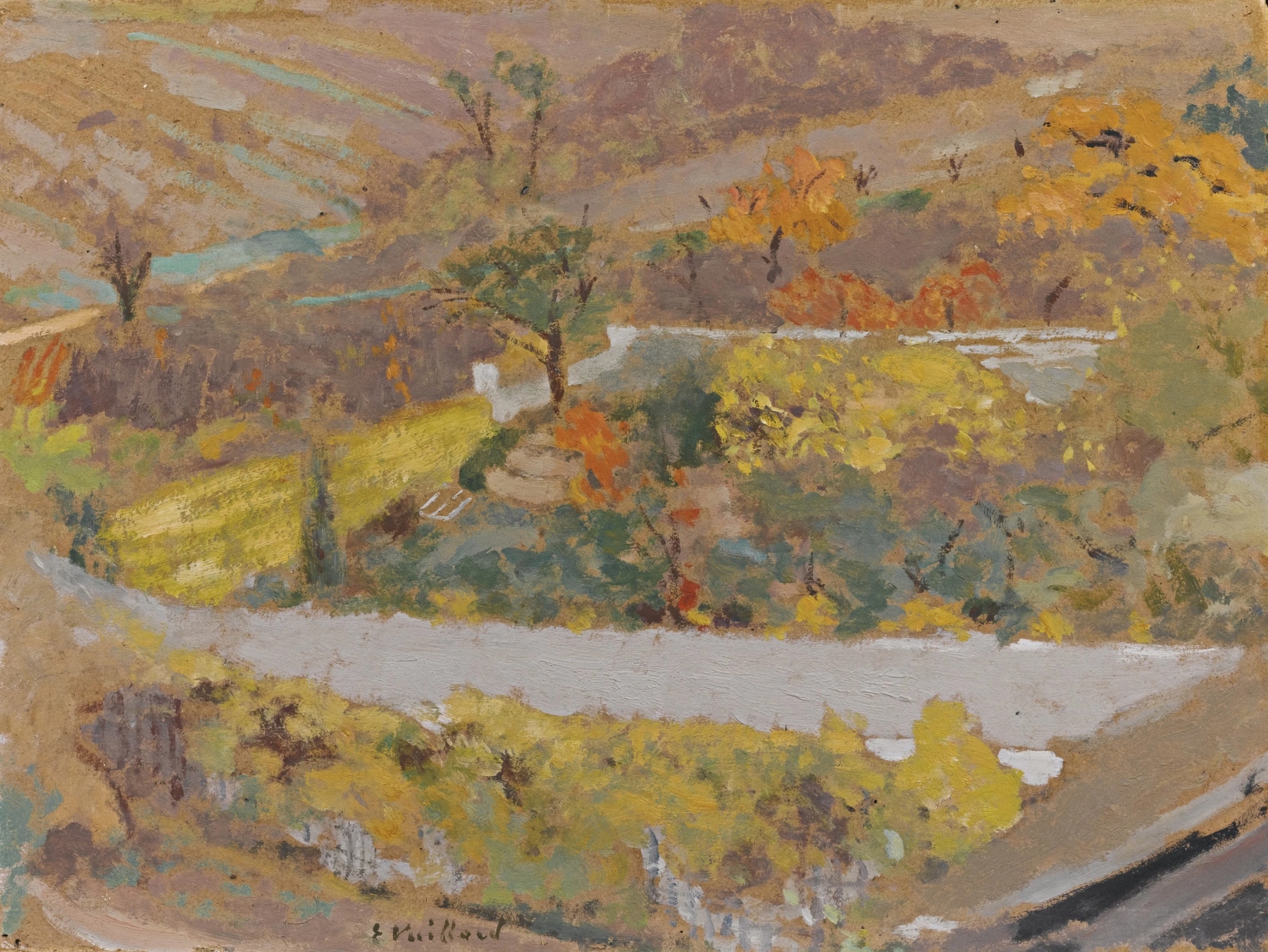
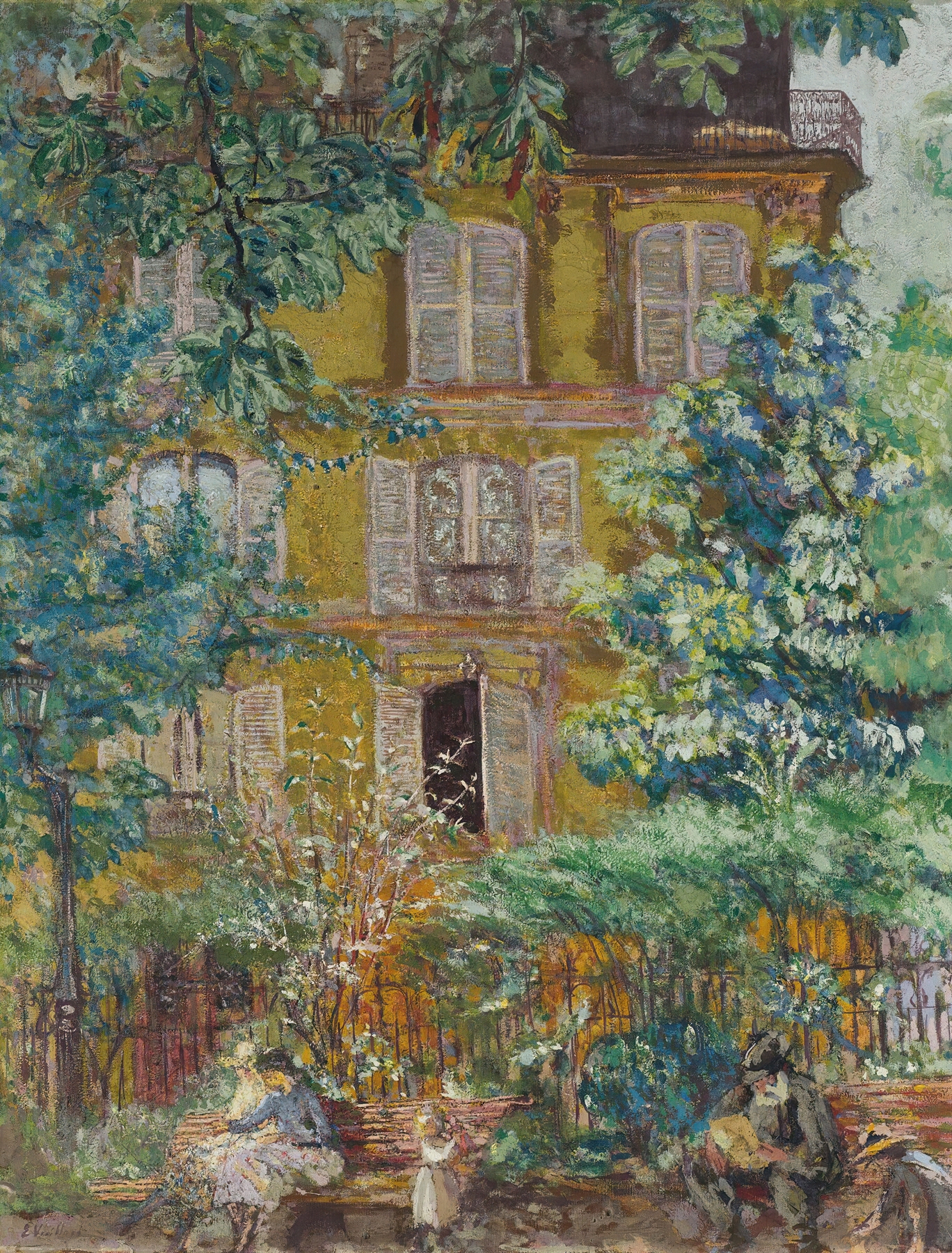
Is this a mirror — or a memory? In *Landscape at L’Étang-la-Ville*, the viewer is drawn into a world where the boundaries blur between the real and the imagined, the divine and the mundane. Focus on the rolling hills in the background, where soft, muted greens meld into gentle blues. Notice how the delicate brushstrokes create an ethereal quality, inviting the light to dance playfully across the canvas. The foreground is a riot of texture and color; the vibrant flowers appear almost tangible, inviting you to reach out and feel their softness. The composition balances chaos with harmony, leading the eye effortlessly throughout the scene. Hidden within this serene landscape are echoes of personal reflection and nostalgia. The juxtaposition of the lush foliage against the tranquil water hints at dualities — life and stillness, joy and melancholy. Here, the seemingly simple setting becomes a gateway to deeper contemplation, inviting the viewer to ponder their own memories and connections with nature. It’s a moment suspended in time, embodying a divine quality wistfully entwined with earthly existence. In 1900, while living in Paris, the artist was immersed in the Symbolist movement, which deeply influenced his work. This period was marked by his exploration of color and texture as emotive tools. The artist’s surroundings were a blend of vibrant artistic and social currents, which informed his approach to capturing the essence of nature in a way that transcended mere representation, ultimately seeking a connection to something greater.