Landscape with rowanberry, right-hand section of the triptych “Go to the streams” — History & Analysis
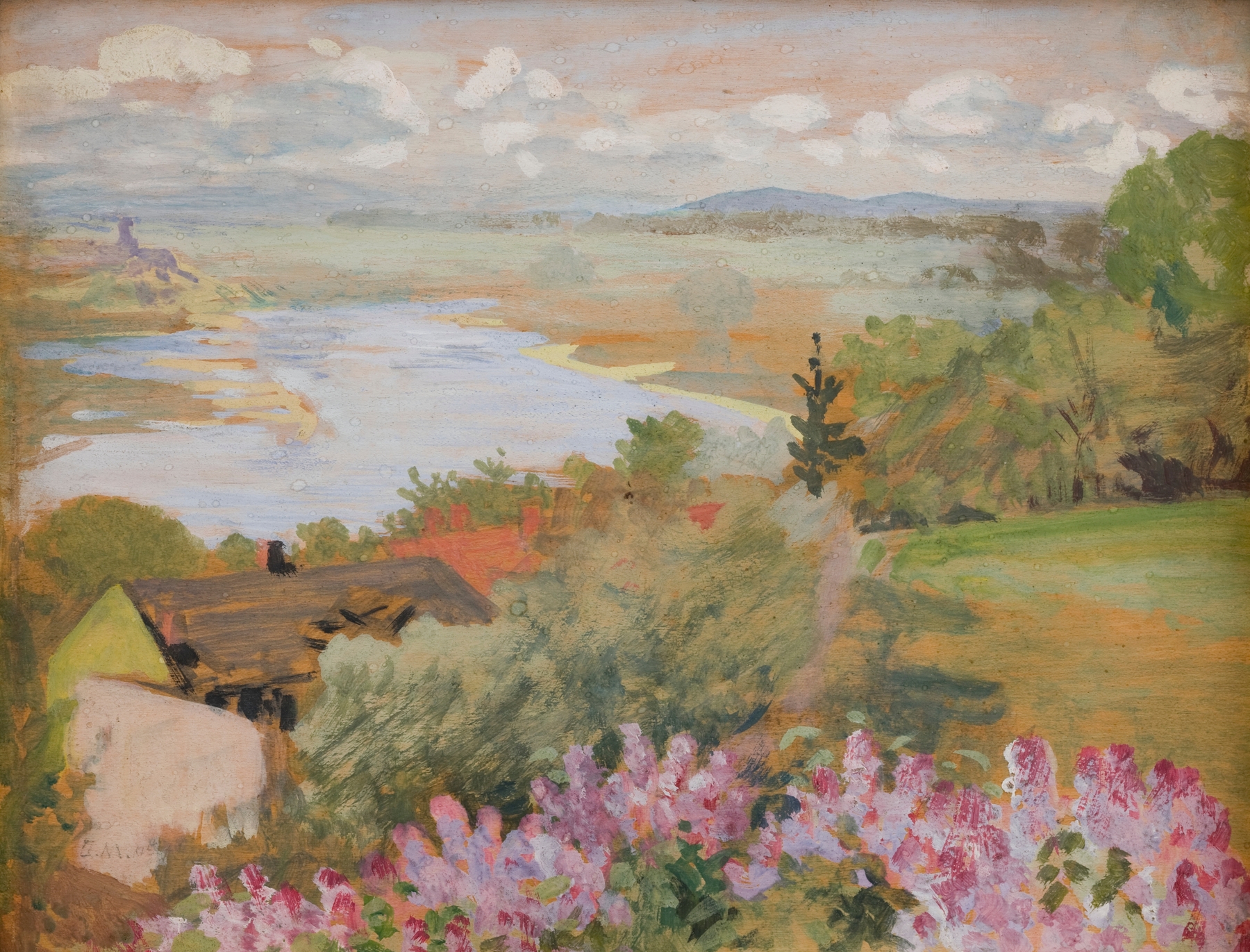
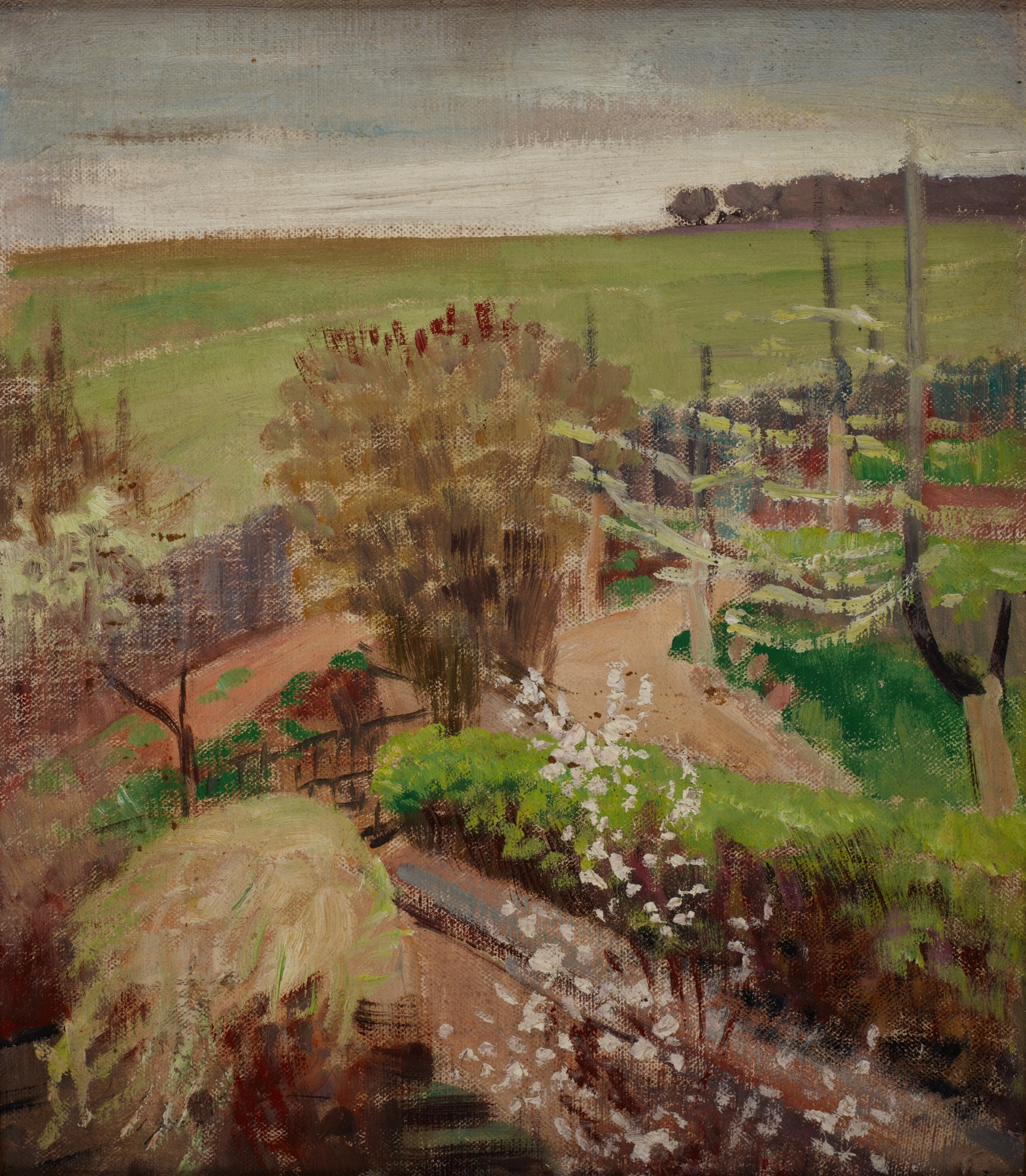
When did color learn to lie? In Landscape with rowanberry, a quiet deception unfolds within the vibrant hues, beckoning viewers to peer beneath the surface for deeper truths. This painting transcends mere representation, inviting contemplation on the intermingling of reality and illusion. Look to the left at the striking contrast between the deep greens of the foliage and the brilliant reds of the rowanberries, which seem almost to pulse with life.
The brushwork creates a textured depth that suggests movement, as if the trees sway gently in a whispering breeze. The composition draws the eye towards the bright clusters of berries, their vividness a stark reminder of nature's abundance against a more muted background, establishing a tension between vitality and the serene stability of the landscape. Delving deeper, one might observe the interplay of light and shadow, where the sun filters through the leaves, casting dappled patterns reminiscent of fleeting moments. The juxtaposition of the vibrant berries against the cooler tones of the foliage evokes a sense of longing—perhaps a yearning for fleeting beauty and the ephemeral nature of life itself.
This contrast between color and form hints at a deeper existential reflection, suggesting that what we perceive may not always align with the underlying truths of experience. Created in 1909, this piece was borne from Malczewski's ongoing exploration of symbolism in art, reflecting a period of personal and artistic evolution. At this time, he was immersing himself in the themes of Polish identity and the natural world amidst changing political landscapes. His work, rich in allegory and emotive color, marked a significant moment as he sought to bridge the gap between the tangible and the transcendental, capturing both the external beauty and the internal struggles of human existence.