Landschaft mit Hirten (Der Tanz am Ufer) — History & Analysis
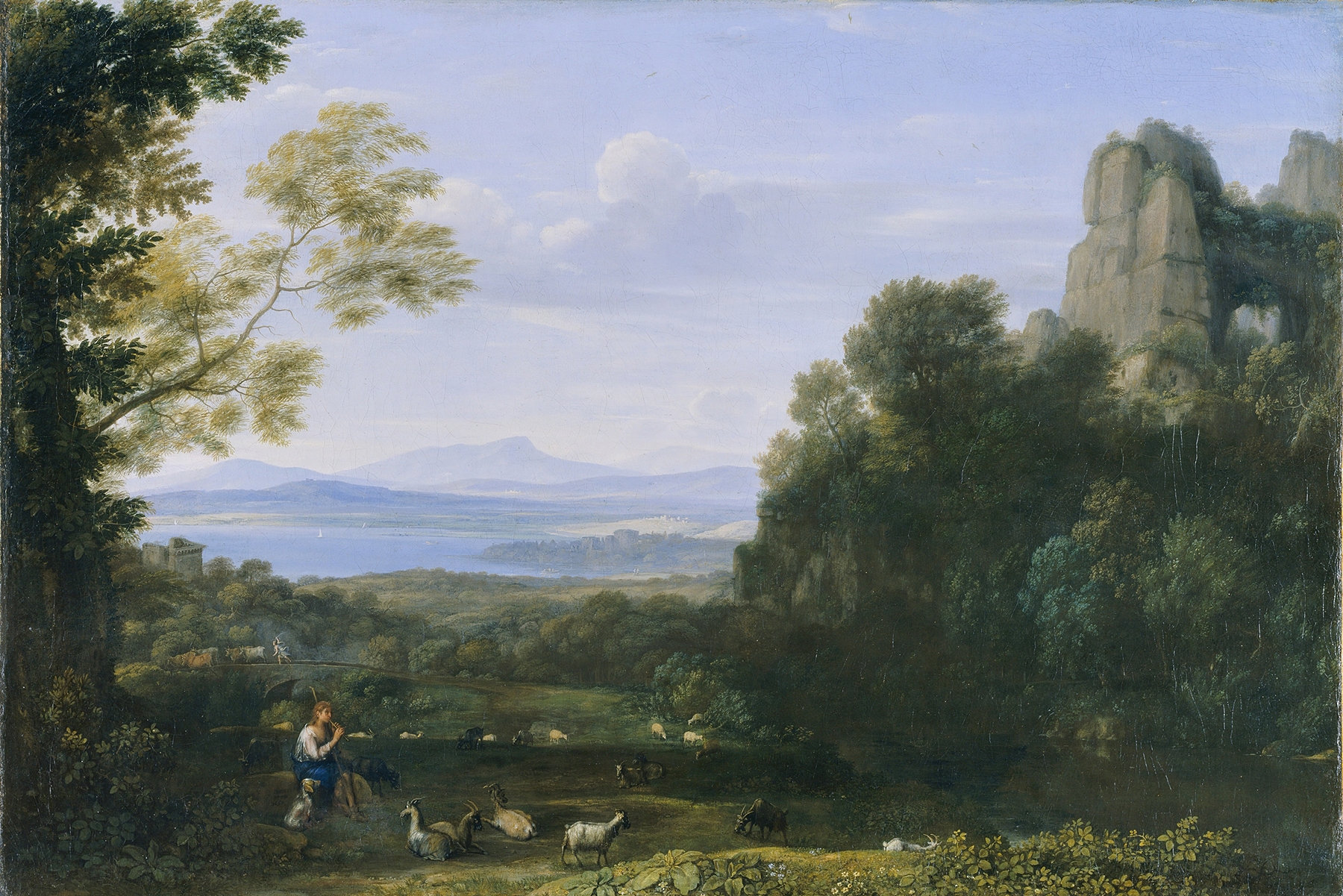
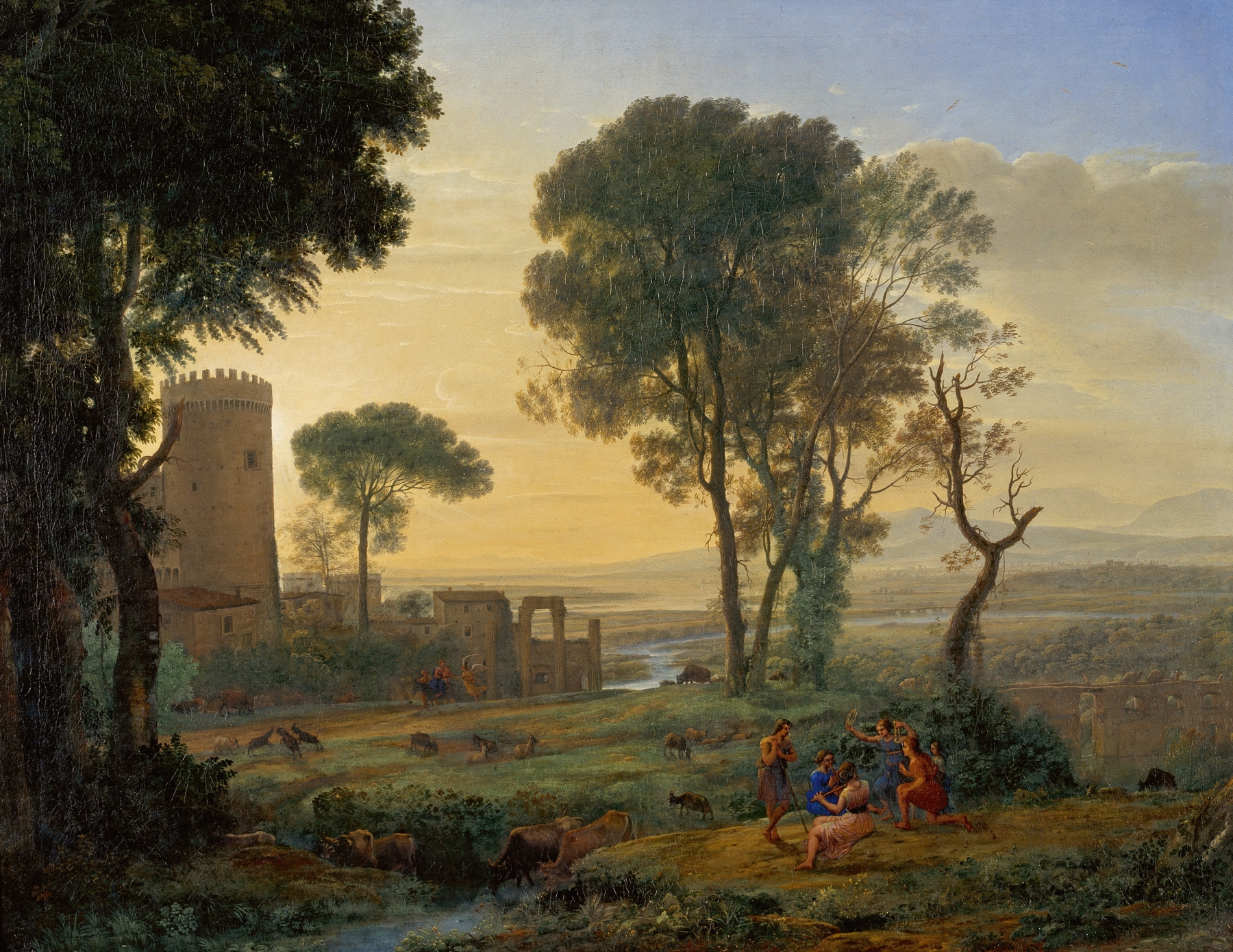
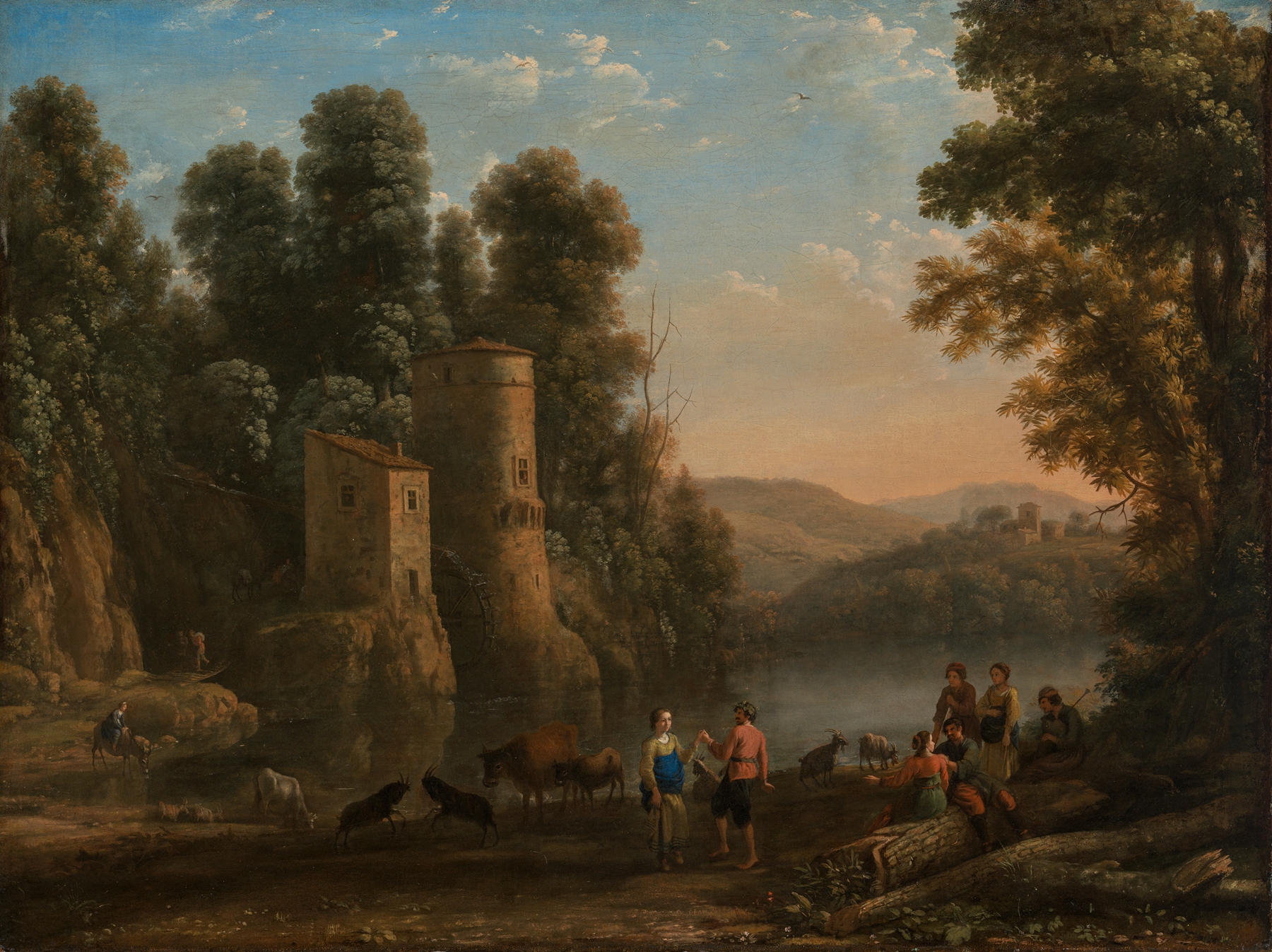
What if beauty was never meant to be finished? In Landschaft mit Hirten (Der Tanz am Ufer), the allure of an idyllic pastoral scene invites us to linger, yet the fleeting nature of its charm leaves us yearning for more. Look to the left at the lively figures of shepherds, entwined in a dance that celebrates both joy and camaraderie. The fluidity of their gestures contrasts with the solidity of the lush landscape behind them, painted in soft greens and warm earth tones.
Notice how the light gracefully bathes the scene, casting elongated shadows that hint at the passage of time, compelling the viewer to consider the ephemeral nature of happiness. The painting encapsulates a dialogue between movement and stillness. While the shepherds dance in harmony, the distant mountains loom quietly, symbolizing the weight of reality that lies beyond this moment of bliss. The shimmering water reflects their joy but also serves as a reminder of the ever-changing tides of life.
This delicate balance evokes a sense of both contentment and an undercurrent of longing—yearning for the permanence of what can only be transient. Created around 1637, this work emerged from Claude Lorrain's studio in Italy during a period marked by the rise of landscape painting as a dominant genre. Lorrain was influenced by Baroque ideals and the prevailing currents of Romanticism, which imbued nature with emotional depth. As he painted, Europe was navigating cultural shifts, and his landscapes became a canvas for capturing both the beauty of the natural world and the human experience within it.