The Embarkation of the Queen of Sheba — History & Analysis
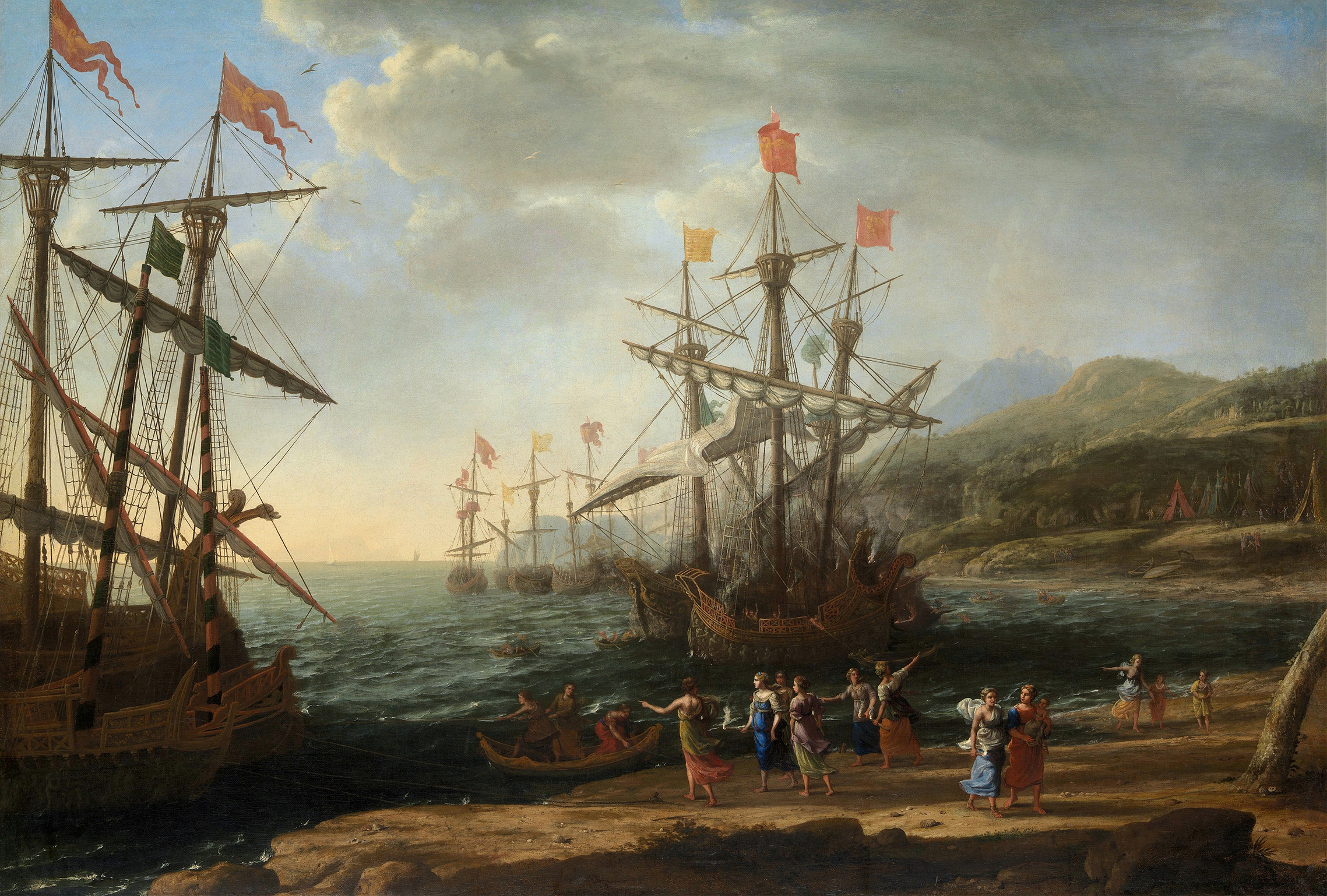
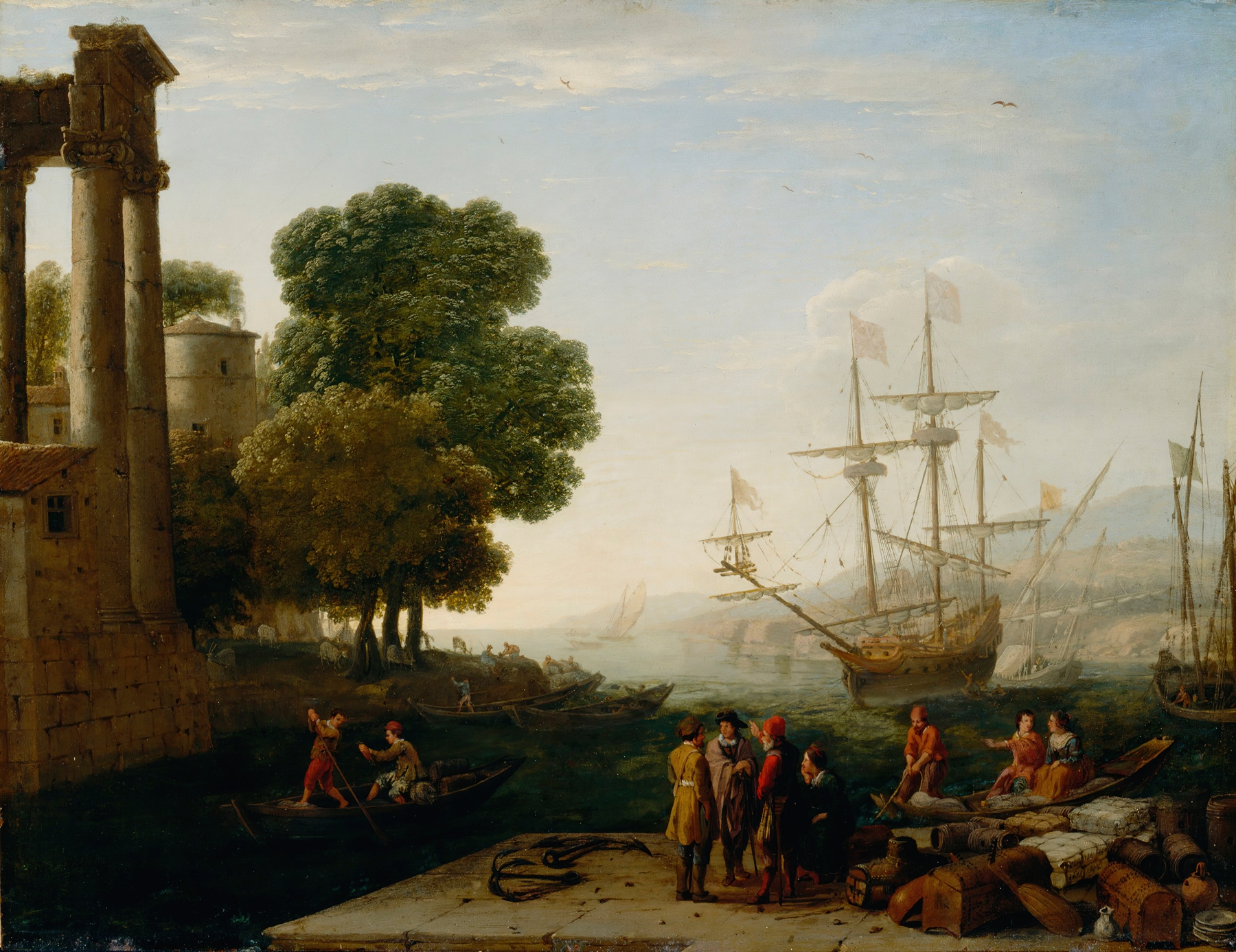
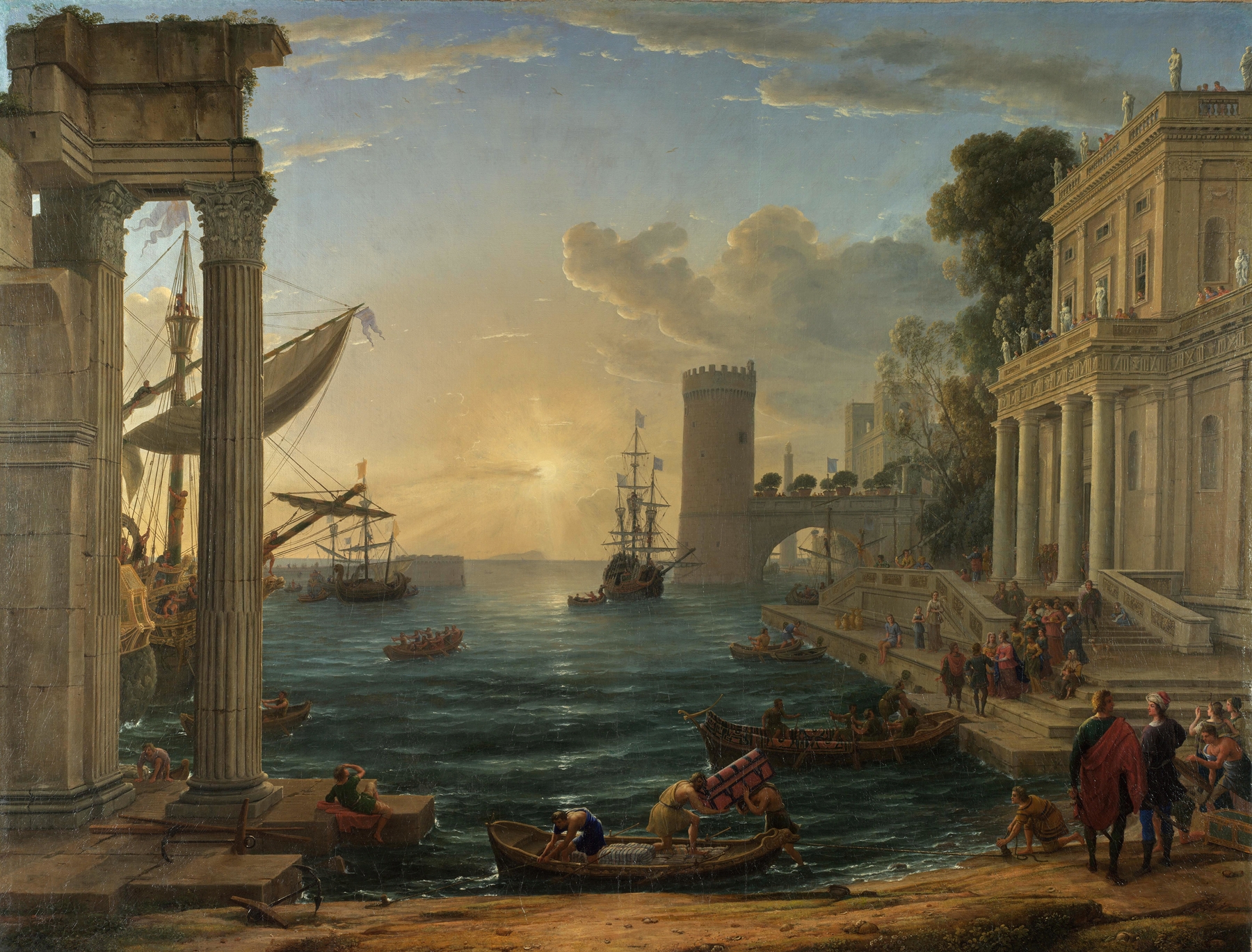
When did color learn to lie? In the luminous realm of The Embarkation of the Queen of Sheba, divinity dances in the embrace of light and color, enveloping us in a moment that transcends the mundane. Look to the left where the Queen, clad in resplendent attire, commands attention, her posture a blend of authority and grace. The warm glow of the setting sun casts golden hues upon the scene, creating a soft interplay between shadow and brilliance. As your gaze travels across the canvas, notice the intricate layering of the sky, with delicate wisps of clouds that seem to breathe life into the horizon, drawing you deeper into the ethereal atmosphere.
The composition flows seamlessly, leading the eye through the bustling throngs preparing for the regal voyage. Beneath the vibrant surface lies a rich tapestry of emotion and significance. The figures, poised in reverence and anticipation, mirror the grandeur of their task, suggesting a deeper connection between human ambition and divine purpose. The contrasting elements of the serene water and the fervent activity on shore speak to the duality of stability and chaos, embodying the tension between earthly endeavors and celestial aspirations.
Each brushstroke encapsulates the essence of a moment that is both fleeting and eternal. Claude Lorrain created this masterpiece in 1648, during a period when the baroque style was flourishing in Europe. At this time, Lorrain was already well-established in Rome, where he was deeply influenced by the classical ideals of antiquity and the emotive potential of landscape painting. The world of art was rapidly evolving, with Lorrain’s works reflecting a transition towards a more poetic and imaginative expression, setting the stage for future generations of artists.