Le Casque de Néron, Plaine de Sassenage, Dauphiné — History & Analysis
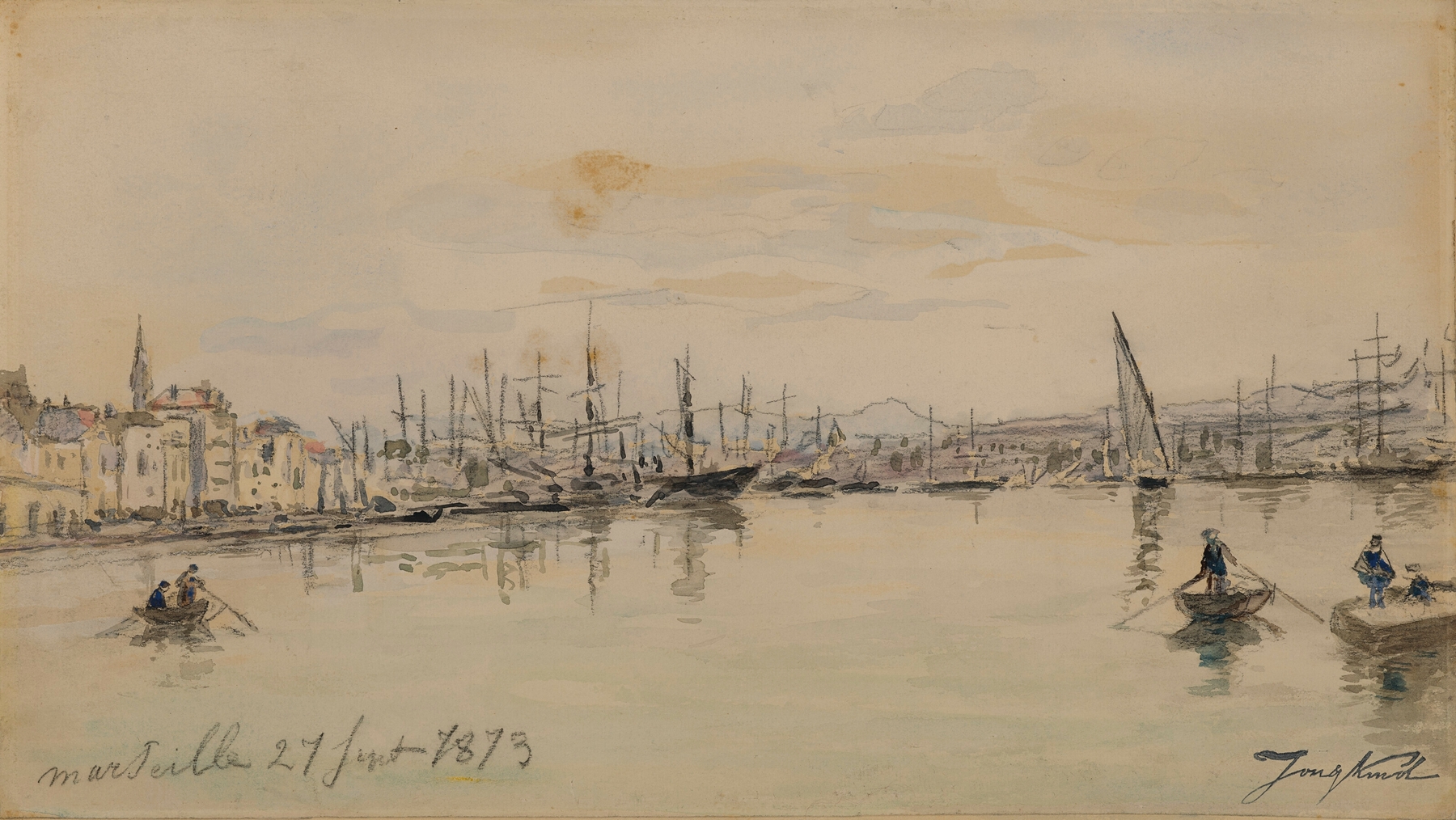
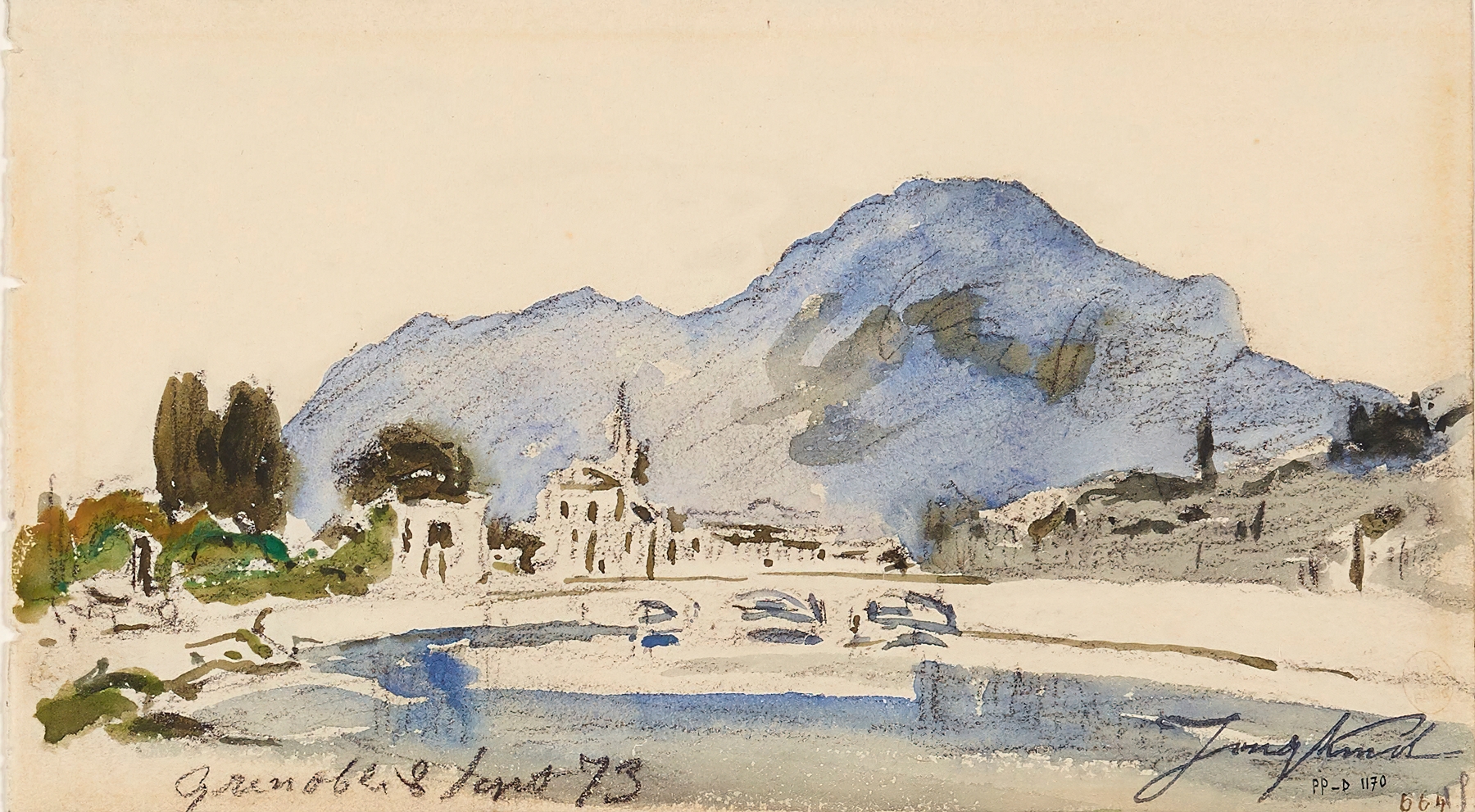
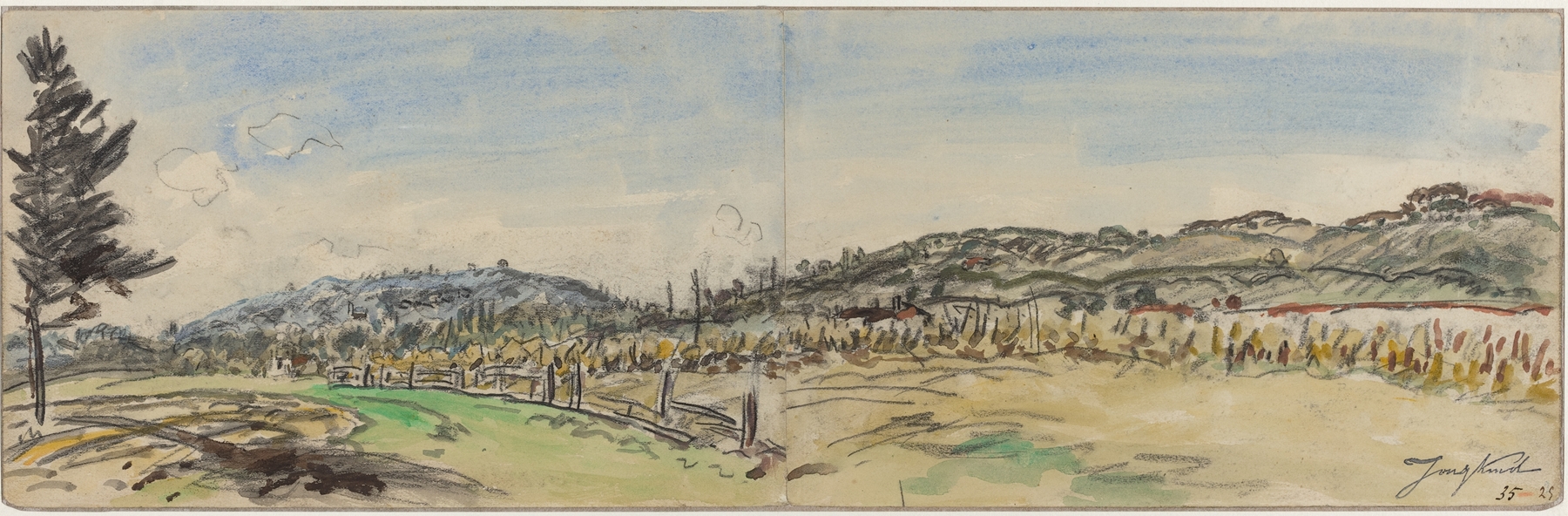
Can paint confess what words never could? In *Le Casque de Néron, Plaine de Sassenage, Dauphiné*, the artist weaves an obsession that resonates through every brushstroke. Focus first on the vivid interplay of blue and green, where the lush landscape unfolds. The viewer's gaze is drawn to the sweeping mountains in the background, their peaks brushing against the sky, while the foreground bursts with wild, vibrant flora. Notice how the brushwork creates an almost tactile sensation, with dabs and strokes that evoke the earthiness of the terrain and the fleeting light that dances across it, illuminating the scene. The subtle gradation of colors reflects the fleeting nature of time, inviting contemplation of both beauty and transience. Amidst the serenity of nature, there lies an undercurrent of tension, a whisper of obsession that clings to the canvas. The dense foliage, exquisite in its detail, seems to conceal secrets, suggesting that beneath the peaceful facade, there exists a relentless pursuit of beauty. The shadows play tricks with perception, blurring the line between reality and dream, urging the viewer to linger longer and ponder what lies beneath the surface. This contrasts with the clarity of the mountains, representing a distant, unattainable ideal that haunts the landscape. Johan Barthold Jongkind painted this work between 1880 and 1885 while living in France, a period marked by the rise of Impressionism. His dedication to capturing the essence of light and atmosphere positioned him as a precursor to the movement, influencing artists who followed. During this time, he was exploring the lush landscapes of Dauphiné, infusing his works with emotional depth and a profound connection to nature, reflecting a world transitioning from realism to the embrace of modernity.