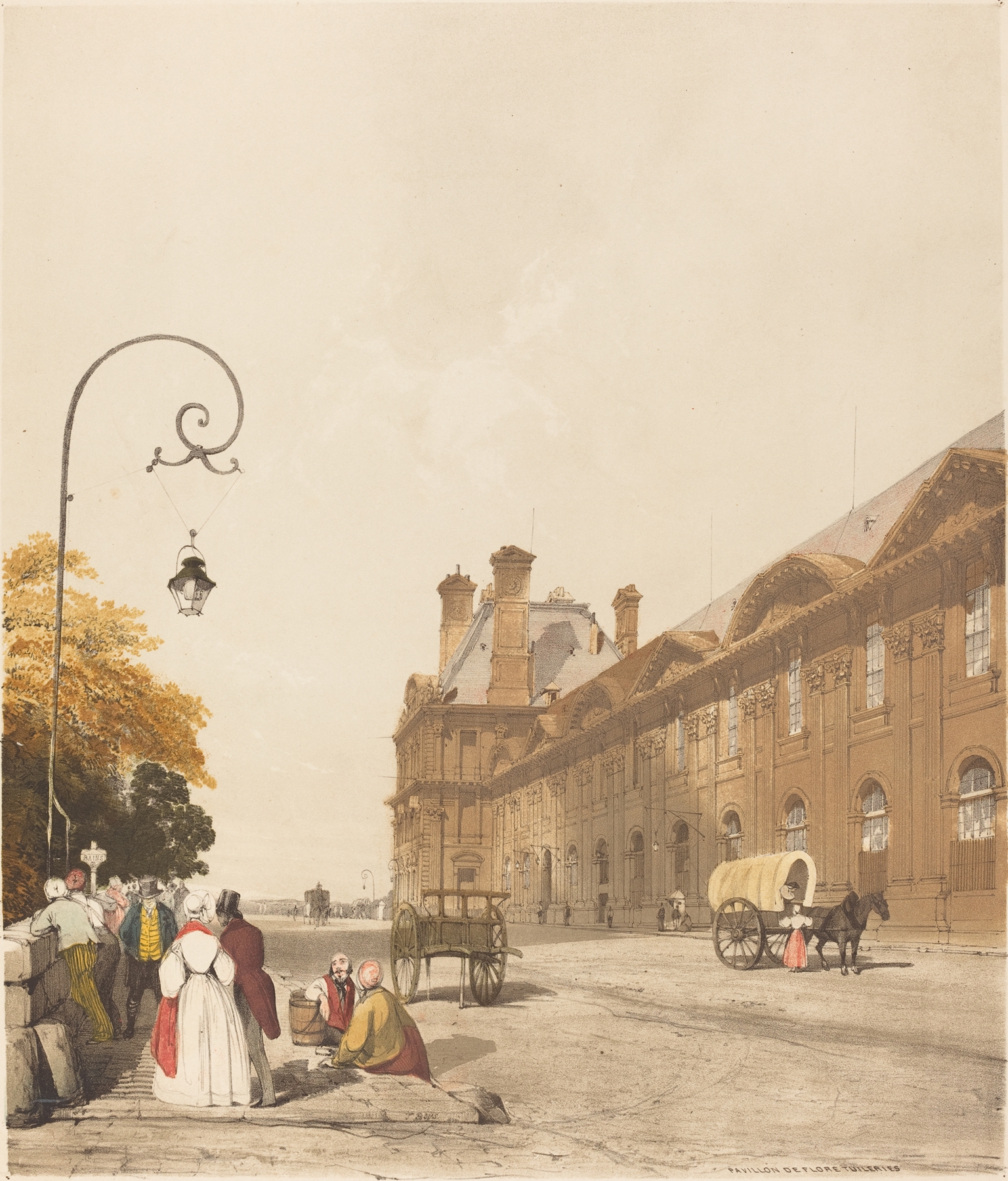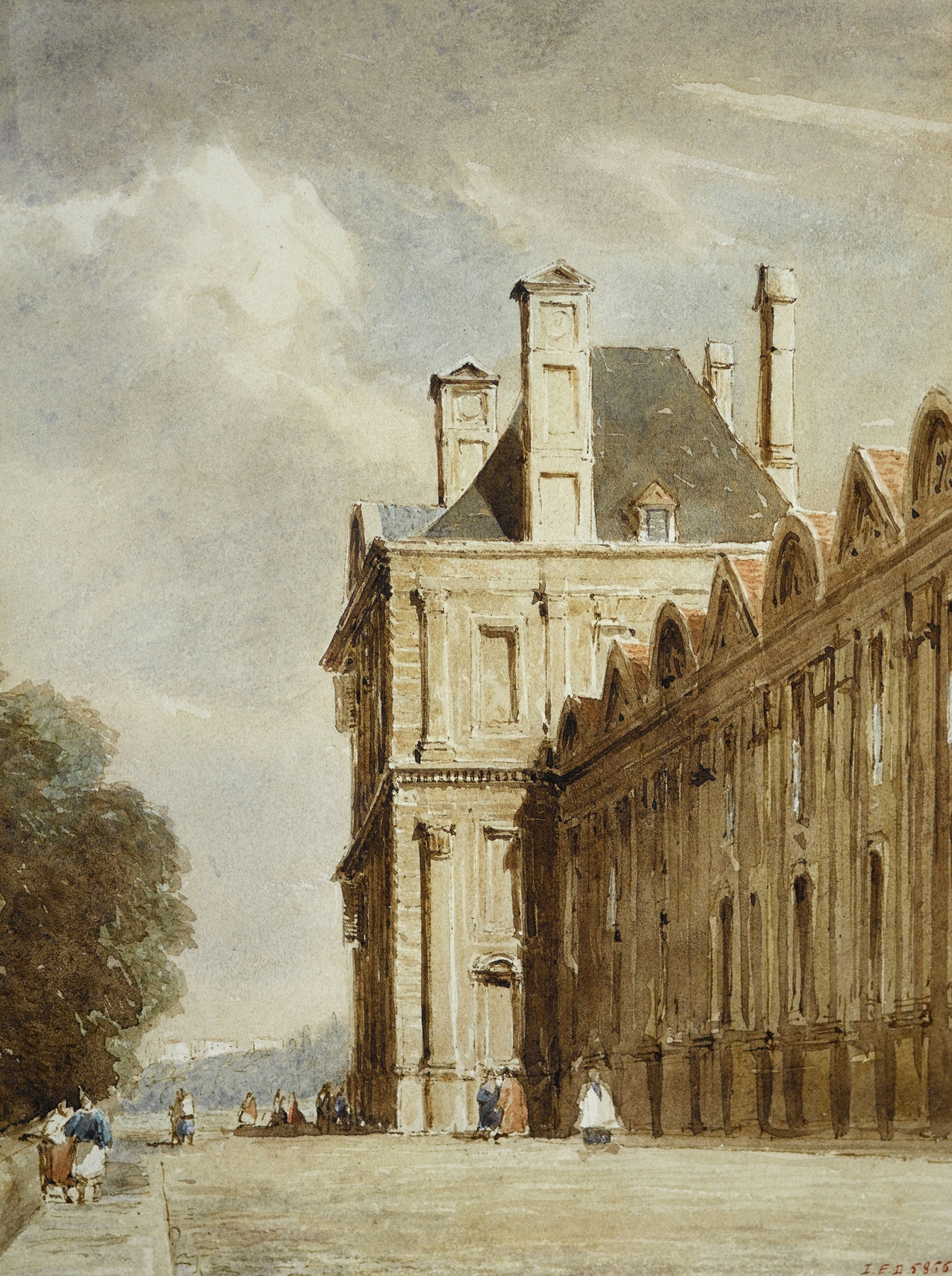
Who listens when art speaks of silence? In *Le Pavillon de Flore*, chaos quietly unfolds in the delicate interplay of light and nature, echoing the tumultuous world just beyond its serene borders. Look to the left at the lush greenery, where vibrant greens meet soft earth tones. Notice how the light falls upon the pavilion's ornate architecture, highlighting intricate details that invite you to explore further. The composition balances a sense of calm with dynamic elements, as skimming shadows stir across the scene, hinting at unseen movement. The warm palette evokes nostalgia, suggesting a world that thrives in quietude despite the chaos that surrounds it. Beneath the surface, an emotional tension emerges in the juxtaposition of the orderly pavilion and the wild foliage that encroaches upon it. This contrast speaks to the fragility of beauty amid disorder. The stillness of the architecture reverberates with a sense of isolation, reminding viewers of the delicate line between peace and chaos. Each brushstroke serves as a reminder that tranquility is often temporary, waiting for the inevitable disruption. In the early 1830s, the artist was immersed in a period of social and artistic change in England. Living in a time marked by the Industrial Revolution, Boys sought to capture the beauty of nature amidst encroaching modernity. This work reflects his fascination with the picturesque, a movement that celebrated the harmony between man-made structures and the natural world, as he painted from his studio in London, longing for the serenity of landscapes untouched by progress.