Le Pont Suspendu D’elbeuf — History & Analysis
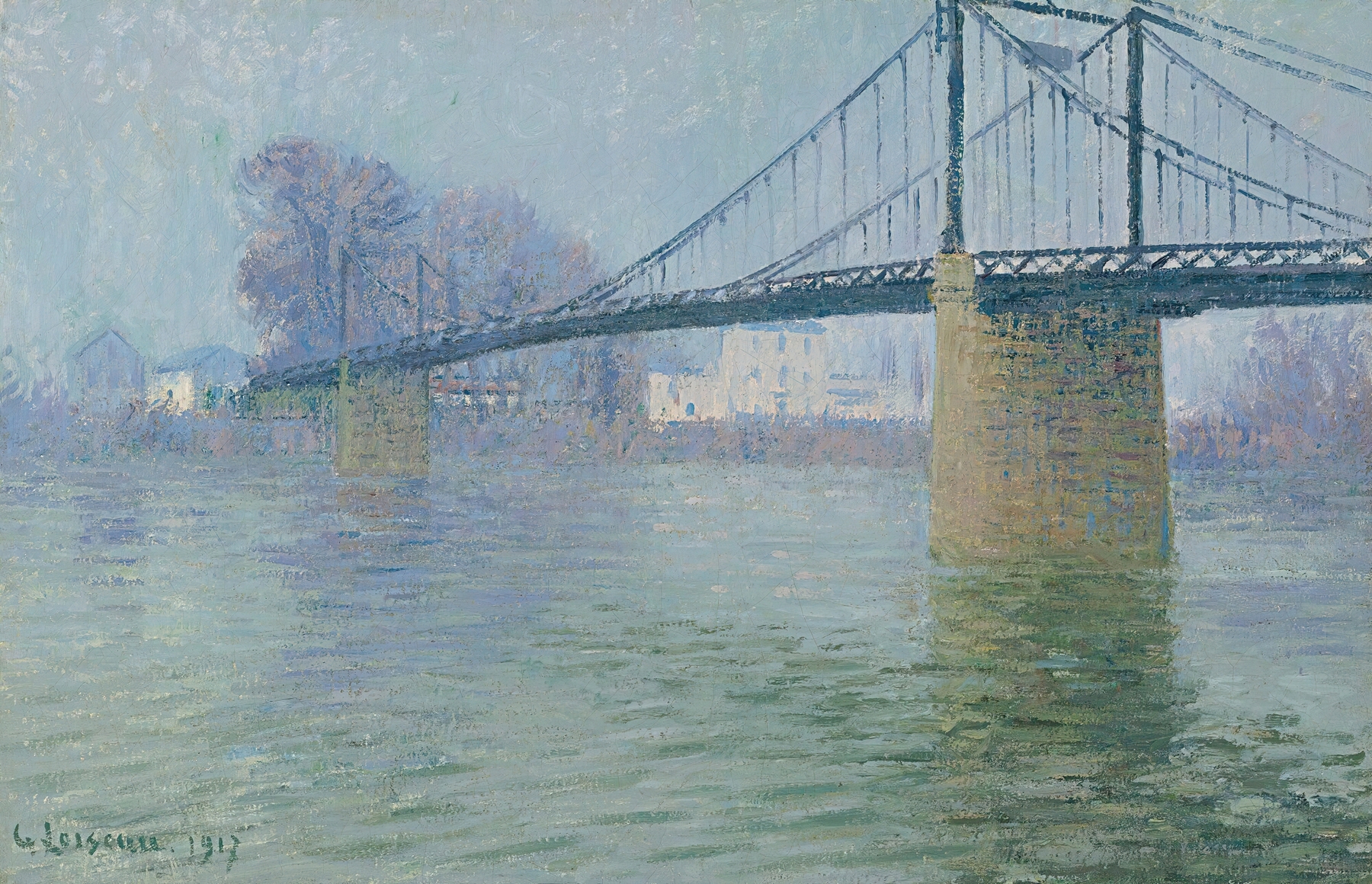
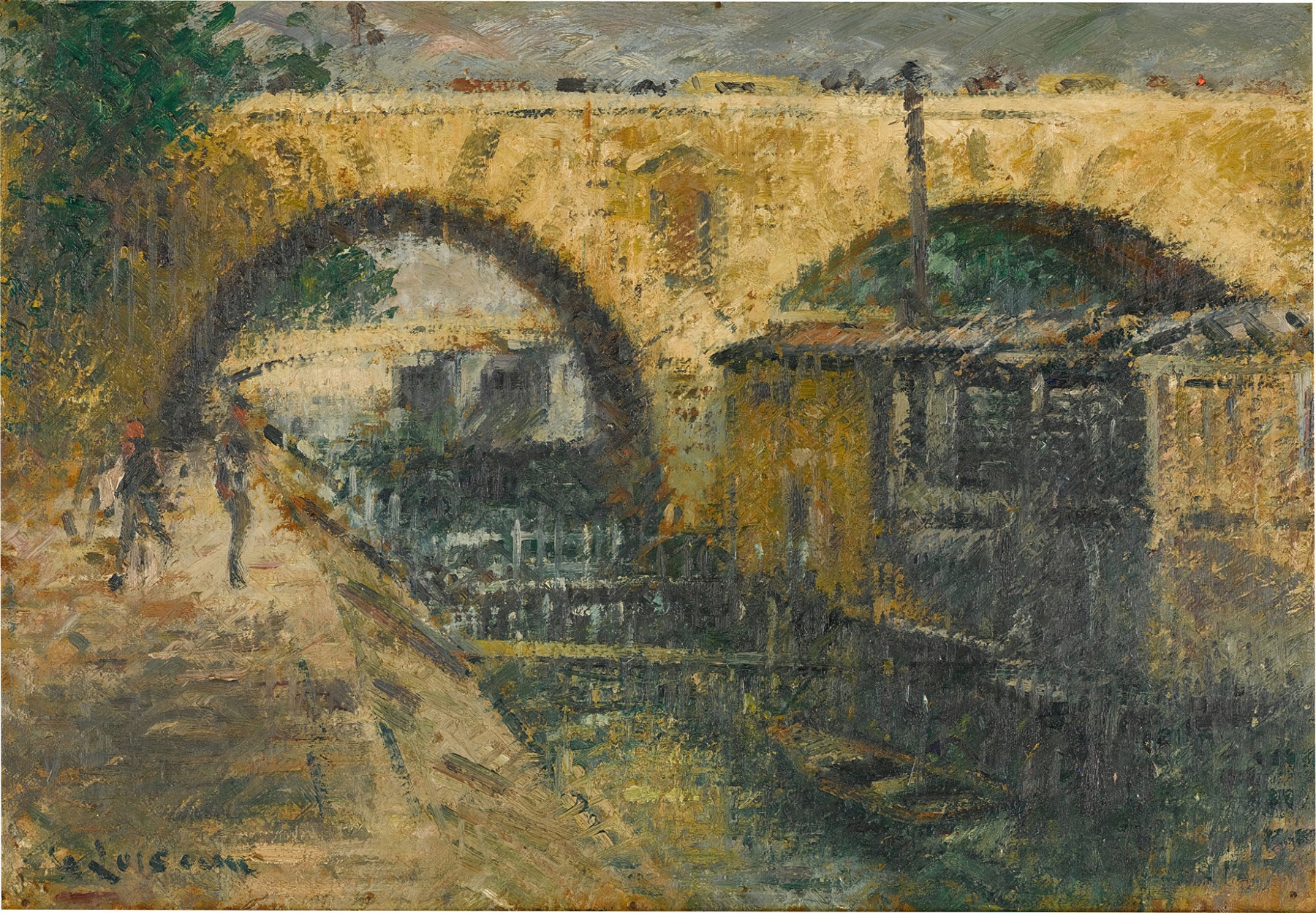
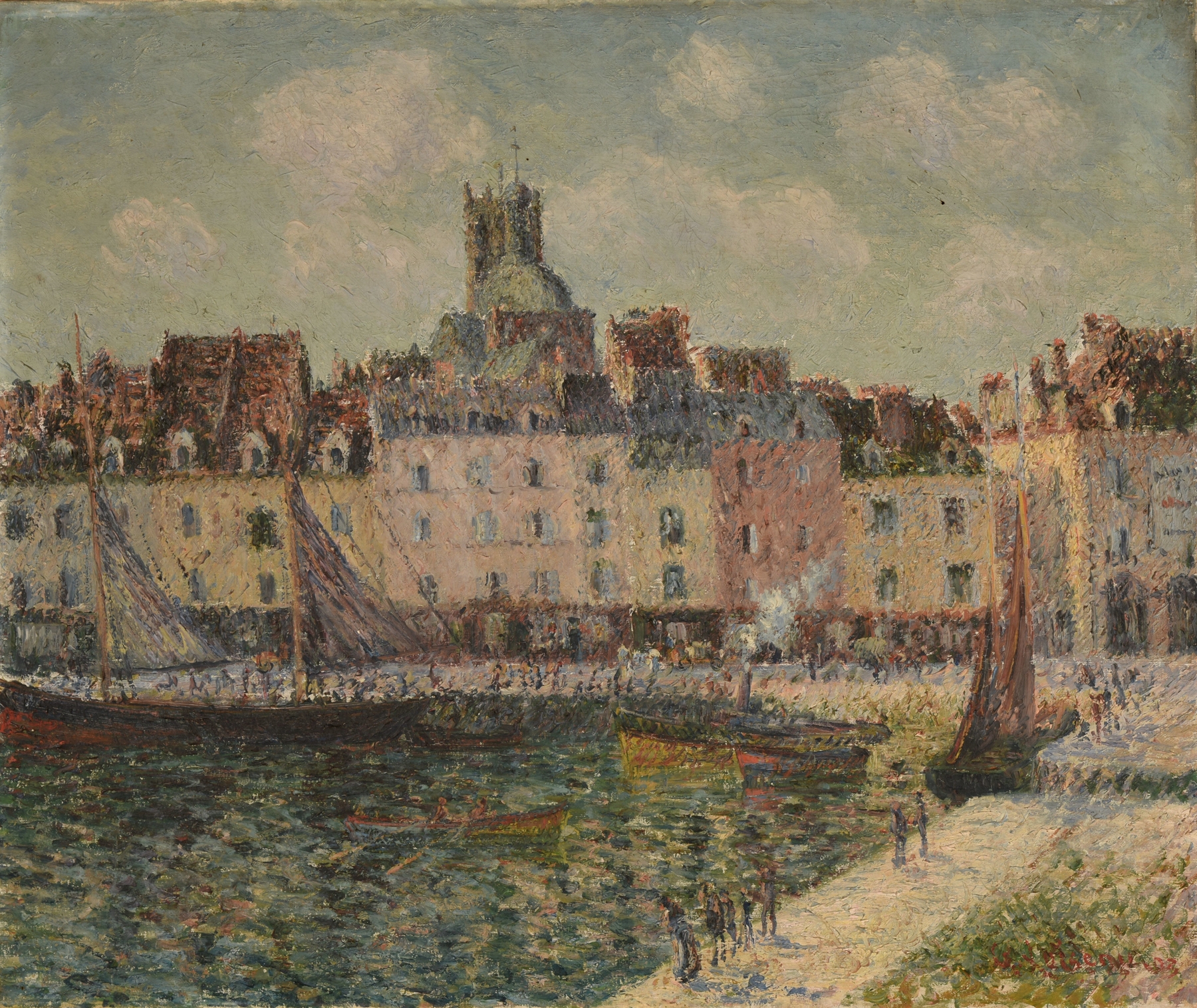
Is this a mirror — or a memory? In Le Pont Suspendu D’elbeuf, the veil between reality and reflection blurs, inviting us to contemplate the fleeting nature of experience. Look to the center where the suspension bridge gracefully arches against a muted sky. The delicate intertwining of blues and grays captures a moment suspended in time, as if the landscape itself breathes with quiet anticipation.
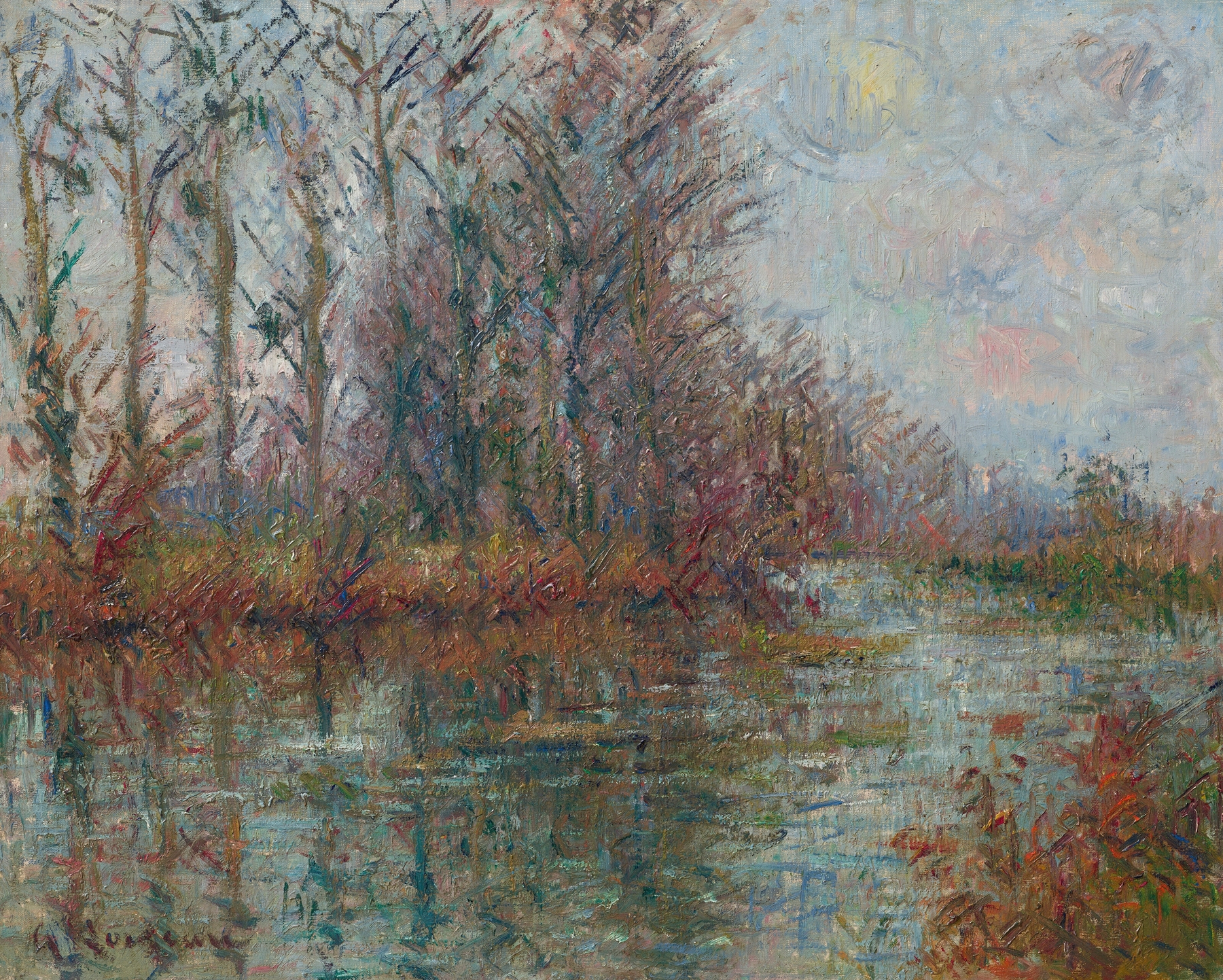
Notice how the brushstrokes, both fluid and deliberate, create a shimmering effect on the water’s surface, echoing the bridge’s elegant form. The juxtaposition of soft hues and sharp lines lends a sense of tranquility, grounding the viewer in a serene yet dynamic composition. Beneath the surface, the painting whispers of deeper themes — the transient nature of memory, the fragility of connection, and the void that often lies between them. The gentle ripples in the water hint at the passage of time, while the bridge symbolizes both a physical and metaphorical link between past and present.
This duality invites introspection, provoking questions about what is lost and what remains, urging us to reflect on our own memories and the landscapes they inhabit. Gustave Loiseau painted this work in 1911, during a period marked by significant changes in the art world as Impressionism evolved into Post-Impressionism. Living in France, he was deeply influenced by his contemporaries while also embracing a unique style that emphasized color and light. This painting reflects not only his personal exploration of natural beauty but also the broader artistic movement of his time, grappling with the interplay of reality and the ephemeral.