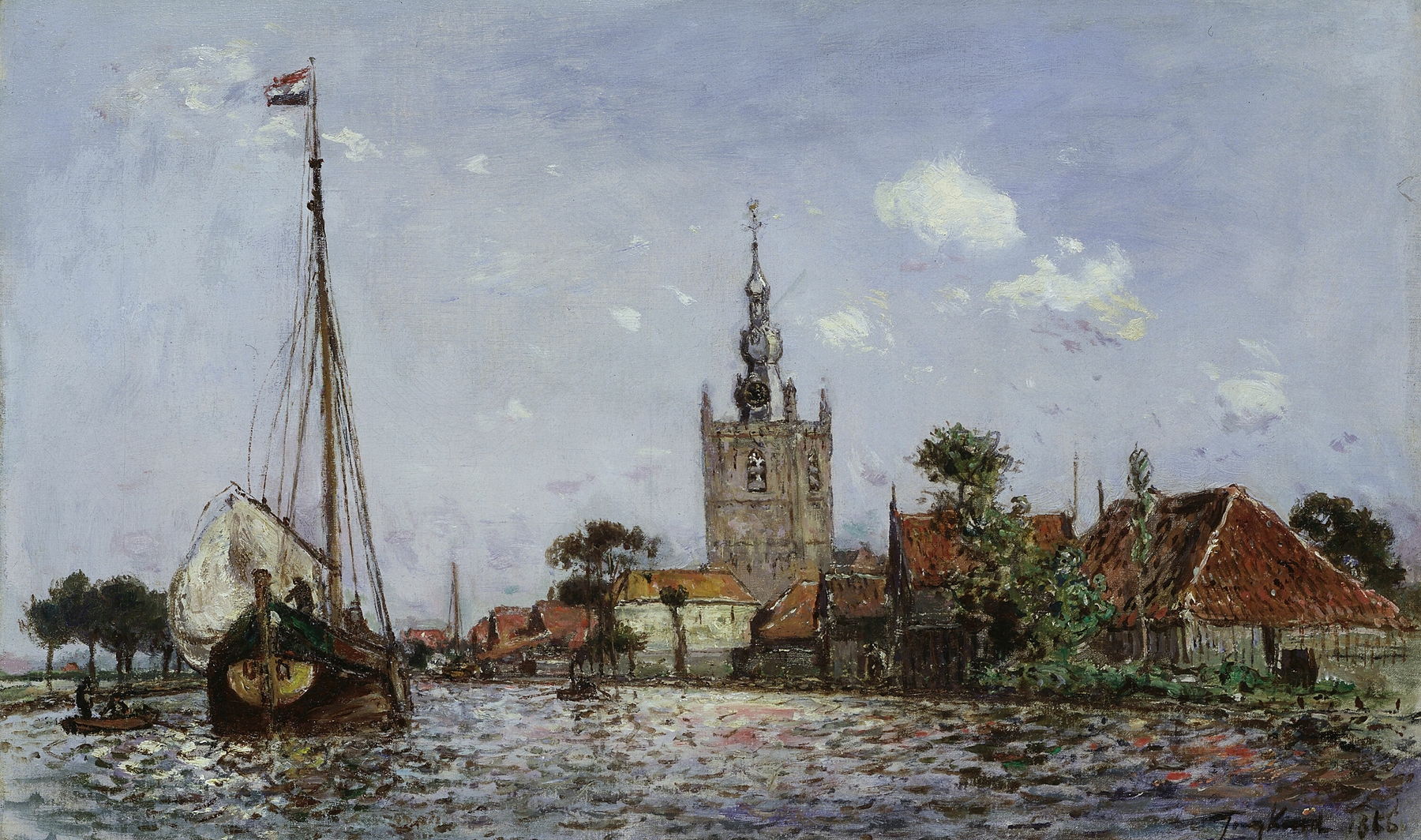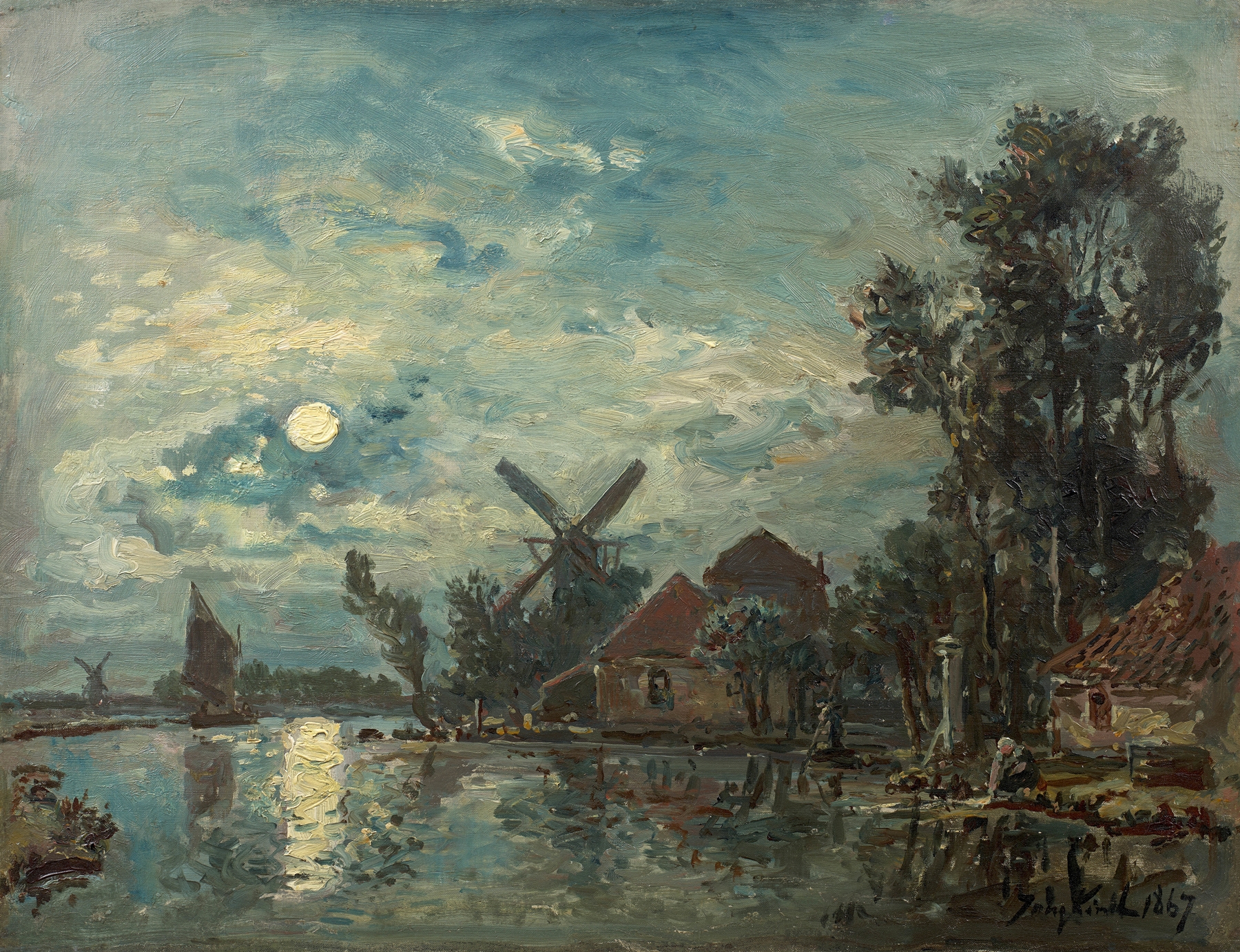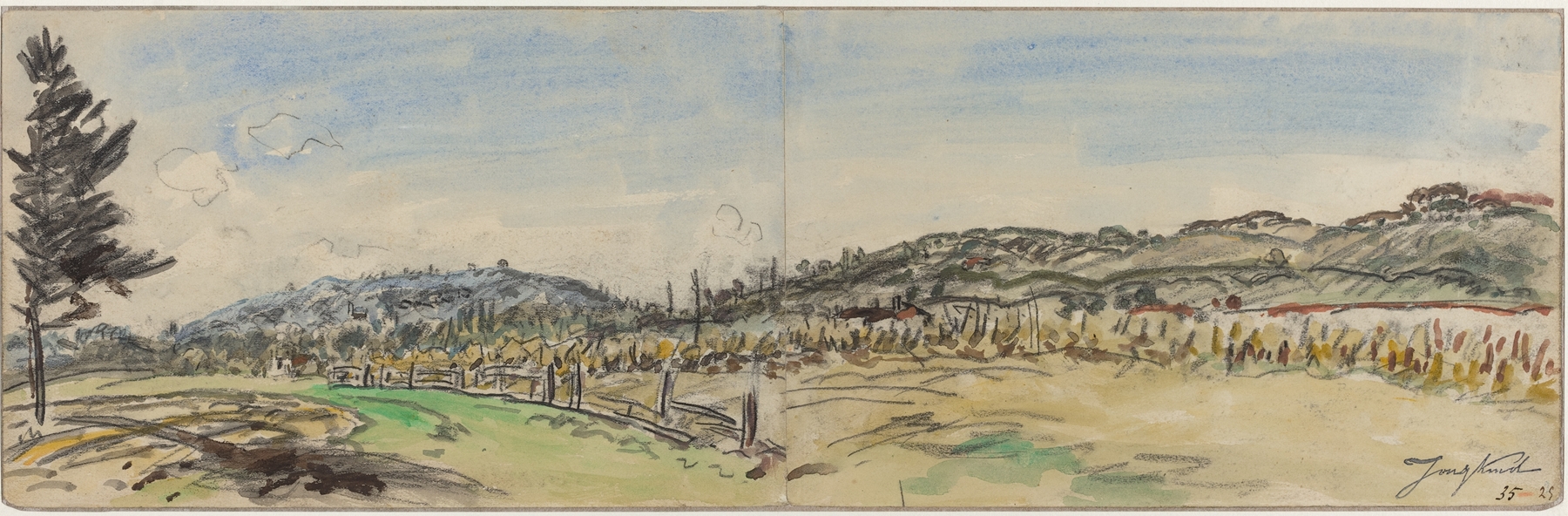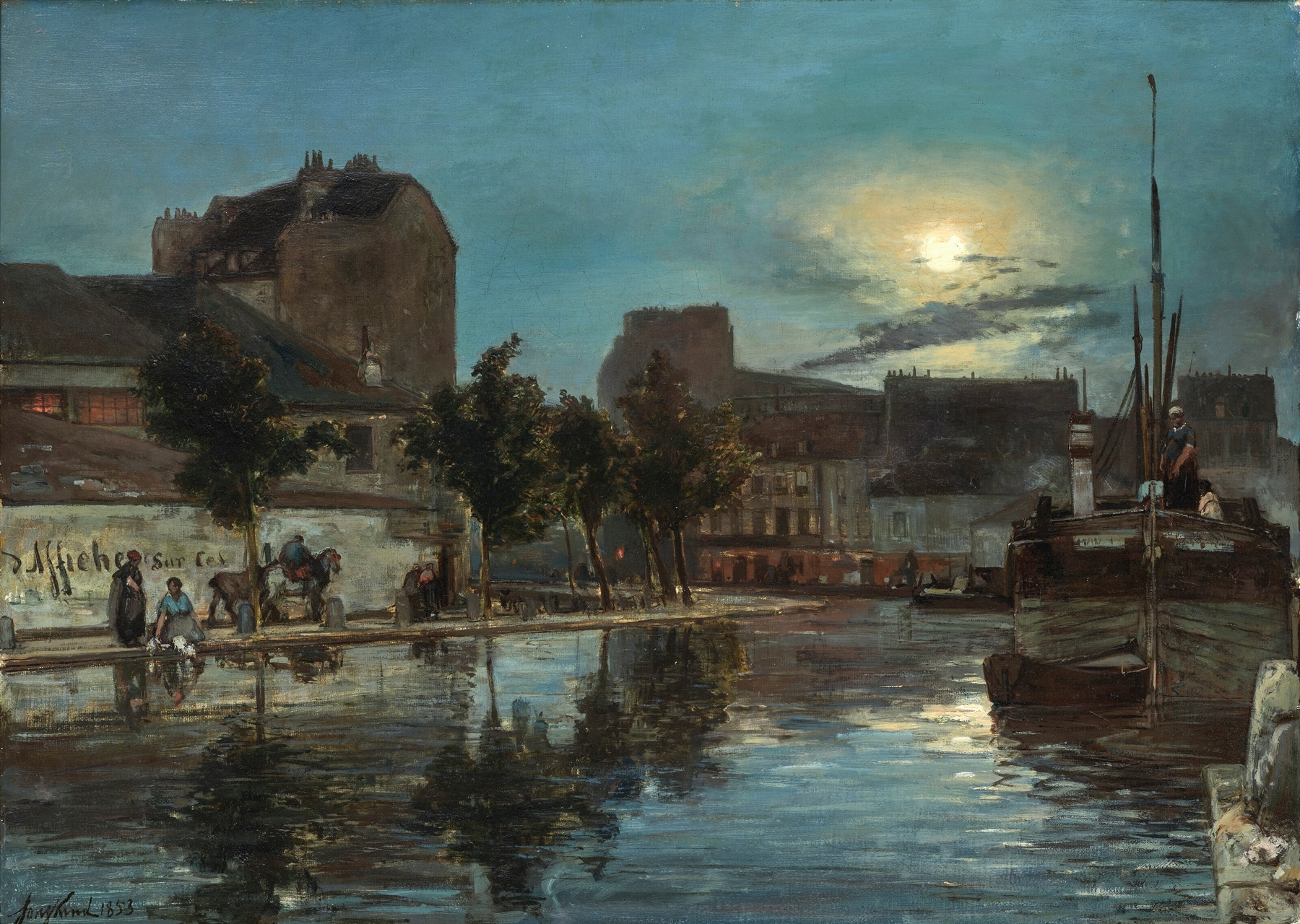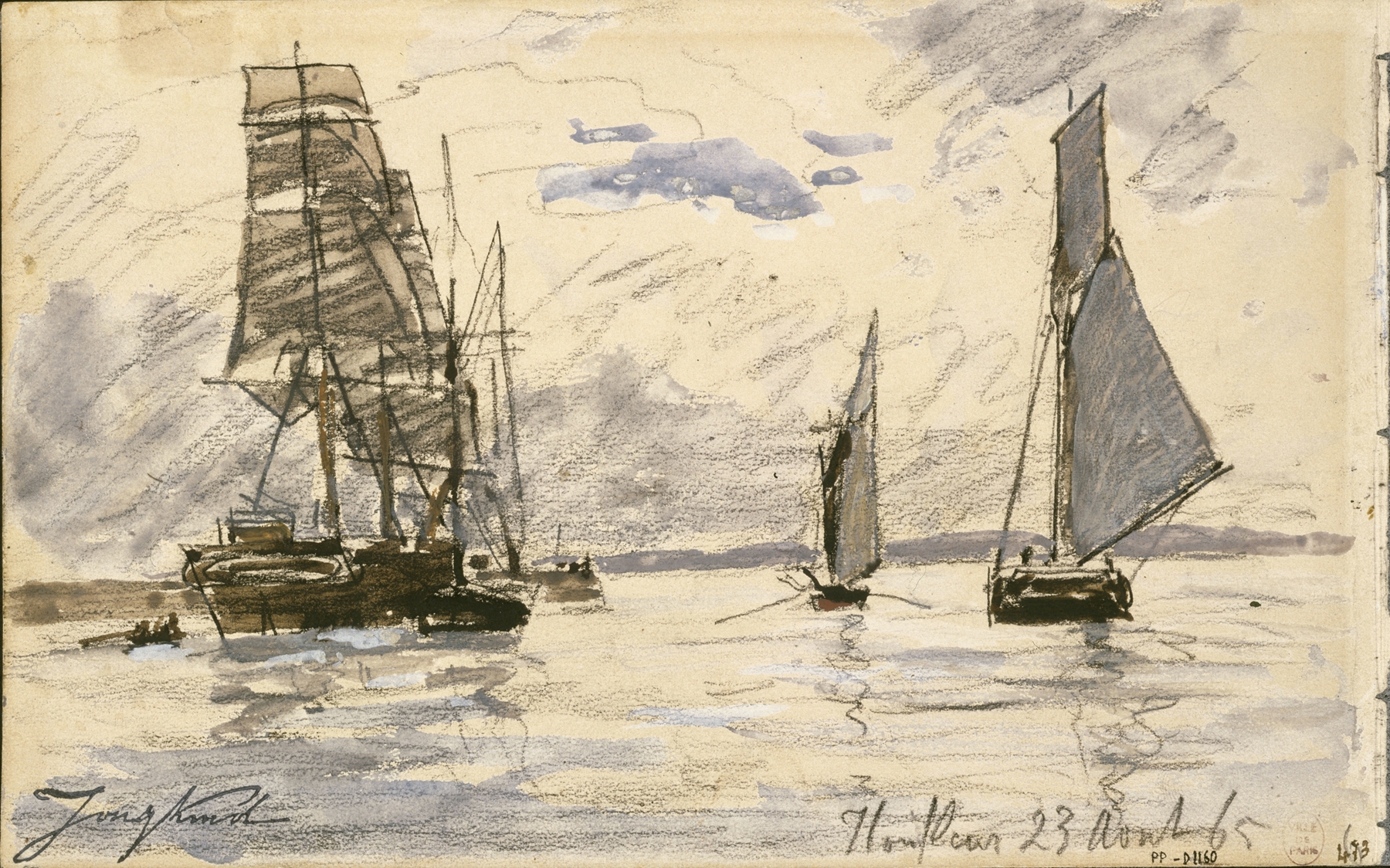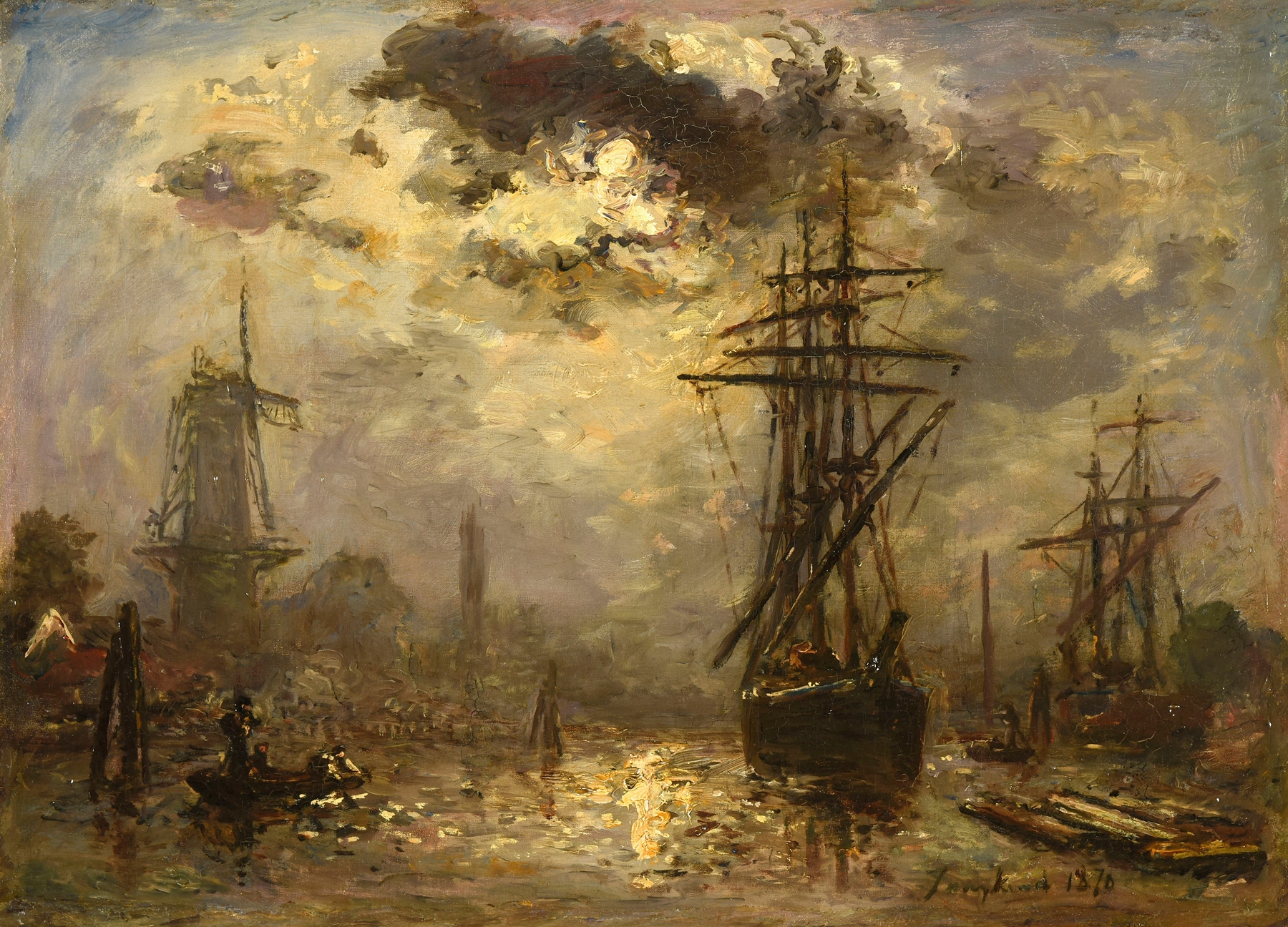
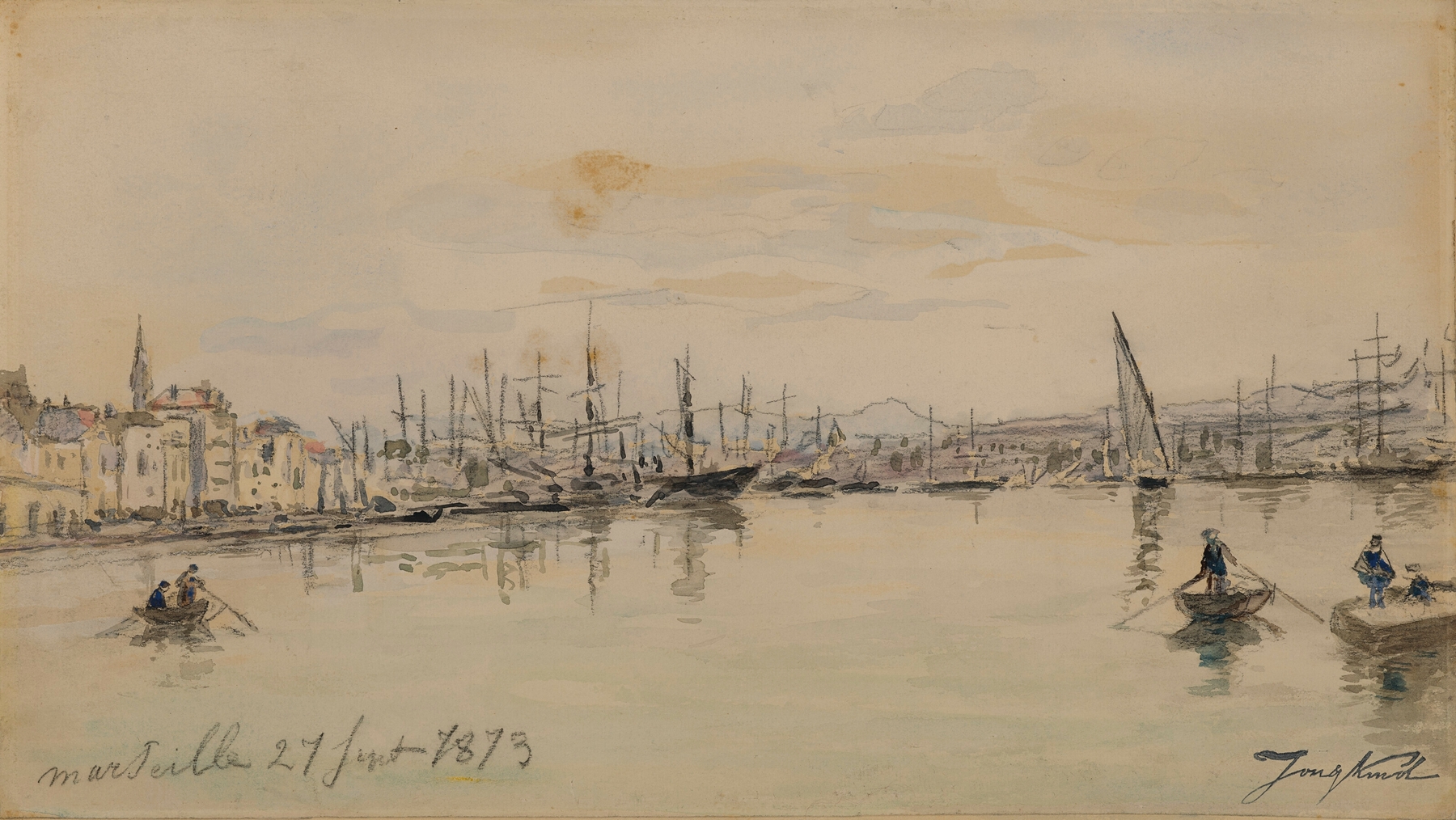
What secret hides in the quiet of the canvas? In *Les moulins de Rotterdam*, the stillness reverberates, echoing the weight of unspoken grief beneath the surface of everyday life. Look to the left, where the gentle silhouette of a windmill rises against a backdrop of muted blues and soft grays. The sky, flecked with wisps of white clouds, seems to breathe above the tranquil waterway that cradles the reflection of this industrious monument. Notice how the brushstrokes ebb and flow, creating a rhythm that guides your gaze across the painting, from the boats tethered by the bank to the distant horizon where the mills stand vigilant, guardians of fleeting moments. Within the seemingly serene landscape lies a poignant contrast between nature and man’s fleeting creations. The windmill embodies both perseverance and nostalgia, a reminder of traditions that are slowly eroded by progress. The delicate interplay of light and shadow hints at the losses that accompany change, while the still water invites contemplation, allowing space for reflection on what is lost and what remains. In 1870, Jongkind painted this piece during a time of personal upheaval and transformation in the art world. Living in Paris after his earlier years in the Netherlands, he was at the forefront of the Impressionist movement, grappling with his identity as an artist. The shift towards capturing light and atmosphere mirrored his own search for meaning amidst the evolving landscape of modernity, revealing the undercurrents of grief that shaped his artistic vision.