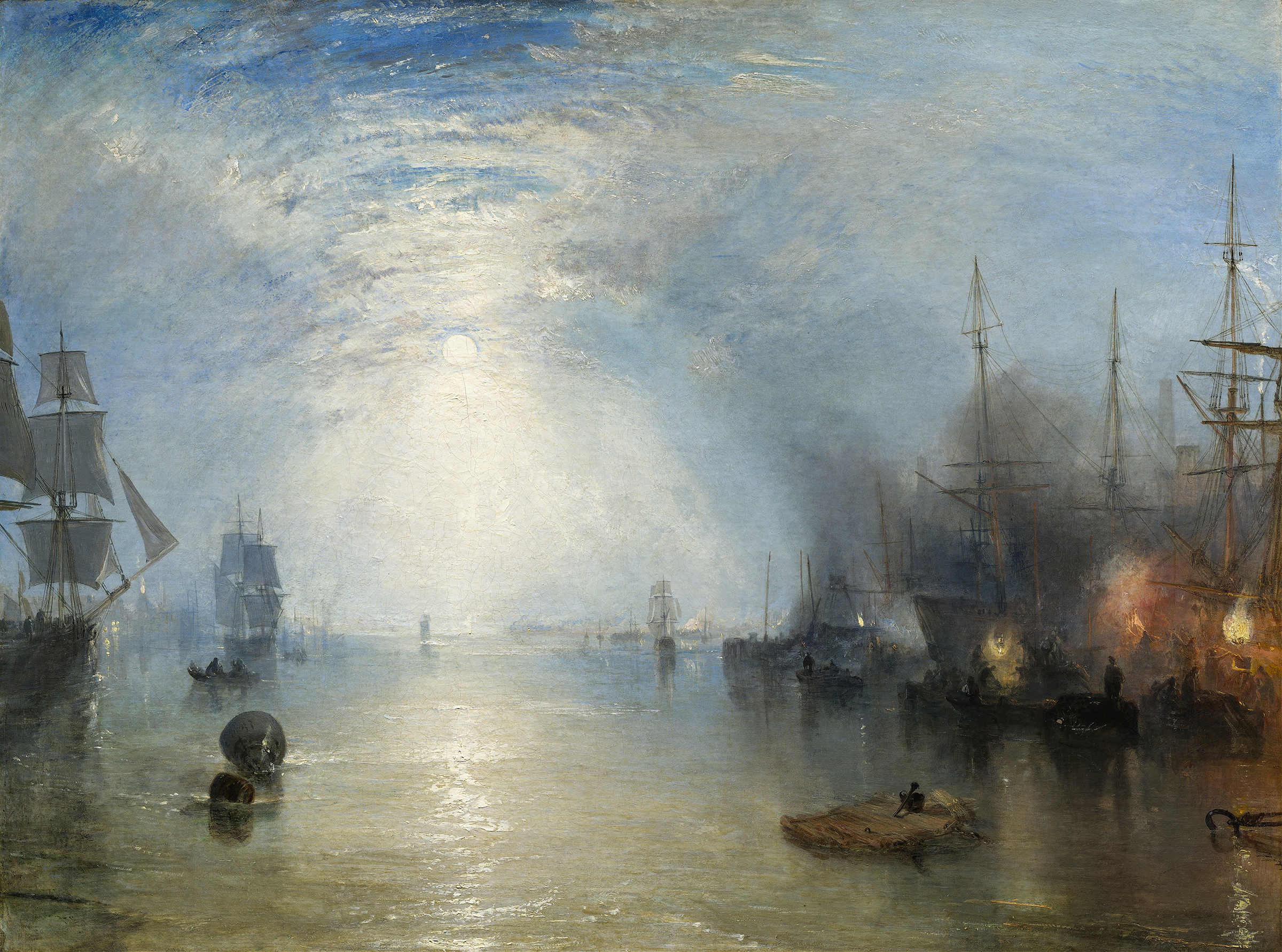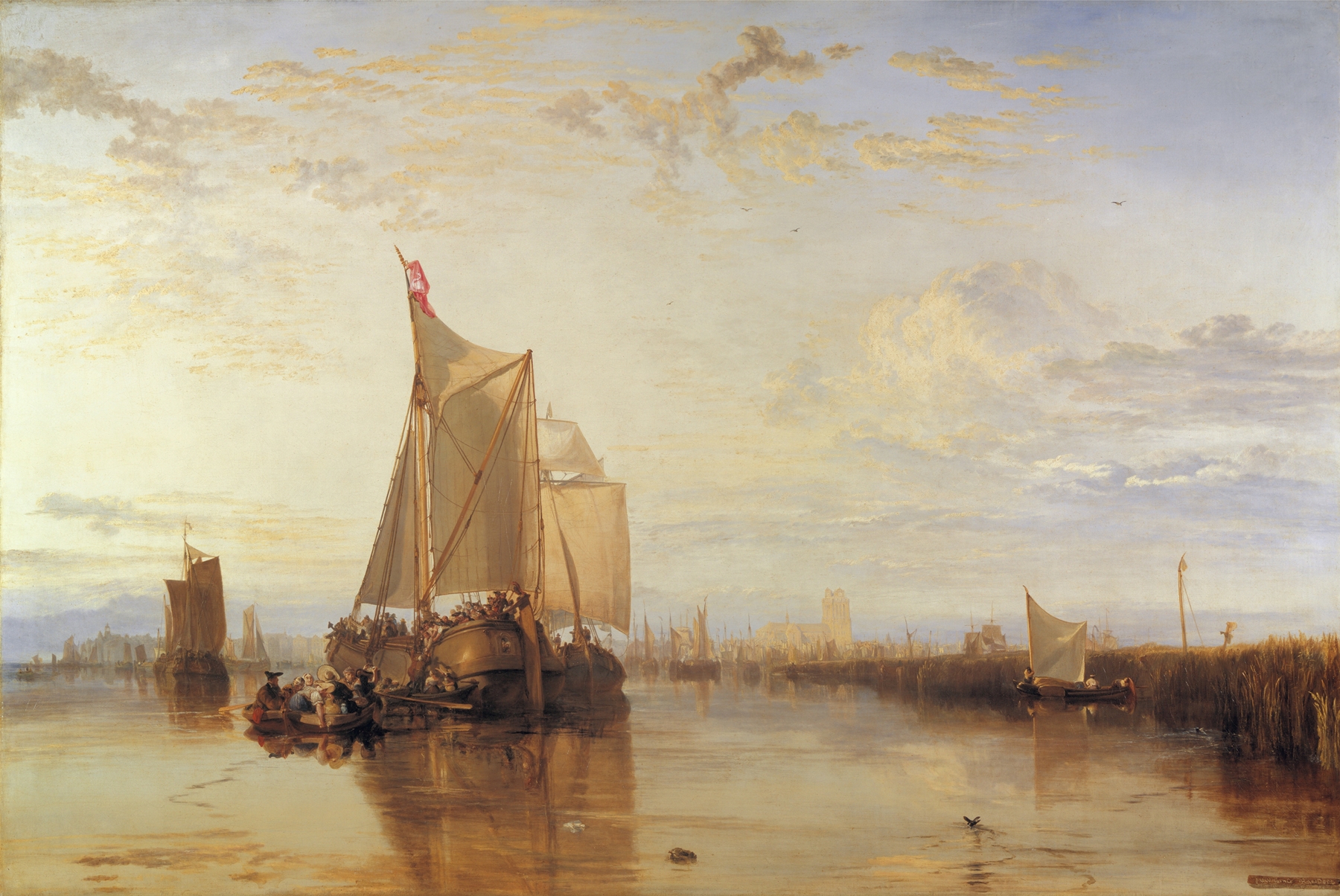
Did the painter know this moment would outlive them? In *Modern Rome – Campo Vaccino*, the beauty of a fleeting scene is captured in brushstrokes that speak of time's relentless passage, grounding us in the eternal. Look to the center of the canvas, where the majestic ruins rise against a luminous sky. The warm hues of ochre and gold meld with cooler blues, creating a dialogue between earth and sky. Notice how the light falls upon the crumbling columns, illuminating their weathered textures and casting soft shadows that echo the memory of grandeur. Each detail — from the wandering figures to the distant hills — invites you to explore the depth and scale of the landscape, revealing Turner's masterful ability to blend color and atmosphere. Yet, beneath this serene beauty lies a poignant contrast. The remnants of ancient Rome symbolize both the glory of civilization and the inevitability of decay. The solitary figure gazing at the ruins suggests contemplation, perhaps an acknowledgment of what has been lost to time. In juxtaposition with the vibrant sky, there’s an emotional tension, a reminder of life's transience and the paradox of human achievement — a moment of reflection amid the splendor. In 1839, Turner painted this piece while living in England, a period marked by his growing fascination with light and color. The art world was shifting, and he was at the forefront, embracing the Romantic movement's ideals. As he depicted the timeless allure of Rome, a city steeped in history, he was also responding to his own artistic evolution, aiming to transcend mere representation and capture the essence of beauty itself.