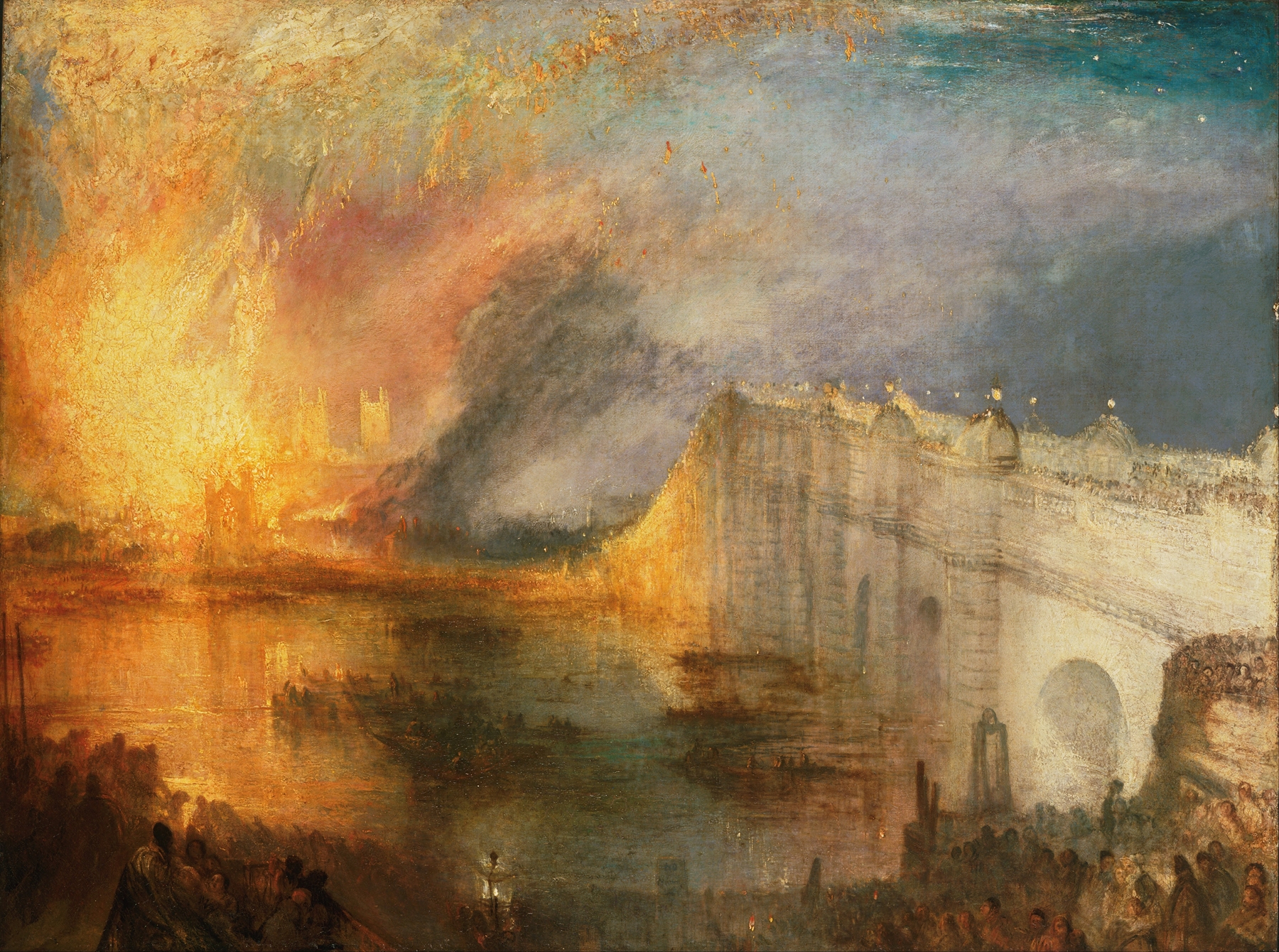
The Burning of the Houses of Lords and Commons, October 16, 1834 — History & Analysis
Can beauty exist without sorrow? In *The Burning of the Houses of Lords and Commons*, flames dance against the twilight sky, casting a haunting glow that blurs the boundaries between destruction and artistry. Look to the left, where the billowing smoke intertwines with the vibrant hues of a dying sun. The warm reds and oranges of the fire contrast sharply with the cool blues of the river, creating a dynamic tension that draws the viewer’s gaze across the canvas. Notice how Turner skillfully employs light — both as a physical phenomenon and a metaphorical one — to highlight the powerful forces of nature and man, merging the real with the illusion of beauty in chaos. The painting encapsulates not merely a moment of catastrophe, but also a profound commentary on the transience of power and the role of art in responding to tragedy. The flames devour the historic structure, yet they illuminate the scene, suggesting that from destruction, new beginnings may arise. The looming figures, spectators in the foreground, appear small and powerless against such monumental forces, reflecting the futility of human ambition in the face of nature’s sublime wrath. Joseph Mallord William Turner painted this piece during a period of profound change in Britain. After the Houses of Parliament burned down in 1834, the artist captured the spectacle while grappling with new artistic movements that embraced emotion and atmospheric effects. At the time, he was already recognized as a pioneering figure in Romanticism, and this work marked a pivotal moment in his exploration of light, color, and the interplay between beauty and devastation.