New England Headlands — History & Analysis
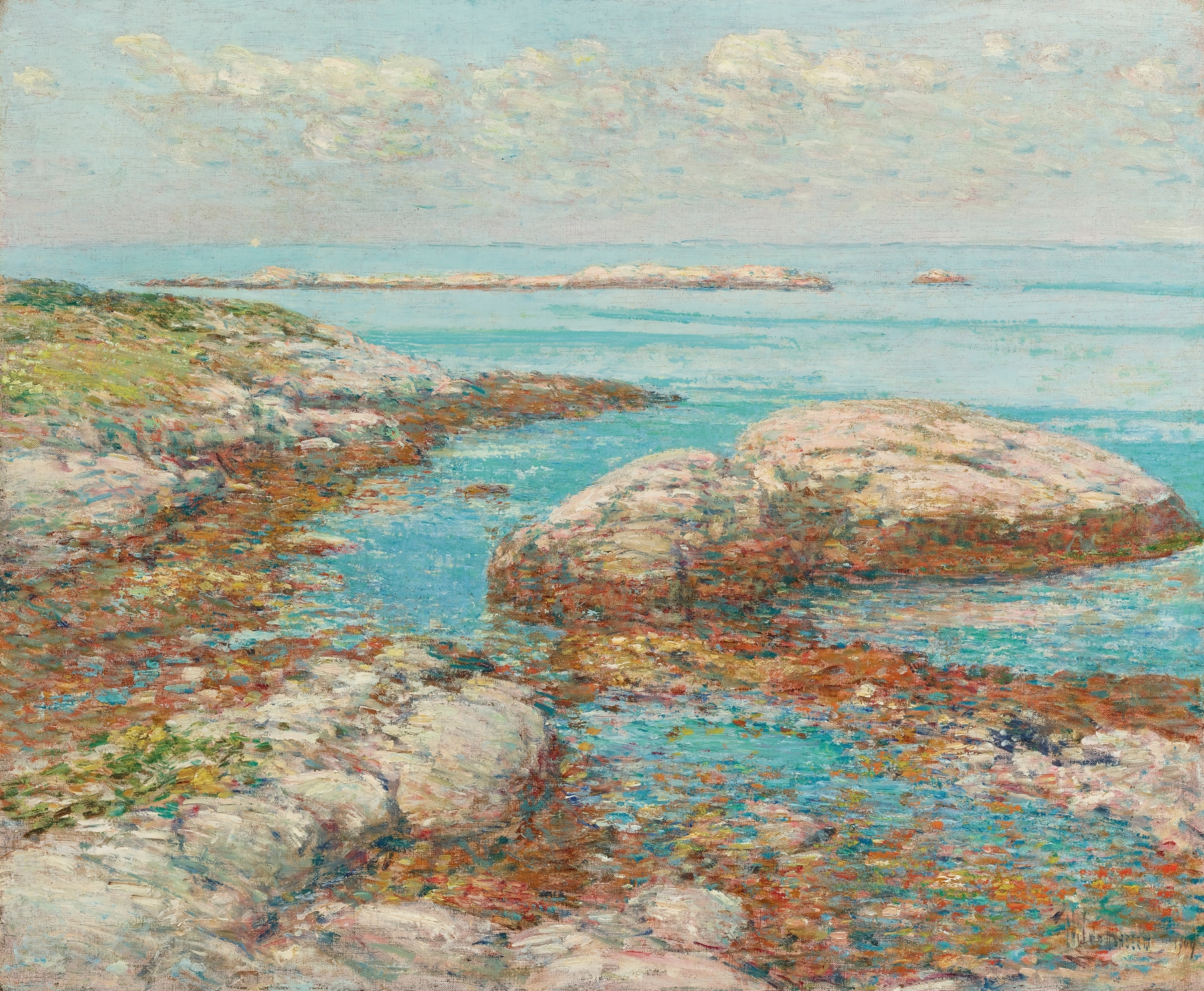
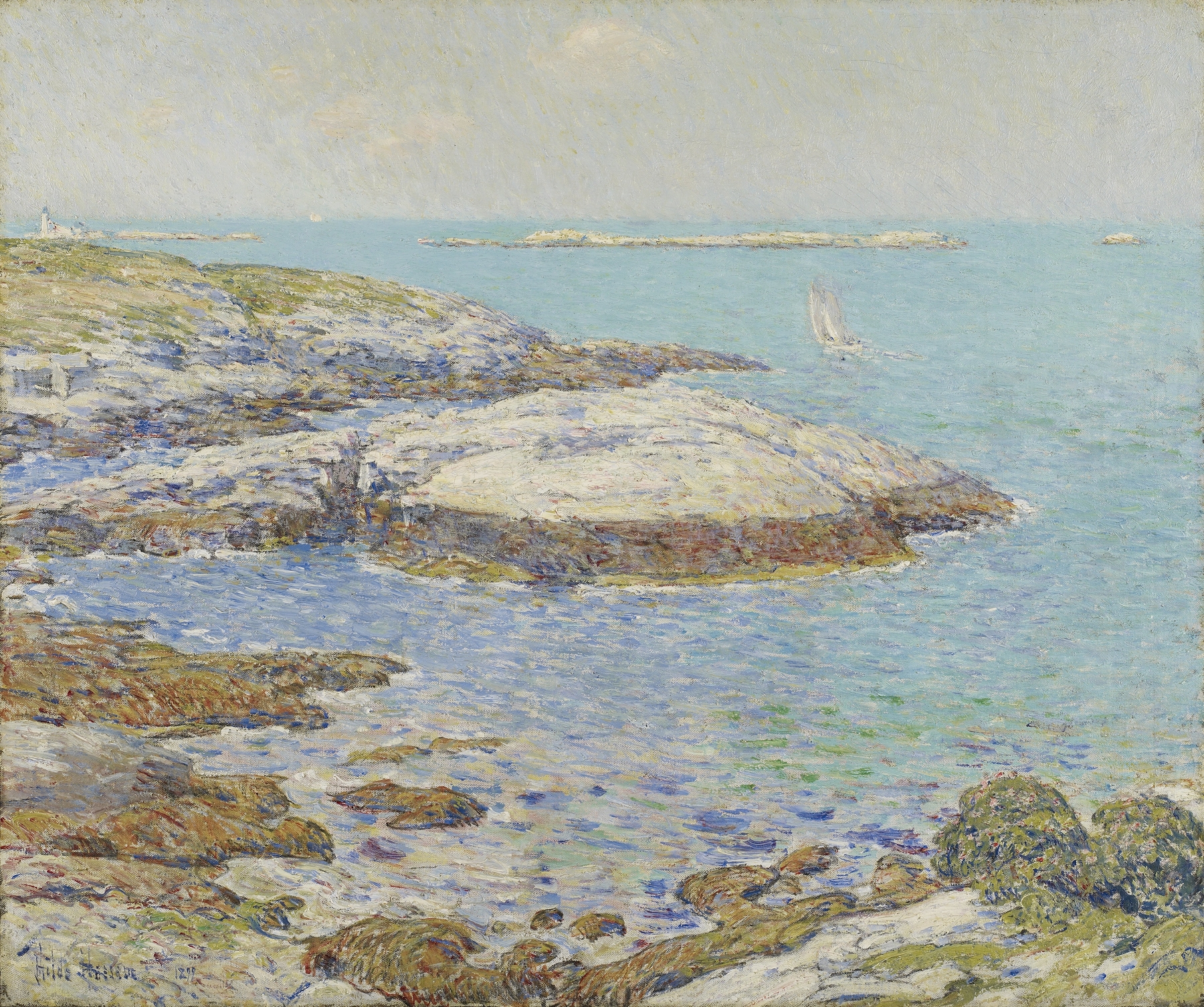
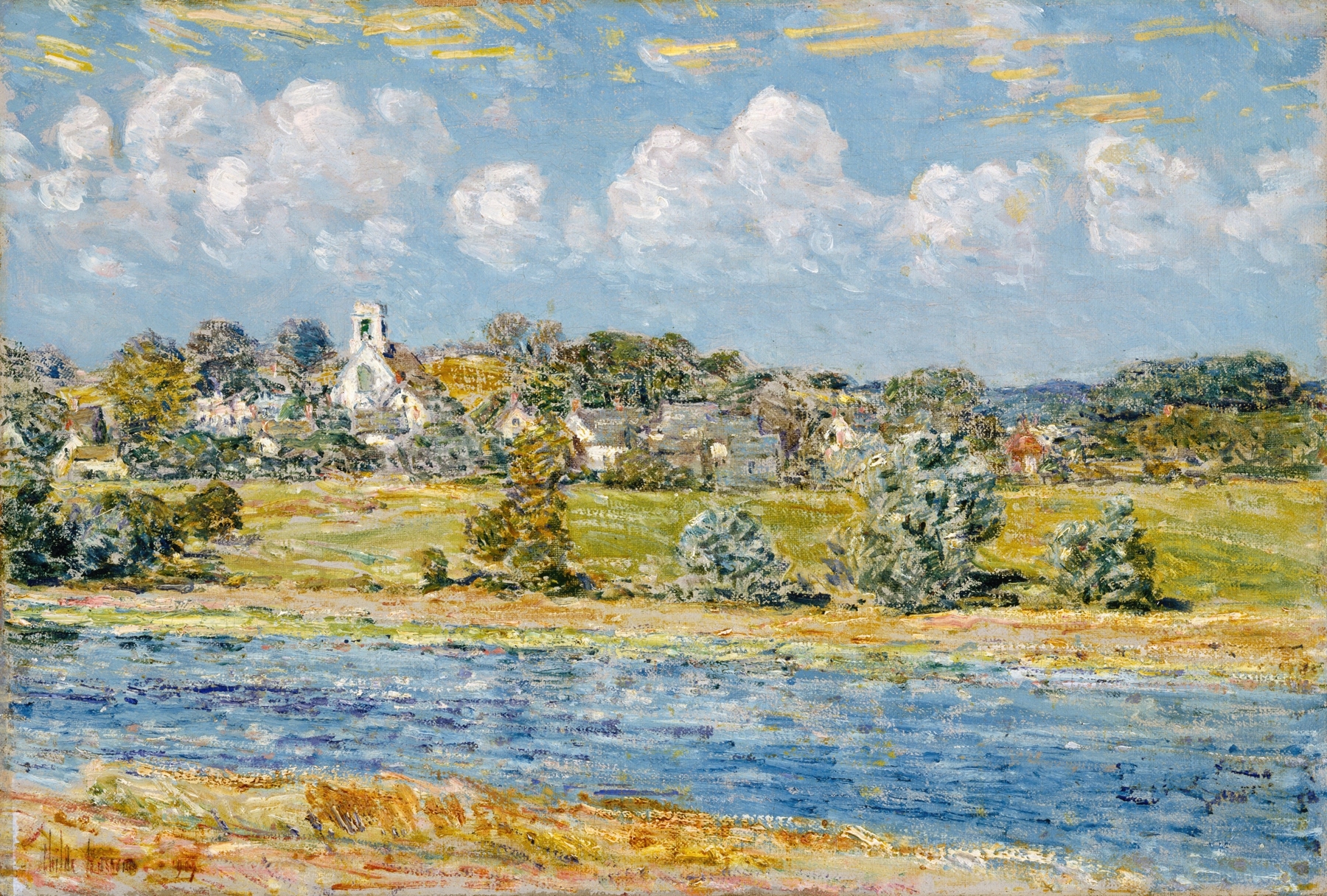
What secret hides in the quiet of the canvas? In New England Headlands, we are invited into a tranquil dreamscape where the whispers of nature beckon us to linger a little longer. Look to the left where the rugged coastline meets the gentle curve of the sea. The artist employs a soft palette of greens and blues, creating a soothing gradient that evokes the serenity of early morning light.
Notice how the brushstrokes pulse with energy; some areas are textured and vivid, while others dissolve into softness, blurring the line between reality and reverie. This interplay of light not only captures the fleeting moment of dawn but also infuses the scene with a sense of timelessness. Upon closer examination, the contrasting elements reveal deeper meanings—the steadfastness of the rocky cliffs juxtaposed with the fluidity of the waves symbolizes the duality of permanence and change. The distant horizon, barely visible, suggests a world beyond what we see, inviting viewers to contemplate the mysteries that lie ahead.
The sky, with its delicate, shifting clouds, reflects the transient beauty of life itself, encouraging introspection amidst the natural splendor. Childe Hassam painted this piece in 1899 during a time of artistic exploration and burgeoning Impressionism in the United States. Settled in New England, he was influenced by the American landscape and a desire to capture its essence through light and color. By employing this innovative technique, he contributed to a growing movement that celebrated the beauty of nature and the emotional resonance it holds, positioning himself as a pivotal figure in American art.