Norwegische Landschaft mit Sägemühle — History & Analysis
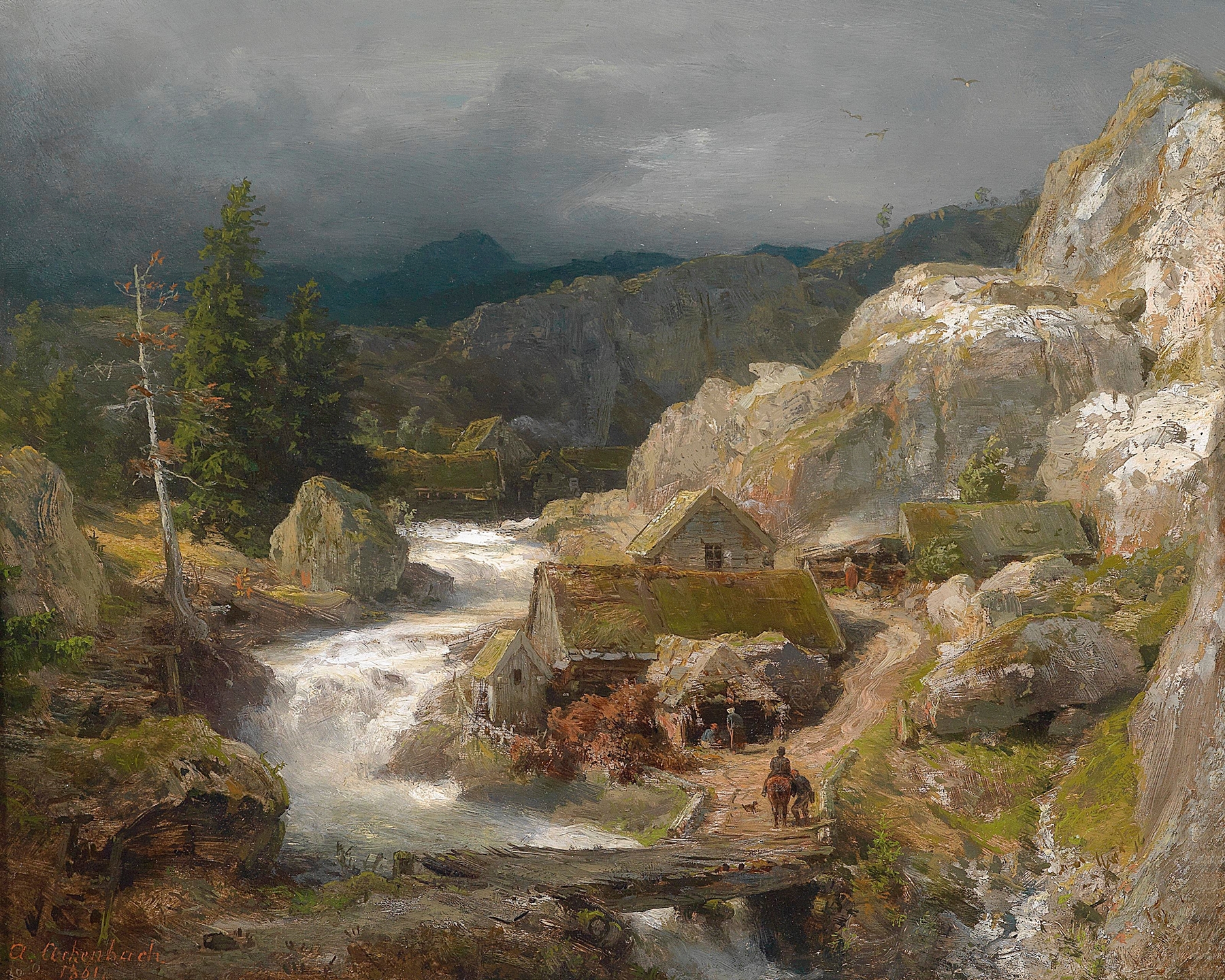
When did color learn to lie? In Norwegische Landschaft mit Sägemühle, the muted tones entwine with shadow, revealing a landscape that whispers secrets beneath its surface. Look to the center where the sawmill stands, its structure both solid and enveloped by a cascade of verdant greens and browns. The play of light dances across the water, reflecting the strength of the trees while casting shadows that stretch like fingers across the ground.
Notice how the dramatic contrast between the illuminated peaks and the darker underbrush creates a sense of depth, pulling the viewer into a realm where nature’s beauty meets the labor of man. Within this serene yet dynamic scene lies a tension between tranquility and industry, as if the landscape both nurtures and resists human intervention. The shadows hint at the stories of those who toil within the sawmill, their lives intertwined with the ancient trees and the ever-flowing river. This duality reflects the struggle between progress and preservation, a theme that resonates deeply in an age grappling with rapid change.
In 1839, Achenbach painted this work during a period of burgeoning Romanticism in Germany, where artists sought to explore the sublime in nature. Living in Dusseldorf, he was influenced by the dramatic landscapes of Norway that had captivated Europe. As the Industrial Revolution loomed, the tension between nature and technology began to shape artistic expression, making this painting a poignant reflection of its time.