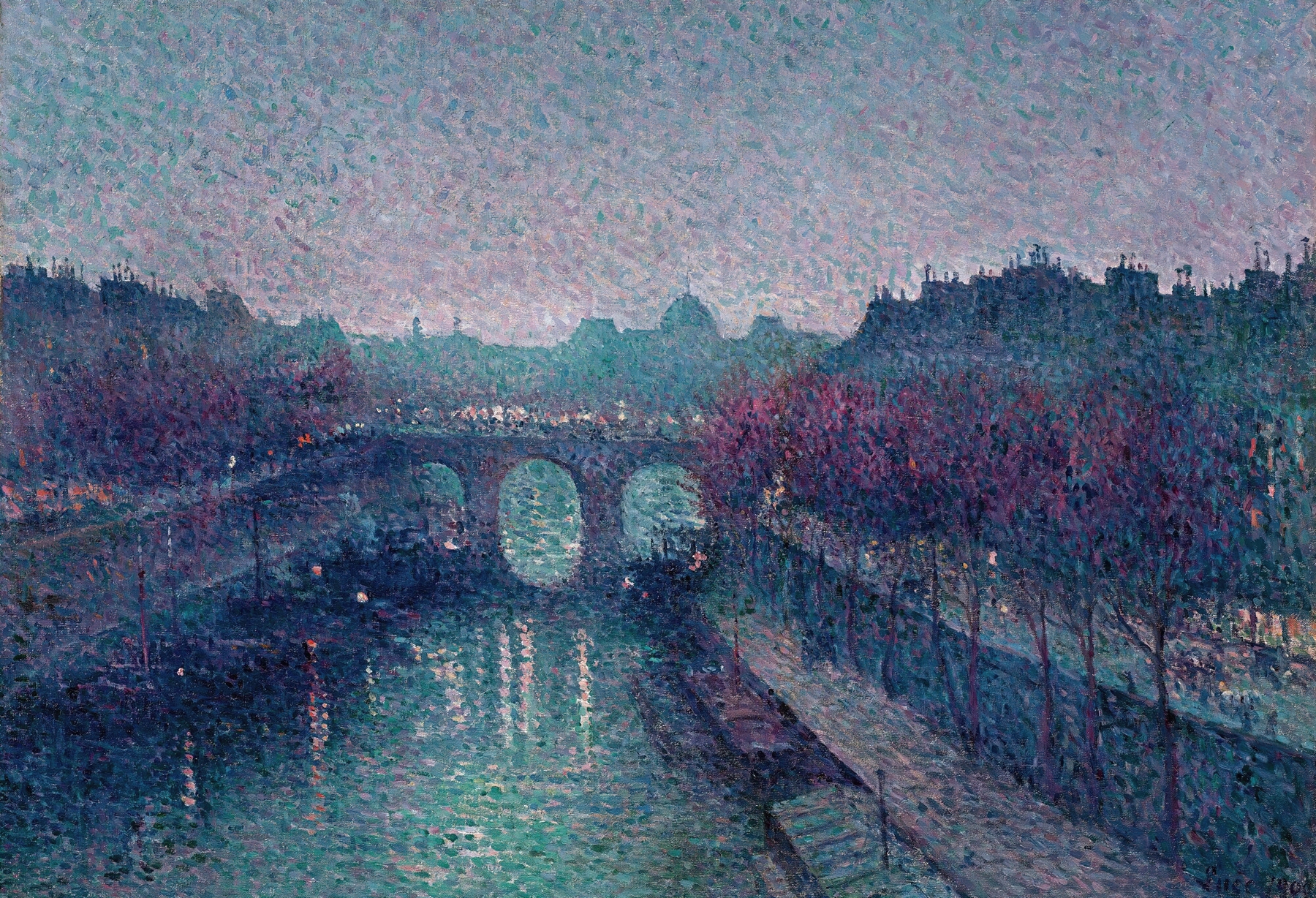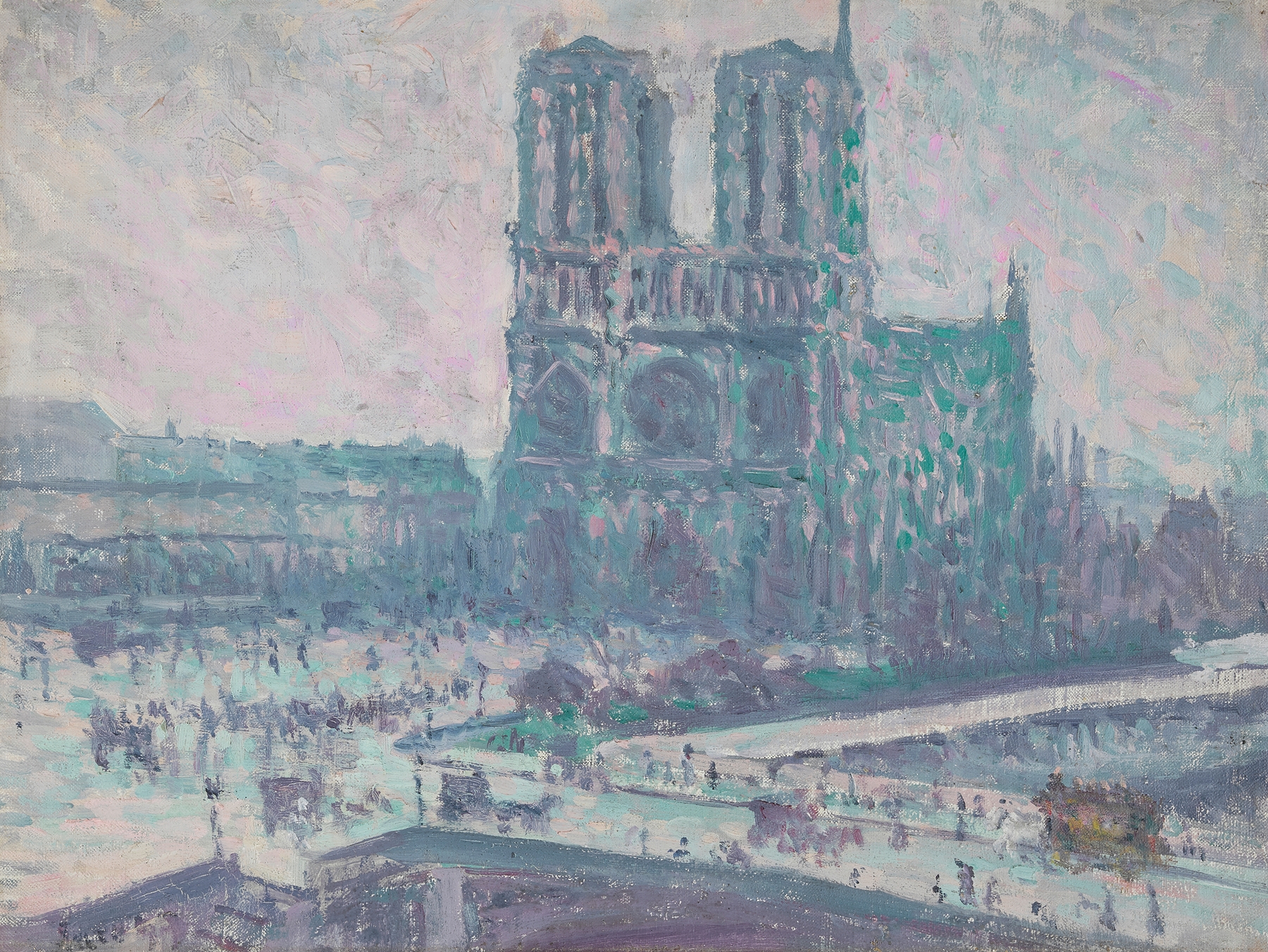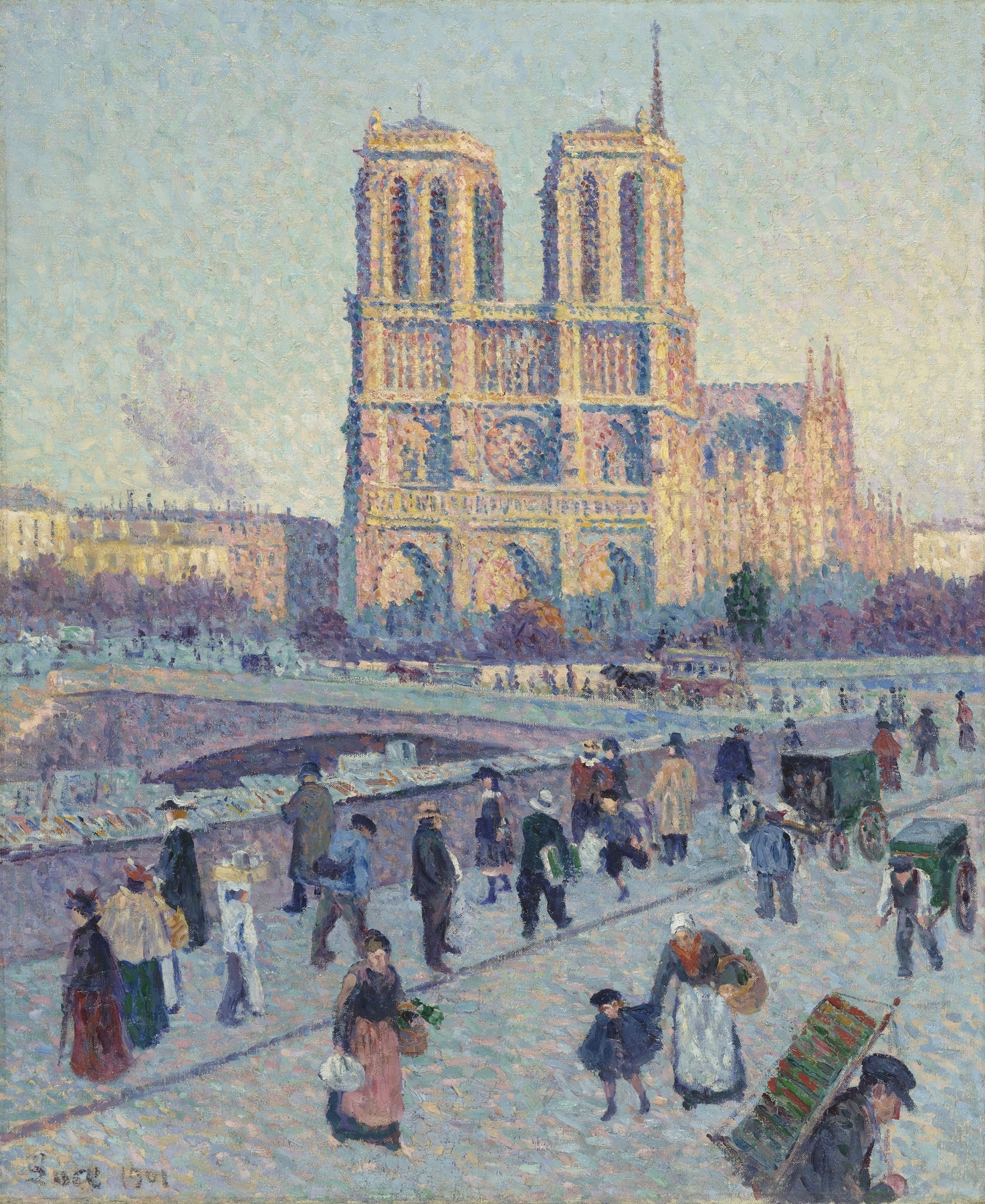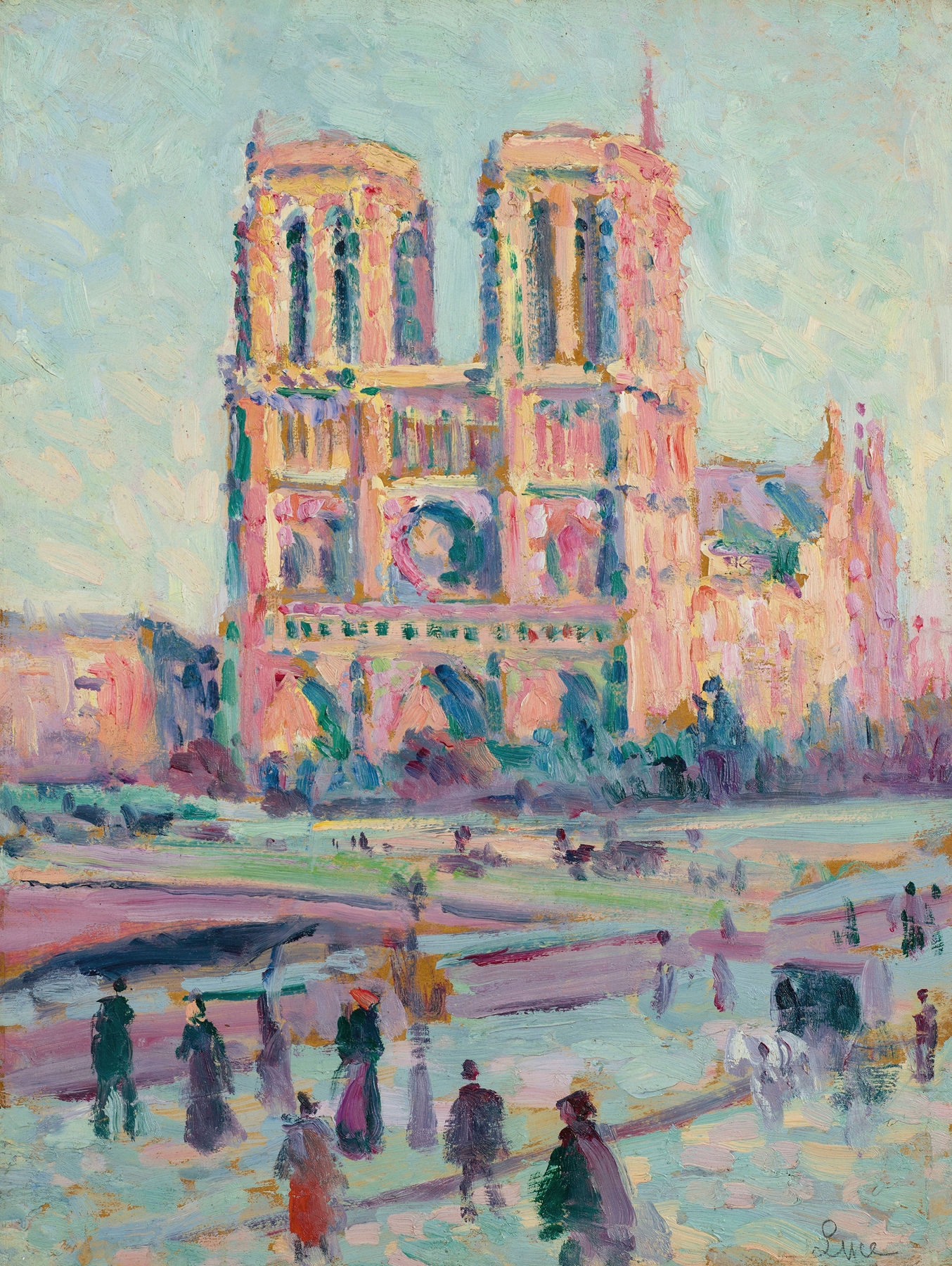
“Between color and silence, truth hides.” In the quiet interplay of hues, a sense of transcendence emerges, inviting us to contemplate the duality of existence. Look closely at the canvas, where the vibrant blues and soft yellows converge. The luminous facade of Notre-Dame stands proud and majestic, framed against a background that oscillates between day and dusk. Notice how the artist employs thick, expressive brushstrokes, lending a palpable texture to the surface, as if the light itself were alive, dancing across the architecture. Your gaze is naturally drawn to the intricate details of the cathedral’s spires, which reach skyward, echoing a yearning for something beyond the earthly realm. Within this scene lies a tension between the steadfastness of the stone structure and the ephemeral nature of the sky. The juxtaposition of bright colors against the shadows captures the fleeting moment of twilight, hinting at the passage of time. Each brushstroke conveys a sense of immediacy, reminding us that beauty is transient and often overlooked. The cathedral becomes not just a building, but a symbol of resilience and hope, embodying the human spirit's search for meaning amid the transient world. Maximilien Luce created this piece in 1910 during a time of profound change in French society, grappling with the impacts of industrialization and modernity. Living in Paris, he was influenced by the Post-Impressionist movement and his friendships with artists such as Vincent van Gogh. This work reflects both a tribute to the architectural marvel of Notre-Dame and Luce’s desire to capture the essence of life’s fleeting moments amid a rapidly changing world.