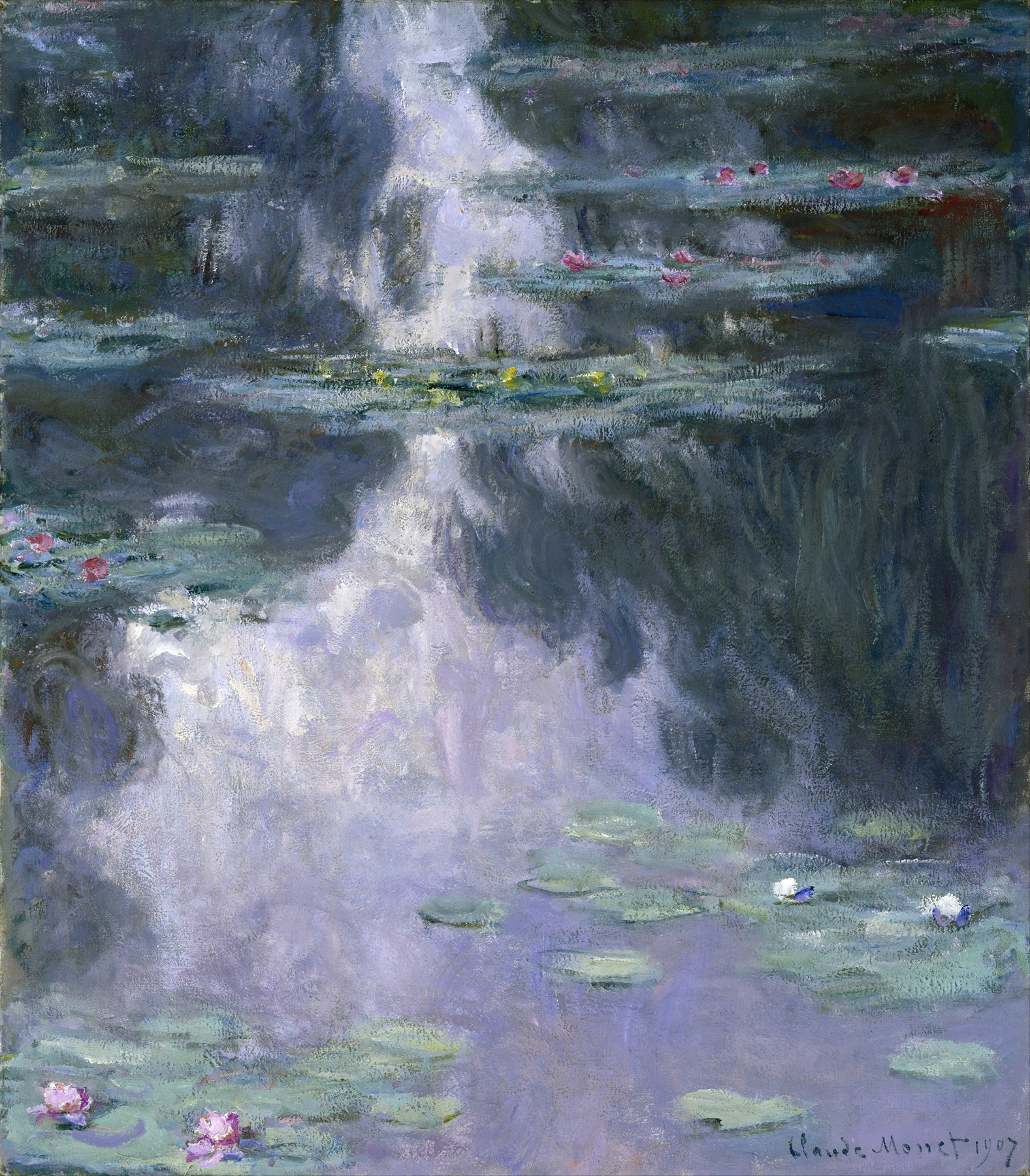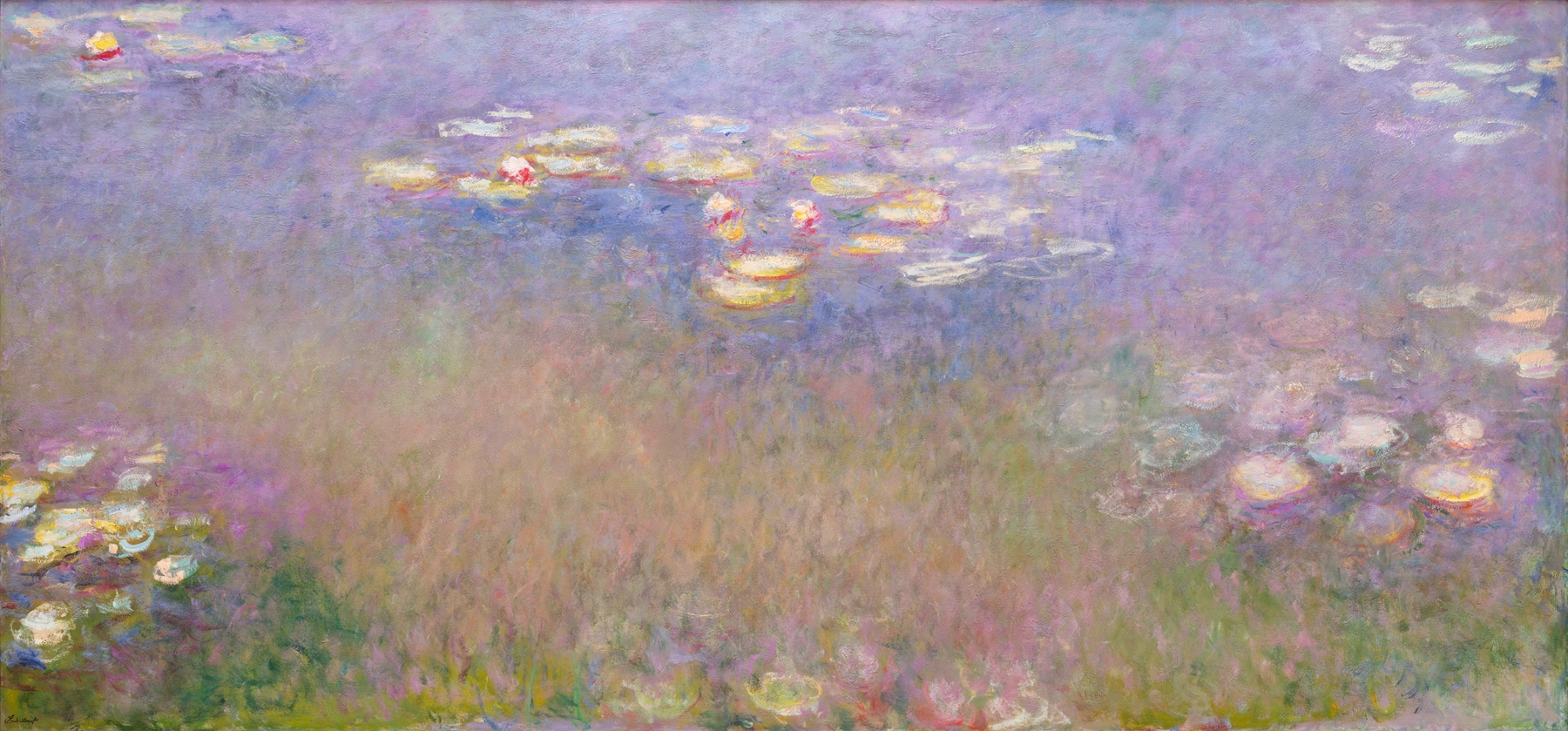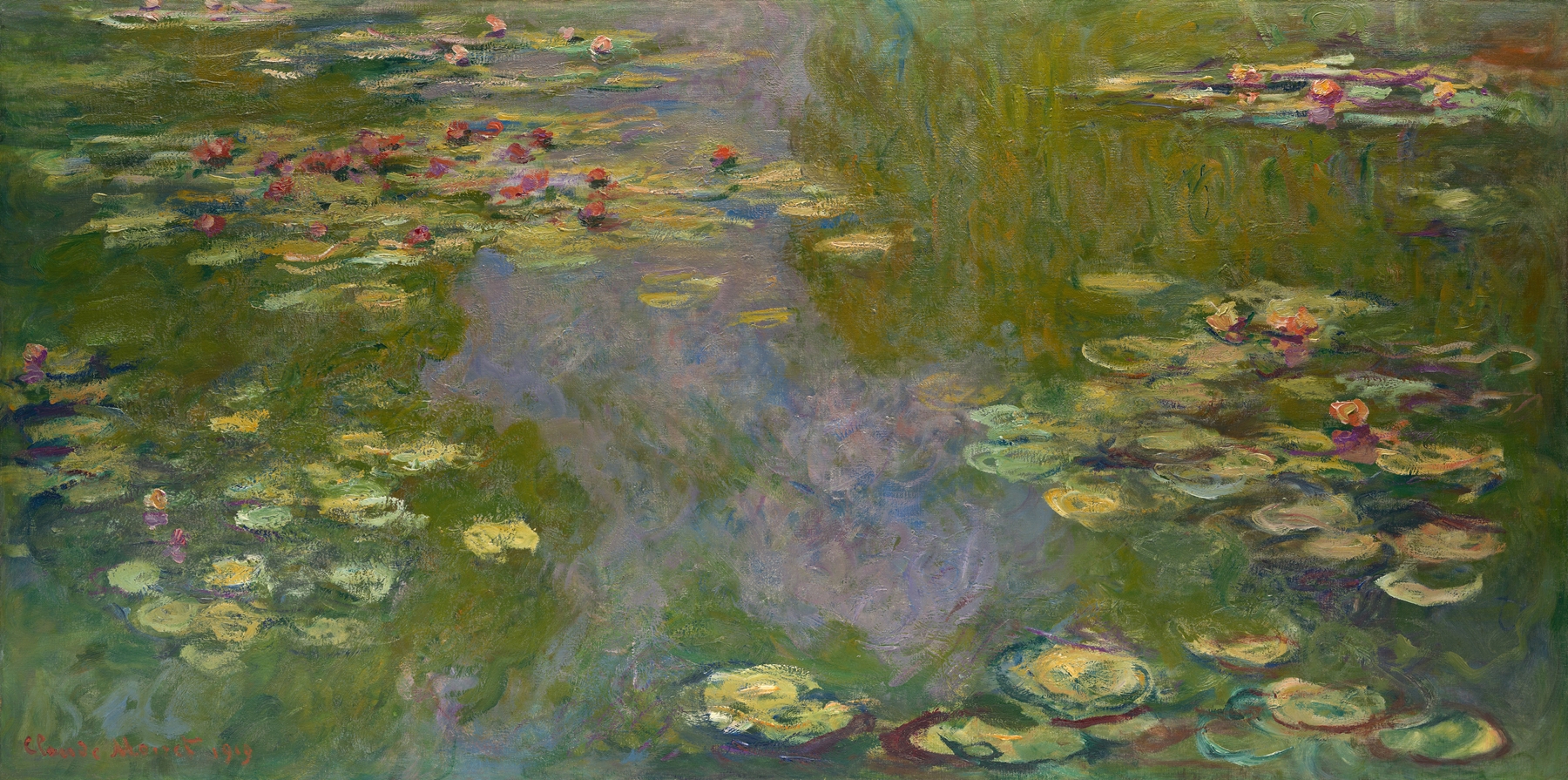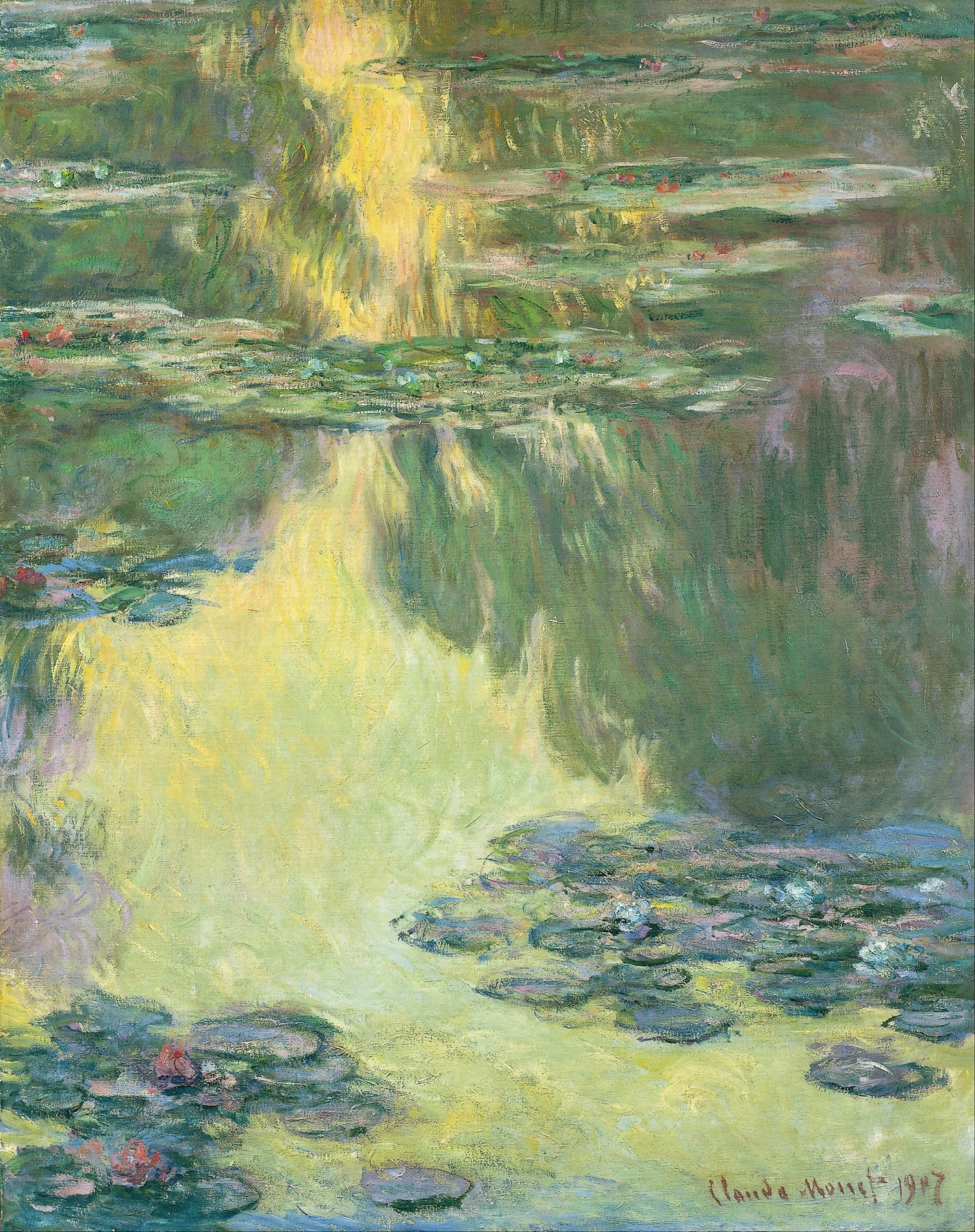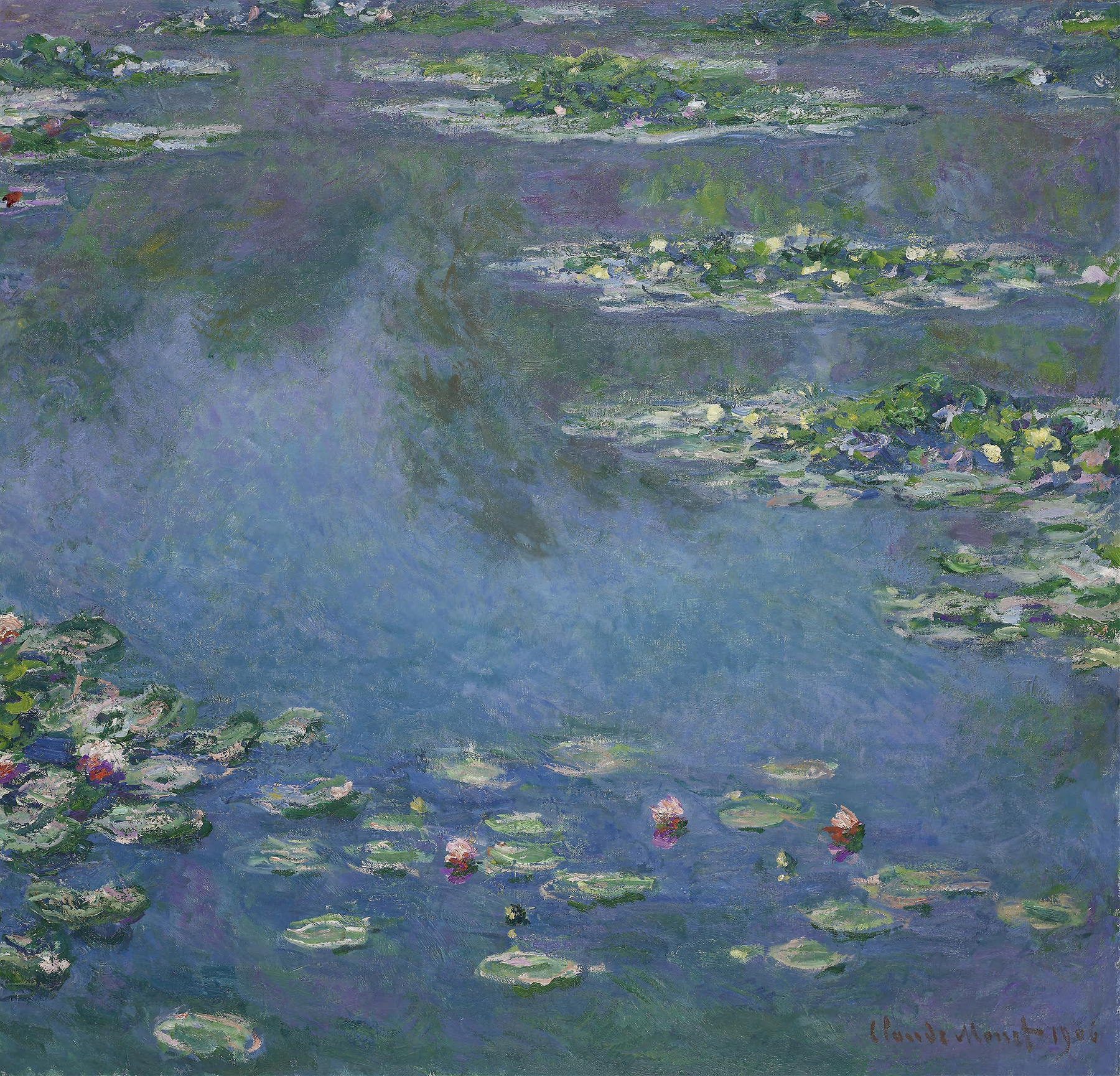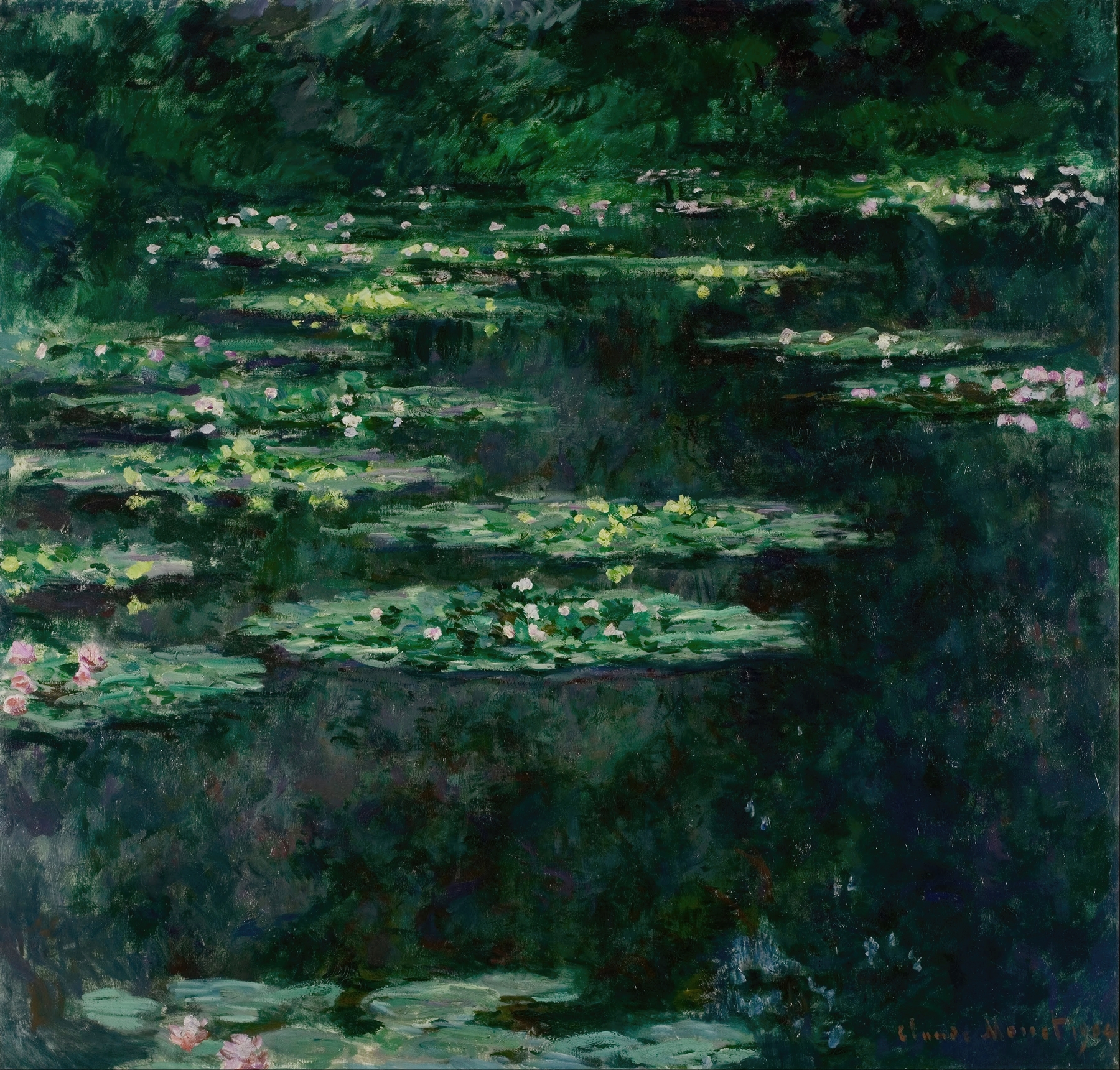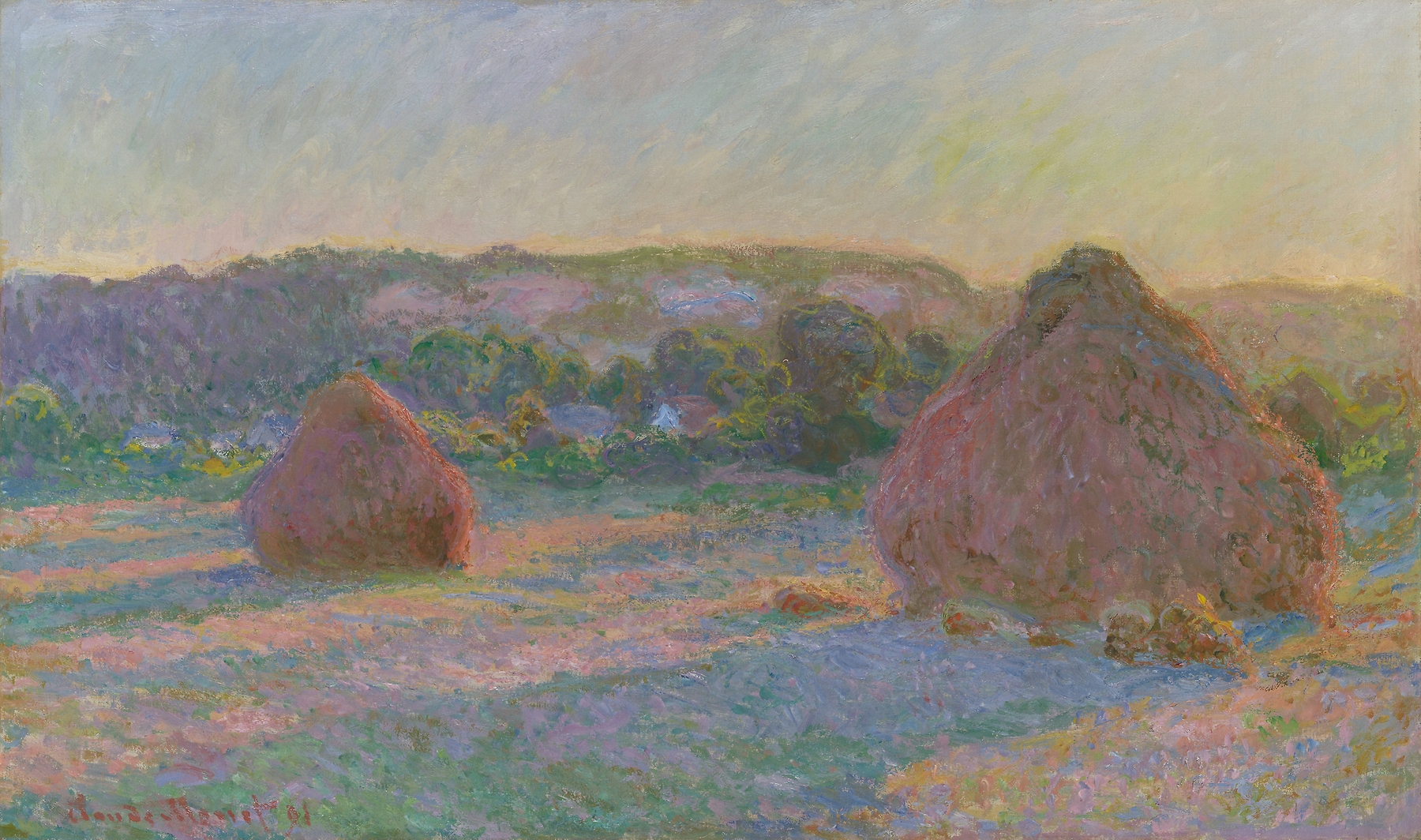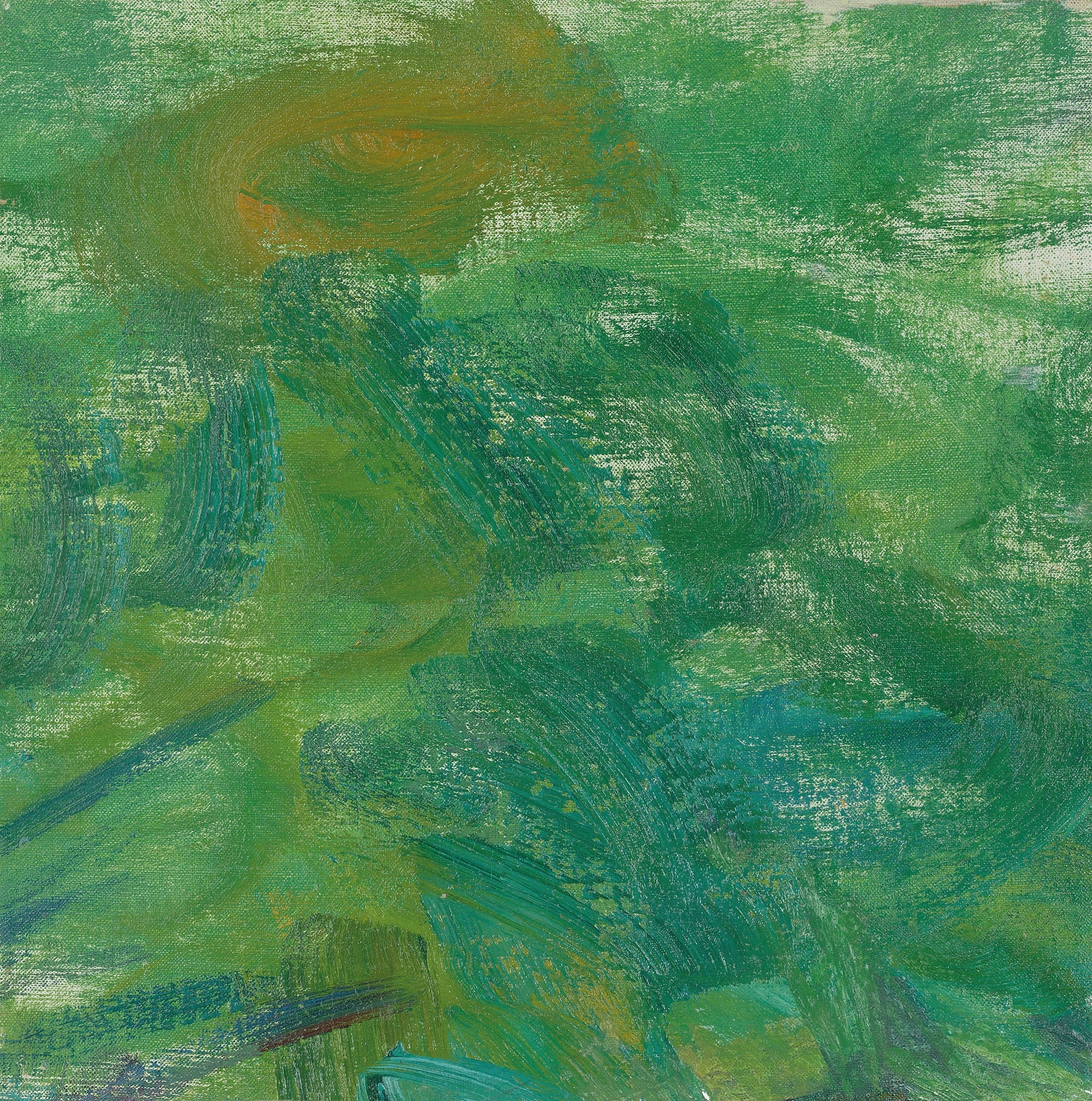
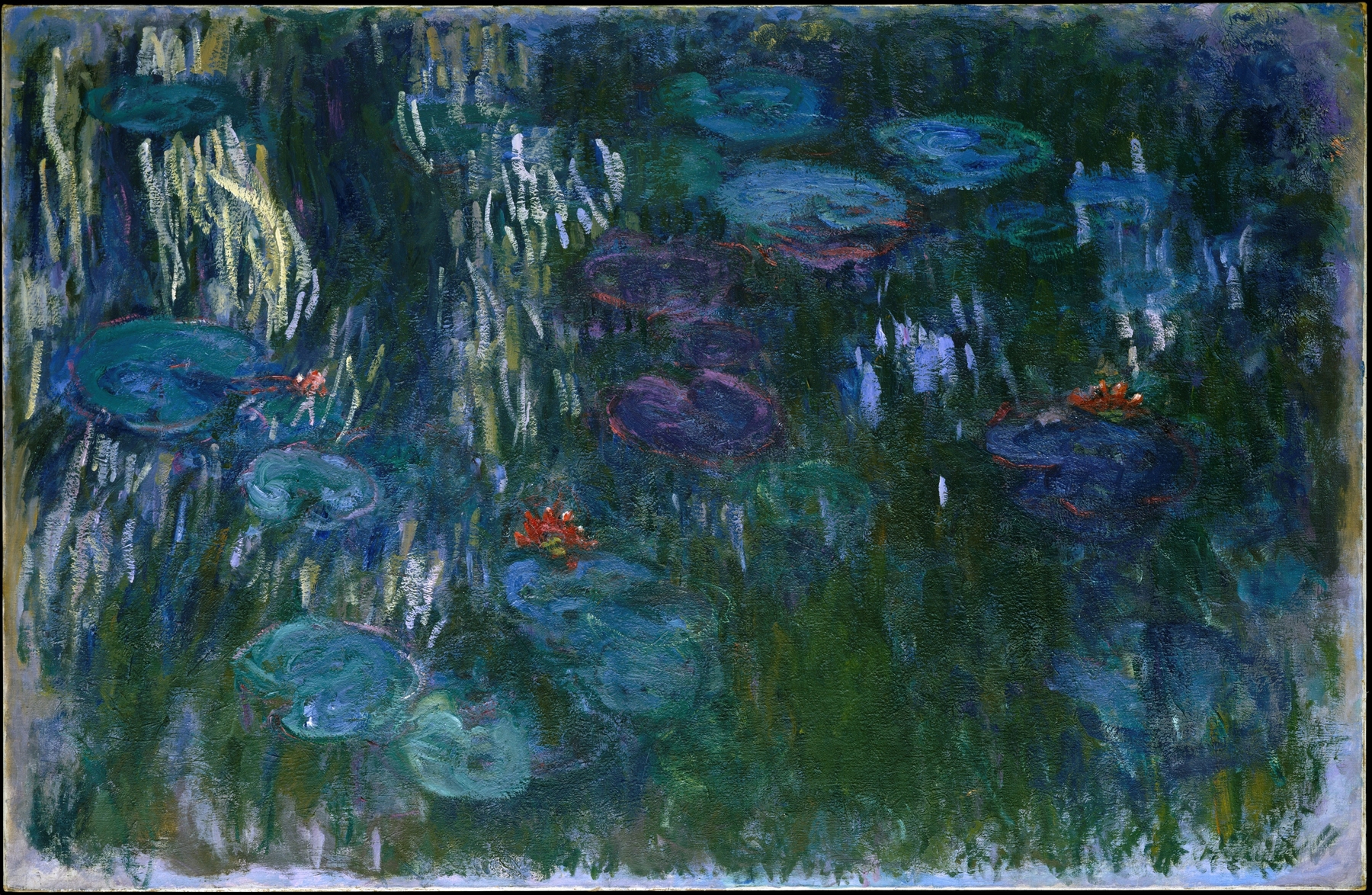
What secret hides in the quiet of the canvas? Under the surface of serene waters, a world teeters on the brink of decay, revealing the fragile beauty of nature's transience. Look to the center of the painting where the delicate lily pads float gracefully, their vibrant greens punctuated by blooms of soft pink and white. Notice how the light dances across the water's surface, creating shimmering reflections that blur the line between reality and illusion. The brushwork, loose yet intentional, invites you to explore the interplay of color, drawing your eye deeper into this ethereal landscape. Yet, beneath the surface lies tension—an unsettling contrast between beauty and decay. The gentle ripples distort the reflections, evoking a sense of impermanence as the once-vibrant flora begins to succumb to time. The muted hues in the background speak to the inevitability of change, suggesting an underlying melancholy that invites introspection amidst the visual feast. Monet created this work during his later years, around the turn of the 20th century, at his garden in Giverny. It was a time of both personal challenges and artistic evolution, as he grappled with the effects of aging on his vision and the changing world around him. The impressionist movement had already taken root, yet Monet continued to push boundaries, creating fragmented works that captured the ephemeral nature of light and life.