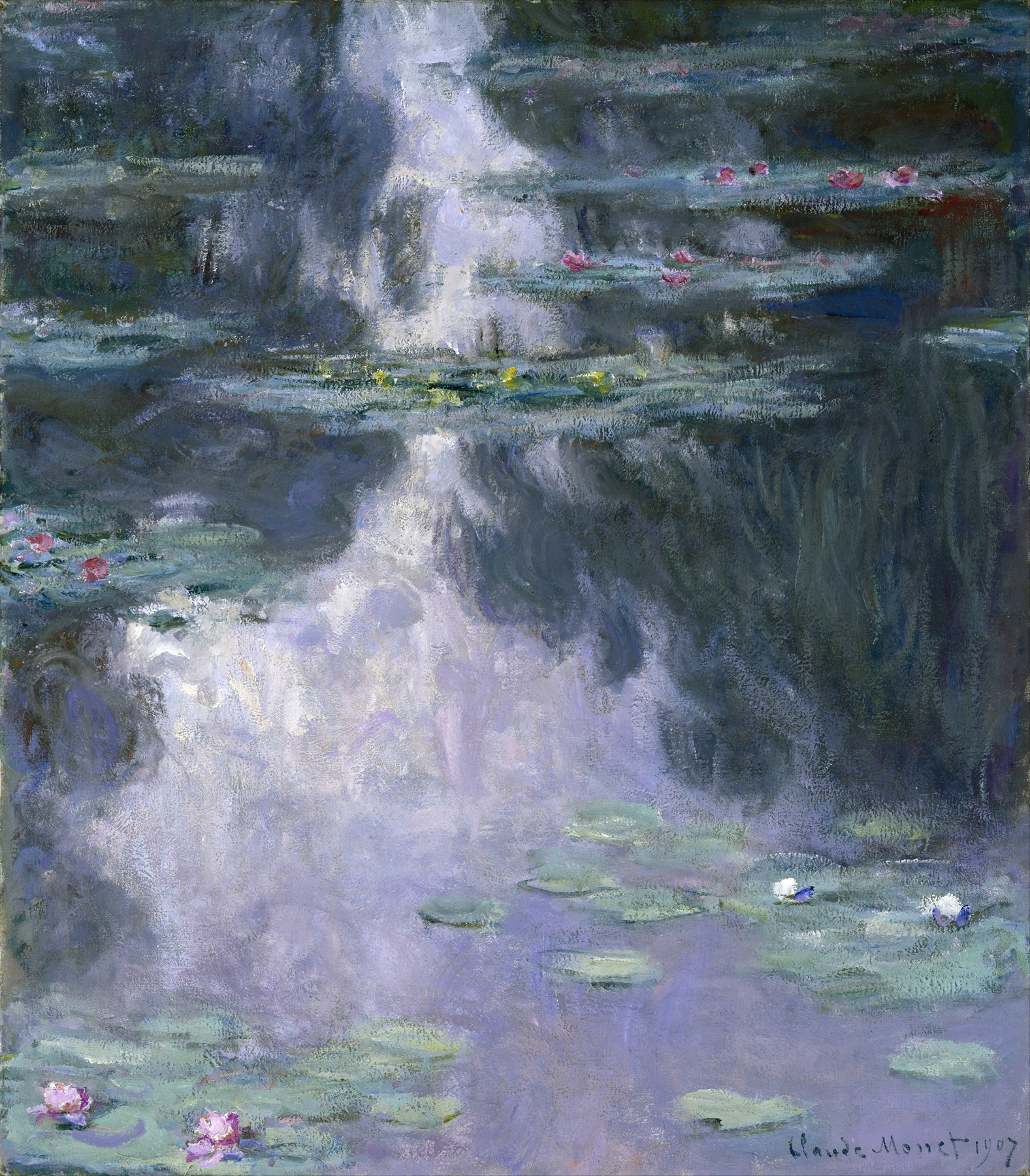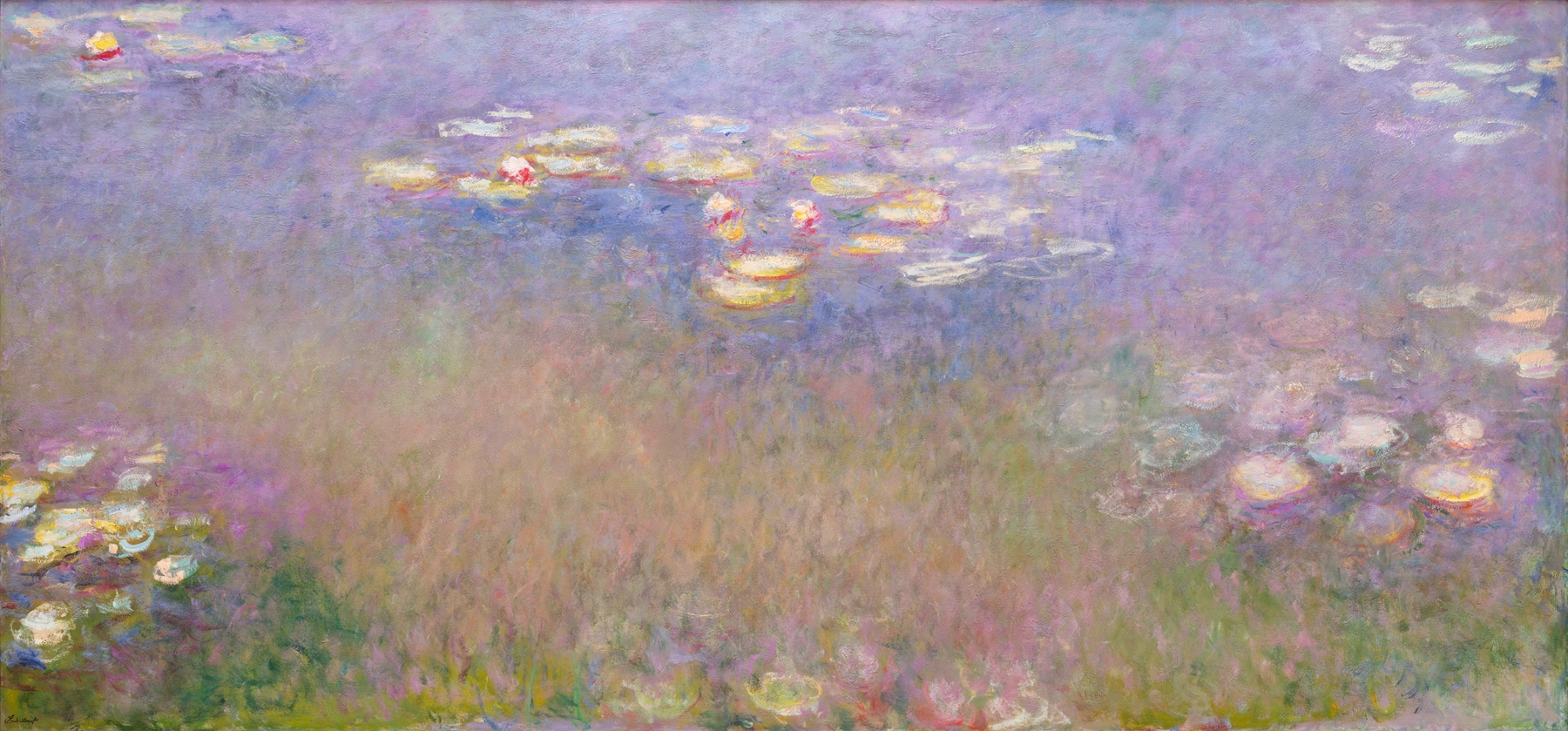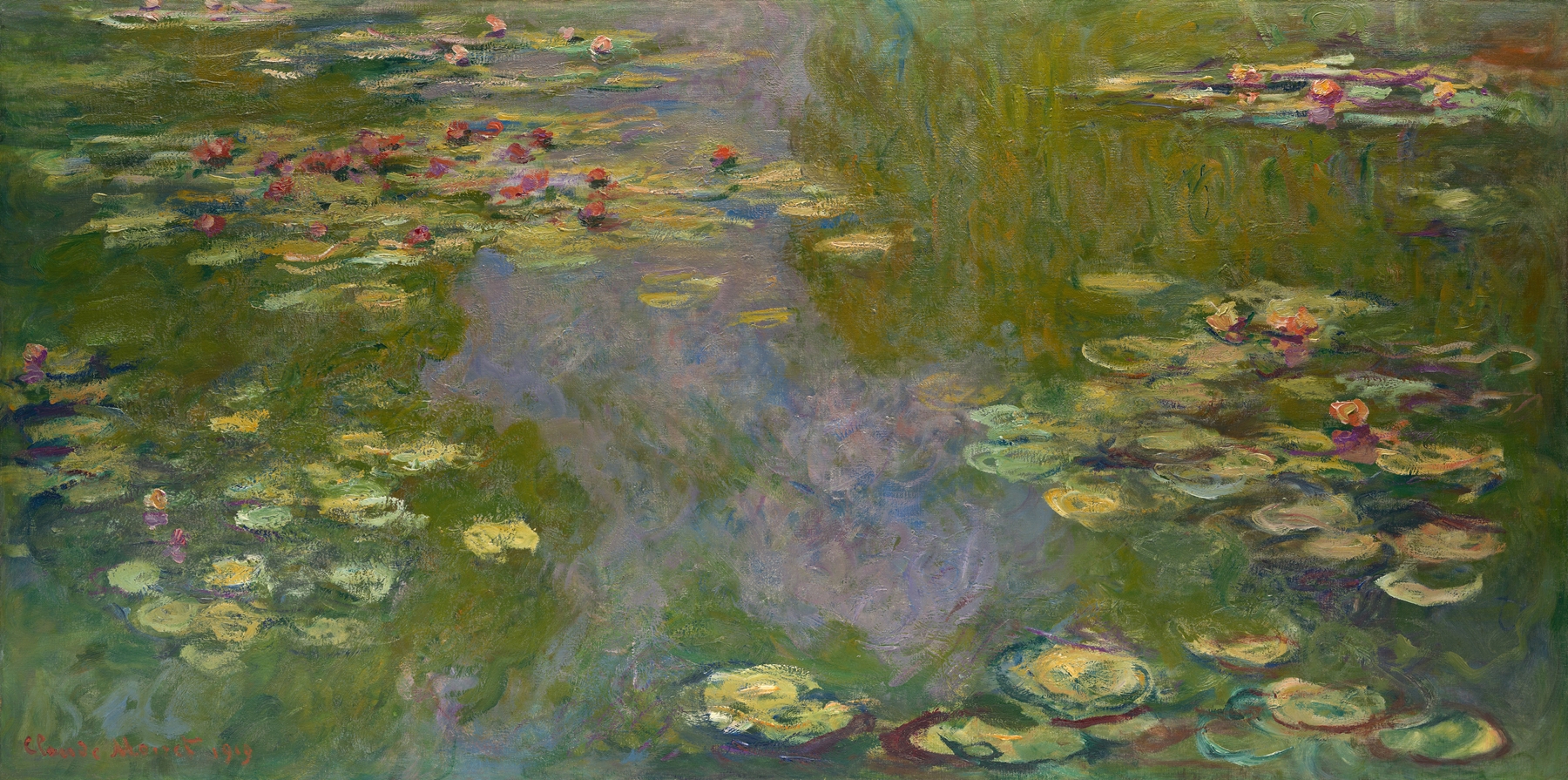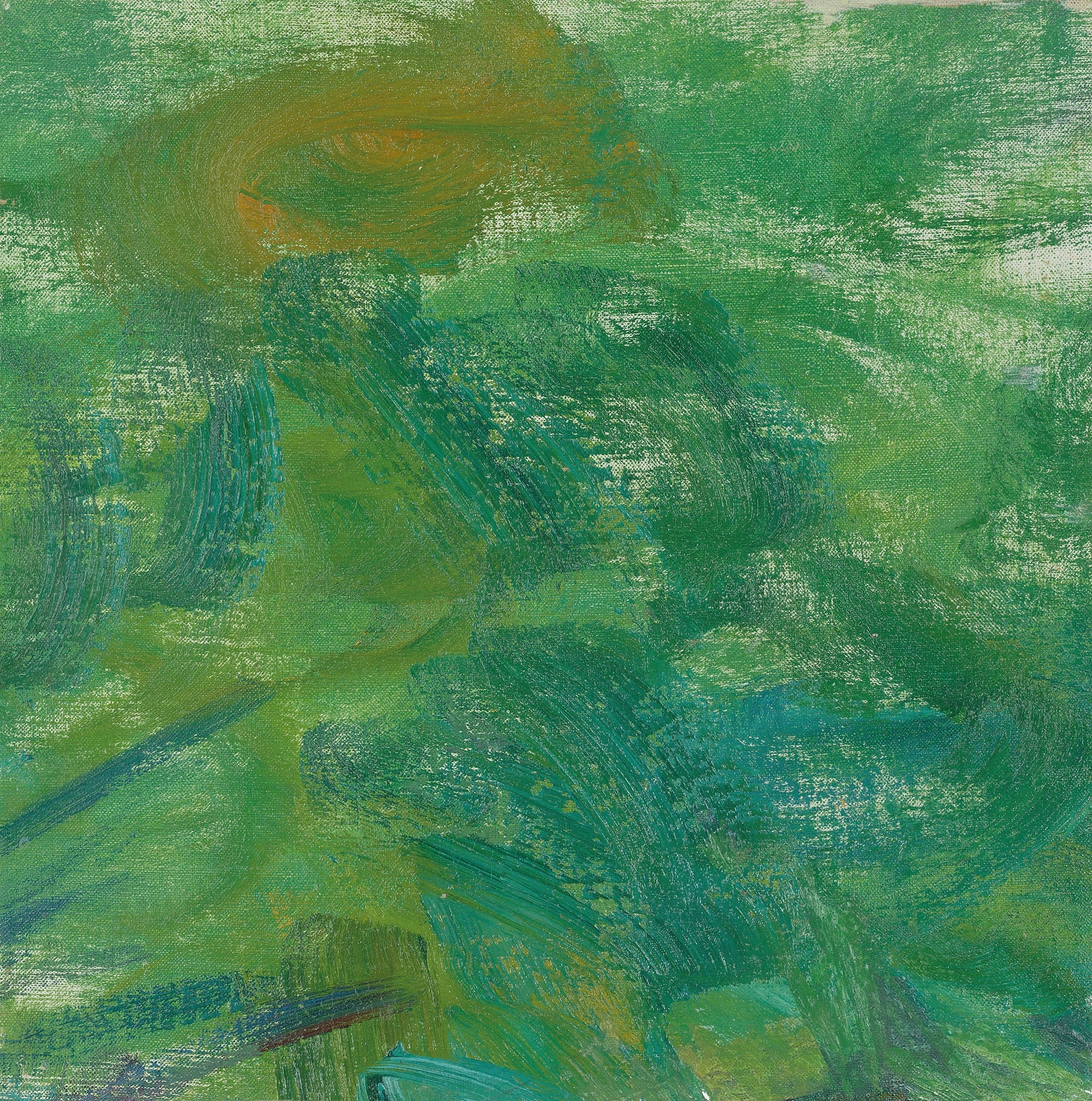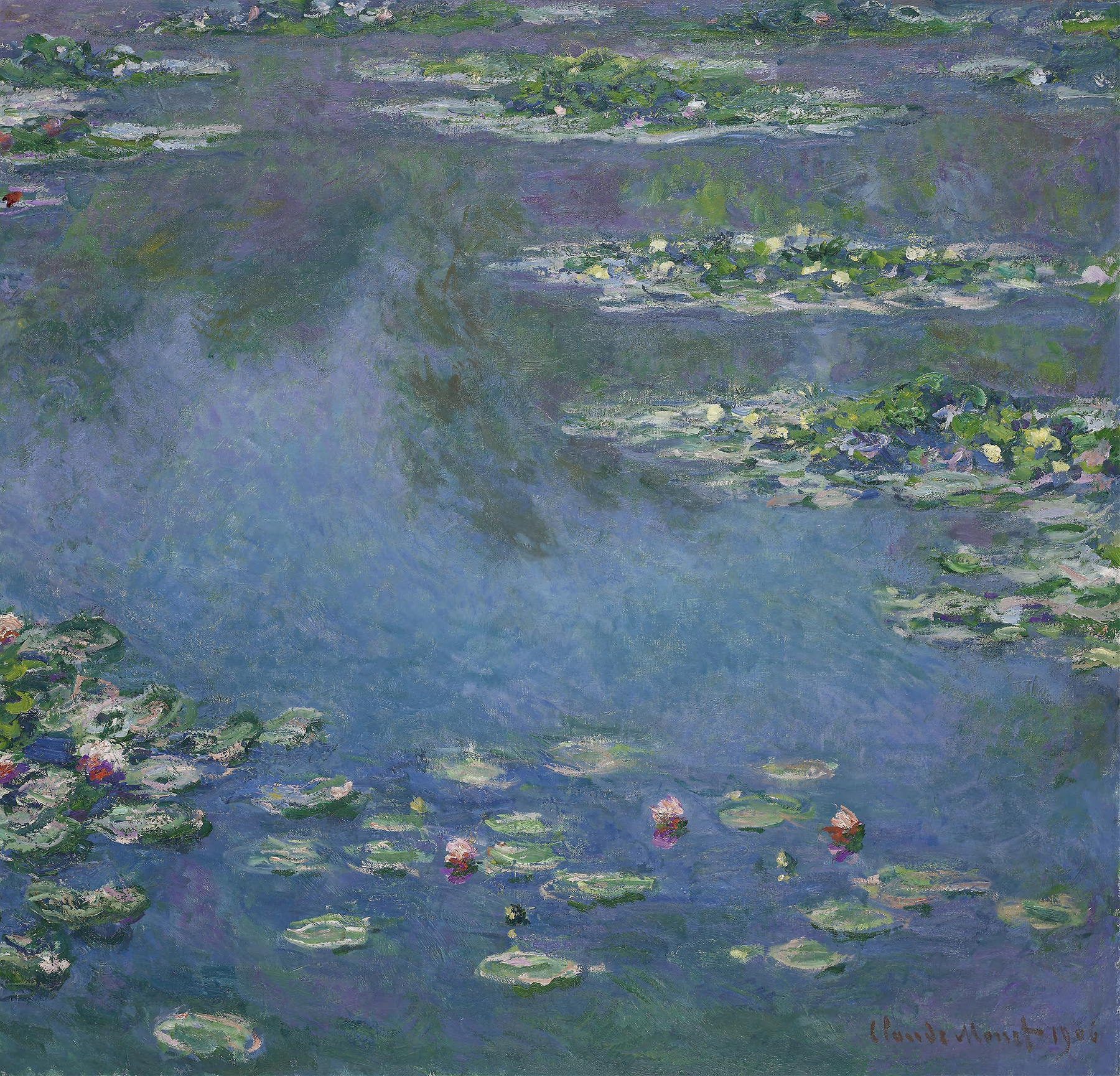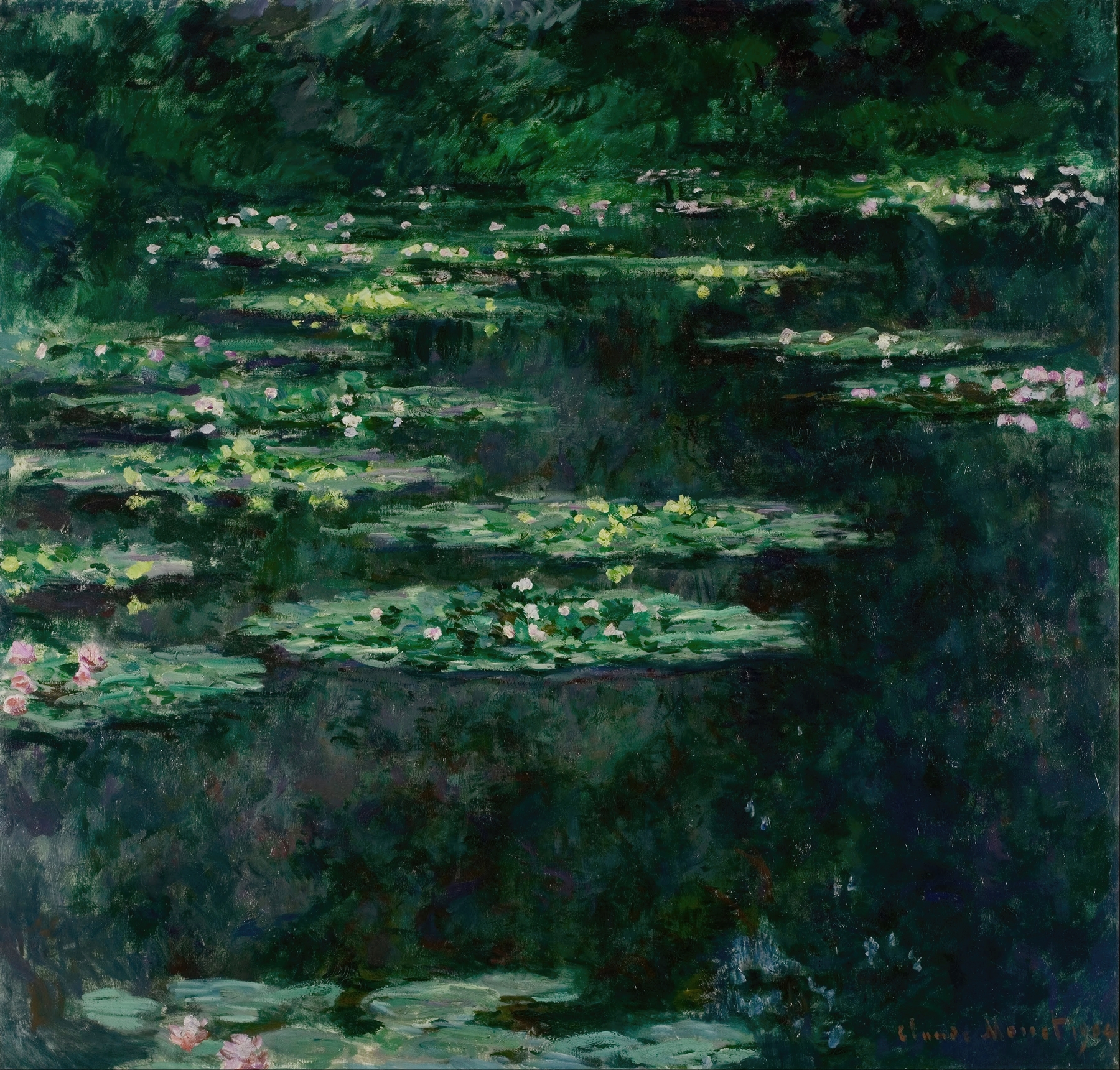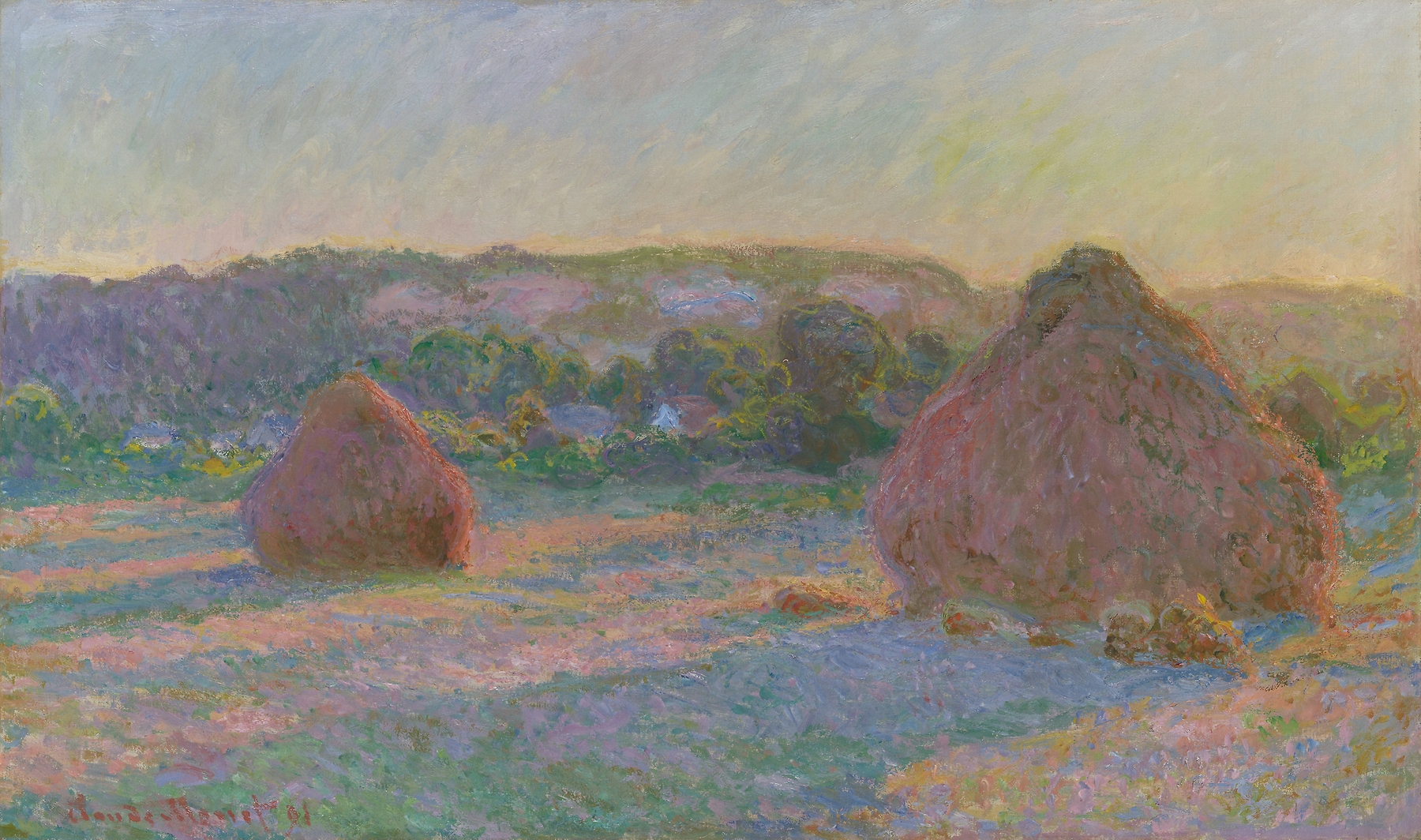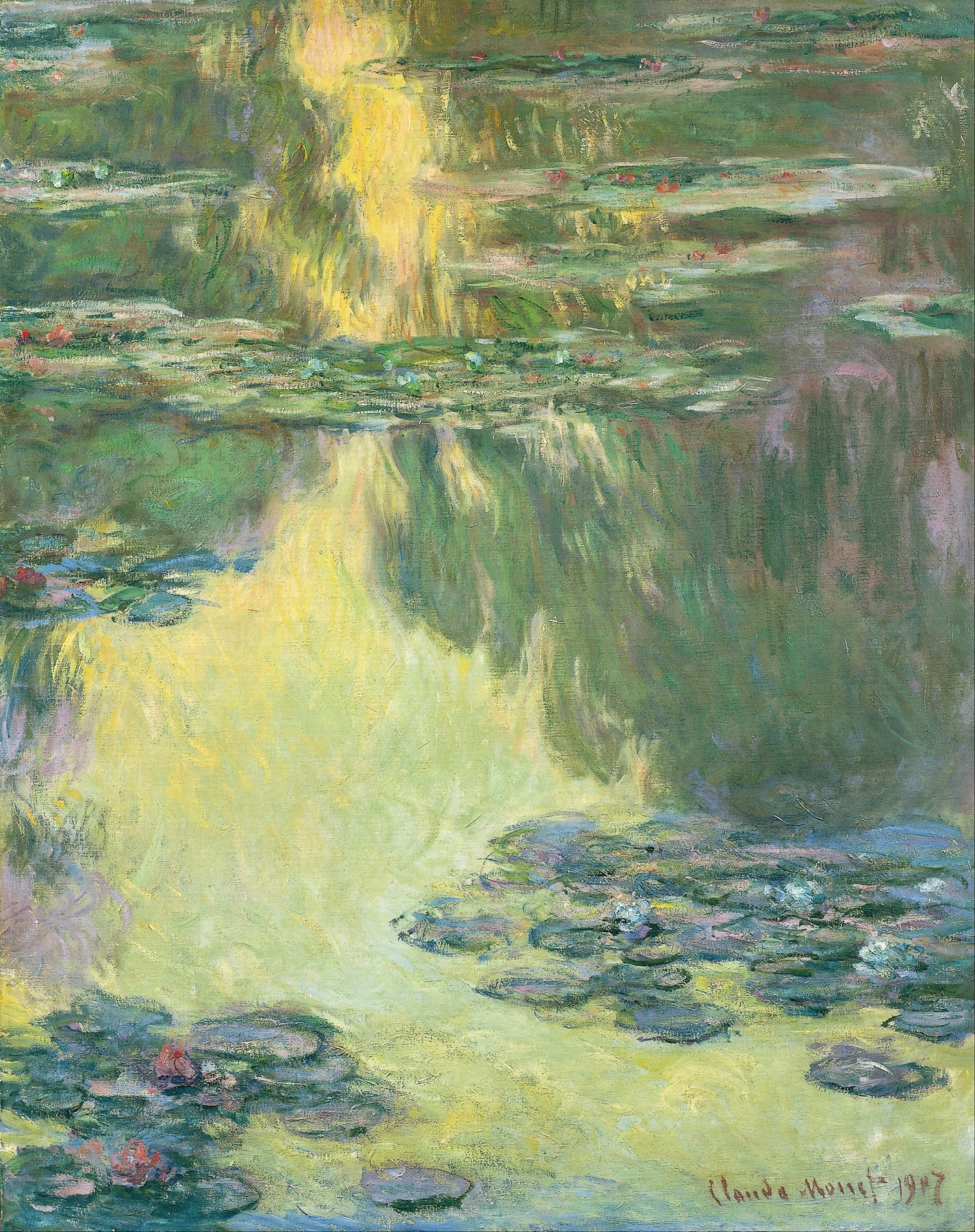
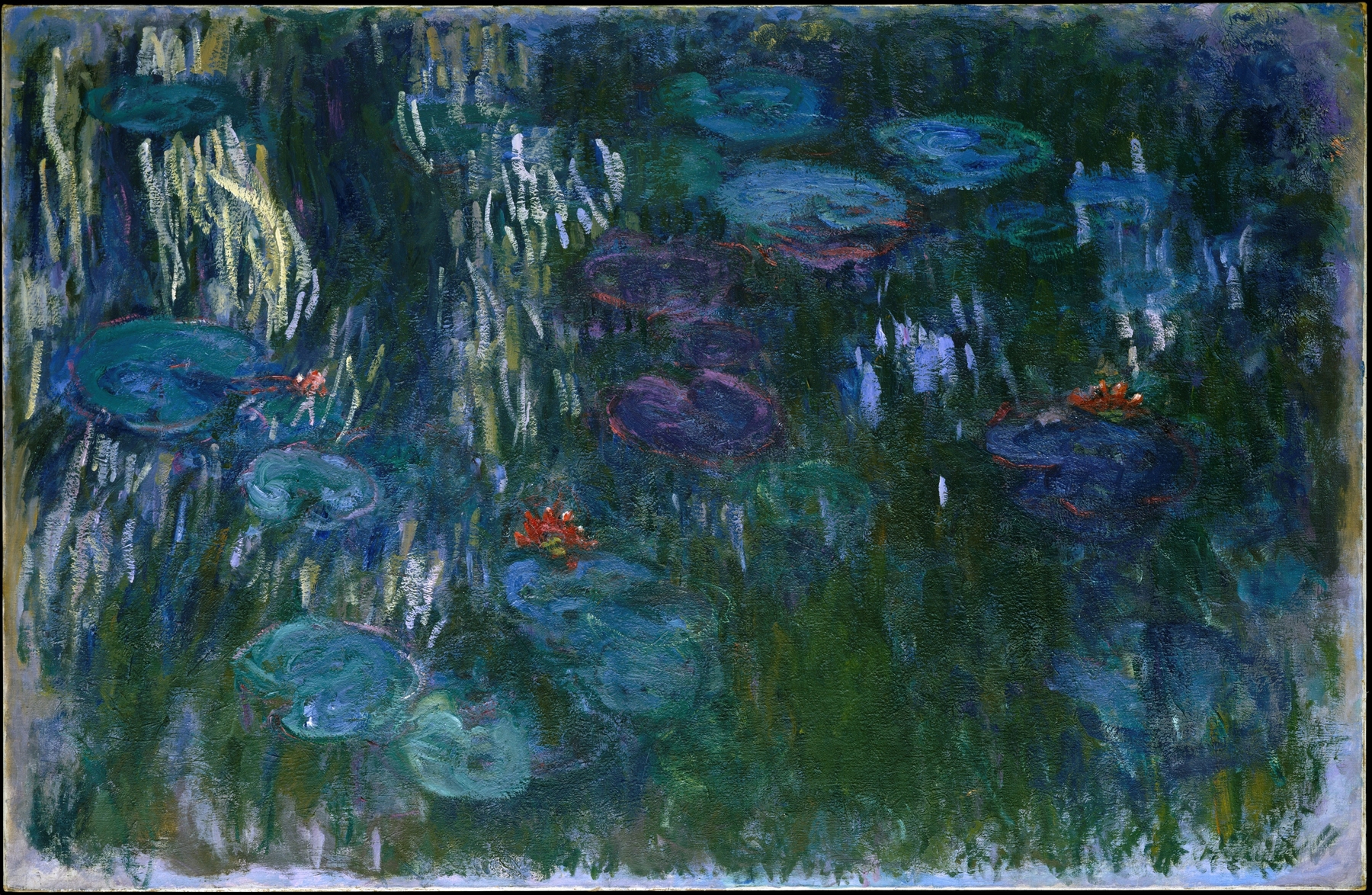
Can beauty exist without sorrow? In *Waterlilies*, Claude Monet invites us to ponder the delicate balance between joy and grief as we gaze upon his tranquil yet poignant garden. Look to the center where clusters of lily pads float serenely, their verdant greens and soft pinks drawn with a brush that seems to caress the canvas. Notice how the light dances across the water’s surface, creating shimmering reflections that blur the boundaries between reality and illusion. The brushwork, thick and expressive, conveys a sense of movement, as if the scene is alive, breathing with an unspoken history of both the serene and the sublime. Within this idyllic setting lies an emotional depth, a contrast of calm and chaos. Each stroke captures not just the beauty of the flowers but also hints at the passage of time, a reminder of nature's transient splendor. The gentle ripples suggest a disturbance beneath the surface, an echo of Monet's inner turmoil following the loss of loved ones. This tension between stillness and the undercurrents of grief transforms the scene into a contemplative space for reflection. Painted in 1907, during a period of personal loss for Monet, this work emerges from his garden in Giverny, where he sought solace. At the time, he was experimenting with light and color, pushing the boundaries of Impressionism as the world around him was grappling with rapid change. The joy found in his art serves as a poignant counterpoint to the sorrow of his experiences, encapsulating a profound truth about the human condition.