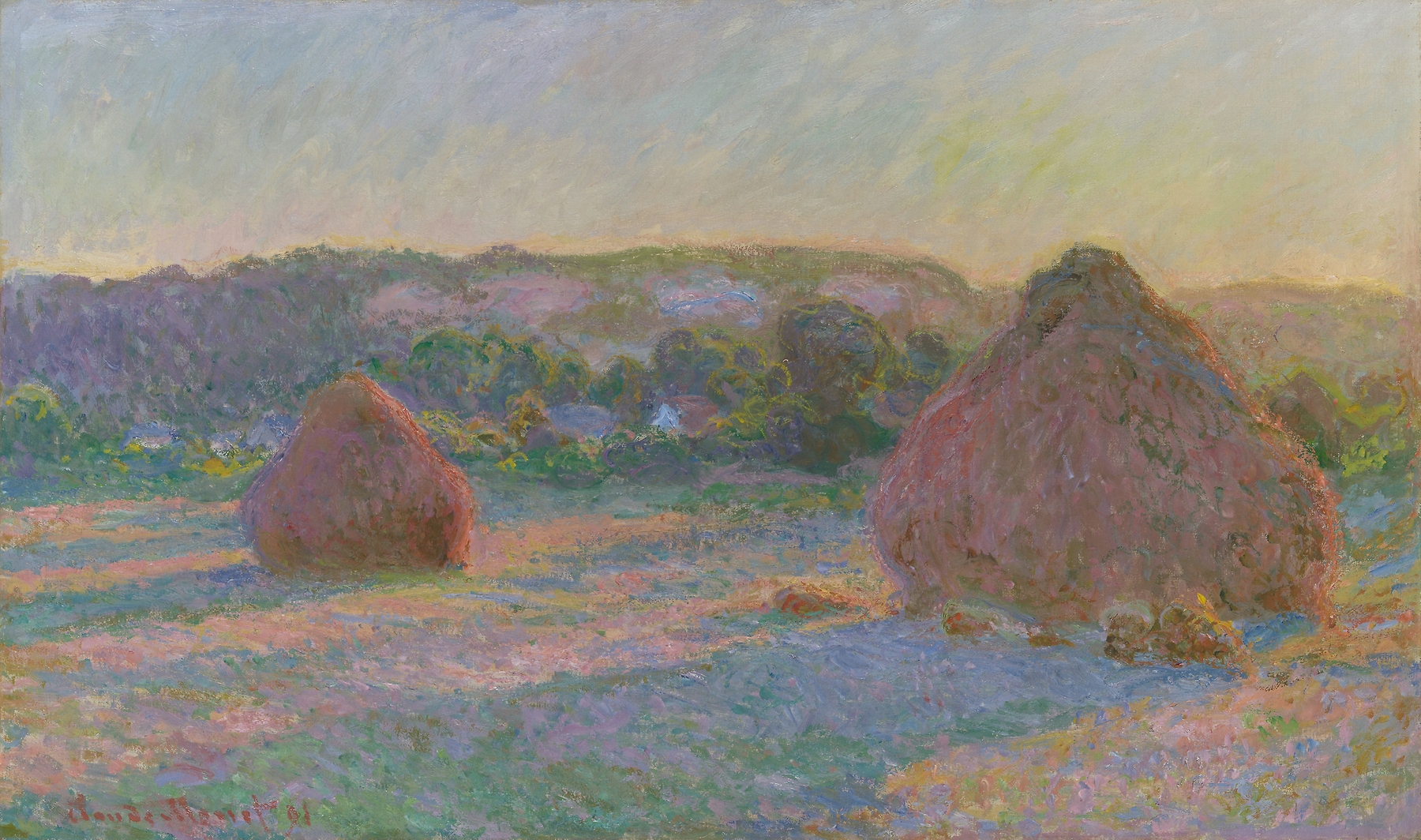
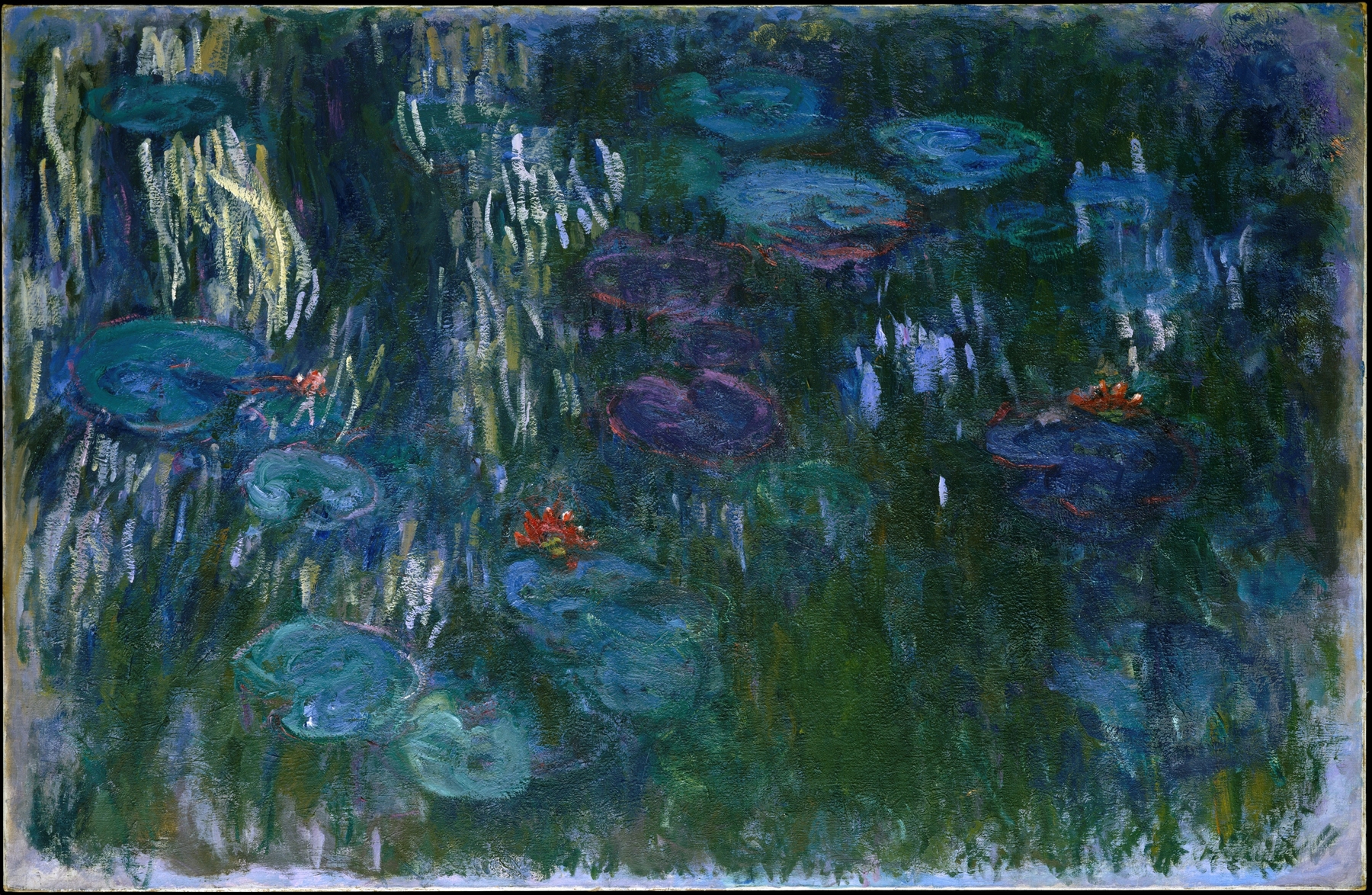
“Between color and silence, truth hides.” In the soft embrace of dusk, a world of golden wheat emerges, each stalk whispering its secrets to the fading light. The quietude of the scene invites reflection, urging viewers to find balance amidst the vibrant chaos of nature. Look to the left at the warm hues of the sun-kissed wheat, where Monet has masterfully blended yellows and ochres to evoke a sense of abundance. The stacks rise like sentinels against a backdrop of a tranquil sky, their gentle curves contrasting with the sharp, angular forms of the horizon. Notice how the light cascades across the canvas, illuminating the textures of the grain and casting soft shadows that invite you deeper into this serene harvest. Within this pastoral tableau lies a poignant exploration of transience and fulfillment. The stacks, though emblematic of summer's bounty, also serve as a reminder of the inevitable passage of time and the looming arrival of autumn. The delicate interplay of light and shadow reflects the fleeting nature of the seasons, capturing a moment poised between abundance and the stillness that follows harvest. This balance of color and composition reveals the artist's contemplation of mortality and the beauty found within cycles of life. Created in the late summer of 1890-91, during a period of intense innovation in the Impressionist movement, the piece showcases Monet's continued exploration of light and color. Working from his home in Giverny, he was deeply influenced by the natural world around him and sought to encapsulate its ephemeral beauty. This era marked a time when he was celebrated for his bold technique and emotional depth, making *Stacks of Wheat (End of Summer)* a testament to both his artistic evolution and the universal rhythms of nature.