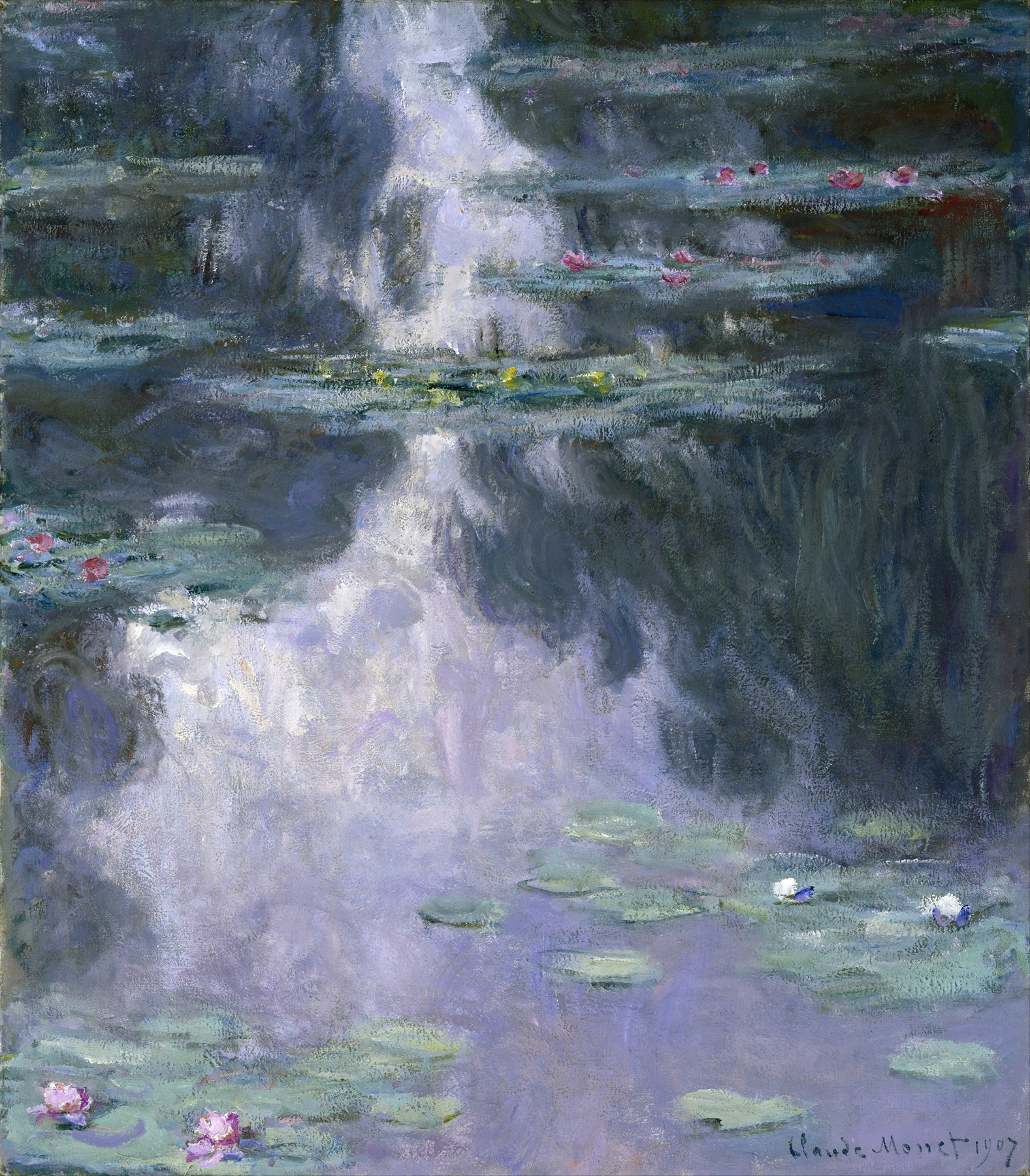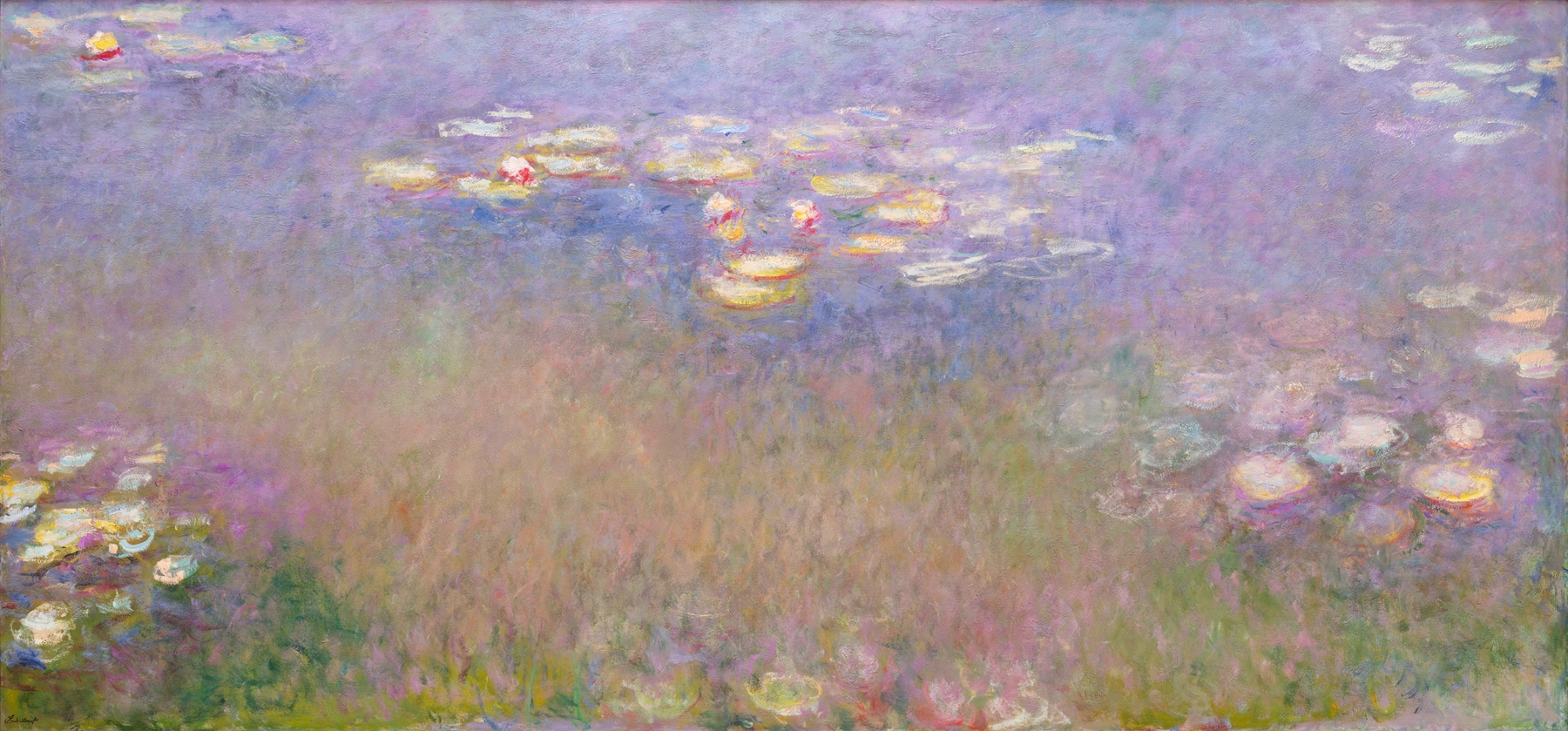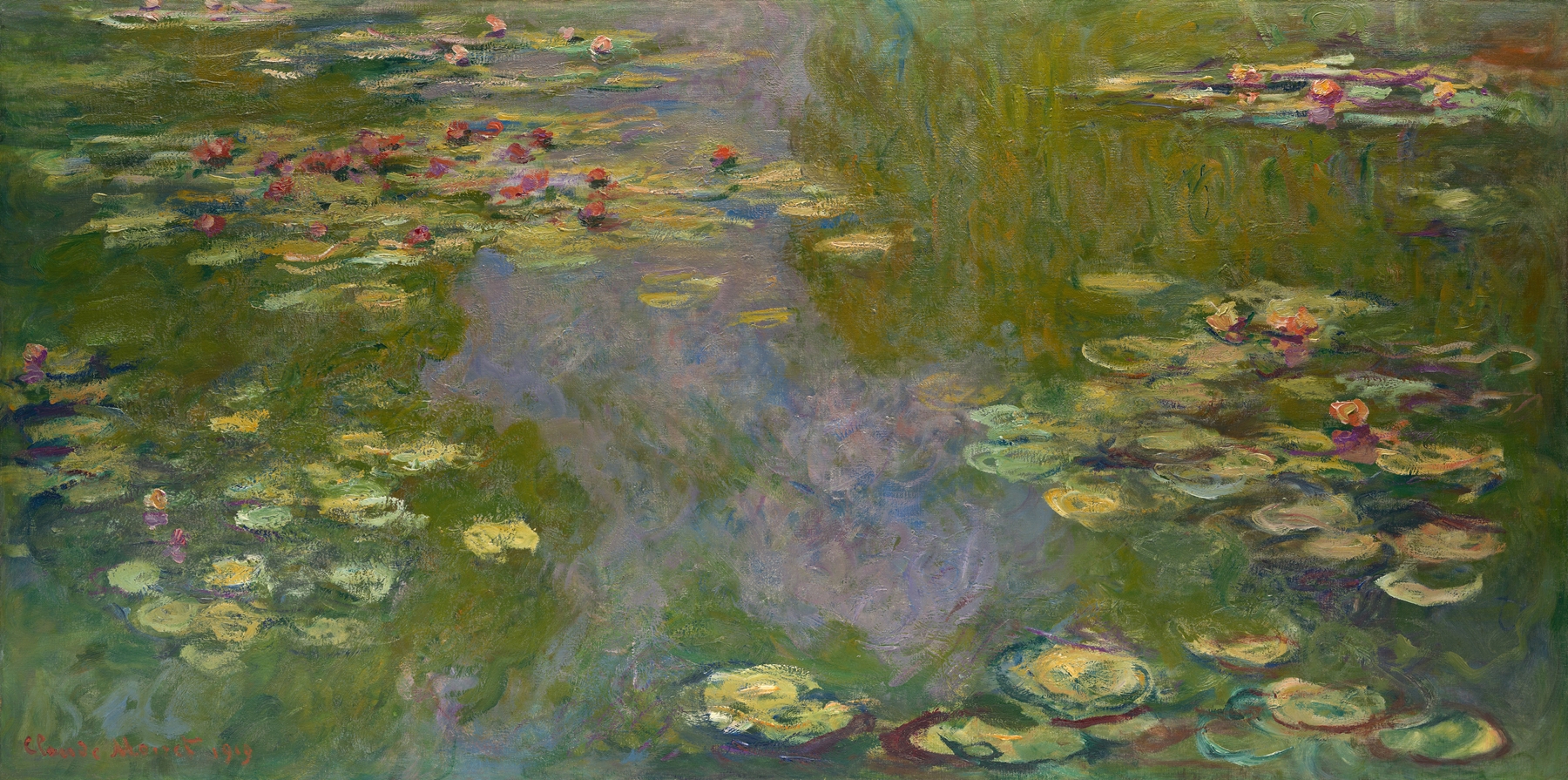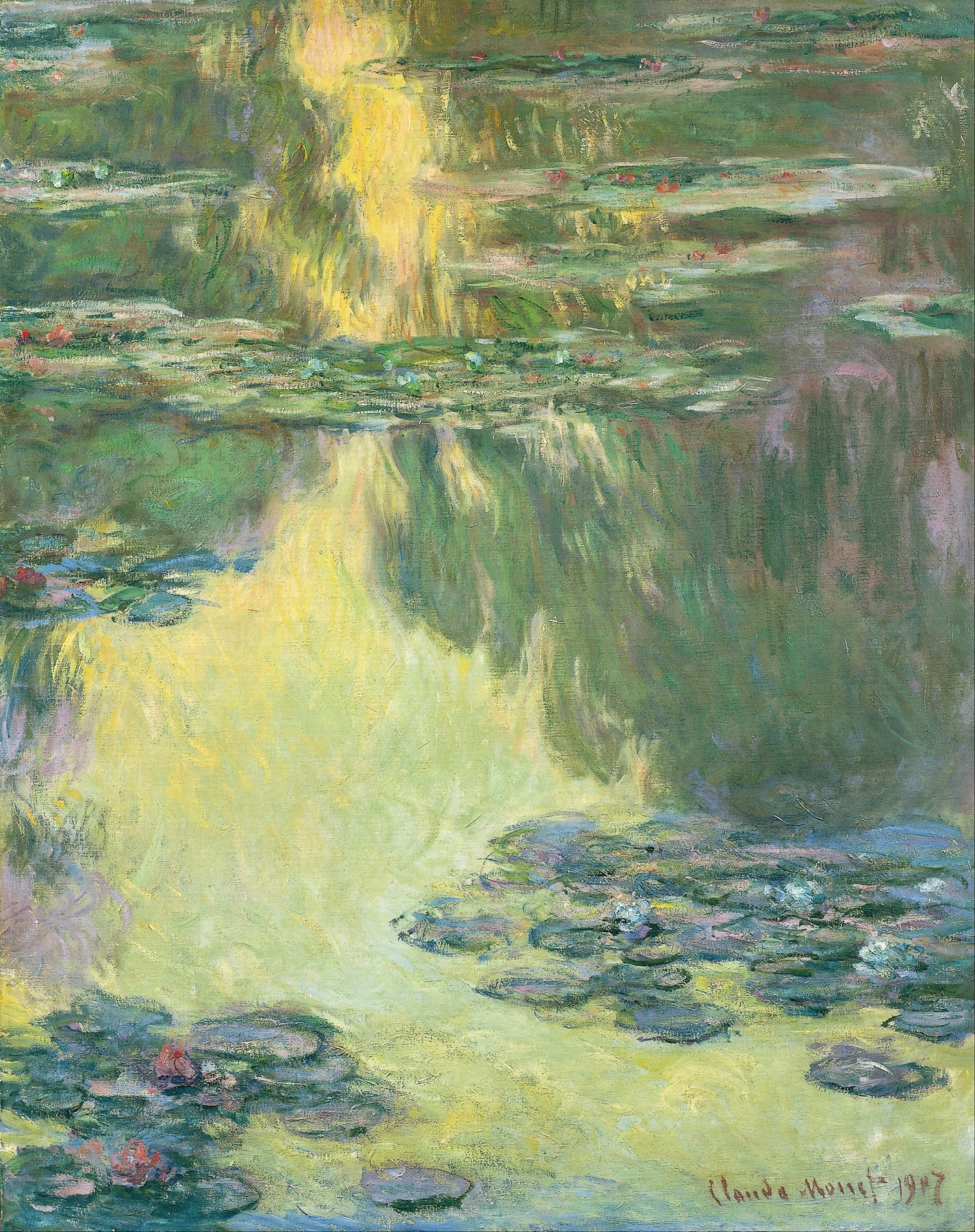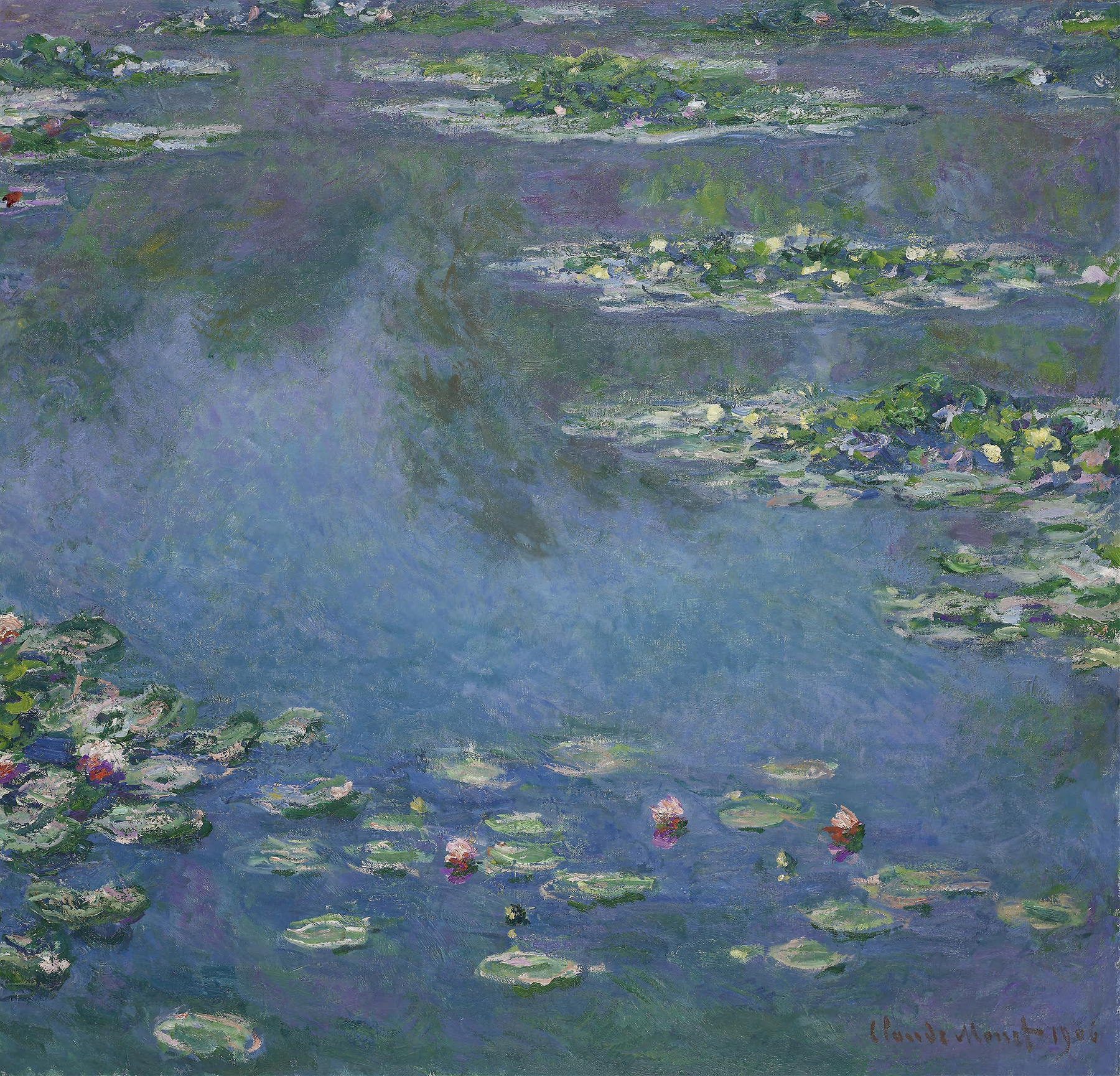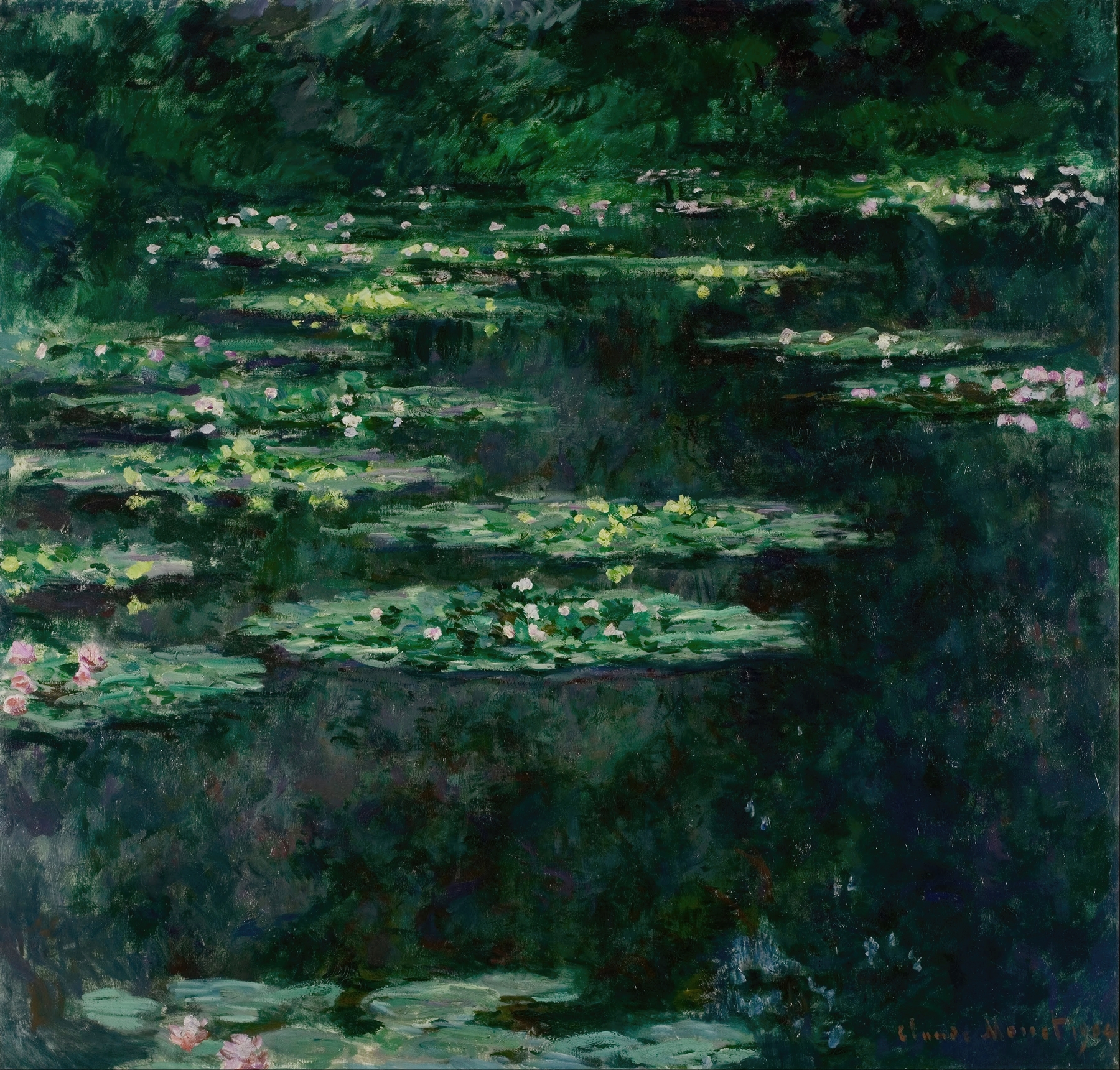
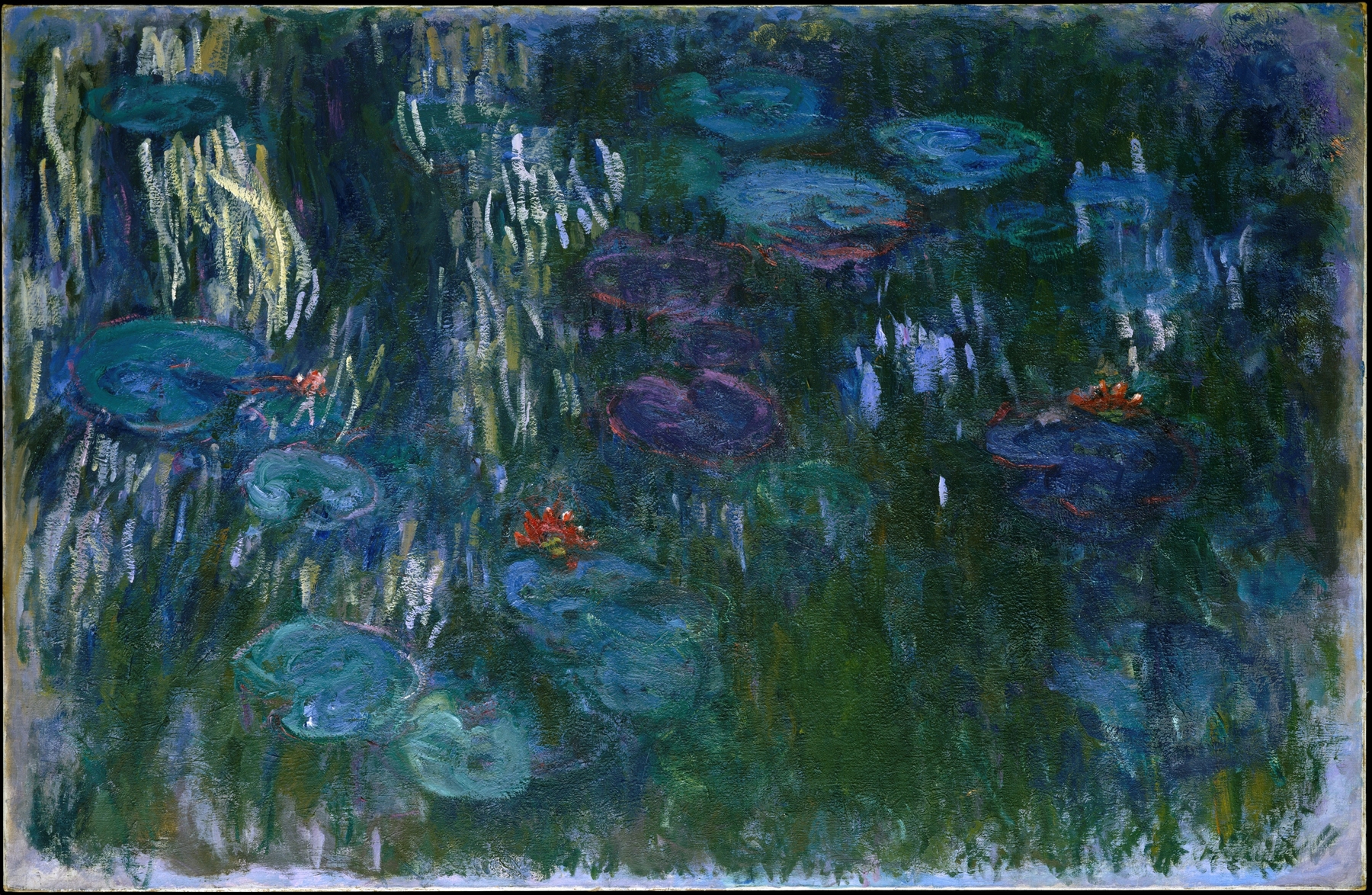
“Every silence here is a confession.” In the gentle embrace of the still water, innocence finds a canvas. The delicate dance of light on the surface evokes a world where thoughts float freely, unsullied by the noise of modernity. Look closely to the center, where vibrant waterlilies bloom amidst a shimmering aquamarine expanse. Notice how Monet meticulously captures the interplay of color—soft pinks and whites surrendering to deep greens and blues. The brushstrokes are fluid, almost impressionistic, inviting the viewer to lose themselves in the harmonious chaos of nature, while hints of reflected sky above add depth, creating a serene yet dynamic atmosphere. There is an emotional tension in the juxtaposition of the stillness of the water and the vibrant life represented by the flowers. Each petal speaks of purity and fragility, emphasizing a fleeting moment of beauty in a chaotic world. The tranquility of this scene invites contemplation, suggesting an innocence that resonates with our own untainted experiences, bridging the past and present in an eternal embrace. In 1904, when this masterpiece was created, the artist was entrenched in his exploration of the water garden at Giverny, a sanctuary that reflected both his personal struggles and his artistic evolution. Monet was at the forefront of the Impressionist movement, pushing boundaries even further as he sought to capture the ephemeral quality of light. This period marked a blossoming of creativity for him, wherein he distilled the essence of nature into art, forever altering the landscape of modern painting.