Orangerie Of The Chase Villa In Florence — History & Analysis
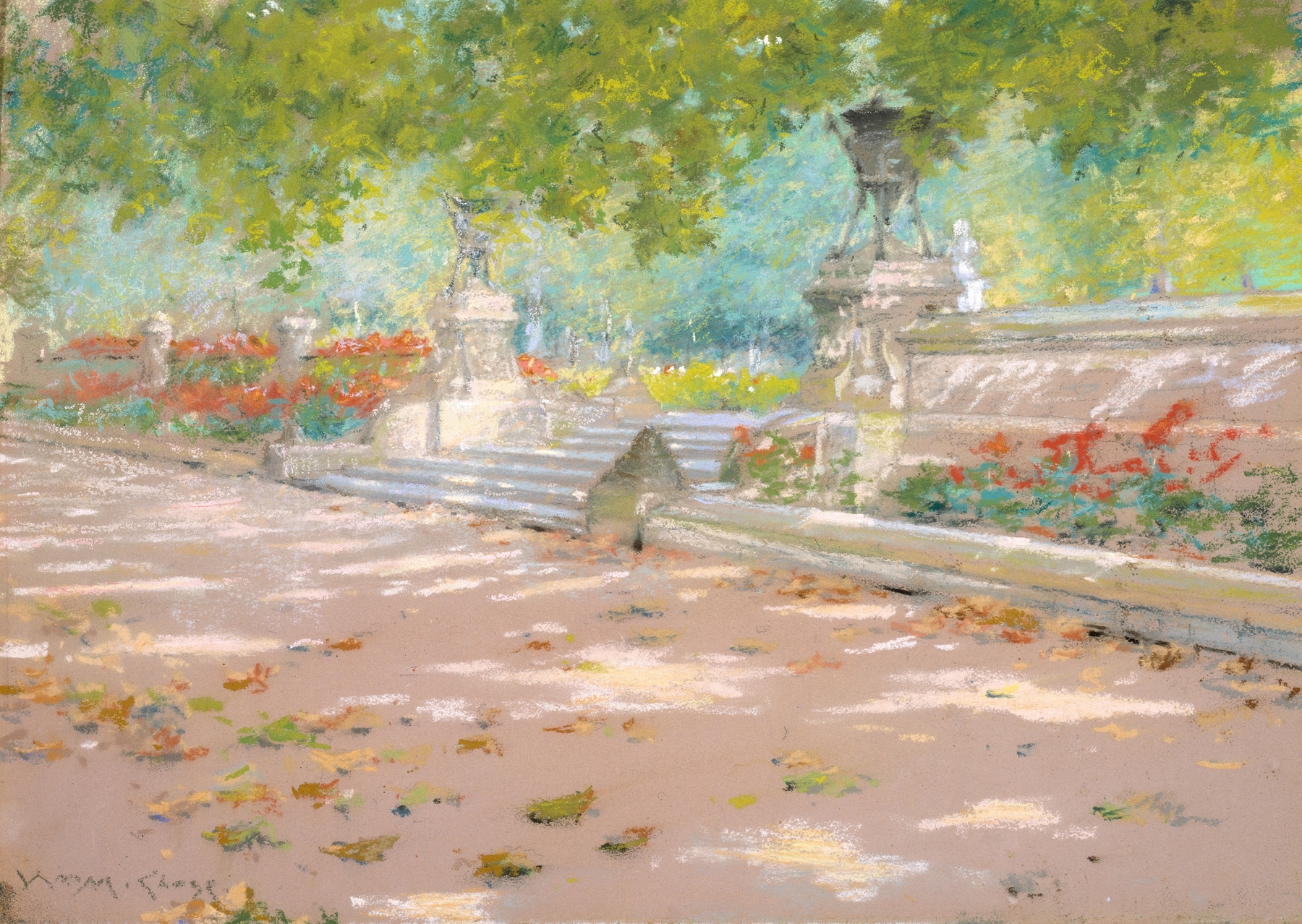
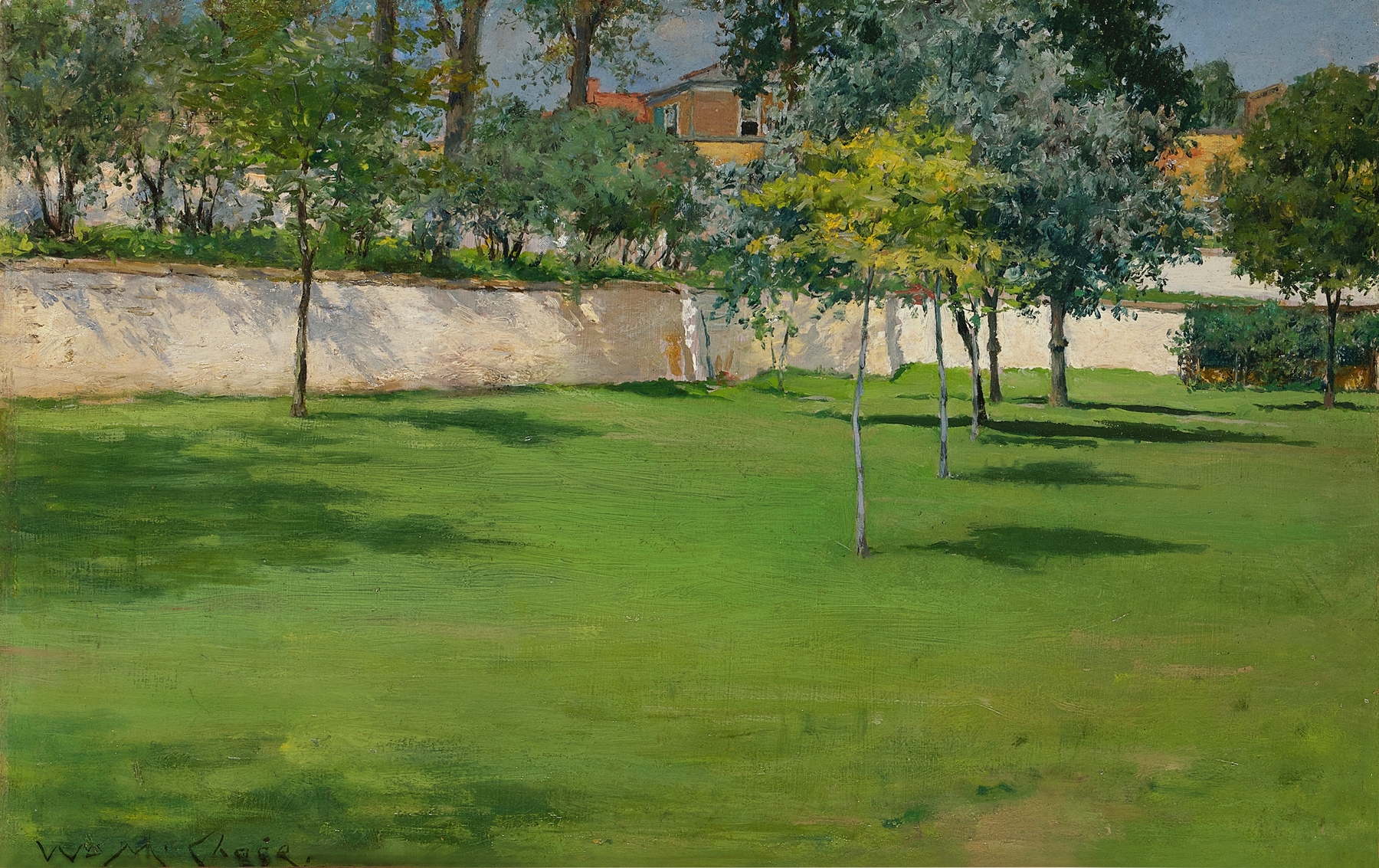
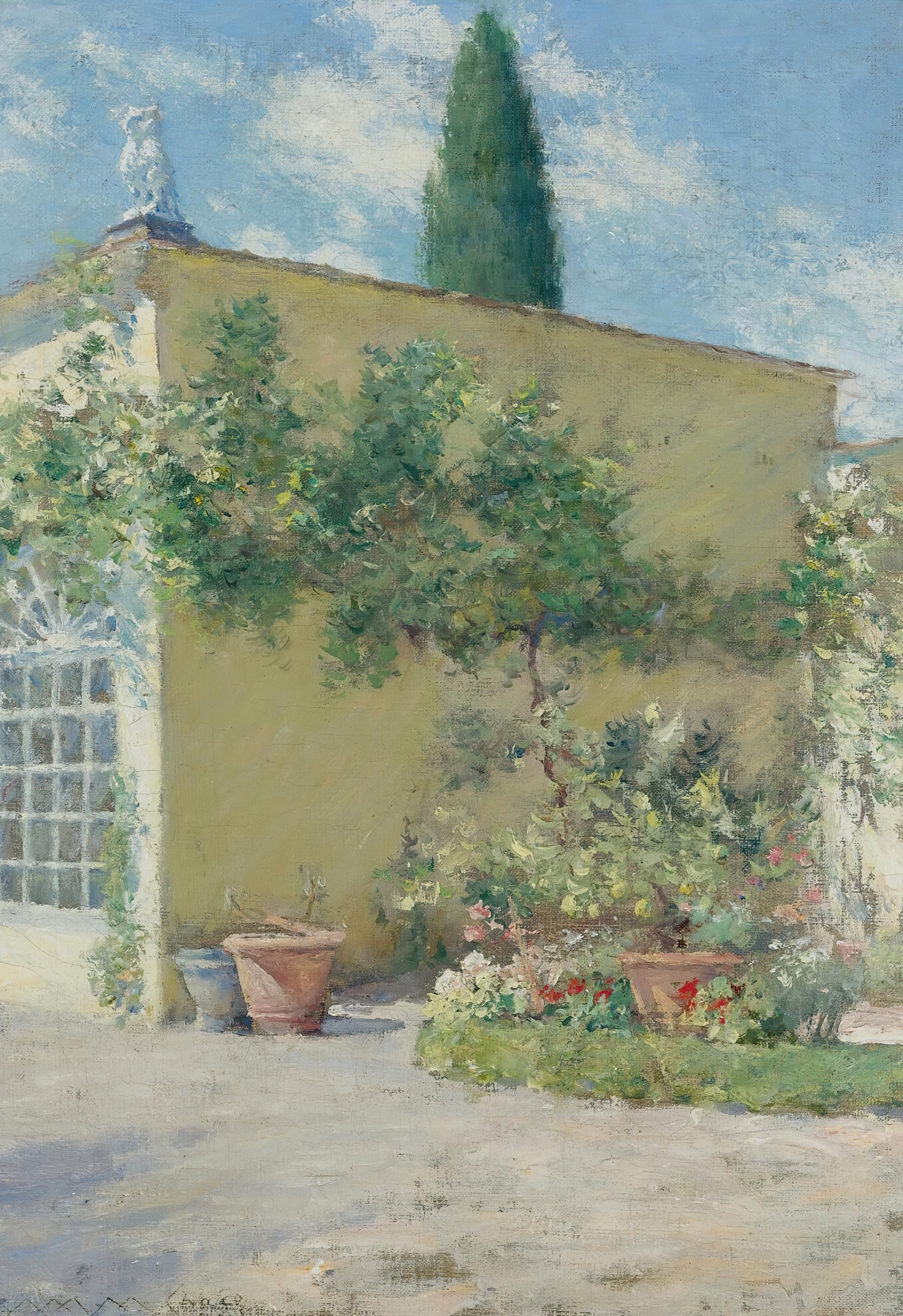
Could beauty survive in a century of chaos? In the delicate balance of nature and art, we find ourselves drawn into a moment that speaks of both serenity and obsession. Look to the foreground where dappled light dances across lush foliage, inviting the viewer into a vibrant embrace. The vivid greens and soft yellows draw the eye toward the meticulously arranged flowers, each bloom bursting with life.
Pay attention to how the brushwork creates a textured tapestry, allowing the plants to feel almost tangible, while the gentle strokes convey both movement and stillness in the air. Beneath the surface, the painting hums with contrasting emotions. The lushness of the garden suggests an idyllic paradise, yet there is a subtle tension in the way the vibrant colors coexist with shadowy corners, hinting at fleeting beauty and the inevitable passage of time. This duality feeds into the artist's obsession with capturing both the ephemeral and the timeless, inviting us to ponder what we might lose amidst the allure of beauty.
In 1910, Chase created this work while residing in the artistically rich milieu of Florence, a city that inspired many. At this time, he was deeply engaged in exploring the interplay of light and color, drawing from both Impressionism and traditional techniques. The world was on the brink of profound changes, but in the confines of his studio, he found solace in the pursuit of beauty, illustrating a moment that would resonate through the chaos of the era.