Orchard in Bloom,Louveciennes — History & Analysis
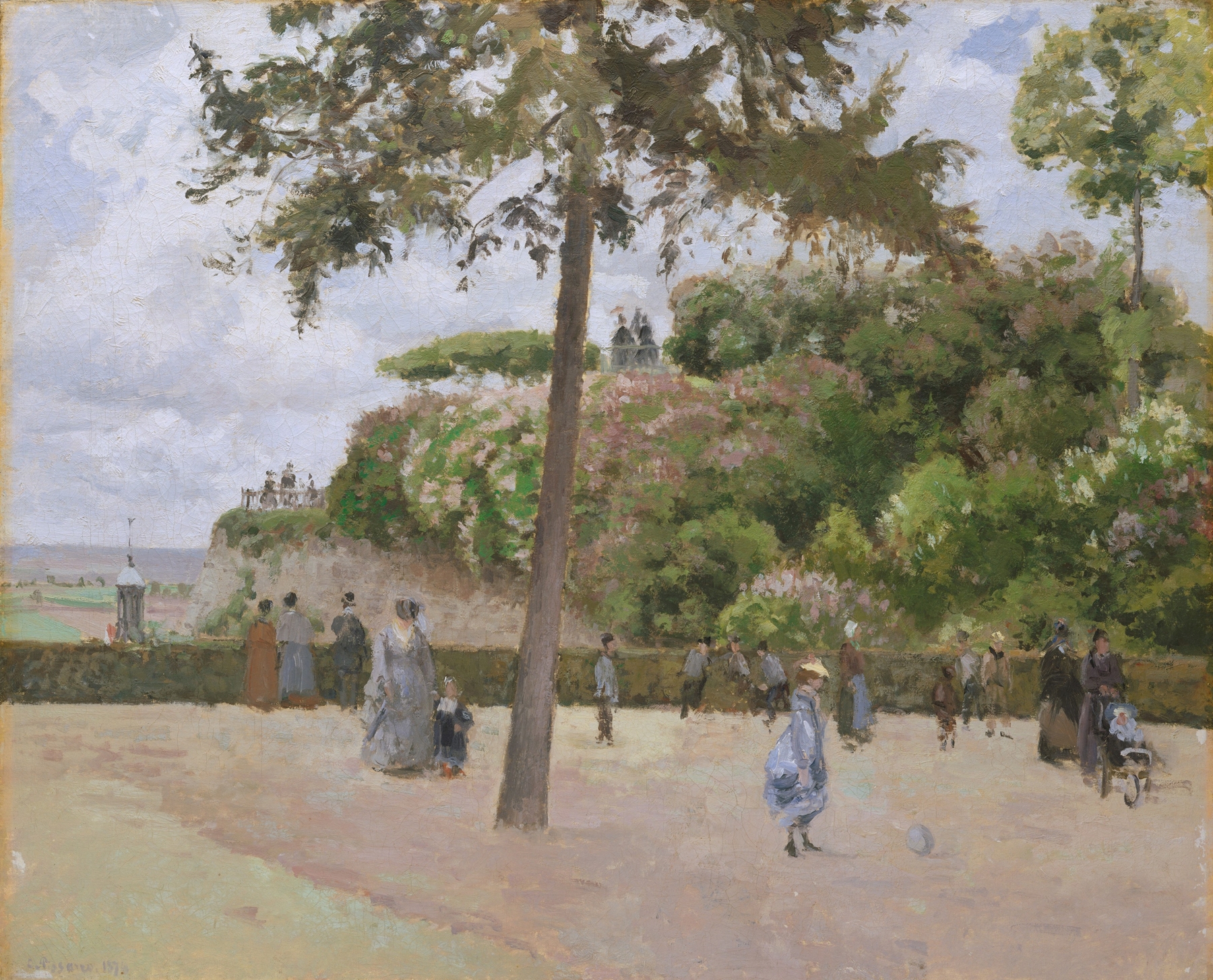
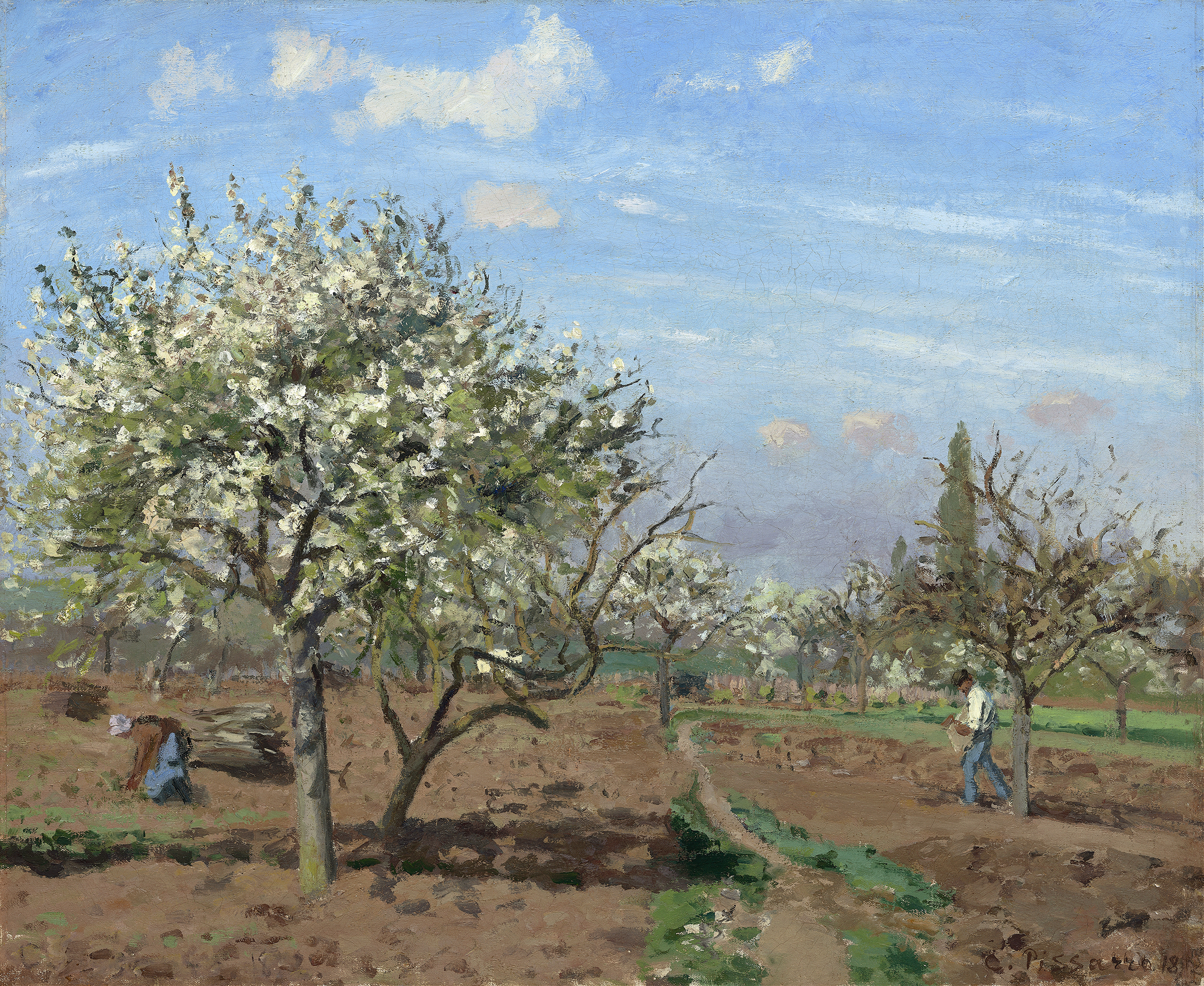
What secret hides in the quiet of the canvas? A tempest brews beneath the serene surface of *Orchard in Bloom, Louveciennes*, as seemingly tranquil blossoms conceal a history fraught with disquiet. Look to the foreground, where soft pinks and whites of the apple blossoms burst forth in jubilant clusters. Notice how the brushstrokes vibrate with energy, creating a flurry of life that draws you in. The background, muted with gentle greens and blues, cradles the orchard, while dappled sunlight filters through the delicate petals, casting playful shadows on the ground. Pissarro’s distinct technique of layering color invites the viewer to explore the depth of the scene, revealing the intricate relationship between nature and the human experience. Yet, beyond the pastoral beauty lies an undercurrent of tension. The harmony of the blossoming trees contrasts sharply with the societal upheaval of the period, hinting at the violence of the Franco-Prussian War that lingered just beyond the canvas. The vibrant colors may suggest a celebration of spring, yet they also echo the fragility of life amidst conflict. Each stroke whispers of fleeting beauty, while the orchard serves as a reminder of what is at stake — a delicate peace threatened by the chaos of human existence. In 1872, during a time of political unrest in France, the artist painted this idyllic scene in Louveciennes, a village that bore witness to both tranquility and turmoil. As an impressionist, Pissarro sought to capture the essence of fleeting moments, reflecting not only the vibrancy of nature but also the socio-political currents that shaped his world. This work encapsulated his evolving style, where the interplay of light and color became a means to engage with deeper themes of violence and vulnerability.