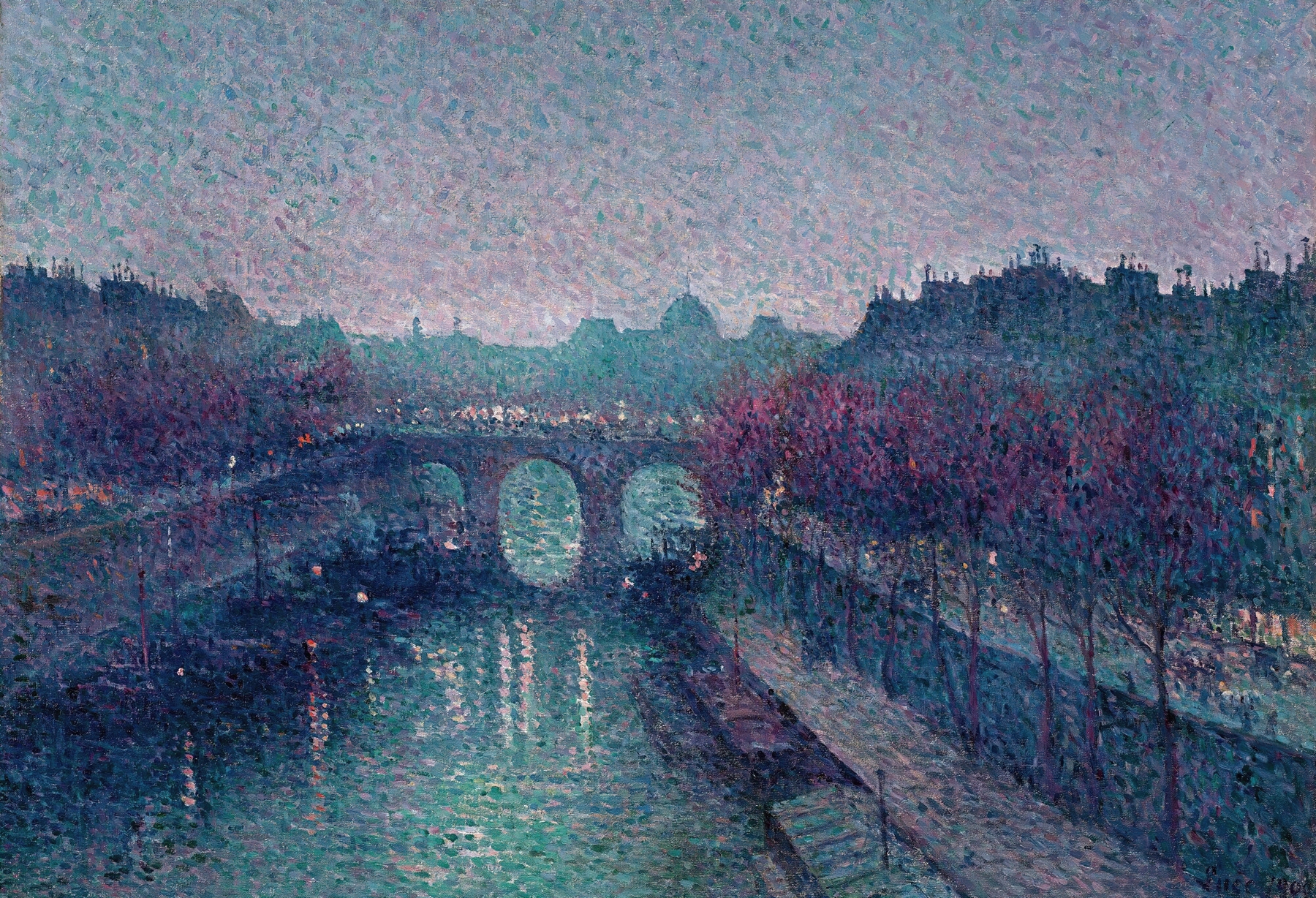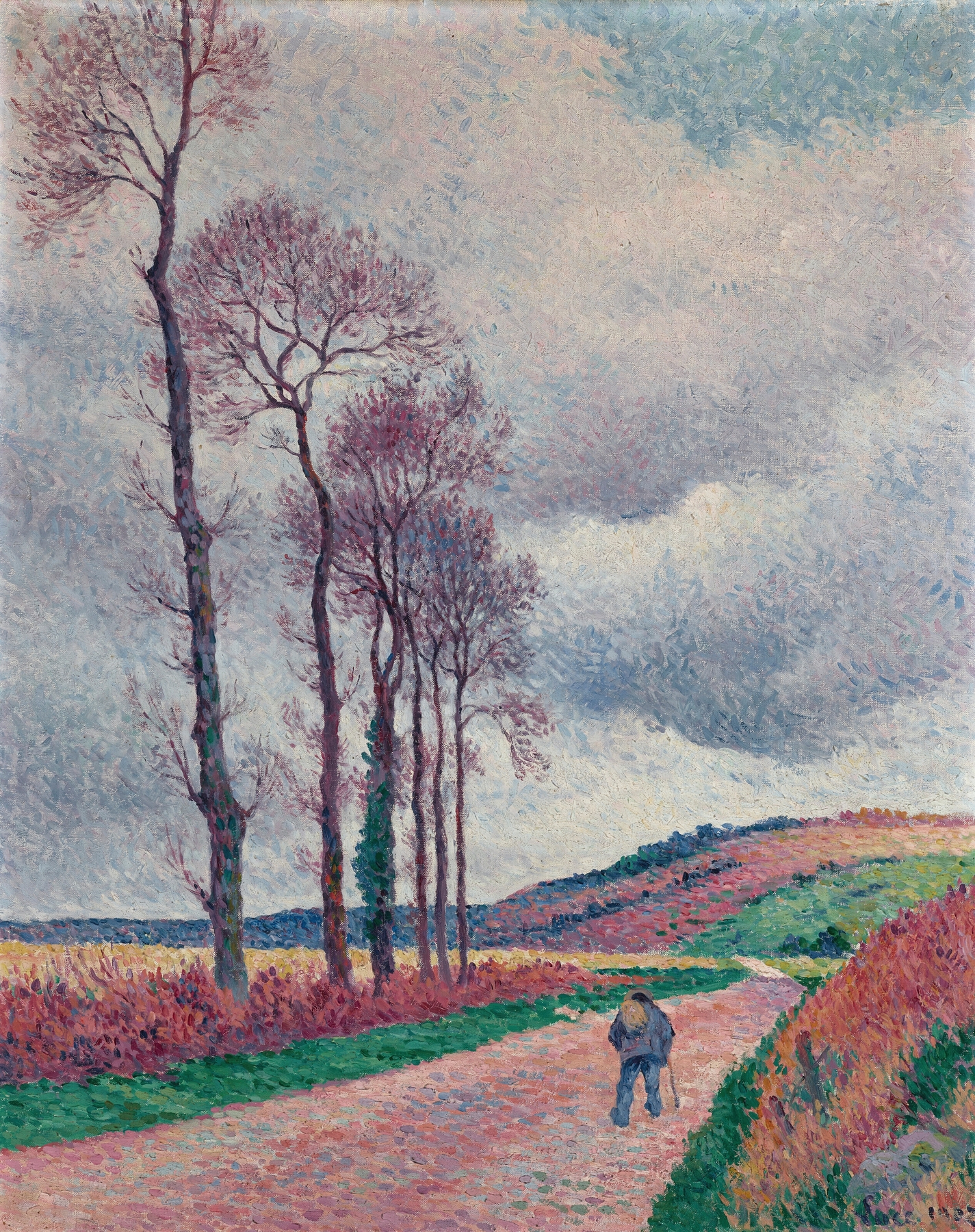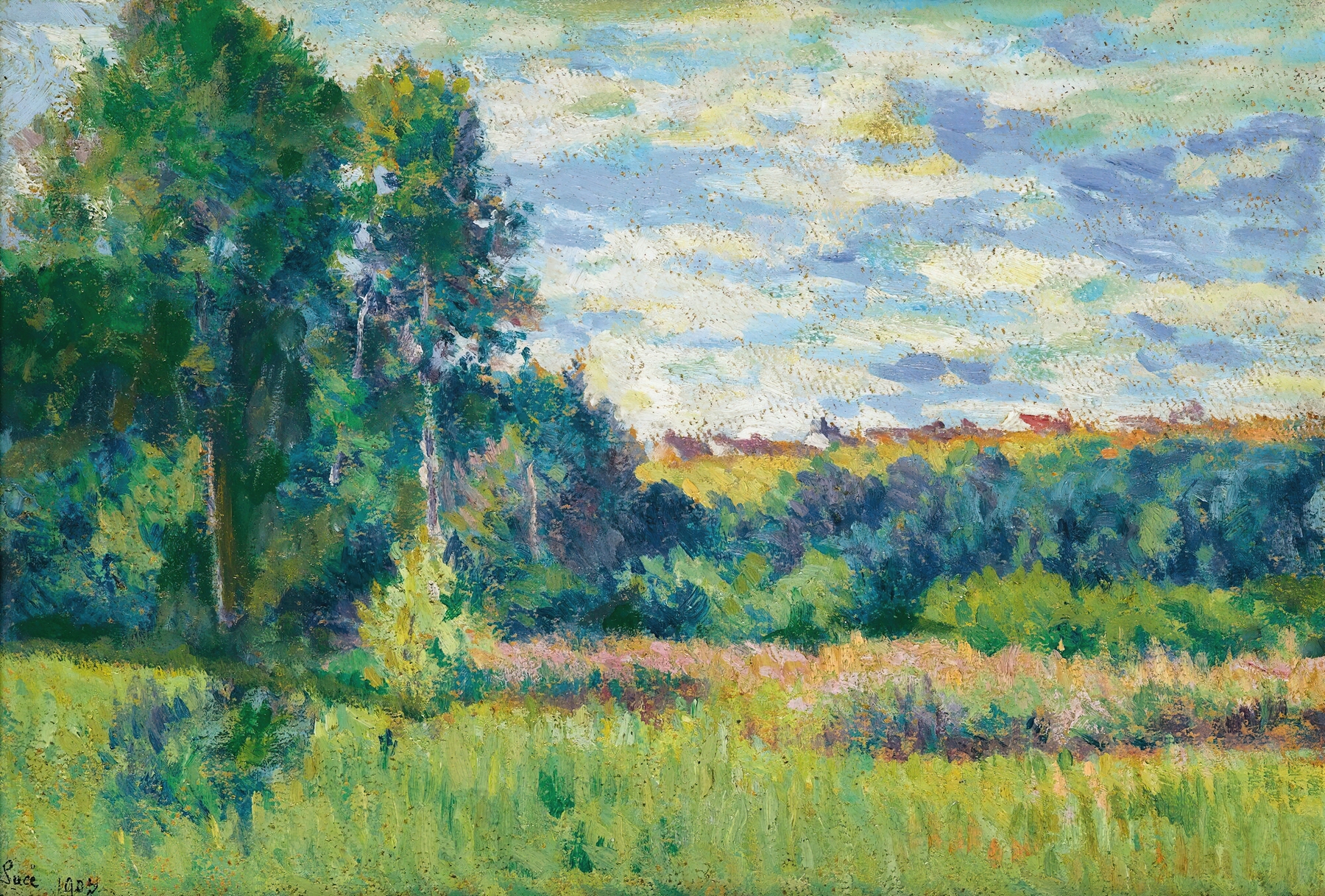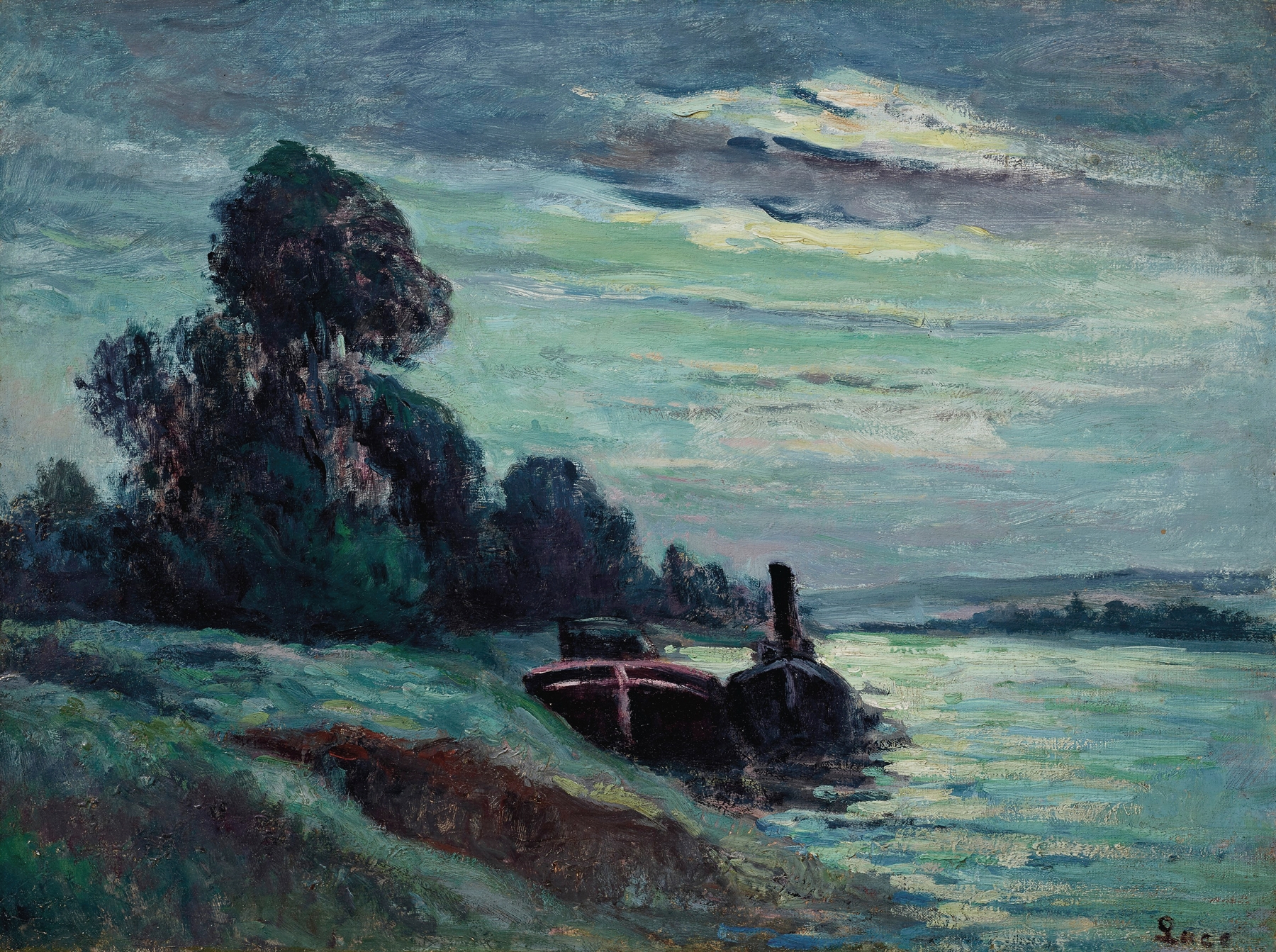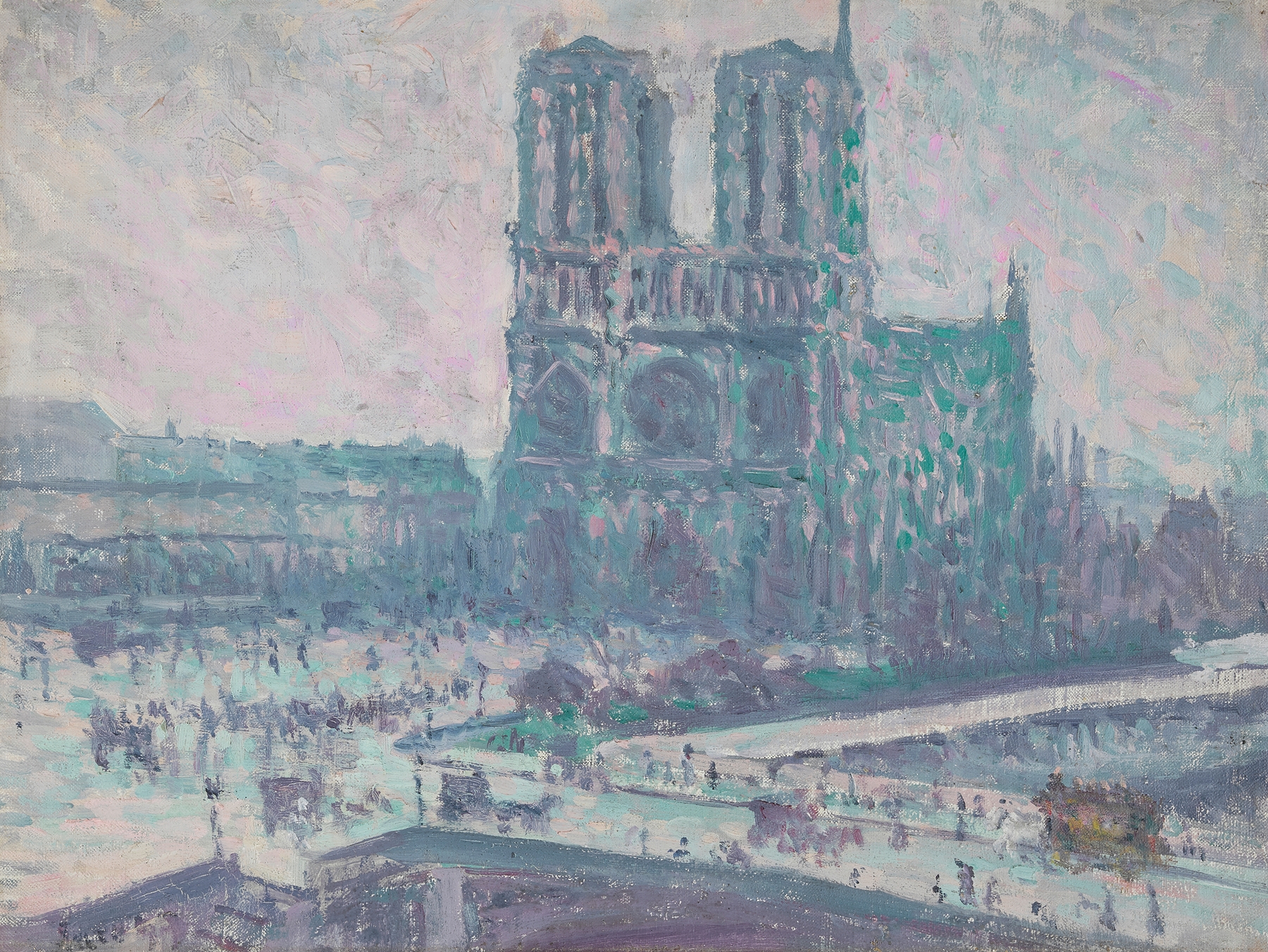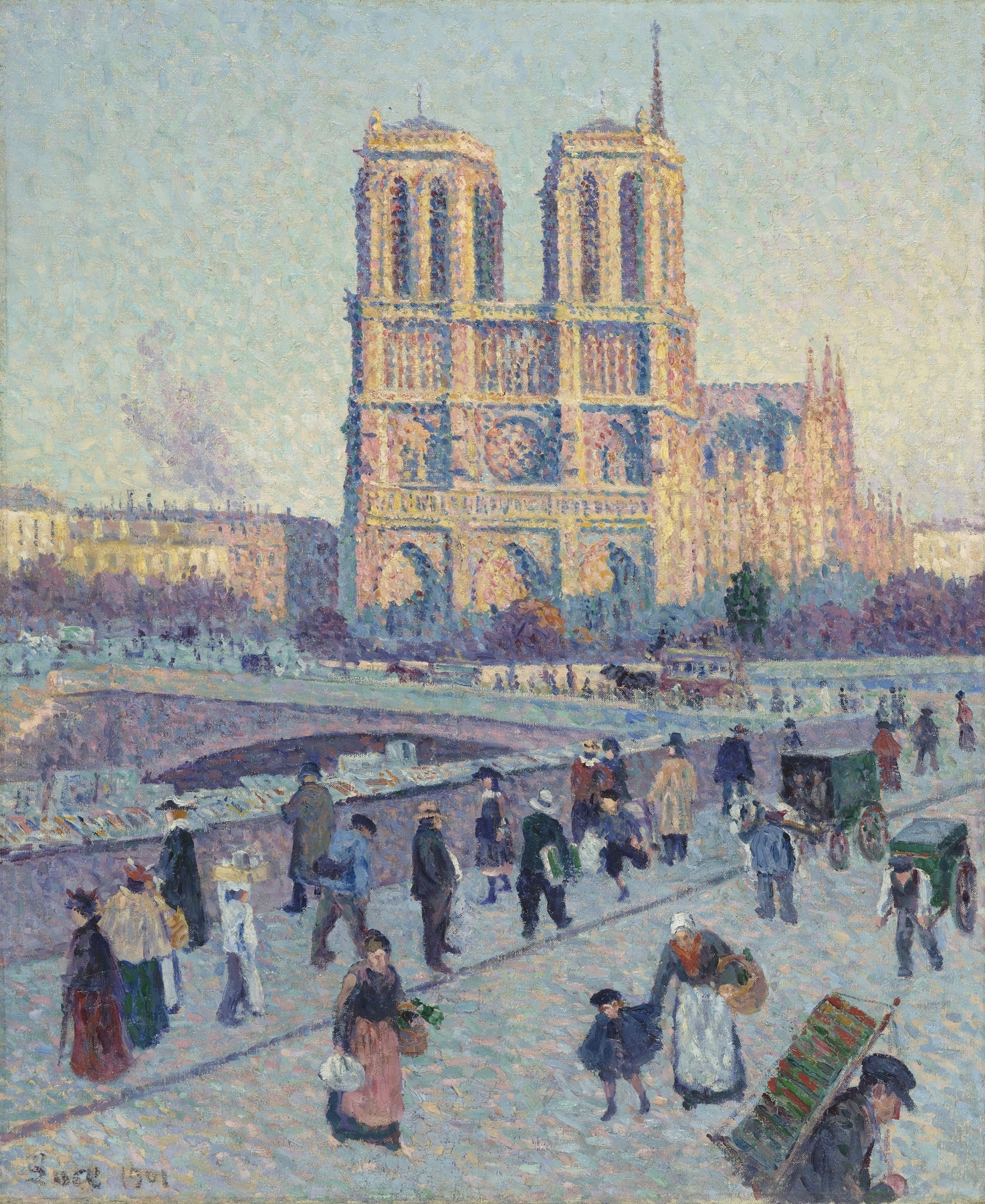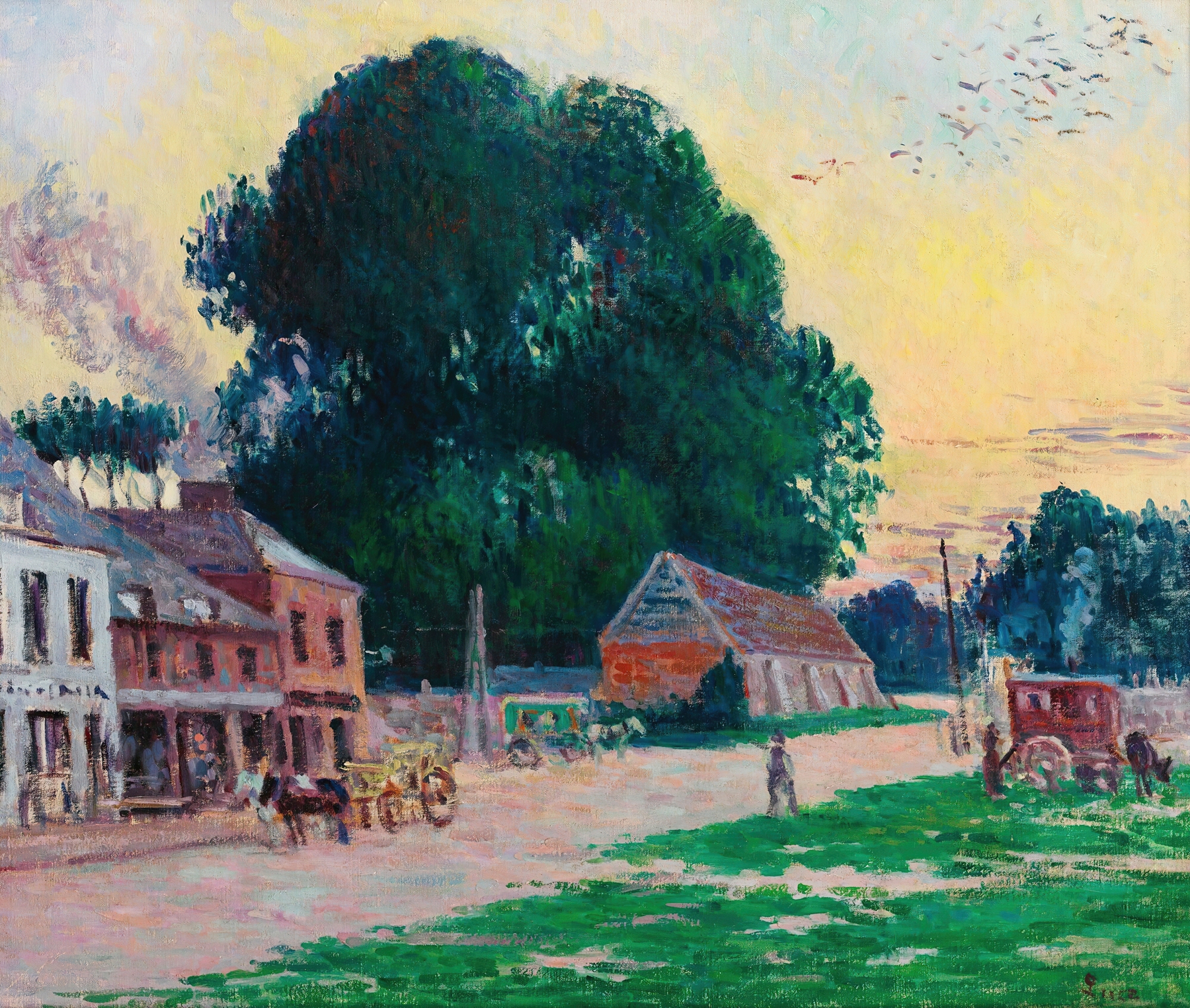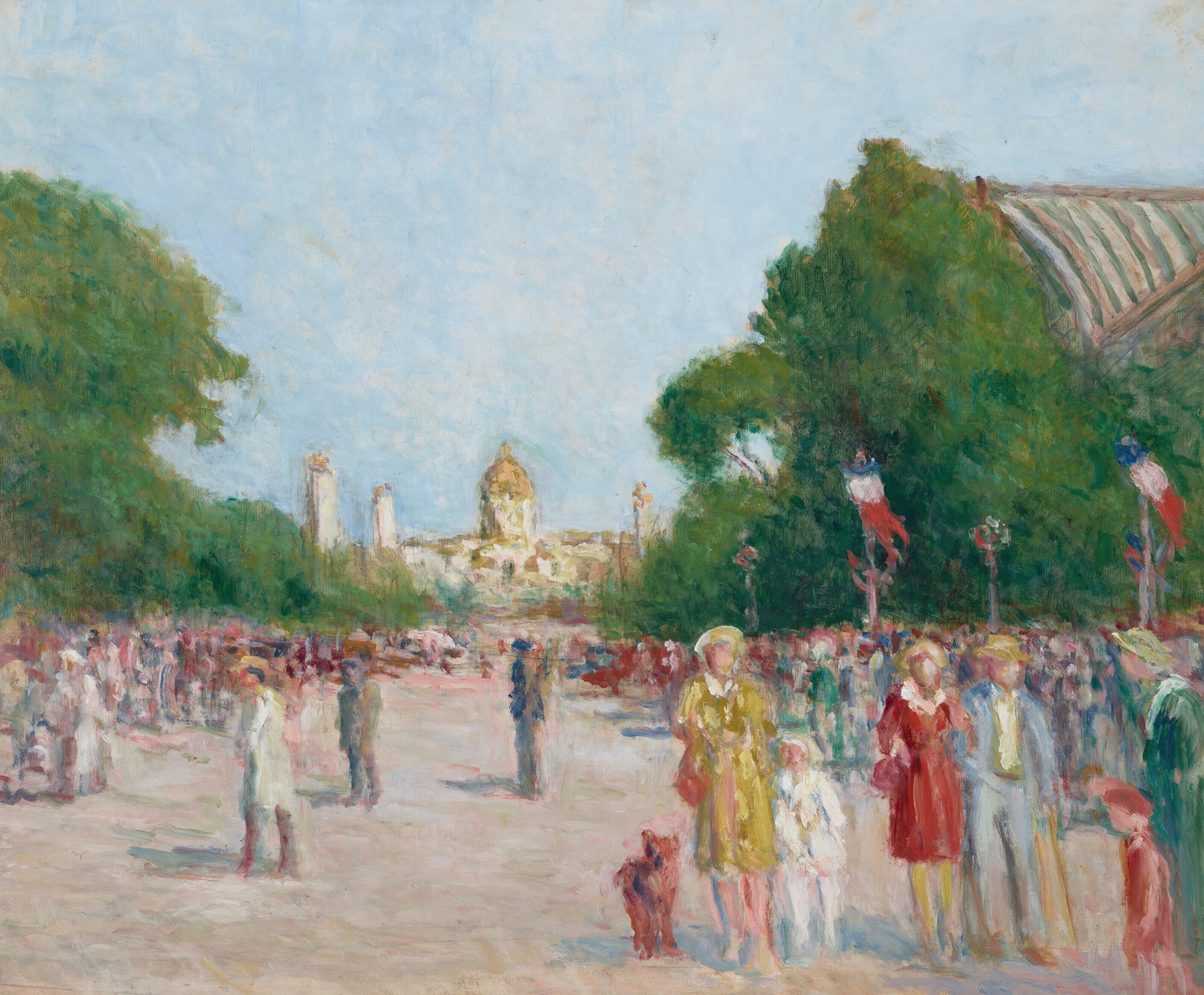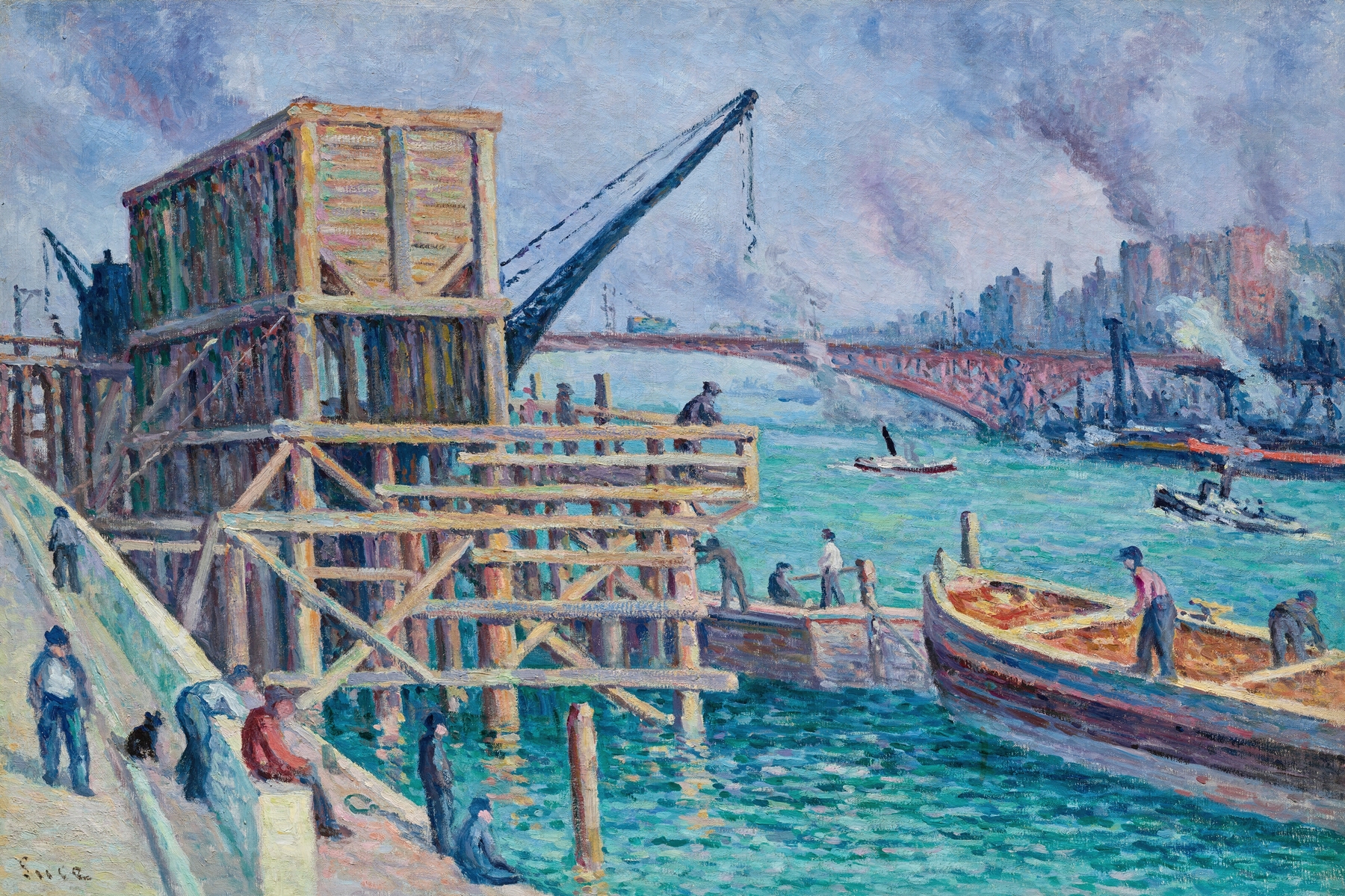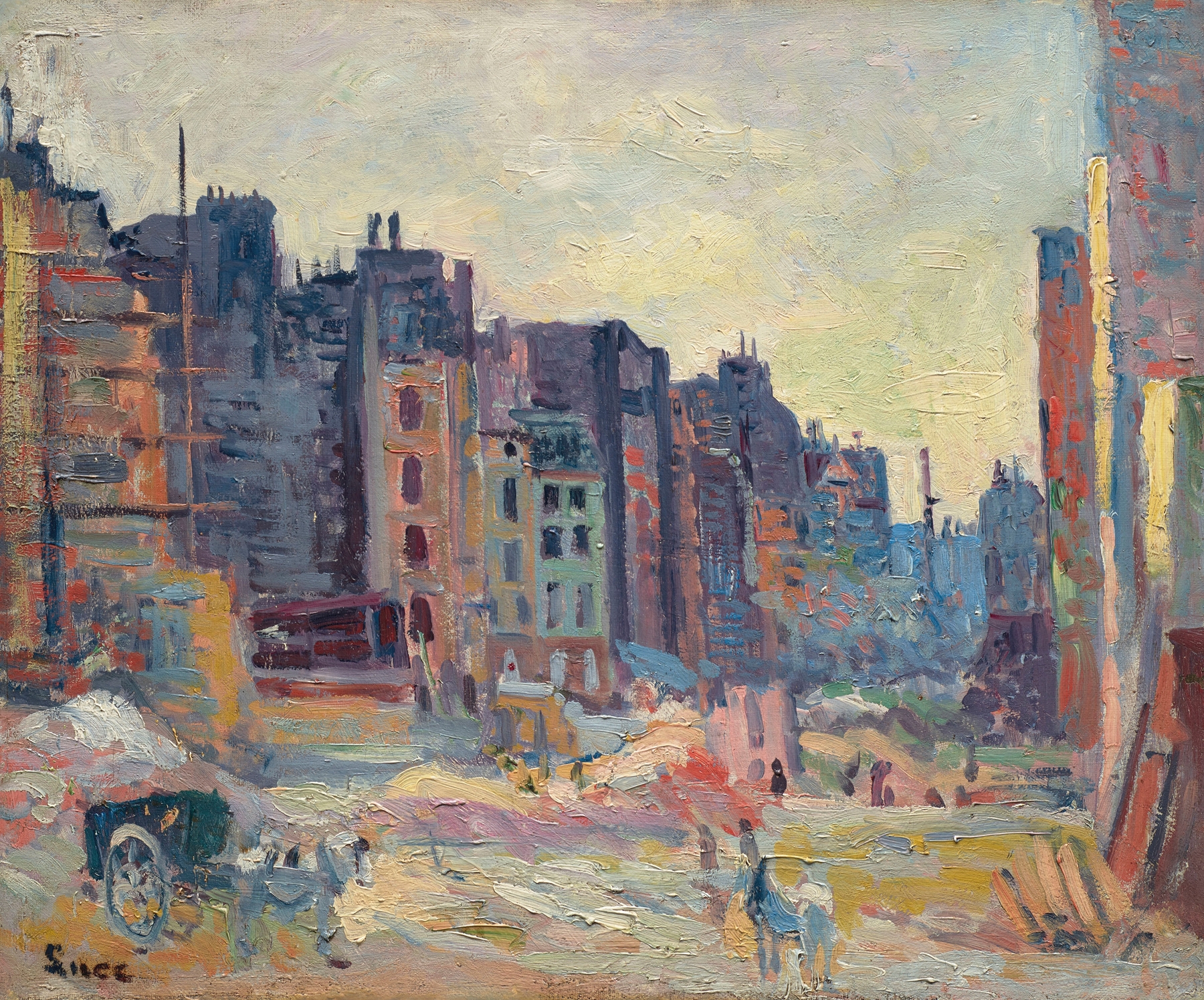
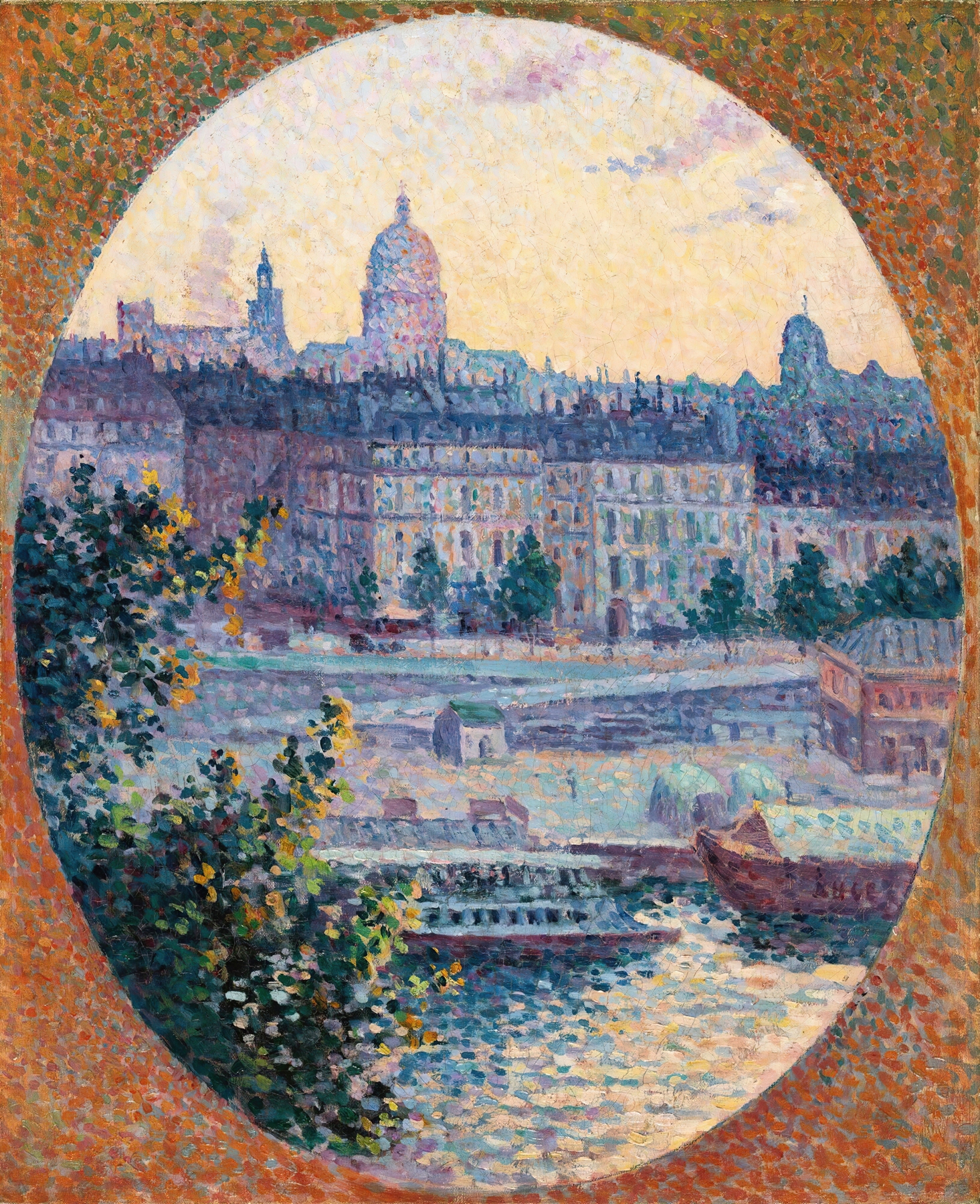
What secret hides in the quiet of the canvas? Beneath the surface of urban life, a tension thrums, and every stroke of color hints at an unseen violence lurking just out of sight. Look to the center of the piece, where the figures move almost mechanically along the bustling street, a perfect embodiment of an era caught between progress and turmoil. Notice how the sunlight, fractured by the buildings, casts dramatic shadows that cling to their forms, echoing the urgency and chaos of the construction site. The artist’s use of vibrant hues contrasts starkly with the muted earth tones of the city, drawing your gaze to the dynamic interplay of laborers and the machinery that looms over them. Beneath the apparent busyness, each figure seems to carry the weight of societal change — a reflection on the struggles of the working class amidst the rapid transformation of Paris. The juxtaposition of the fluid movements of the workers against the rigid architecture speaks to the violence of progress, where the old is often demolished in favor of the new. Hidden in the vibrant chaos are quiet expressions of resilience, as the city's pulse beats steadily, almost defiantly, in the face of destruction. Maximilien Luce painted this work between 1907 and 1908 during a time when Paris was undergoing monumental urban development. The burgeoning modernist movement was reshaping the landscape of art and life, while socio-political tensions simmered in the background. Luce, who was influenced by the Impressionists and was an active participant in the artistic discussions of his time, aimed to capture this transformative moment with a vibrant, yet contemplative, lens.