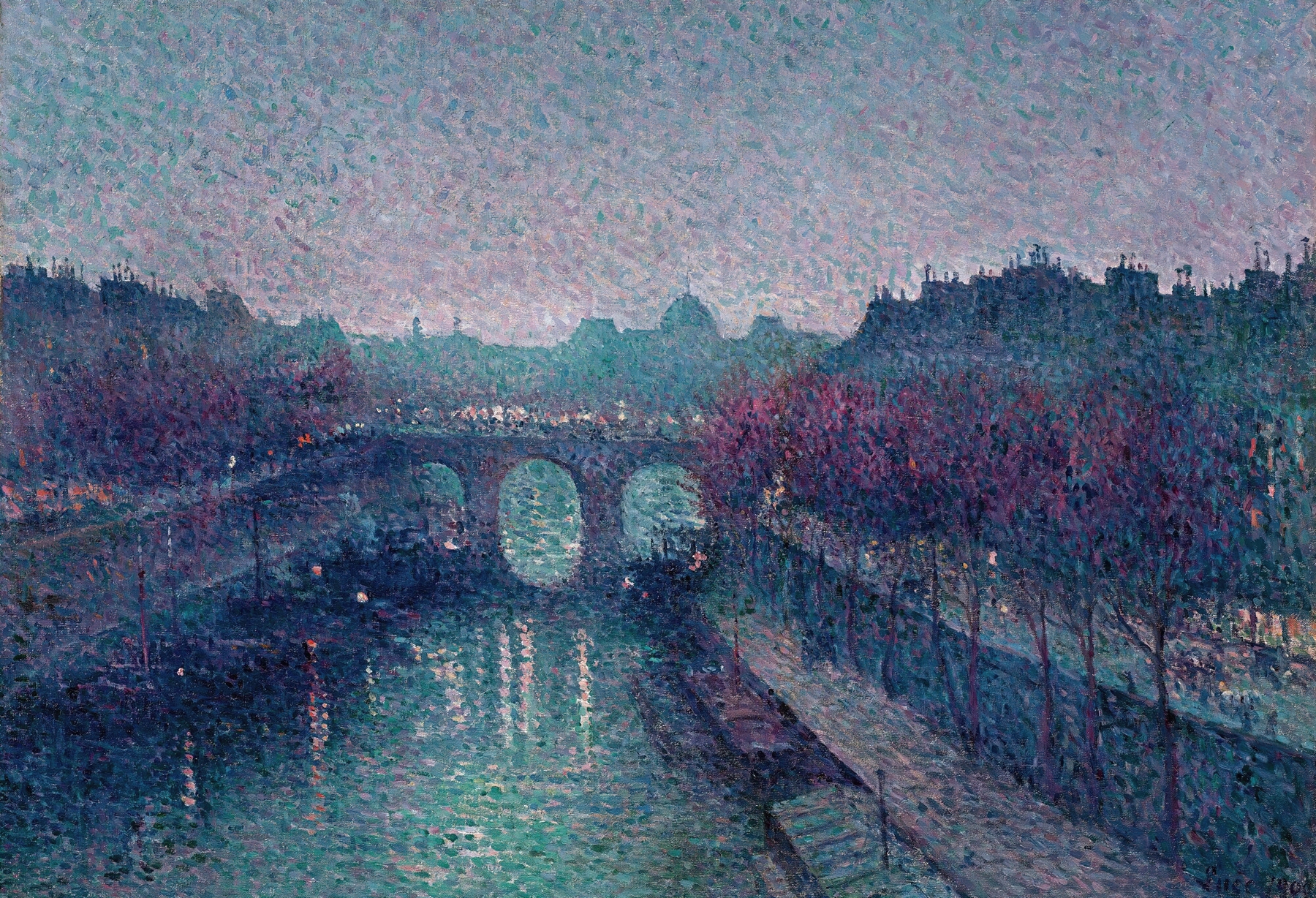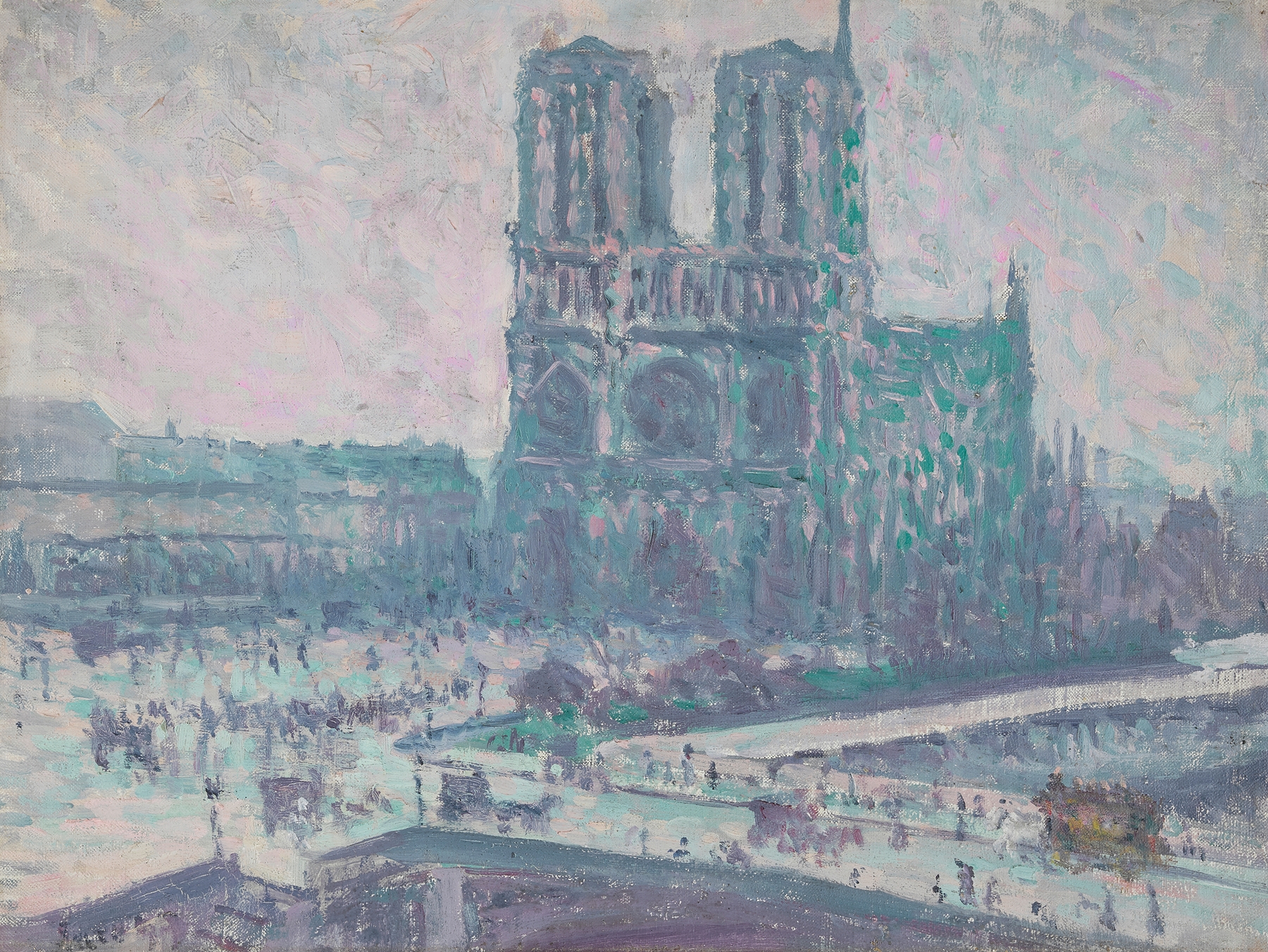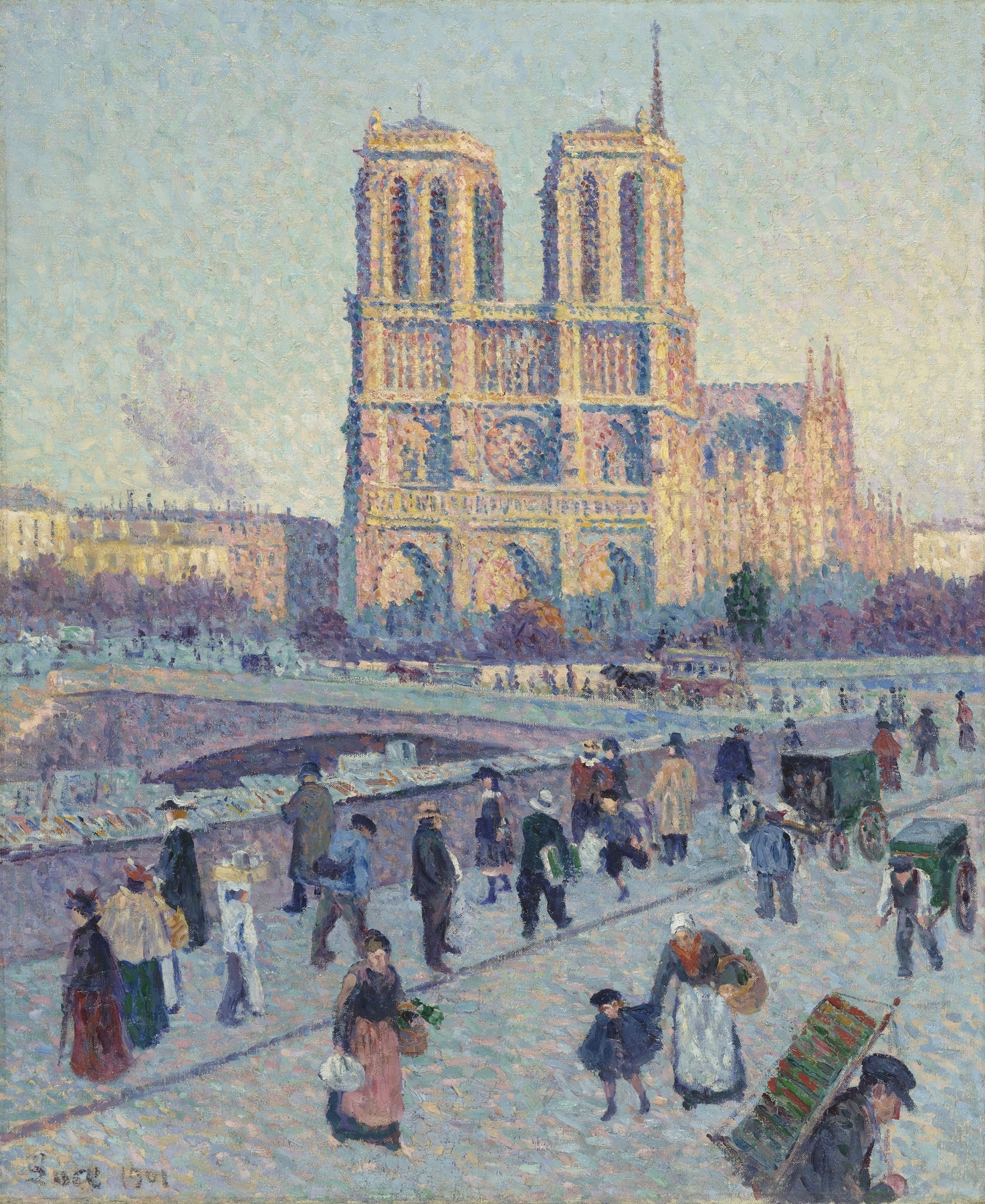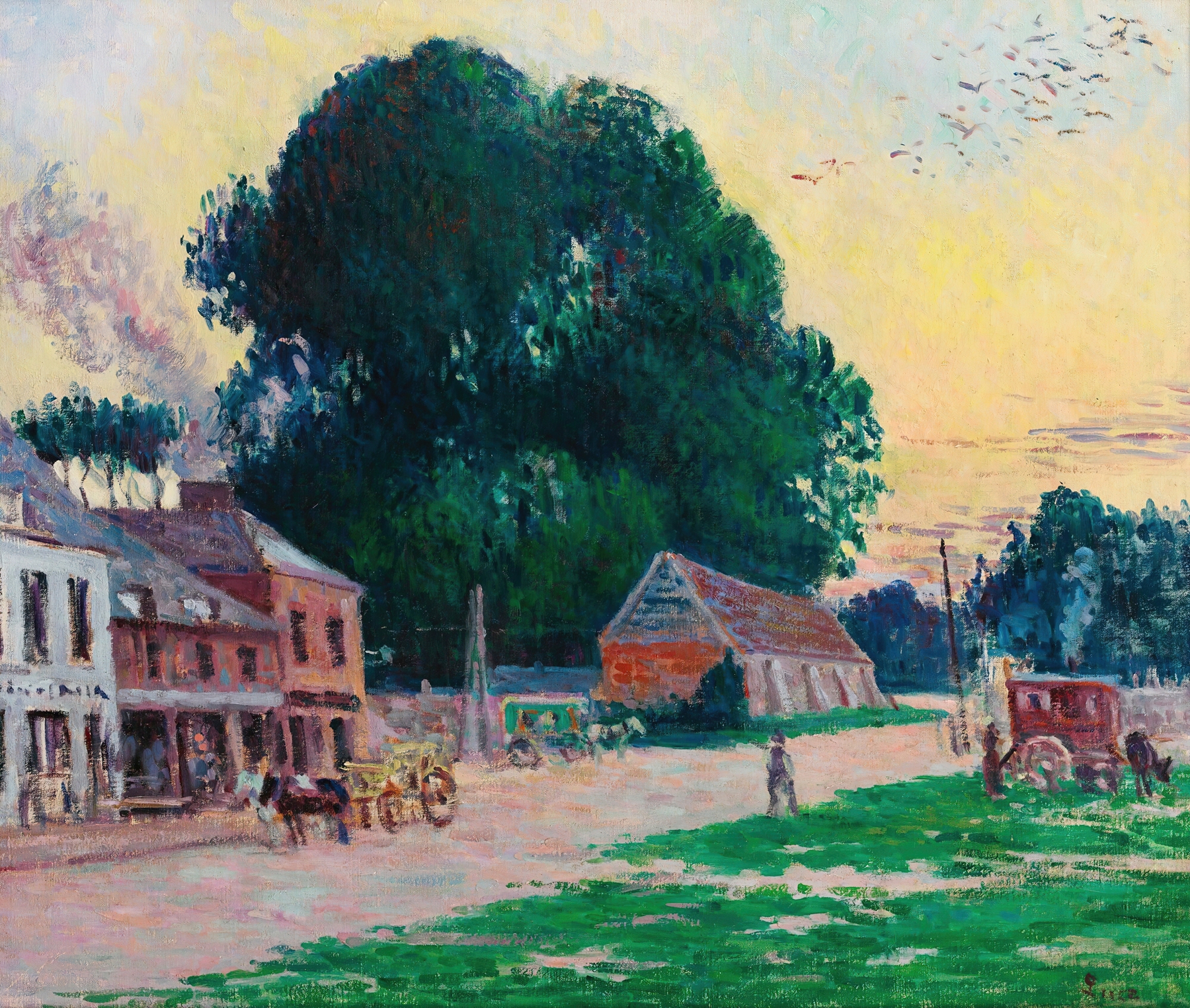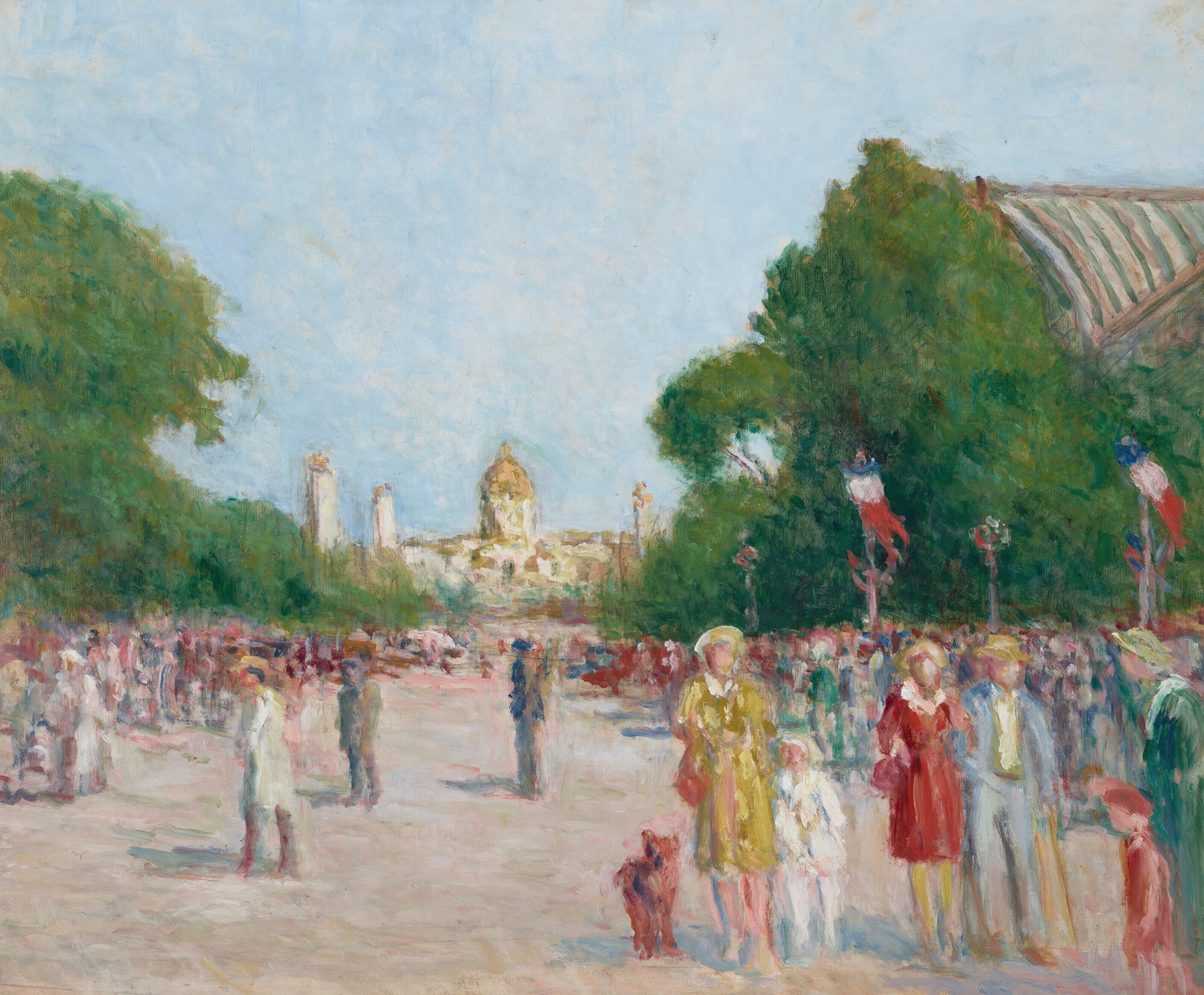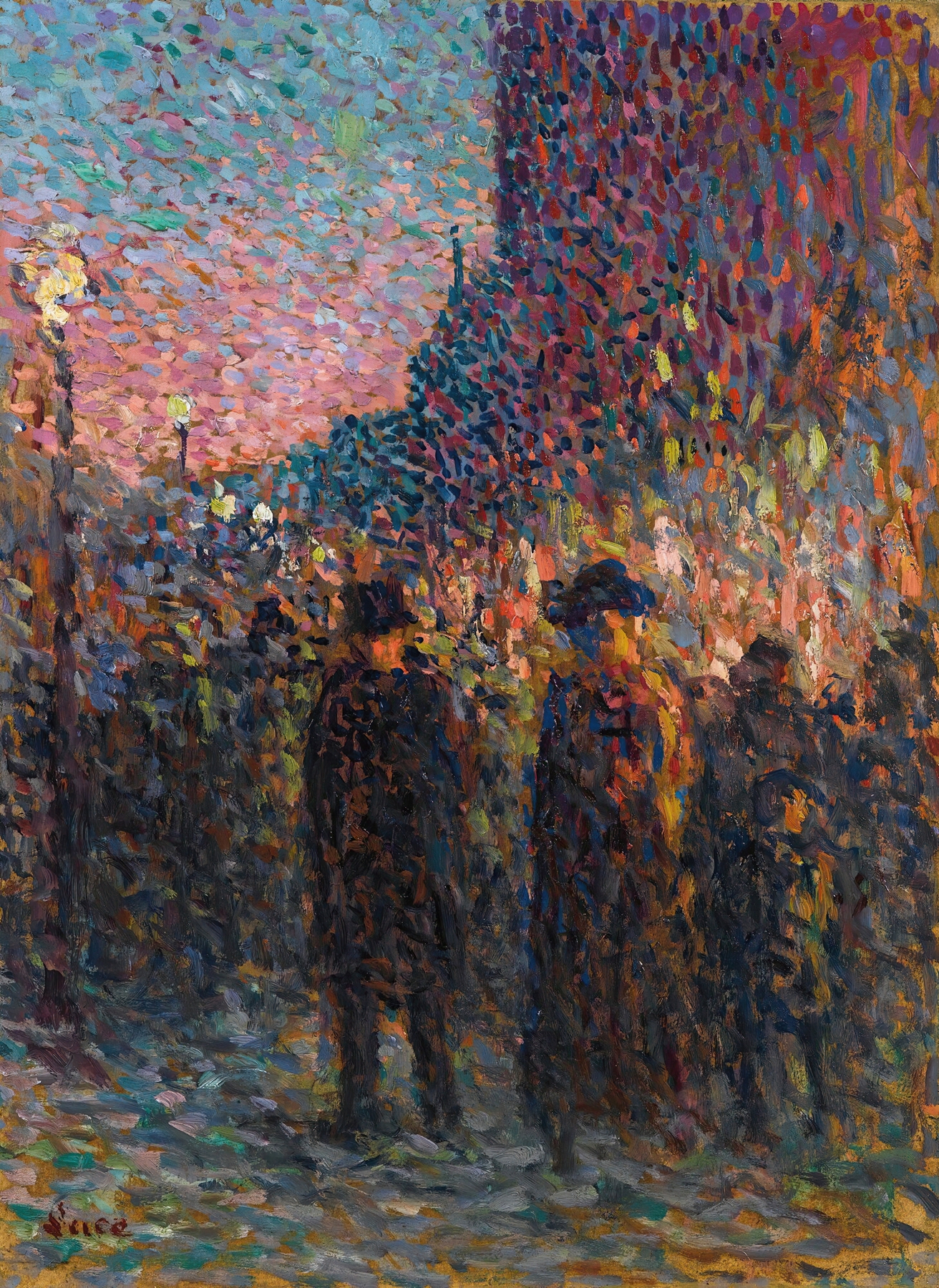
Where does light end, and longing begin? In the twilight of a vibrant Paris, the boundaries blur, leaving only the pulsating essence of time. Look to the bottom left of the canvas, where the streetlamps flicker like stars against the deepening blue of the evening sky. The warm glow from these lights dances across the cobblestones, revealing the bustling life around them. Notice how the figures, rendered with swift strokes, appear almost ephemeral, their movements a celebration of the nightlife that fills the boulevards. The contrast between the illuminated areas and the encroaching darkness captivates, inviting the viewer to wander deeper into the scene. The painting captures a duality of emotion—joy intertwined with a sense of transience. Observe the small groups of people, their joyous expressions punctuated by shadows that hint at stories untold. Each figure, vibrant yet blurred, speaks to the fleeting nature of not just the night but of moments themselves. This tension between light and dark mirrors the complexities of urban life, where the thrill of connection exists alongside inevitable solitude. In 1893, Luce embarked on this work amidst a period of great innovation and change in Paris. Living in a post-Impressionist era, he was influenced by the dynamic energy of the city, as well as the burgeoning Symbolist movement that sought to convey emotional depth. His exploration of color and form during this time reflects both his personal journey and the collective pulse of a city on the brink of modernity.