Passau am Inn — History & Analysis
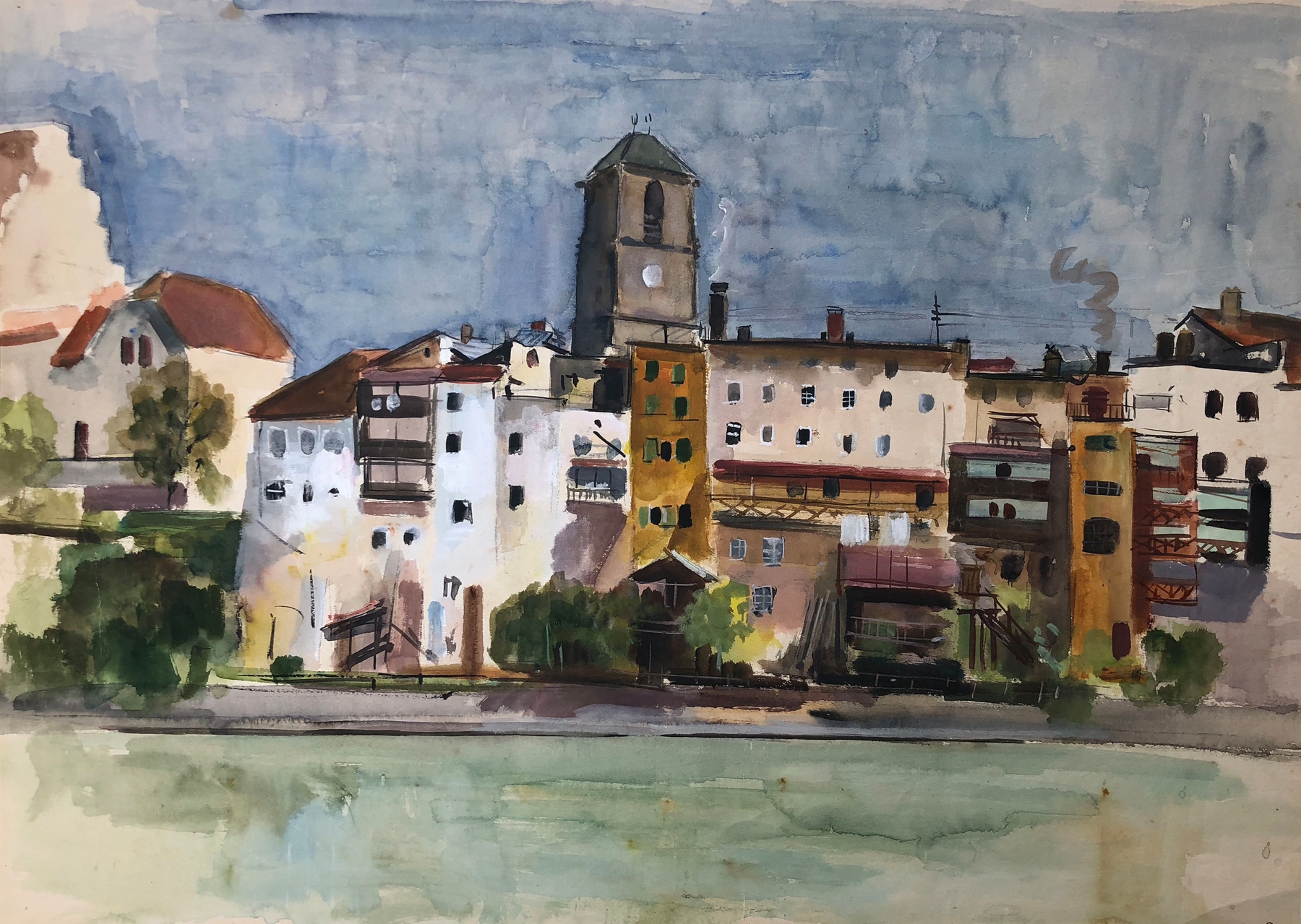
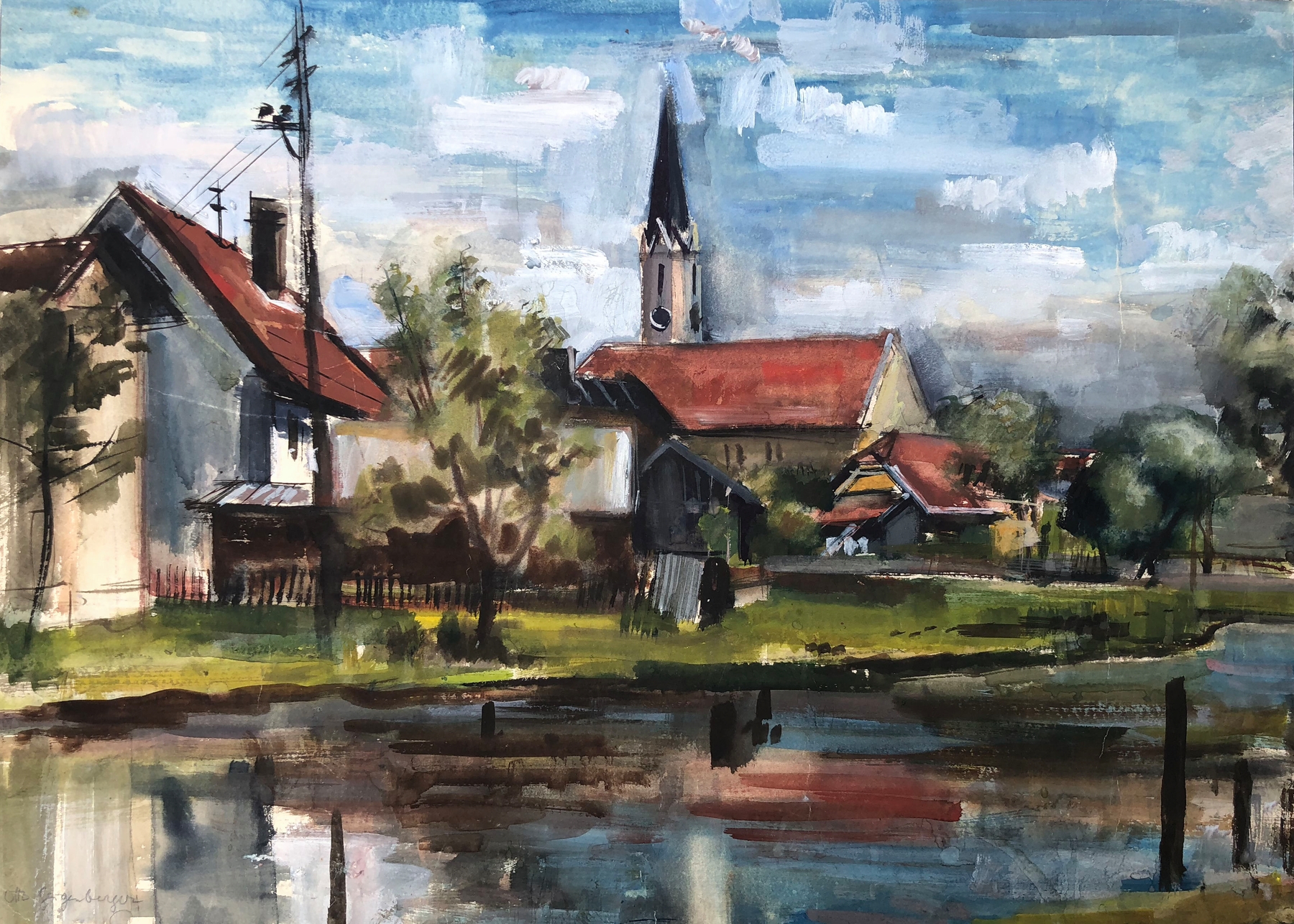
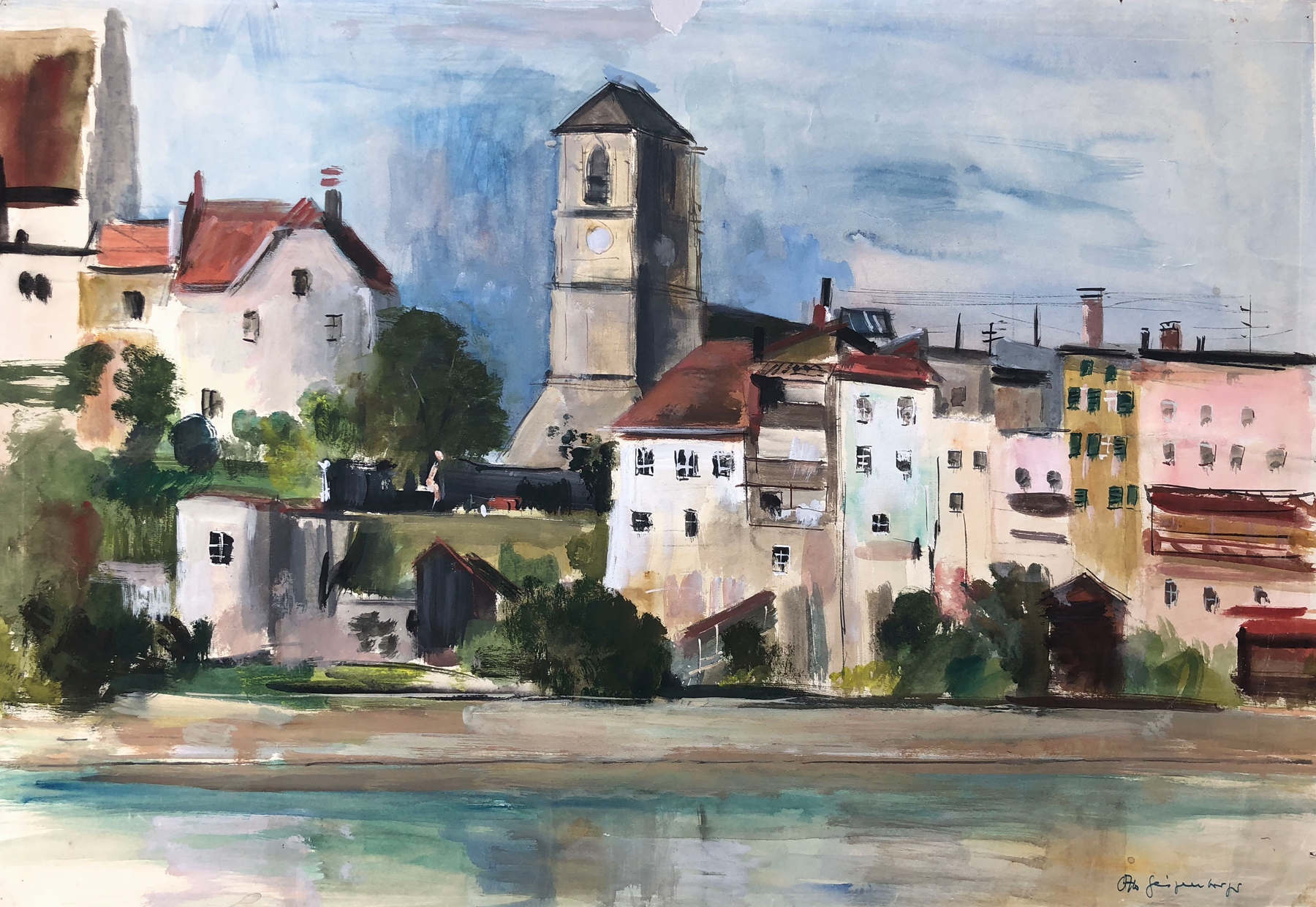
Can beauty exist without sorrow? In Passau am Inn, Otto Geigenberger invites us to ponder this question as time quietly weaves its narrative through the landscape. Look to the center of the canvas, where the river Inn glistens under a soft light, mirroring the delicate interplay of hues painted across the sky. The warm, golden tones of the sunset blend seamlessly with cooler blues, suggesting an ephemeral moment suspended between day and night.
The architecture lining the riverbank stands tall yet understated, their silhouettes gently embraced by the flowing water, guiding the viewer's gaze along the tranquil scene. Beneath the surface of this picturesque setting lurks an emotional tension; the wistfulness of time passing echoes through the gentle ripples of the river. The bright colors may evoke a feeling of serenity, yet they are juxtaposed with a subtle undercurrent of melancholy, as if the viewer is witnessing a memory rather than a reality. The contrast between the lively strokes representing the vibrant town and the calm, reflective water speaks to the coexistence of joy and sorrow, illustrating how beauty often emerges from the passage of time.
Painted in 1939 amidst the backdrop of an unstable Europe, Geigenberger created Passau am Inn during a period of embracing both tradition and modernity in art. His return to representational landscapes revealed a desire to reconnect with nature and stability in a world that appeared increasingly chaotic. This work not only captures the visual beauty of the town but also serves as a poignant reflection on the tensions of its time.