Patio in Sitges — History & Analysis
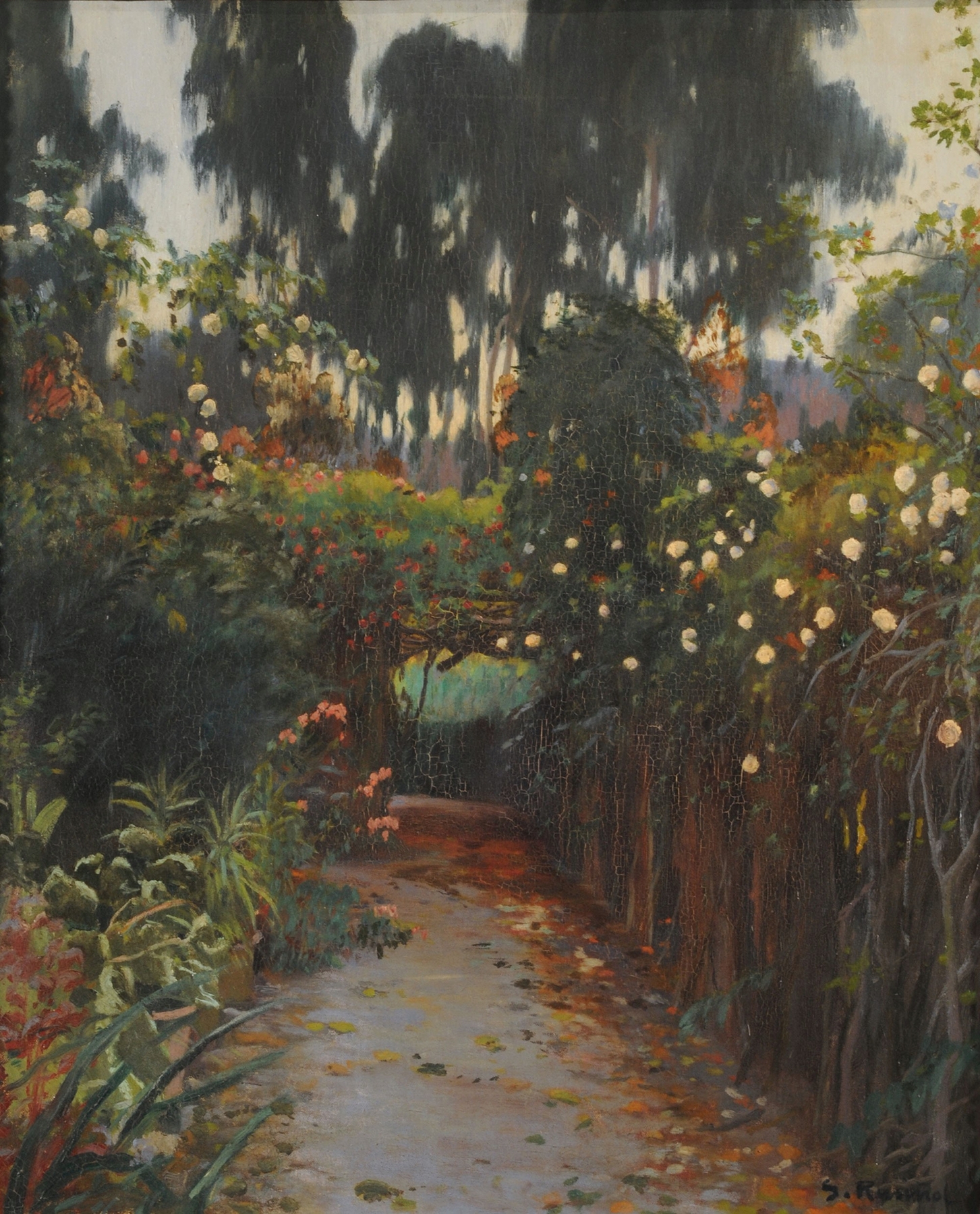
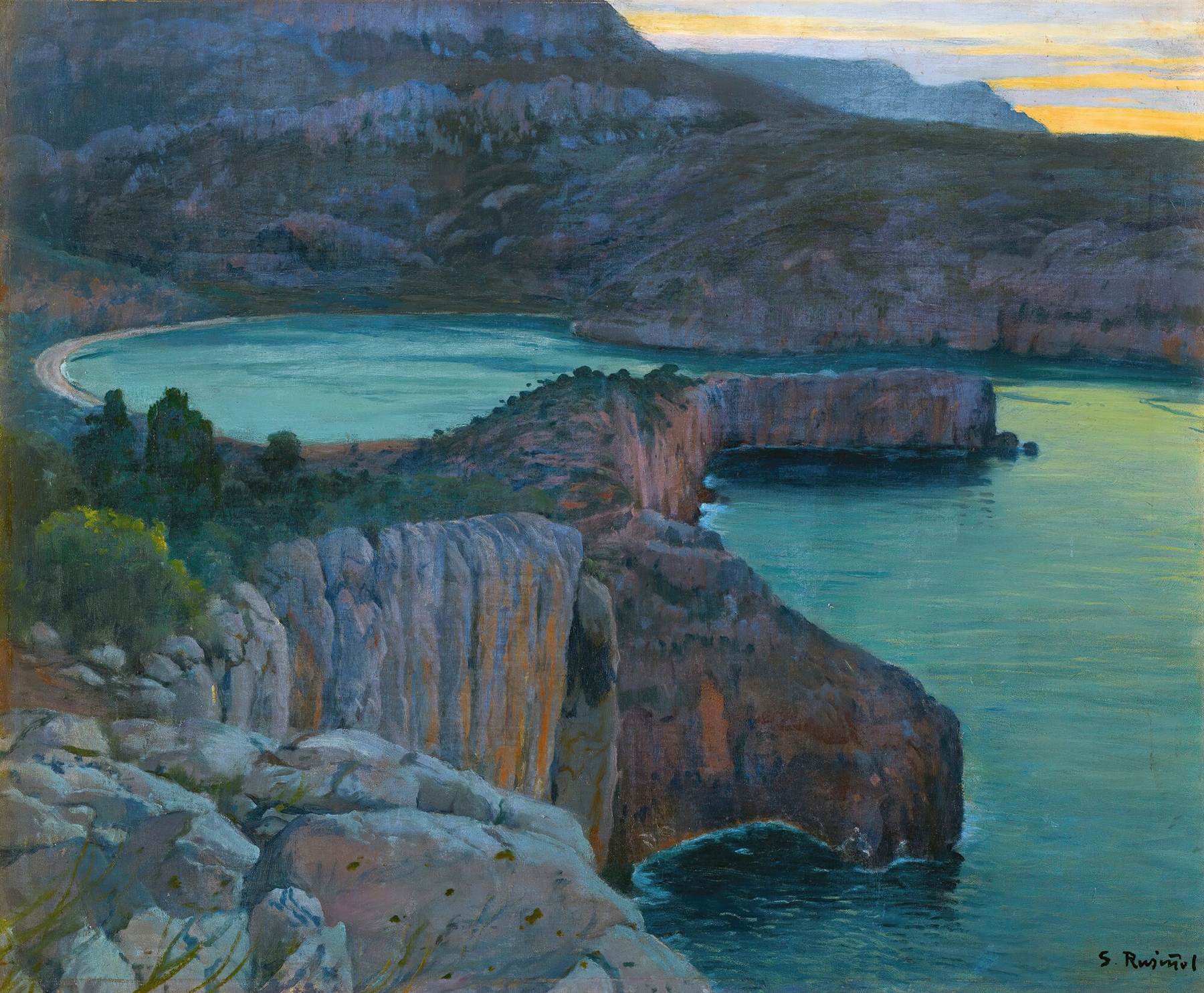
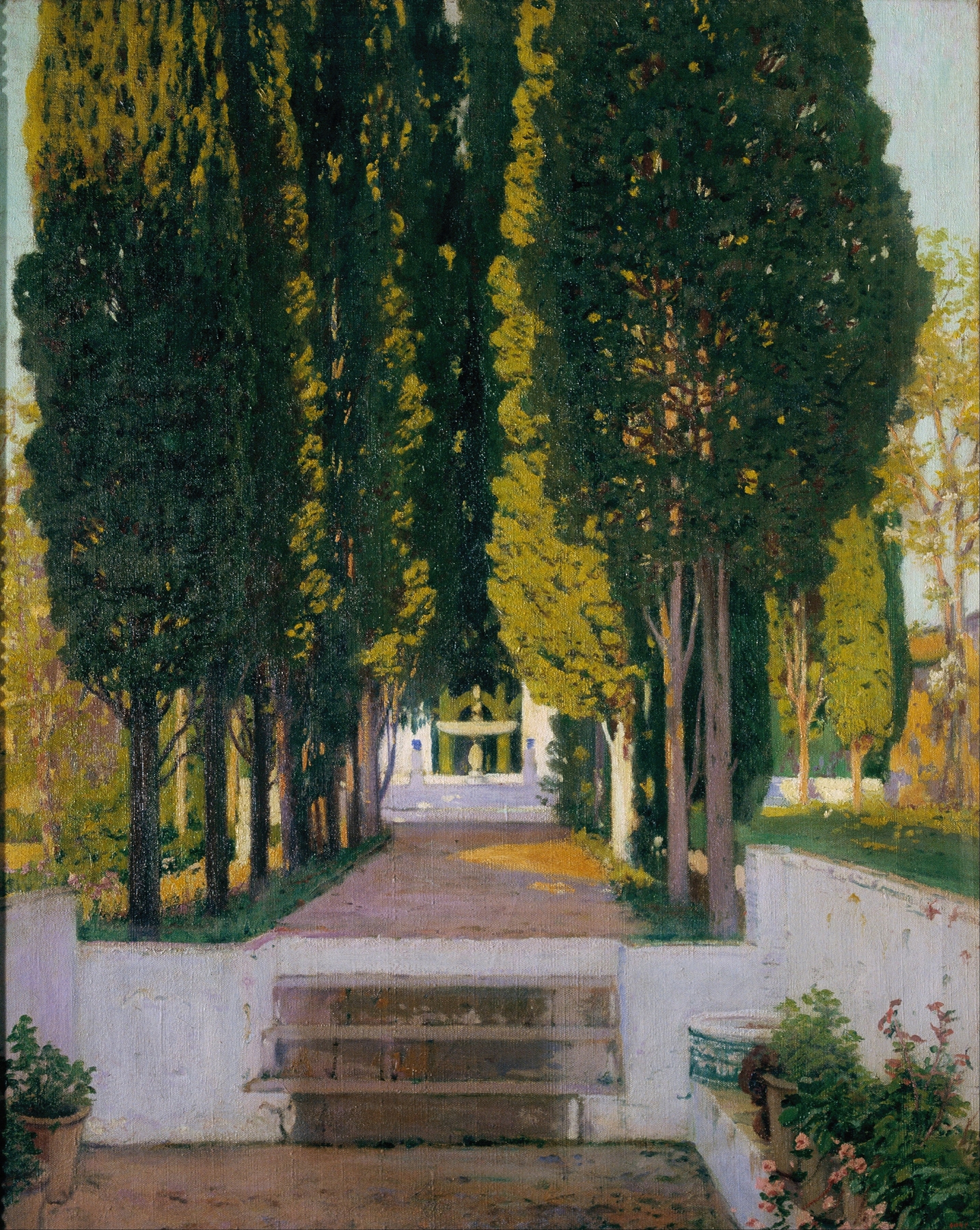
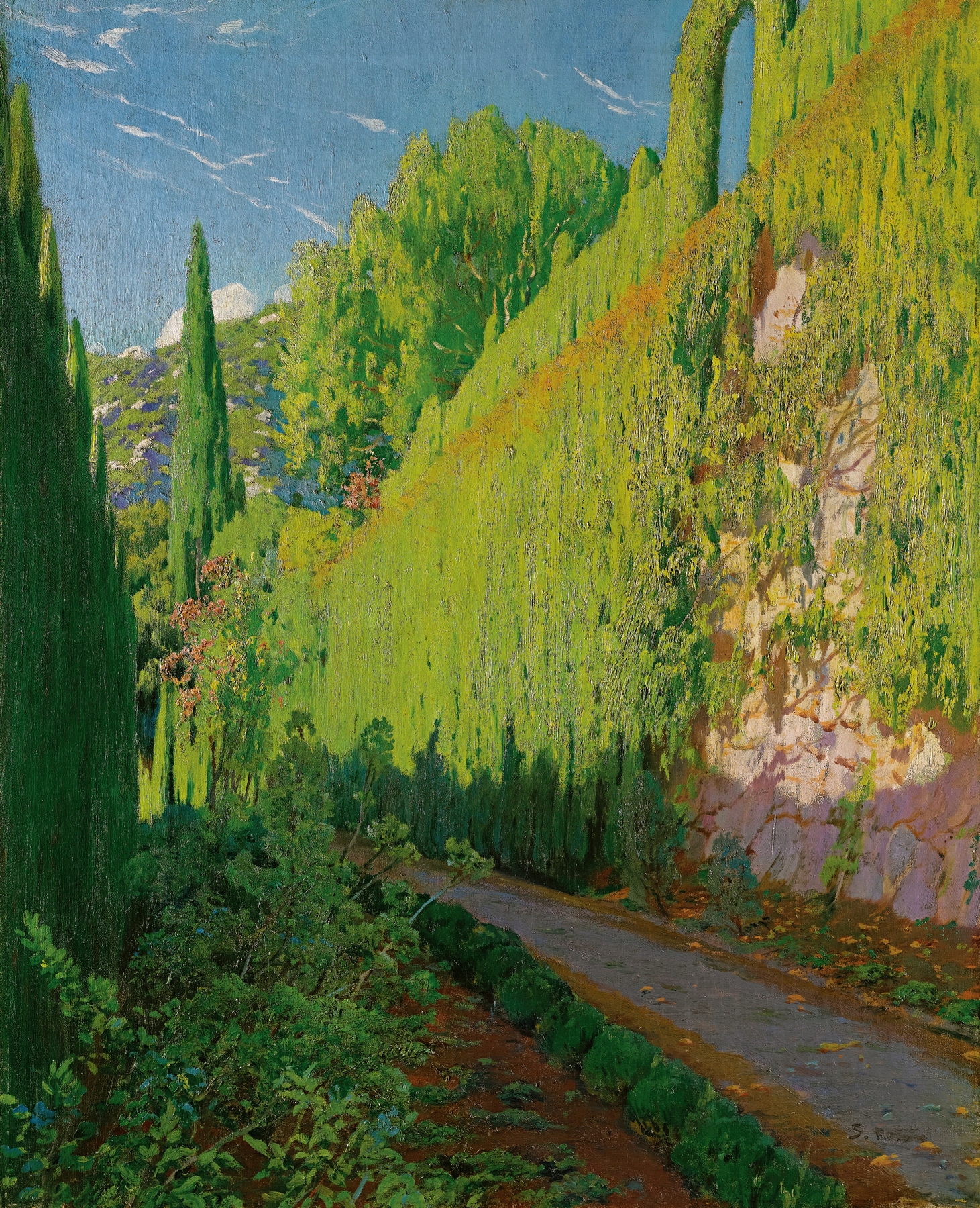
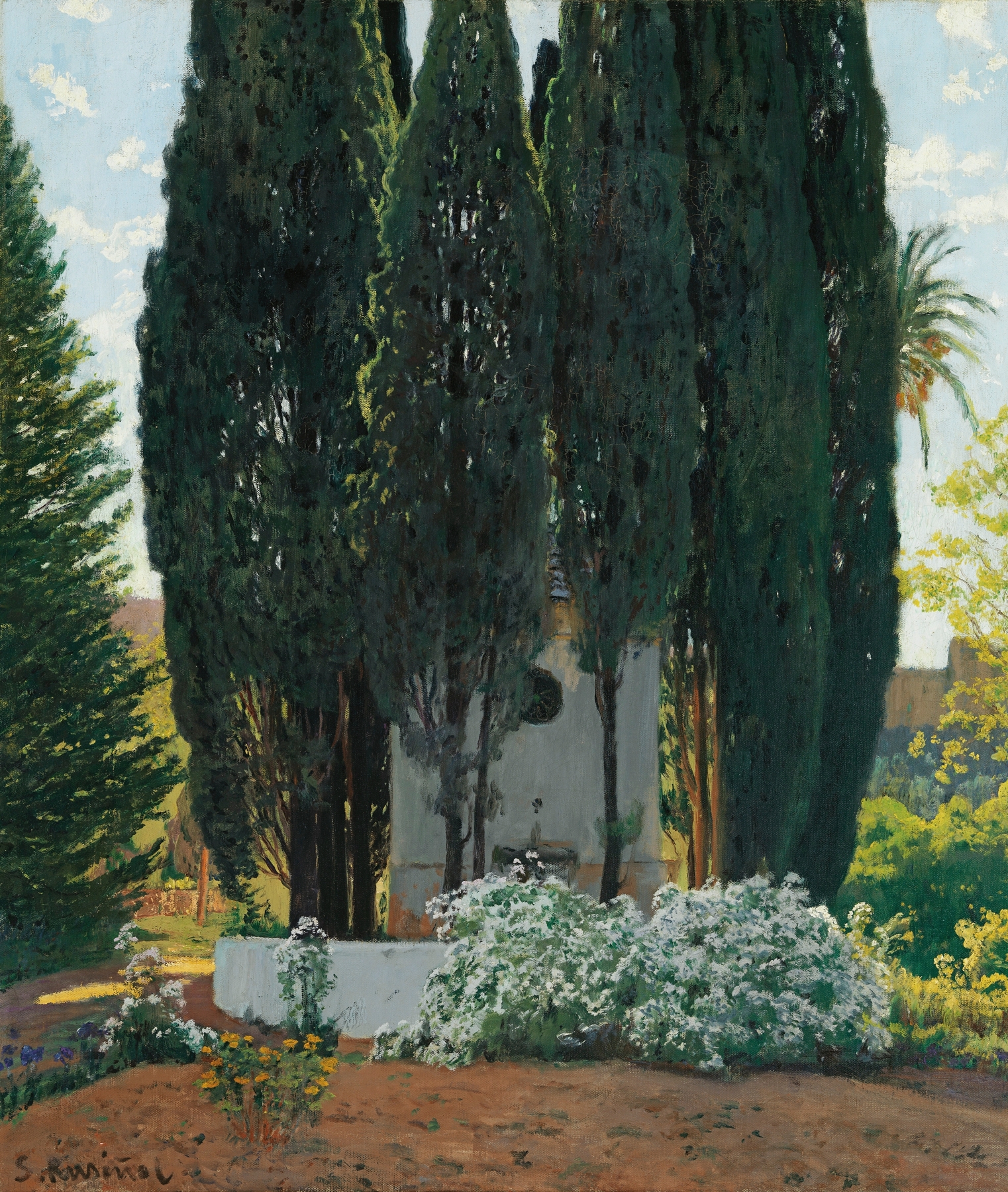
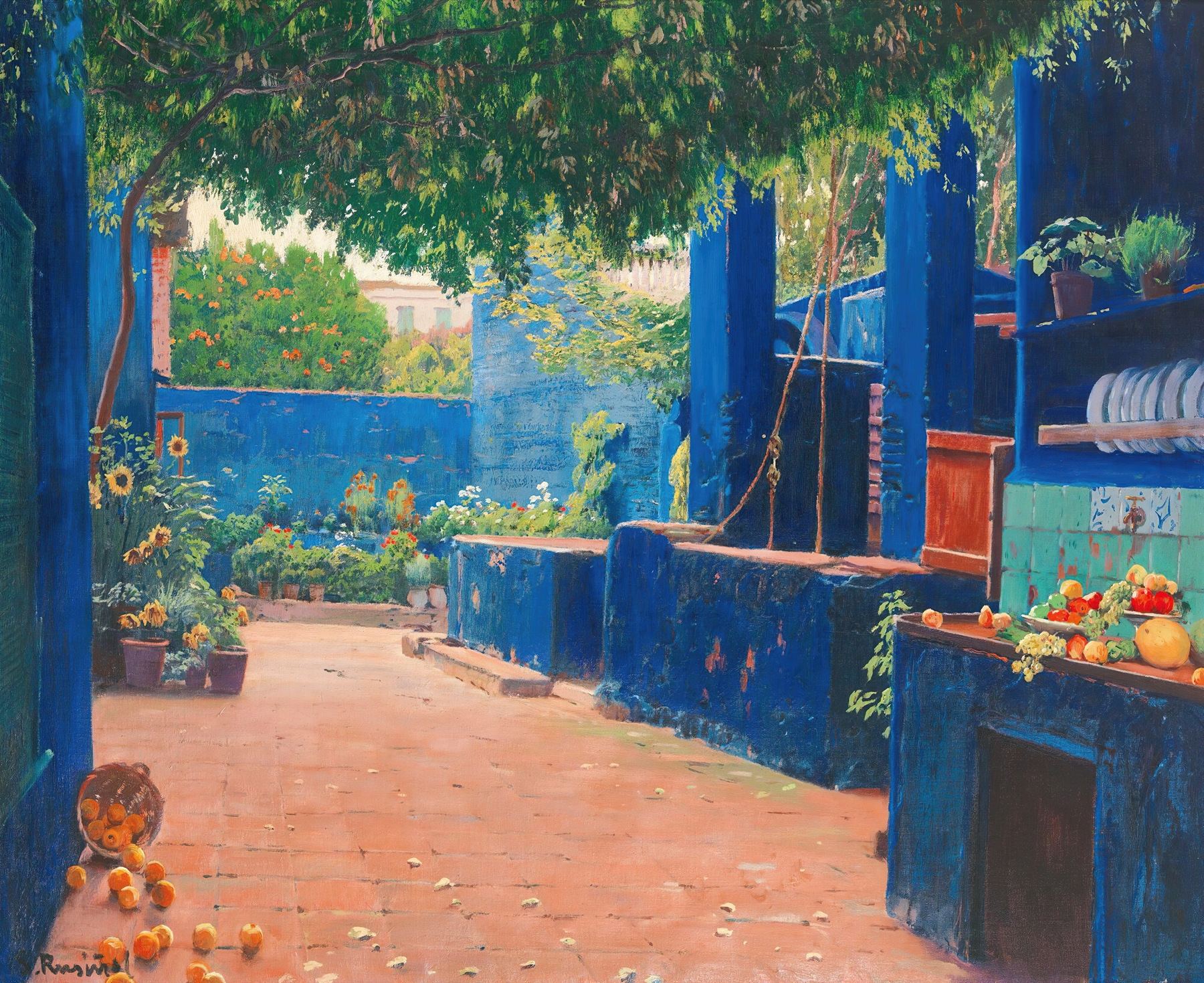
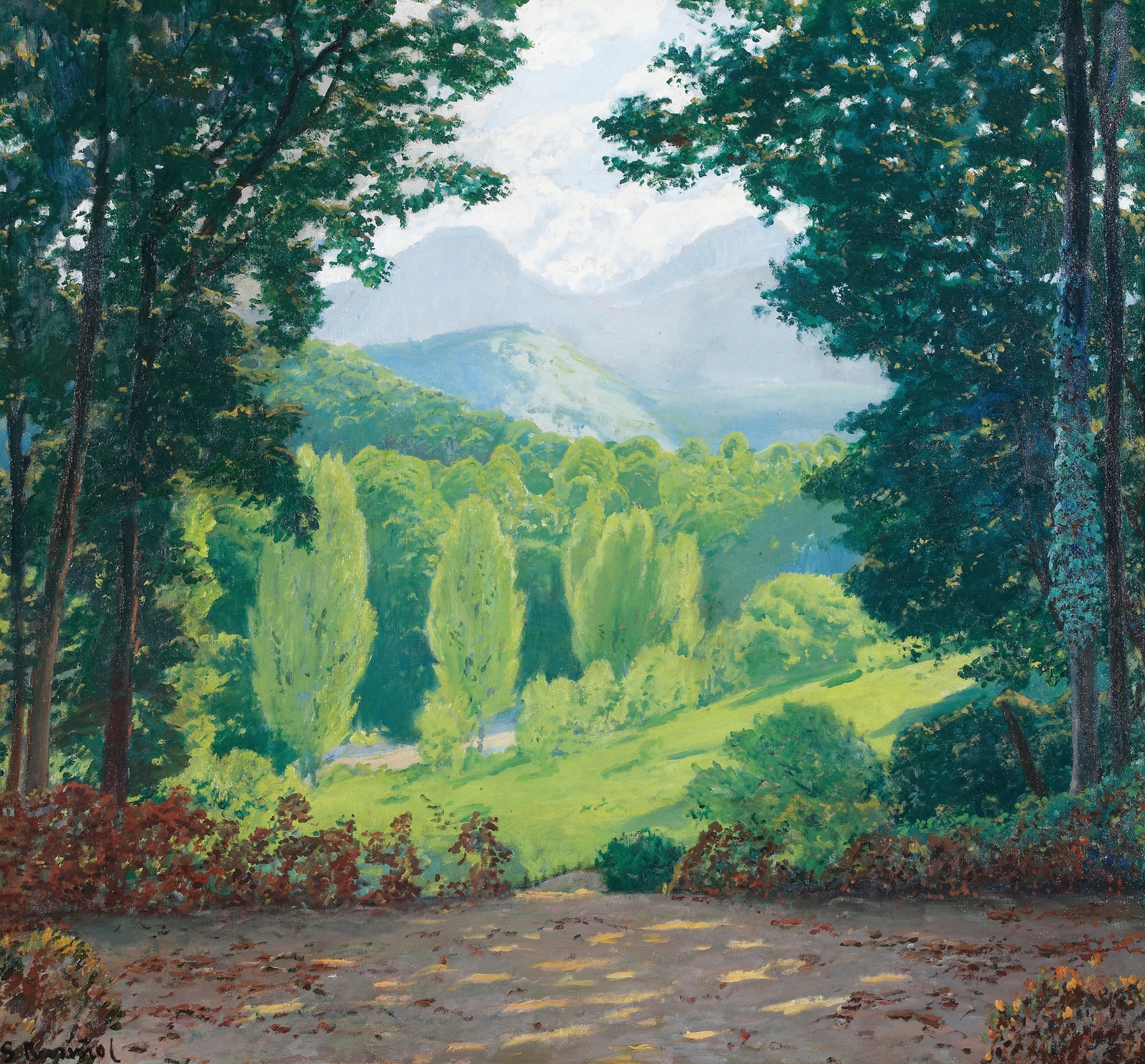
Could beauty survive in a century of chaos? Look closely at the interplay of light and shadow in Patio in Sitges. The vibrant hues of the terracotta tiles contrast sharply against the deep greens of the surrounding foliage. Notice how sunlight filters through the leaves, casting dappled patterns that evoke a sense of movement, as if the garden itself is alive and breathing.
The careful arrangement of flowers and plants draws the eye inward, creating a serene oasis that invites contemplation. Beyond its inviting charm, emotional tensions simmer beneath the surface. The juxtaposition of the lively blossoms and the stillness of the stone walls highlights the delicate balance between nature and architecture. The bright colors suggest joy and vitality, yet there’s an underlying stillness that whispers of isolation, a reminder of the tumultuous world beyond the garden’s embrace.
Each brushstroke reflects the fleeting nature of happiness, hinting that such beauty, while vibrant, is also ephemeral. During the years 1892-1894, the artist created this work in Sitges, a coastal town in Spain that became a retreat for progressive artists and thinkers. At this time, Rusiñol was deeply immersed in the modernisme movement, embracing the tension between tradition and innovation in the face of societal change. His experiences in Sitges, surrounded by a vibrant artistic community, inspired him to explore the intersection of beauty and reality, ultimately capturing a fleeting moment of tranquility in a rapidly changing world.