Ponte Santa Trinità — History & Analysis
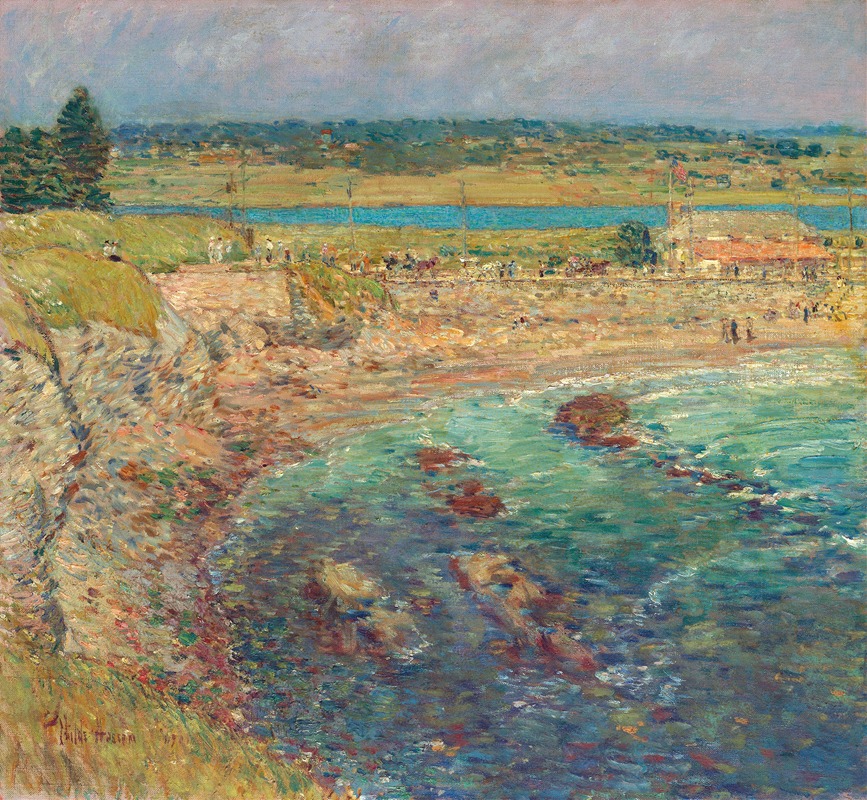
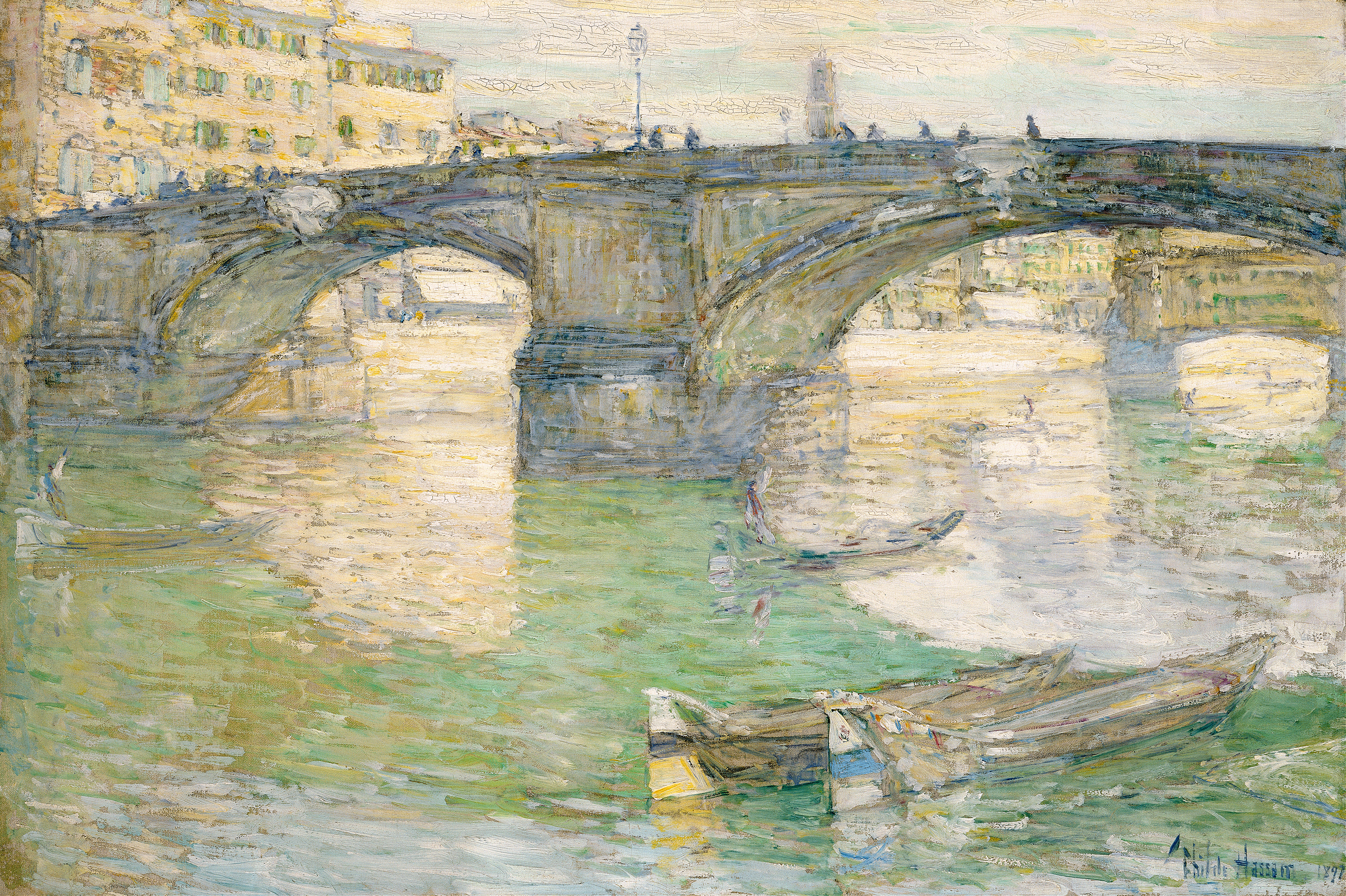
“Sometimes beauty is just pain, disguised in gold.” In Ponte Santa Trinità, the luminous reflections on the water whisper of fleeting moments, evoking complex emotions tangled in the beauty of daily life. Focus on the bridge at the center, its arches gracefully curving into the sky, framing the bustling scene of pedestrians crossing. Notice how the golden light dances on the surface of the river, illuminating the vivid colors of the buildings on either side. The use of brushstrokes captures a gentle movement, suggesting the passage of time and the transient nature of this picturesque moment.
The soft blues and warm yellows merge harmoniously, inviting the viewer to experience the joy of a sunlit afternoon in Florence. Yet, beneath this picturesque veneer lies a deeper tension. The bridge, a symbol of connection, contrasts with the solitary figures traversing it, each lost in their own world. The vibrant energy of the water contrasts with the quiet strength of the architecture, hinting at the duality of life — beauty intertwined with isolation.
These nuances provoke reflection on how we navigate our paths, often unseen in the crowd, despite the beauty surrounding us. Childe Hassam painted Ponte Santa Trinità in 1897, during his time in Italy, where he was deeply influenced by Impressionism. This era marked a significant transition in his artistic career as he sought to merge the styles of American and European painting, capturing the essence of modern life in vibrant color and light.