Ranguun no kinto (Golden pagoda in Rangoon) — History & Analysis
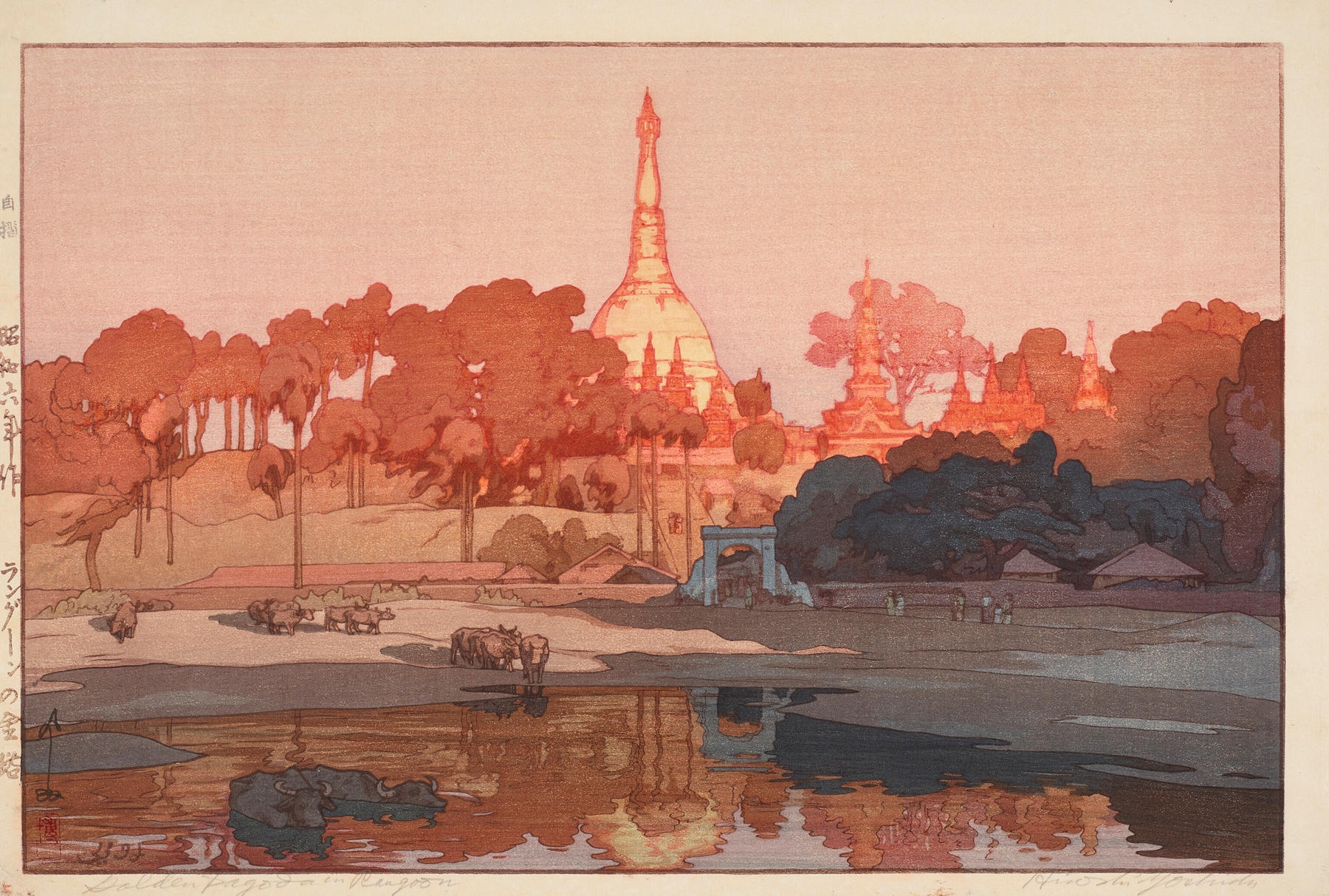
What secret hides in the quiet of the canvas? An obsession lingers in the delicate strokes and vivid colors, inviting us to listen to the whispers of a world captured in stillness. Look to the shimmering golden pagoda at the heart of the composition, glistening against the deep azure sky. Notice how the light dances around its gilded edges, wrapping the structure in an ethereal glow. The surrounding foliage, painted in lush greens and earthy browns, creates a contrasting sense of vitality, grounding the pagoda in nature while enhancing its otherworldly presence.
The careful layering and meticulous brushwork reflect the artist's mastery, drawing your eye toward the sacred site with a magnetic pull. Beneath the surface, there’s an intricate dialogue between tradition and modernity. The pagoda, a symbol of spiritual devotion, stands resolute amidst the encroaching influences of change, hinting at the tension between timeless heritage and the relentless march of progress. Each leaf stirred by a gentle breeze seems to murmur untold stories, as if the very essence of Rangoon is captured within the confines of the painted frame.
This balance of serenity and impending transformation evokes a deep emotional resonance, inviting contemplation. In 1931, the artist was immersed in a world seeking to reconcile its past with the uncertainties of modernity. Living in Japan, Yoshida Hiroshi was part of the Shin-hanga movement, which aimed to revitalize traditional woodblock printing techniques while incorporating Western influences. This period saw Hiroshi traveling to Southeast Asia, where his fascination with the landscapes and cultures profoundly influenced his work, ultimately culminating in the creation of a piece that celebrates the magnificence and fragility of cultural identity.