Return at full moon — History & Analysis
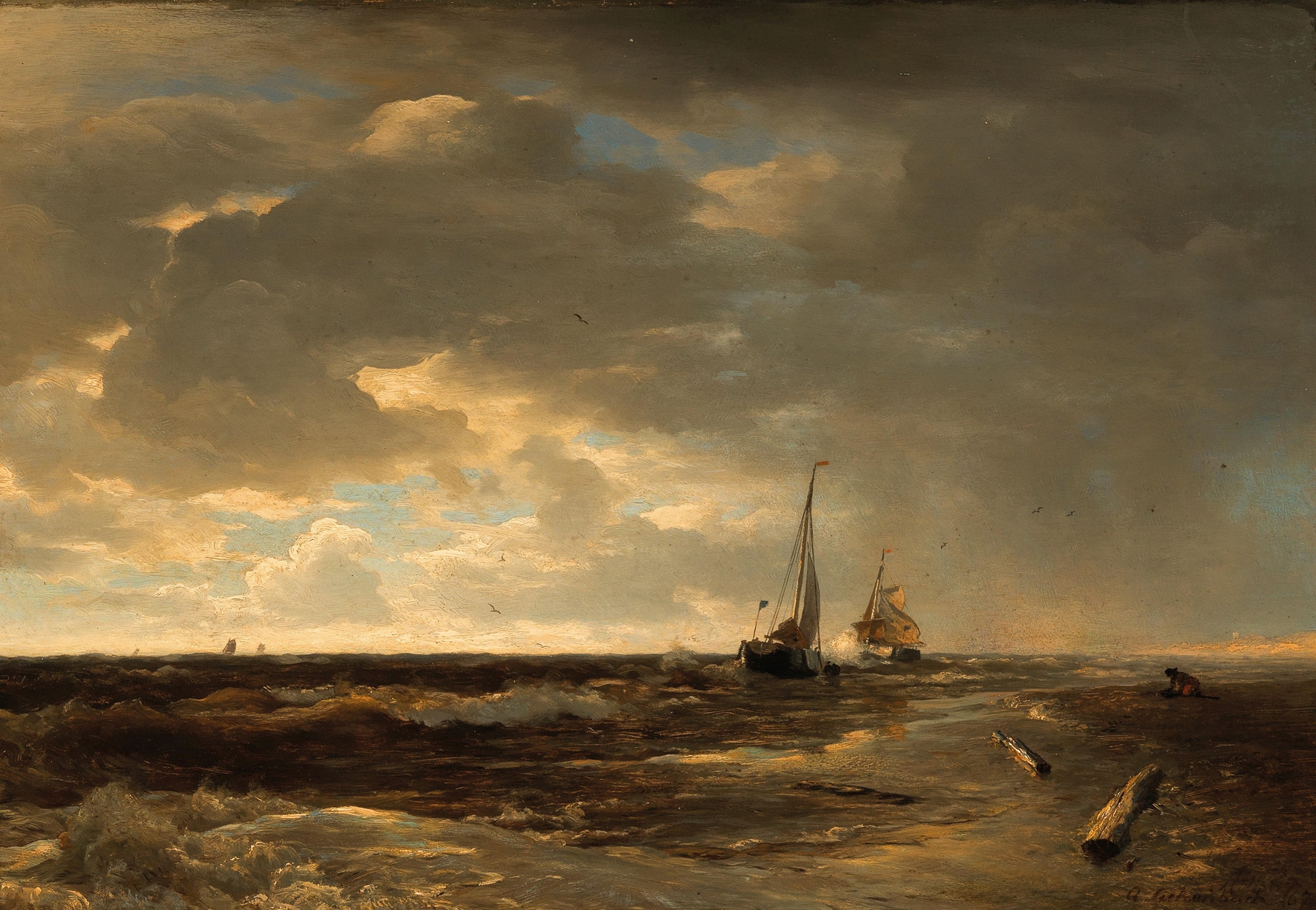
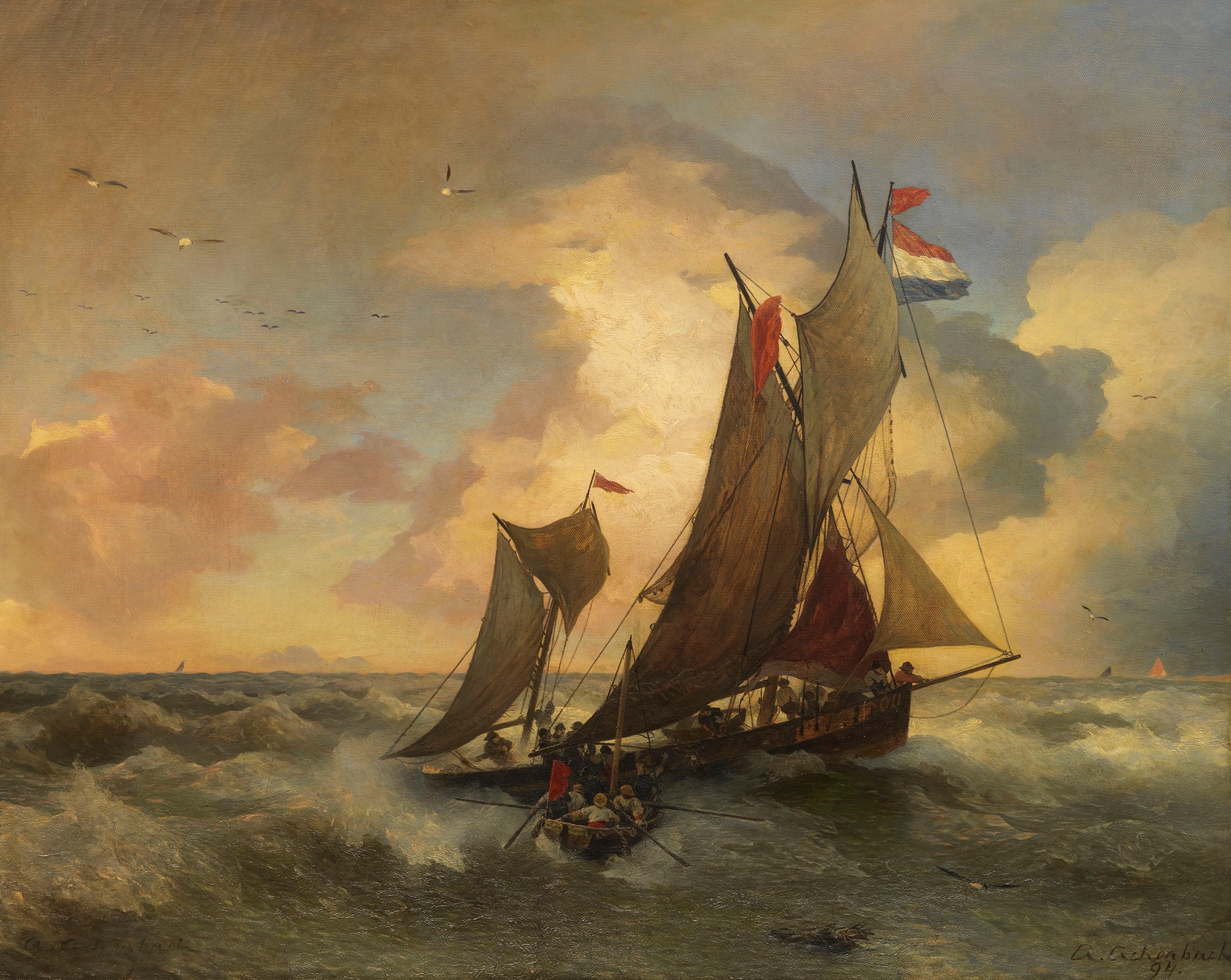
What if beauty was never meant to be finished? A deep contemplation emerges in the interplay of color and light within this painting, inviting viewers to consider the transient nature of existence itself. Look to the center of the canvas, where twilight's rich blues and purples collide, creating a luminous backdrop for the tranquil scene below. The soft, delicate strokes depict a serene landscape bathed in the silvery glow of a full moon, casting gentle reflections that guide the eye across the water.
Notice how Achenbach masterfully employs contrasts; the darkness of the night sky is pierced by the ethereal light, evoking a sense of calm amidst the encroaching shadows. The harmonious fusion of color elevates the moment, enveloping it in a dream-like quality that both captures and evokes emotion. Delve deeper, and the painting reveals a tension between the idyllic beauty of nature and the ephemeral beauty of life itself. The glistening moonlight dances upon the water’s surface, suggesting a fleeting moment caught in time, yet it also hints at the inevitable passage of time.
The boats, gently swaying, remind us of mankind’s humble connection to the vastness of the universe, embodying both tranquility and vulnerability in their stillness. Created in 1884, the work reflects a pivotal moment in Achenbach's career as he sought to encapsulate the sublime beauty of nature. Residing in Germany, he was influenced by the Romantic movement’s embrace of emotion and nature's grandeur. Achenbach’s dedication to landscape painting flourished during a time ripe with artistic exploration, as he endeavored to capture the fleeting beauty of the world around him.