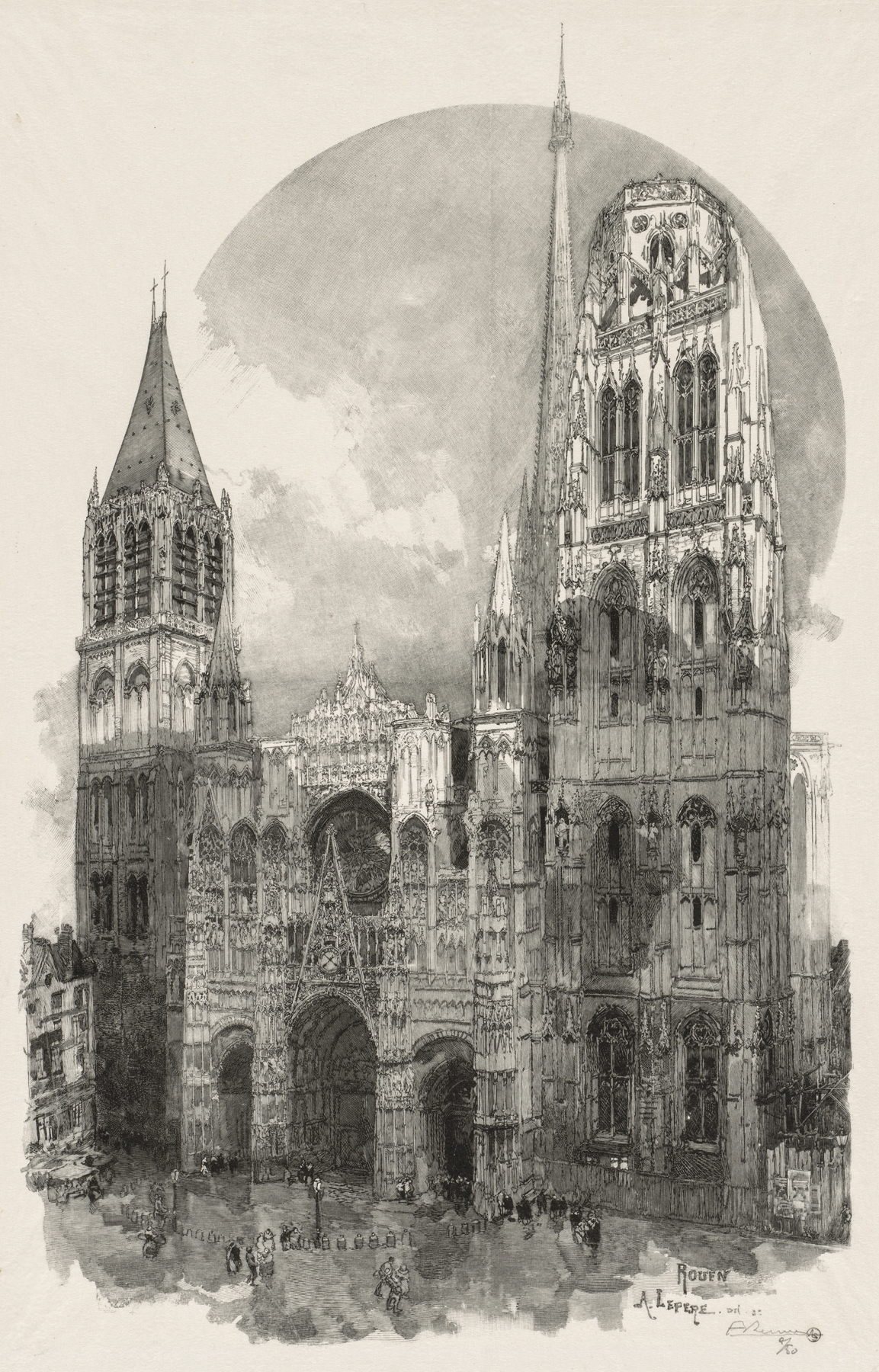
Rouen Illustré; La Cathedrale de Rouen — History & Analysis
Could a single brushstroke hold eternity? In *Rouen Illustré; La Cathédrale de Rouen*, the fleeting essence of hope is captured through the intricate dance of light and shadow across the cathedral’s facade, inviting contemplation of the sacred and the sublime. Look to the center where the magnificent spires rise dramatically against the backdrop of a soft, cerulean sky. Notice how the delicate strokes of muted pastels breathe life into the stone, each stroke revealing the artist's meticulous attention to detail. The interplay of light subtly highlights the cathedral's ornate carvings, while darker hues gather in the crevices, invoking a sense of depth and history. This careful composition frames an architectural marvel that transcends time, allowing the viewer to feel both the weight of its grandeur and the lightness of the atmosphere surrounding it. Yet, beneath the surface lies a dialogue between permanence and transience. The cathedral stands as a symbol of resilience, its steadfast structure contrasted by the ephemeral qualities of the clouds that drift lazily above. The artist’s choice of color evokes an emotional tension—warm notes hint at nostalgia, while cooler tones suggest a quiet yearning for connection. In this balance, we find the embodiment of hope, a longing for continuity amidst the passing moments of life. Auguste Louis Lepère painted this work in 1888, during a period marked by the rise of Impressionism in France. Living in Paris, he was surrounded by a burgeoning art scene that celebrated light and color. This was a time when artists were increasingly exploring the relationship between nature and architecture, and Lepère’s focus on the cathedral reflects both a personal connection to his surroundings and a broader cultural shift in artistic expression.